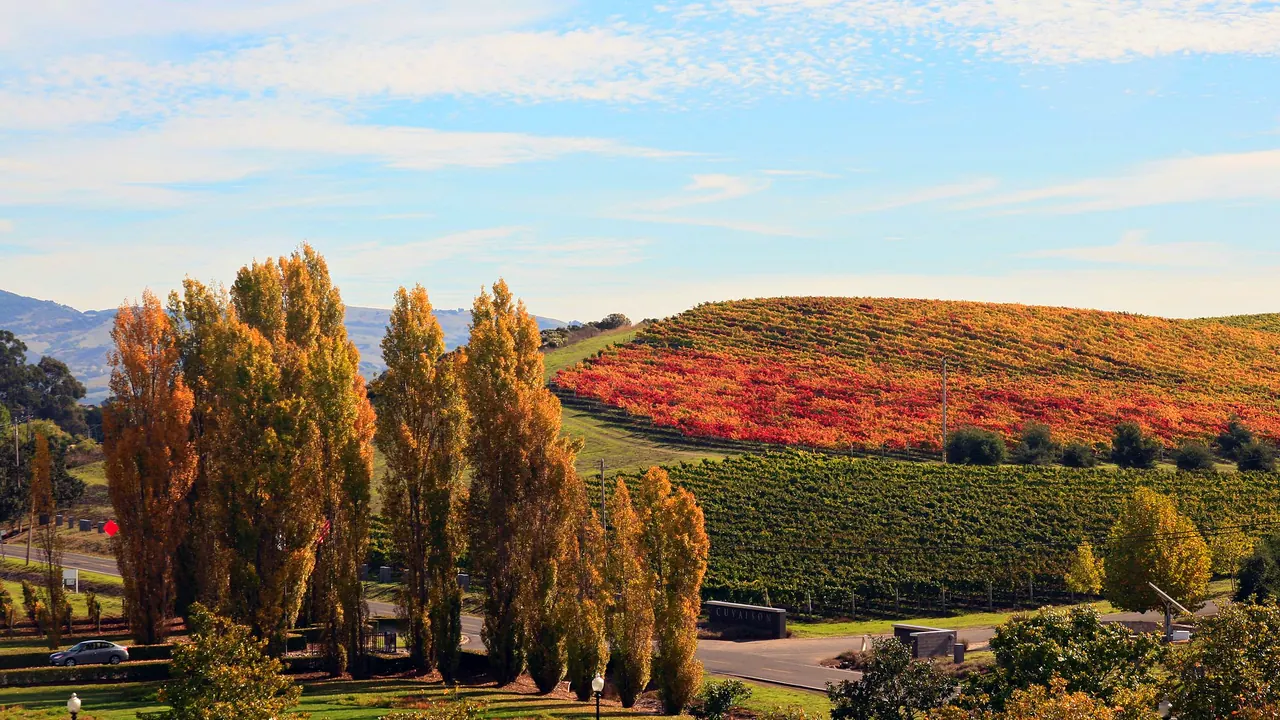
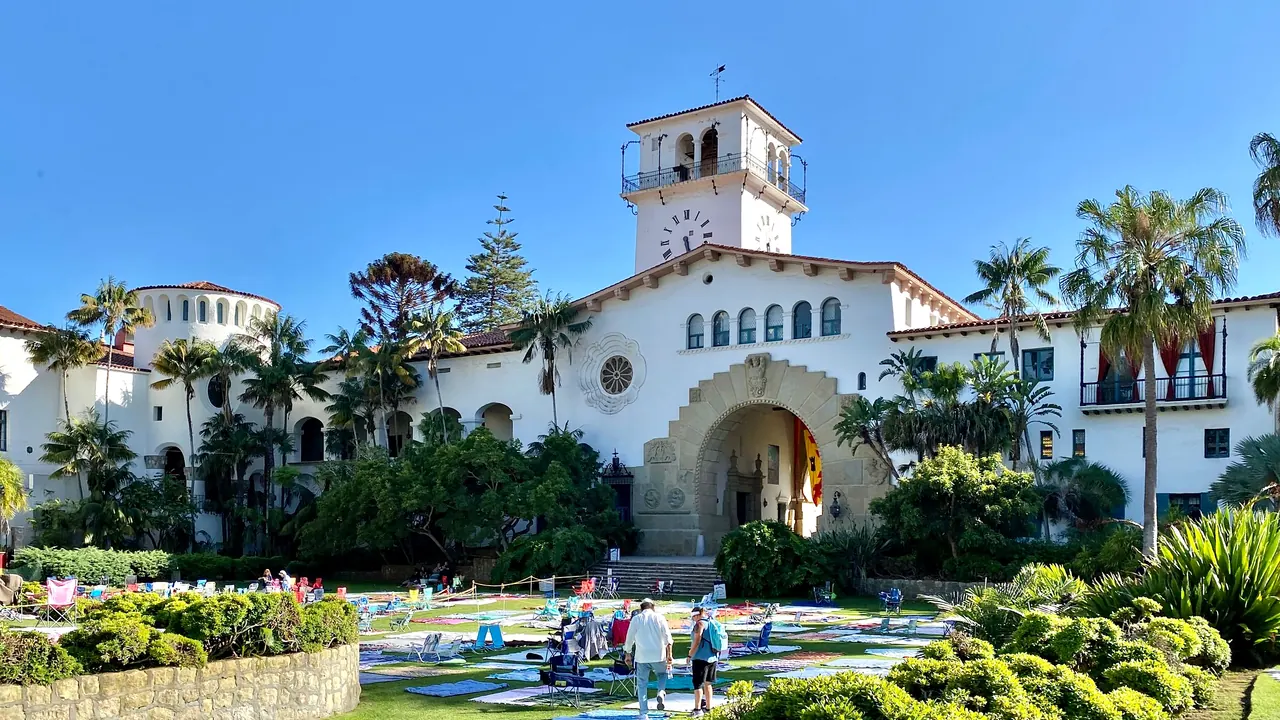
Photos: Napa by Brocken Inaglory, CC BY-SA 3.0, cropped; Santa Barbara by Warren LeMay, CC BY-SA 2.0, cropped.
Napa or Santa Barbara?
Our verdict in twelve categories, each scored against the same fixed benchmark cities, and the climate month by month, so you can choose for your trip.
Choose Napa for
- day trips
- wellness
- food and drink
Napa is for a trip built around the glass and the plate. Choose it if you want days moving between Cabernet estates and small family cellars, dinners in Yountville or St Helena, and an afternoon soaking in Calistoga's mud baths. San Francisco and Sonoma are both easy days out. It suits adults happy with a slow, indulgent pace and little to see.
Choose Santa Barbara for
- beaches
- families
- culture and sights
Santa Barbara gives a broader trip on the coast. There is sand in town, mountain trails starting from the edge of the suburbs, whale watching from the harbour, a white stucco centre worth walking, and a proper evening at the Granada or the Lobero. Wine is still close by, over the hills in the Santa Ynez Valley. It is the better choice for families, for mixed groups, and for anyone who wants the sea and the outdoors in the same week.
Scoreboard
Twelve categories on one fixed scale from 0 to 100. The shaded stretch is the gap between the two.
Your match
Pick a travel style or drag the sliders, and both match scores follow your weighting.
Wins on day trips and wellness with your weighting.
Wins on beaches and families with your weighting.
What matters to you?
Category by category
What the scores mean for a trip.
Beaches & swimming
Napa has no beach life at all. The Sonoma shore around Bodega Bay is more than an hour's drive away and too cold and rough for anything but a walk, so swimming means a resort pool or a summer trip out to Lake Berryessa.
Santa Barbara faces south behind the shelter of the Channel Islands. East Beach and West Beach lie either side of the wharf, and Carpinteria's long shallow strand suits small children. The water stays cool, though, and many locals swim in wetsuits, so it is a pleasant beach town rather than a swimming destination.
Food & drink
Napa is the better place to eat. Its restaurants grow out of the estates along Highway 29 and the Silverado Trail, and Yountville and St Helena, a short drive away, have some of the most celebrated tables in the country. Cabernet Sauvignon is the star, with Pinot Noir and sparkling wine from Carneros.
Santa Barbara cooks from the sea, with spot prawns, sea urchin and rock crab landed in the harbour, alongside very good farmers' markets. Its advantage is that you can taste wine on foot in the Funk Zone warehouses without needing a driver. Both towns fill the cheap end mainly with taquerias, and neither offers much beyond Californian and Mexican cooking.
Culture & sights
Napa is not a town for sightseeing. Downtown keeps the restored Opera House of 1880 and a few Victorian streets by the river, the di Rosa estate in Carneros shows contemporary Northern California art, and old stone wineries line the valley road. Most visitors will have seen it all within a day.
Santa Barbara has much more to look at. After an earthquake in 1925 the centre was rebuilt in Spanish Colonial Revival style, so simply walking it is the main sight, with the County Courthouse and its clock tower, the Old Mission known as the Queen of the Missions, and the restored Spanish Presidio. The art museum and the natural history museum add another day or two.
Nightlife
Neither town stays up late, but Santa Barbara has more going on after dinner. Breweries and tasting rooms in the Funk Zone are busy in the early evening, and the lower blocks of State Street have bars and a few small dance floors that fill with students at weekends.
In Napa an evening usually means a long dinner and one glass at a wine bar by the river, and the valley is quiet soon after. For a real night out you would have to drive an hour to San Francisco.
Nature & outdoors
Santa Barbara has more outdoor variety. Trails such as Rattlesnake Canyon and Seven Falls climb straight from residential streets to ridges looking over the channel. From the harbour you can go whale watching, the surf at Rincon is famous, and Channel Islands National Park is a boat ride away.
Napa's outdoors is gentler and centred on the vineyards. Balloons rise over the valley floor at dawn, a paved trail makes for easy cycling, and there are redwoods at Bothe-Napa Valley and wide views from Mount St Helena. The hot summer afternoons push any walking into the early morning.
Day trips
Napa is the better base for days out. Sonoma's plaza and mission are about half an hour away, Healdsburg and the Russian River valley about an hour, and San Francisco is an hour by car or by ferry from Vallejo, with Sacramento not much further.
Santa Barbara has one excellent day trip: over the mountains to the Santa Ynez Valley wineries and the Danish-founded town of Solvang. Beyond that there is Ojai and Ventura, and Los Angeles is far enough away that it works better as a separate stay.
Good for families
Santa Barbara is much kinder to children. The hilltop zoo, the touch tanks at the Sea Center, the MOXI science museum and the whale skeleton at the natural history museum are all close together, and the calm beaches and mild weather keep children outdoors all year.
Napa is mostly for adults. There are parks by the river, the geyser near Calistoga and a theme and animal park in Vallejo, but long drives between wineries and the summer heat make it hard going with young children.
Getting around
Santa Barbara is easier without a car. State Street runs flat from the Mission district to the sea, a shoreline path links the wharf, the harbour and East Beach, and buses, a downtown shuttle and the coastal train cover the centre. The wine country and outlying beaches still need wheels.
Napa's walkable downtown is small, and the wineries are spread along some 50km of valley with buses too infrequent to rely on. Since tasting and driving do not mix, many visitors end up paying for a driver or a tour.
Shopping & style
Santa Barbara has a little more range. There are galleries and boutiques around the fountain courtyards of the Spanish-style paseos off State Street, upmarket fashion in Montecito, and design shops in the Funk Zone.
Napa's shopping mostly means cases of wine shipped home, plus cookware and gift shops on St Helena's main street, food gifts at the market hall and an outlet mall on the edge of town. In both places the best things to bring back are wine and local produce.
Affordability
Both are expensive by any measure, and neither can really be done cheaply. In Napa the costs pile up through luxury hotels, estate tasting fees and the driver a tasting day needs. Savings come from chain hotels further south, smaller cellars and the taquerias.
Santa Barbara's beachfront and Montecito rooms are just as dear, but more of what it offers is free. The beaches and mountain trails cost nothing, and staying in Goleta or Ventura, or visiting midweek in the cooler months, cuts the bill.
Live music & performing arts
Santa Barbara has the deeper programme. The Granada hosts the local symphony, opera and ballet, the Lobero offers chamber music and jazz, the Santa Barbara Bowl brings major bands to an amphitheatre in a canyon, and the Music Academy of the West fills summer with concerts.
Napa's stage life runs on a few venues and seasonal peaks. The Opera House and an Art Deco theatre host touring acts, a classical festival spreads across the wineries in summer, and a large rock festival takes over the fairgrounds in late spring. For serious opera or theatre you would go to San Francisco.
Wellness & relaxation
Napa has a real bathing tradition. Calistoga has been a hot spring town since the nineteenth century, with volcanic mud baths and mineral pools, and the resort spas among the vines use grape seed in their treatments. The slow days of tastings and long lunches suit the mood.
In Santa Barbara the restful part is the mild climate and the quiet mornings, along with resort spas and yoga studios. The nearest thing to bathing is a hike up to small hot pools above Montecito, and for a proper retreat people drive an hour to Ojai.
When should you go?
Pick your month. The climate figures are measured averages, not a forecast.
Napa in July
Santa Barbara in July
Daytime high, °C
Rainfall in the month, mm
Where the figures come from
Napa has no rain gauge within 25 km of the centre, so its rainfall comes from a gridded climate dataset read at the city rather than from a gauge further away.
Napa's sunshine is measured 73 km from the centre, at Sacramento Executive Airport.
Temperature and rainfall are climate normals, averaged over the years shown. Napa: 1991-2020 (sunshine 1981-2010) normals, Napa / Middleton (9.8 km from centre). Santa Barbara: 1991-2020 normals, Santa Barbara / La Patera (11.7 km from centre).
Napa has distinct seasons. Winters are wet, with up to 138mm of rain a month from December to February, and the valley turns green with mustard between the vines by early spring. From June to September it is almost completely dry and very sunny, and afternoons reach about 26°C, so walking and cycling are best done early. April to May and late September into October are the most comfortable months. The coast an hour away never warms much beyond 14°C, so the sea plays no part in planning a Napa trip.
Santa Barbara changes far less through the year. Even in winter, days reach about 18°C, and the rain is lighter and falls mostly between December and March. The water warms to about 18°C from July to October, which makes late summer and early autumn the best time for the beach. Early summer can start under grey morning cloud. Its gentler summer heat makes walking the streets easier than in Napa at any time of year.
Which traveller are you?
On a beach and sun trip, Santa Barbara wins easily. It has sheltered sand in the town itself and calm shallows at Carpinteria. Napa has no beach at all, only resort pools and a reservoir in the hills, with a cold, rough coast more than an hour away.
On a family trip with children, Santa Barbara is far easier. The zoo, the touch tanks on the wharf, a hands-on science museum and gentle beaches all sit close together. Napa revolves around tasting rooms and long drives in summer heat.
For a relaxing and wellness trip, Napa is the stronger choice. Calistoga's hot springs and volcanic mud baths have a long history, and the resort spas sit among the vines. Santa Barbara relaxes you through its mild pace and resort spas, but it has no bathing tradition of its own.
Before you go
| Measure | Napa | Santa Barbara |
|---|---|---|
| Currency | US Dollar (USD) | US Dollar (USD) |
| Sockets | AB120 V, 60 Hz | AB120 V, 60 Hz |
| Driving side | Right | Right |
| Time zone | UTC-8, UTC-7 in summer | UTC-8, UTC-7 in summer |
| Emergency number | 911 | 911 |
| Elevation | 6 m | 15 m |
| Main airport | San Francisco International Airport (SFO)76 km from centre143 non-stop destinations | Santa Barbara Municipal Airport (SBA)12 km from centre13 non-stop destinations |
| Public holidays this year | 13 days | 13 days |
By the numbers
| Measure | Napa | Santa Barbara |
|---|---|---|
| City population | 79,246 | 88,665 |
| People per km² | 1,686 | 816 |
| Museums within 10 km | 3 | 10 |
| UNESCO World Heritage sites within 50 km | 0 | 0 |
| Swim season, months above 21 °C | None | None |
Where else could you go?
Every comparison below shares a destination with this one, so you can follow Napa or Santa Barbara somewhere new.
- San Franciscovs Napa
- San Josevs Napa
- Santa Monicavs Santa Barbara
- Los Angelesvs Santa Barbara
- Huntington Beachvs Santa Barbara
- Newport Beachvs Santa Barbara