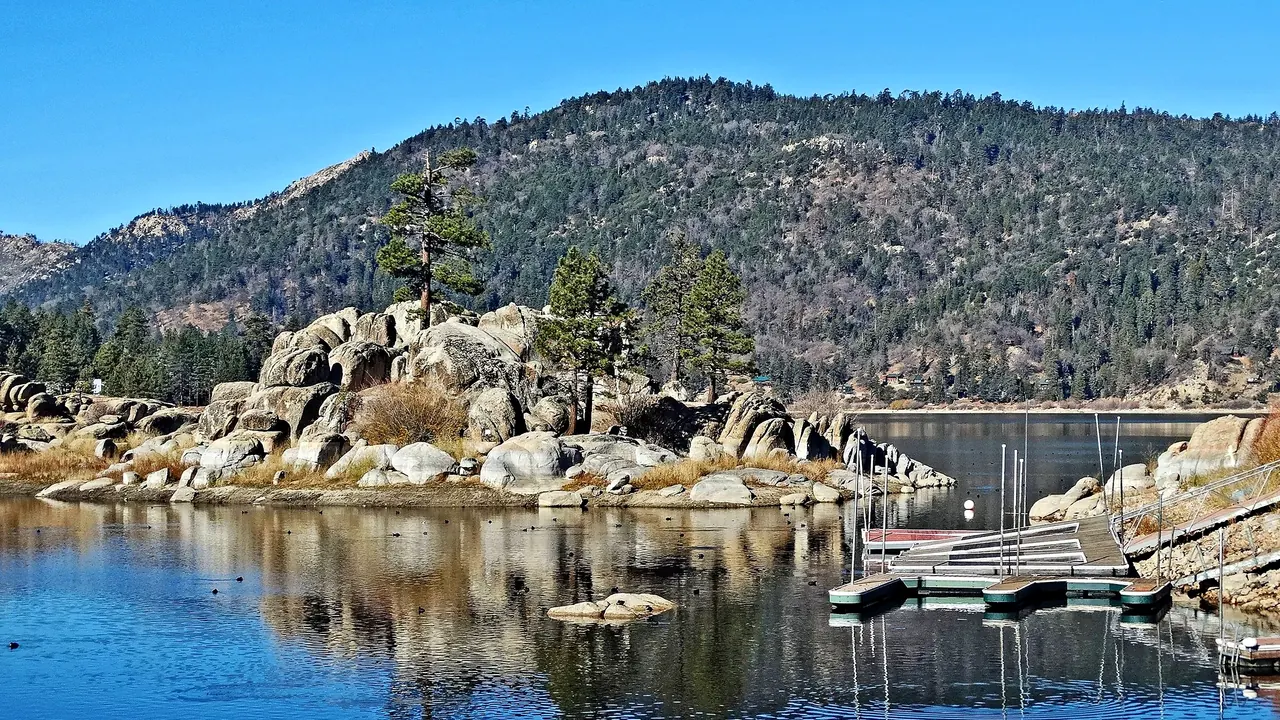
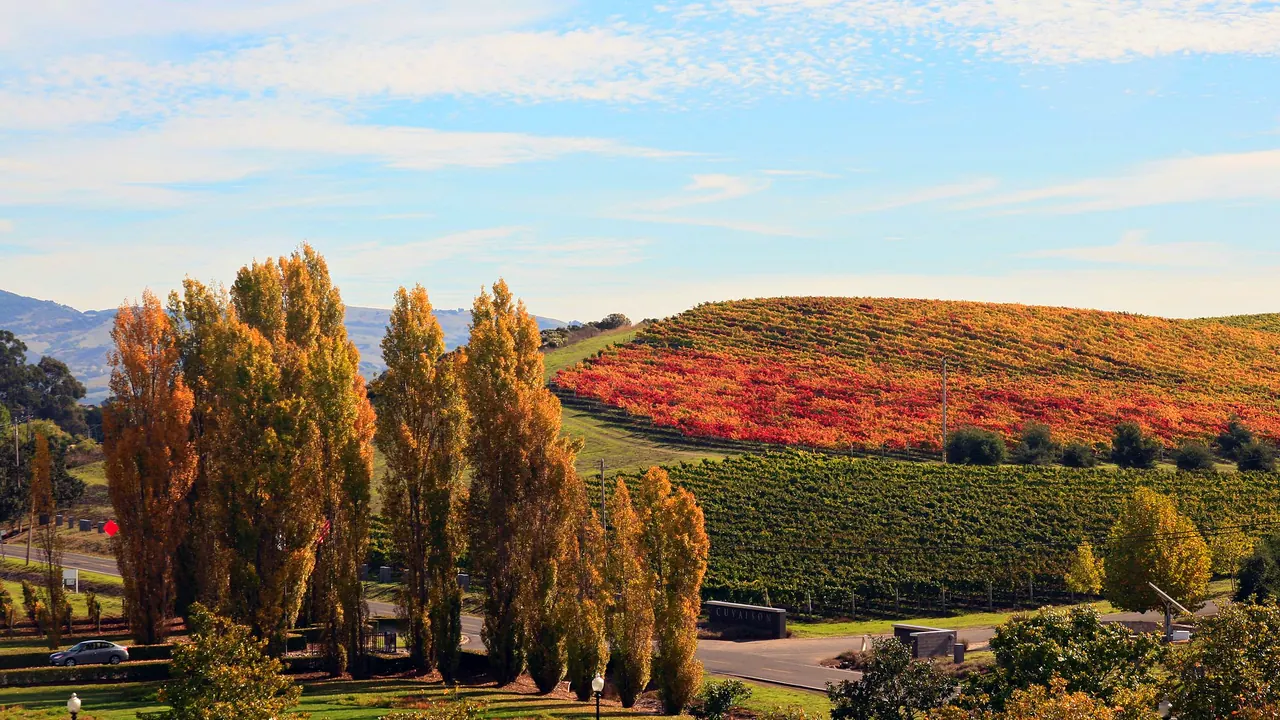
Photos: Big Bear Lake by inkknife_2000, CC BY-SA 2.0, cropped; Napa by Brocken Inaglory, CC BY-SA 3.0, cropped.
Big Bear Lake or Napa?
Our verdict in twelve categories, each scored against the same fixed benchmark cities, and the climate month by month, so you can choose for your trip.
Choose Big Bear Lake for
- families
- prices
- nature and the outdoors
Big Bear Lake suits travellers who want to be active outdoors and don't mind keeping things simple. Winter brings skiing, snowboarding and sledding. Summer brings mountain biking, kayaking and hiking through the pines. It is also the easier choice with children, and a shared cabin with a kitchen keeps the cost down. Don't expect much in the way of food, sights or evenings out.
Choose Napa for
- food and drink
- day trips
- wellness
Napa is the trip for adults who want to eat, drink and slow down. Tasting rooms line the valley, and Yountville and St Helena have some of the most celebrated restaurants in the country. Calistoga's mud baths are within easy reach, and you can visit Sonoma or spend a day in San Francisco. You pay a lot for all this, and young children will find little to do.
Scoreboard
Twelve categories on one fixed scale from 0 to 100. The shaded stretch is the gap between the two.
Your match
Pick a travel style or drag the sliders, and both match scores follow your weighting.
Wins on families and prices with your weighting.
Wins on food and drink and day trips with your weighting.
What matters to you?
Category by category
What the scores mean for a trip.
Beaches & swimming
Neither town is a beach destination, but Big Bear Lake at least lets you swim close to where you stay. The lake is cool, around 19°C in high summer, and the one supervised spot is the small beach at Meadow Park, which is good for children. Elsewhere you get a quick dip off a rocky or sandy patch between paddleboarding sessions.
In Napa, swimming means a hotel pool. Otherwise you drive out to Lake Berryessa in the eastern hills. The Sonoma coast is more than an hour away, and its Pacific water is too cold and rough for most people to swim.
Food & drink
This is where the two differ most. Napa's food grows out of its vineyards. You can taste Cabernet along Highway 29 and the Silverado Trail, try Pinot and sparkling wine in Carneros, and book the celebrated kitchens of Yountville and St Helena. The Oxbow Public Market and the taquerias cover cheaper meals.
Big Bear Lake serves mountain-resort food: hearty breakfasts in log-cabin diners, burgers, barbecue and a pint at a brewpub. Many visitors cook for themselves in their cabins. It feeds you well after a day outdoors, but nobody chooses it for the food.
Culture & sights
Neither town has much to see, but Napa has a little more. It has Victorian buildings along First Street, the restored Opera House of 1880, the di Rosa art estate in Carneros and old stone wineries up the valley, which together fill about a day.
Big Bear Lake's history is the 1860s gold rush in Holcomb Valley, which you follow on a dirt-road drive past mining remains. Add the Discovery Center and a small museum, and the chalet-style Village is mostly modern.
Nightlife
Both towns are quiet by late evening, and neither has clubs. What you do differs with the season and the setting. In Big Bear Lake it means après-ski in the bars and pubs near the slopes in winter, followed by a hot tub back at the cabin. Napa's evenings are a long dinner and then a wine bar or a cocktail bar by the river. San Francisco is about an hour away if you want a real night out.
Nature & outdoors
Big Bear Lake is the stronger outdoor base. It has two ski areas in winter, mountain-bike trails on the same slopes in summer, and a lake for kayaking, sailing and fishing. The Pacific Crest Trail runs along the north shore, and the San Gorgonio Wilderness, with Southern California's highest summit, is close by. Bald eagles spend the winter around the lake.
Napa's landscape is gentler and more cultivated. There are dawn balloon flights over the vineyards and a paved cycle trail along the flat valley floor. Bothe-Napa Valley State Park has redwood groves, and Mount St Helena gives wide views. Point Reyes and Muir Woods are within reach on a longer day.
Day trips
From Napa, the day trips are short and varied. Yountville, St Helena and Calistoga are each a short drive away, Sonoma's plaza and mission are about half an hour over the hills, and Healdsburg is about an hour. San Francisco is about an hour by car, or by ferry from Vallejo, and Sacramento's state capitol is a little further east.
Big Bear Lake sits at the end of slow, winding mountain roads. Lake Arrowhead and the orchards of Oak Glen make pleasant outings. Riverside's Mission Inn is about an hour and a half away, and most other destinations mean a long day on the road.
Good for families
Big Bear Lake is set up for families. Children from the lowlands come for the snow, the sledding hills and the beginner ski lessons. In summer there are pedal boats, mini-golf and the Alpine Zoo's rescued bears and bobcats. Families should keep the thin air and the cold nights in mind.
Napa is first of all a place for adults. Families can visit the animal park in Vallejo or the geyser near Calistoga, and use hotel pools, but tasting rooms, long drives and summer heat wear young children out.
Getting around
You need a car in both places, but Big Bear Lake is a little easier once you have arrived. A local bus and a seasonal trolley link the walkable Village with the ski areas, although the mountain highways can crawl on busy weekends and may require snow chains in winter.
Napa's downtown is easy to walk, but the wineries are spread along some 50km of valley road, and the buses run too rarely to rely on. Since a tasting day and driving don't mix, many visitors hire a driver or join a tour.
Shopping & style
In Napa, most of the shopping is wine, often shipped home by the case from the cellars you visited. You can also buy olive oil and kitchenware at the Oxbow Public Market and browse the cookware and design shops on St Helena's main street, and there is an outlet mall at the edge of town. Big Bear's Village has fudge shops, bear-themed souvenirs and outfitters for ski and lake gear, which fill an hour of browsing at most.
Affordability
Neither is cheap, but Big Bear Lake costs noticeably less. A shared cabin midweek or in spring and autumn is fairly economical for a group that cooks its own meals, and hiking and sledding cost little. Costs climb on winter weekends, when you pay for lift tickets and equipment hire.
Napa is among the most expensive places to stay in the United States. Hotels, estate tastings, celebrated dinners and drivers all add up. Even a careful trip, with a chain hotel to the south, taqueria lunches and small cellars, is not a cheap one.
Live music & performing arts
Napa has more on stage, though not much. The Opera House stages concerts and comedy, and a 1930s Art Deco theatre hosts touring bands. In summer a classical festival plays in winery and resort venues, and a large rock and pop festival fills the fairgrounds in late spring.
Big Bear Lake has local theatre at a small community arts centre, free summer concerts by the lake and the Bavarian bands of its long-running Oktoberfest.
Wellness & relaxation
Napa is made for unwinding. Calistoga has been a hot spring town since the nineteenth century, with mud baths and mineral pools, and the resorts in Carneros and the hills nearly all have large spas. The slow pace of tastings and long lunches helps too.
Big Bear Lake has no hot springs and no destination spa. Relaxing there means a private hot tub and a wood stove at your cabin, and it works best on quiet midweek days rather than crowded winter weekends.
When should you go?
Pick your month. The climate figures are measured averages, not a forecast.
Big Bear Lake in July
Napa in July
Daytime high, °C
Rainfall in the month, mm
Where the figures come from
Big Bear Lake has no rain gauge within 25 km of the centre, so its rainfall comes from a gridded climate dataset read at the city rather than from a gauge further away.
Napa has no rain gauge within 25 km of the centre, so its rainfall comes from a gridded climate dataset read at the city rather than from a gauge further away.
Napa's sunshine is measured 73 km from the centre, at Sacramento Executive Airport.
Temperature and rainfall are climate normals, averaged over the years shown. Big Bear Lake: 2014-2025 (rainfall 1991-2020) normals, Big Bear City (5 km from centre). Napa: 1991-2020 (sunshine 1981-2010) normals, Napa / Middleton (9.8 km from centre).
Big Bear Lake has two quite different seasons. From December to February the town is cold, with daytime highs around 7°C. These are also the wettest months, and at this altitude much of it falls as snow, which is when skiing and sledding are at their best. Summer is short, dry and pleasant, with highs of about 26°C in July and almost no rain in June. That makes June to September the months for hiking, biking and a quick swim in the cool lake. May and October are cool, mostly dry and good for walking, though the nights at altitude are cold.
Napa is milder all year, with winter highs in the low to mid teens. The heavy rain runs from November to March, so early spring is still wet. From June to September the valley is dry, very sunny and as warm as Big Bear's July, with hot afternoons, so plan tastings and walks for the morning. The nearby Pacific stays cold all year, at about 12°C to 14°C, too cold for a beach day in any month. April, May and October are often the most comfortable months in the valley, with warm days and little rain.
Which traveller are you?
On a food and nightlife trip, choose Napa. Its tasting rooms, the Oxbow Public Market and the restaurants of Yountville and St Helena make every meal worth planning for. Big Bear has diners, pizza and brewpubs, and both towns are quiet after dark.
On a family trip with children, Big Bear Lake is the easier choice. It has snow play, beginner ski lessons, the Alpine Zoo, an alpine slide and pedal boats, and roomy cabins with kitchens. Napa is built around wine tasting and long drives between wineries, which bore most children.
For a relaxing and wellness trip, Napa is the better choice. Calistoga has offered hot spring soaks and mud baths since the nineteenth century, the resorts have large spas, and the days are unhurried. In Big Bear, relaxing mostly means the cabin's own hot tub and a wood stove.
Before you go
| Measure | Big Bear Lake | Napa |
|---|---|---|
| Currency | US Dollar (USD) | US Dollar (USD) |
| Sockets | AB120 V, 60 Hz | AB120 V, 60 Hz |
| Driving side | Right | Right |
| Time zone | UTC-8, UTC-7 in summer | UTC-8, UTC-7 in summer |
| Emergency number | 911 | 911 |
| Elevation | 2,058 m | 6 m |
| Main airport | Ontario International Airport (ONT)67 km from centre28 non-stop destinations | San Francisco International Airport (SFO)76 km from centre143 non-stop destinations |
| Public holidays this year | 13 days | 13 days |
By the numbers
| Measure | Big Bear Lake | Napa |
|---|---|---|
| City population | 5,046 | 79,246 |
| People per km² | 299 | 1,686 |
| Museums within 10 km | 1 | 3 |
| UNESCO World Heritage sites within 50 km | 0 | 0 |
| Swim season, months above 21 °C | - | None |
Where else could you go?
Every comparison below shares a destination with this one, so you can follow Big Bear Lake or Napa somewhere new.
- Sonomavs Napa
- Palm Springsvs Big Bear Lake
- San Franciscovs Napa
- Palm Desertvs Big Bear Lake
- Anaheimvs Big Bear Lake
- Laguna Beachvs Big Bear Lake