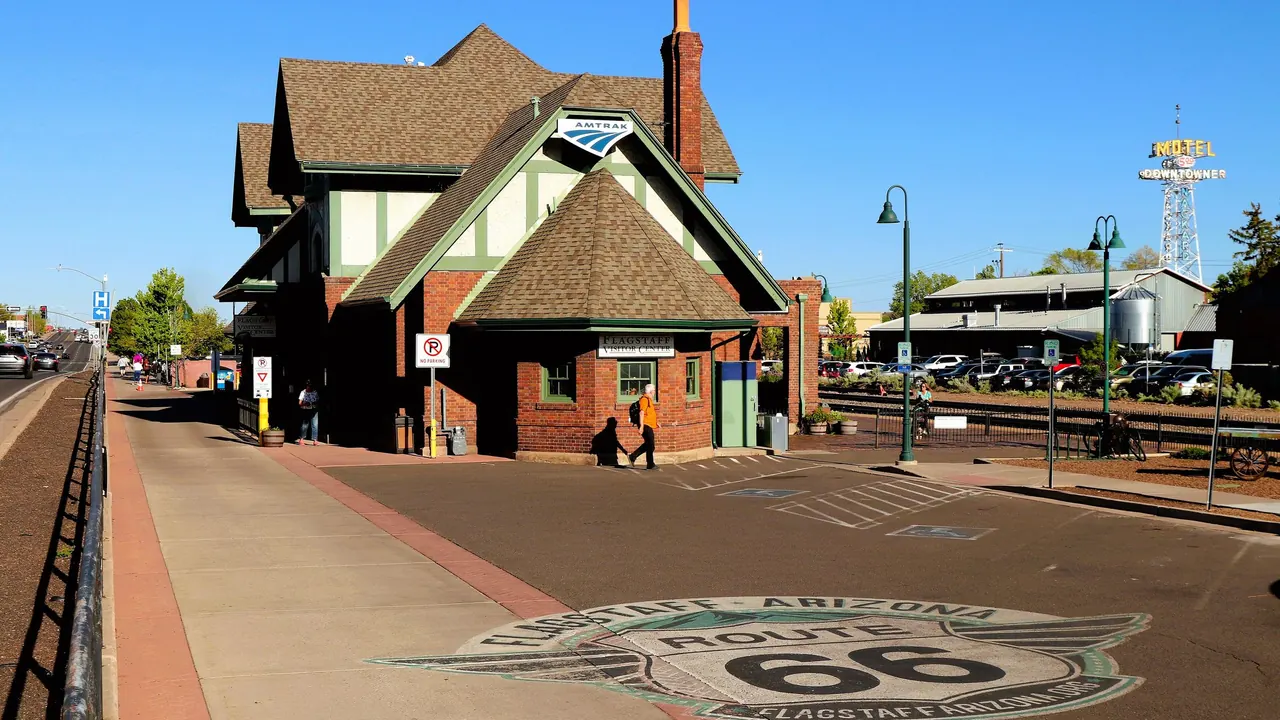
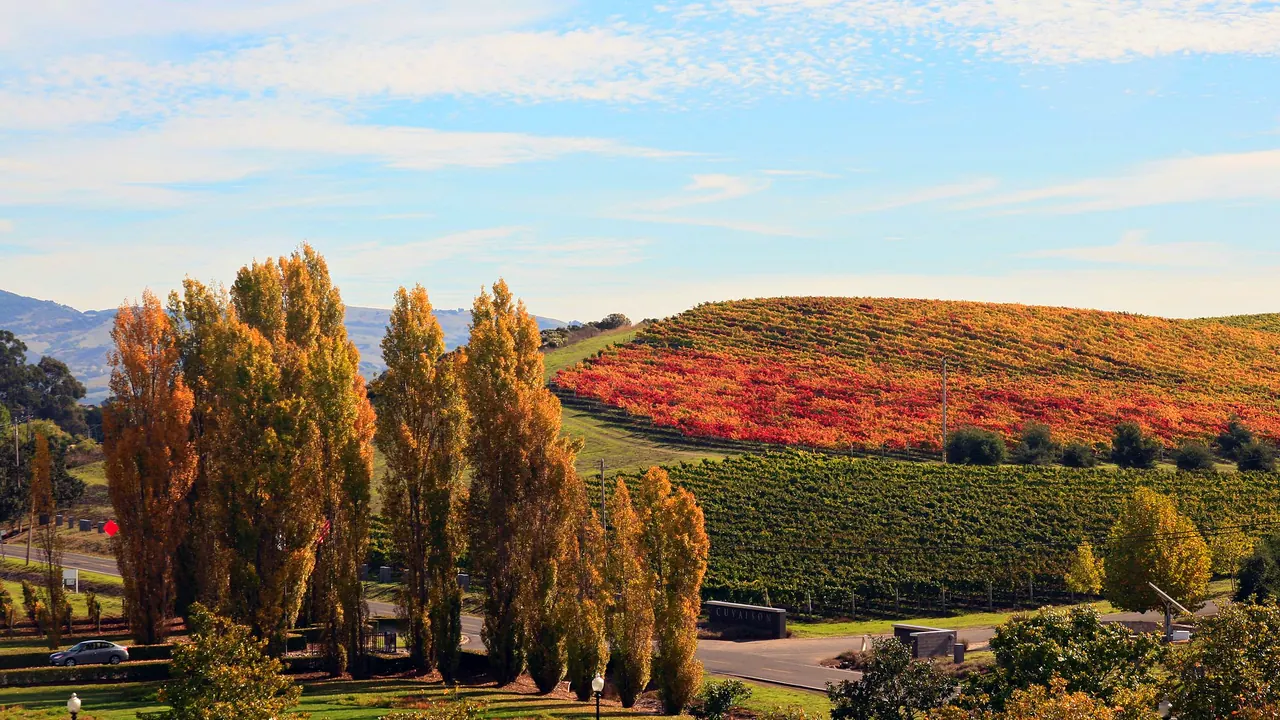
Photos: Flagstaff by Thank You (25 Millions) views, CC BY 2.0, cropped; Napa by Brocken Inaglory, CC BY-SA 3.0, cropped.
Flagstaff or Napa?
Our verdict in twelve categories, each scored against the same fixed benchmark cities, and the climate month by month, so you can choose for your trip.
Choose Flagstaff for
- families
- prices
- nature and the outdoors
Flagstaff suits travellers who want to spend their days outside. Mountain trails, pine forest, lava fields and the South Rim of the Grand Canyon are all within a drive, and the evenings end on a brewery patio or at a telescope under some of the darkest skies in the country. It is also the cheaper and easier base with children, and the observatory and the Museum of Northern Arizona give it a short but worthwhile list of sights.
Choose Napa for
- food and drink
- wellness
- day trips
Couples and groups of adults who travel for wine, food and slow afternoons should pick Napa. Tastings along the valley, a serious dinner in Yountville or St Helena and a mud bath in Calistoga have no equal around Flagstaff, and Sonoma and San Francisco are close enough to fill extra days. You pay heavily for all of it, though, and there is little to keep children happy.
Scoreboard
Twelve categories on one fixed scale from 0 to 100. The shaded stretch is the gap between the two.
Your match
Pick a travel style or drag the sliders, and both match scores follow your weighting.
Too close to call, 1 point apart
Wins on families and prices with your weighting.
Wins on food and drink and wellness with your weighting.
What matters to you?
Category by category
What the scores mean for a trip.
Beaches & swimming
Neither place has a beach, and nobody should choose either one for swimming. Flagstaff's best option is the cold creek pools at Slide Rock in Oak Creek Canyon, which get crowded at weekends.
Napa's nearest coast at Bodega Bay is too cold and rough for bathing, so summer swimming means Lake Berryessa or, more often, a resort pool in the valley heat.
Food & drink
This is where the two differ most. In Napa, eating and drinking are the whole point of the trip: estate and family cellars along Highway 29 and the Silverado Trail, Carneros Pinot and sparkling wine, and a run of nationally celebrated restaurants in Yountville and St Helena that use produce from the farms around them. The Oxbow Public Market adds an easy daytime option in town.
Flagstaff eats casually. Its craft breweries downtown and in the Southside are genuinely good, and Navajo tacos and green chile add some local flavour, but otherwise it is diners, Mexican kitchens and barbecue. That is fine after a day on the trails, but it gives you nothing to plan meals around.
Culture & sights
Flagstaff has a little more to see. The Lowell Observatory, where Pluto was discovered, makes a memorable evening, and the Museum of Northern Arizona holds a serious collection of Hopi, Navajo and Zuni art. The Riordan Mansion and the Route 66 railroad downtown fill out a day or two.
Napa's sights are mostly the 1880 Opera House, some Victorian streets, the stone wineries up the valley and contemporary art at di Rosa. Few people go there for any of it.
Nightlife
Neither is a party town, but Flagstaff stays up later. University students keep the downtown and Southside taprooms, cocktail bars and old Route 66 saloons busy on term-time weekends, and they are all close enough to walk between.
In Napa, a night out usually means a long dinner and one last glass at a First Street wine bar. The valley is quiet by late evening, and anything livelier means driving an hour to San Francisco.
Nature & outdoors
Flagstaff is one of the great outdoor bases in the American West. You can walk alpine trails up to Humphreys Peak, ski or hike on the San Francisco Peaks, cross the cinder cones at Sunset Crater and explore an enormous ponderosa forest. Sedona's red rock and the South Rim of the Grand Canyon are within an easy drive, and the night sky is exceptionally dark.
Napa's landscape is gentler and more cultivated. It means vineyards between two ranges of hills, dawn balloon flights, a flat cycling trail, redwoods in Bothe-Napa Valley State Park and the climb up Mount St Helena. It is lovely, but it has none of Flagstaff's scale.
Day trips
Napa has the richer choice of day trips. Sonoma's plaza and mission are about half an hour away, Healdsburg and the Russian River valley offer a different wine country, and San Francisco can be reached by car or by ferry from Vallejo, with Sausalito and Berkeley along the way. Sacramento's old town is a little over an hour east.
Flagstaff's outings go deeper into the past, with Sinagua ruins at Walnut Canyon and Wupatki, cliff dwellings in the Verde Valley and the ancient Hopi villages. They are more spread out, though, and every one needs a car.
Good for families
Flagstaff is much better with children. It has telescope evenings at Lowell, dinosaur displays at the museum, rope courses in the pines, winter snow play and the steam train to the Grand Canyon. Just allow a day for children to get used to the altitude.
Napa is built for adults who taste wine and linger over dinner. A theme park in Vallejo, the geyser near Calistoga and hotel pools help, but the long drives and summer heat wear young children out.
Getting around
You will want a car in both, but Flagstaff is a little easier without one. Its downtown and Southside are walkable, a paved urban trail network makes cycling practical, buses serve the university and long-distance trains stop downtown. Snow and ice can make the mountain roads difficult in winter.
In Napa, only the downtown is walkable. Wineries are strung along some 50km of valley, buses are too infrequent for touring, and since tasting and driving do not mix, many visitors end up paying for a driver or a tour.
Shopping & style
Napa offers more to buy, though most of it is wine. Many visitors have cases shipped home from the cellars they visited, and the Oxbow market, the cookware and design shops on St Helena's main street and an outlet mall cover the rest.
Flagstaff's shopping is smaller but has a particular strength. Navajo rugs, Hopi kachina carvings and silver and turquoise jewellery are sold in downtown galleries and at trading posts outside town. Buy from established dealers so you know the work is authentic.
Affordability
Flagstaff costs far less. Chain motels on old Route 66 keep rooms affordable, and brewery meals are reasonably priced, although summer weekends push rates up and you still need a hire car and park entry fees.
Napa is among the most expensive places to stay in the country. Luxury rooms, estate tasting fees, special-occasion restaurants and a hired driver all add up. Even careful visitors who stay further south and eat at taquerias will spend a lot.
Live music & performing arts
The two are on a similar modest level, though the venues differ. Flagstaff has a symphony orchestra and university concerts on campus, touring folk and indie acts at the Orpheum and summer concerts outdoors in the pines.
Napa puts on concerts and comedy at its 1880 Opera House, has a summer classical festival held in wineries and resorts, and hosts a large rock and pop festival at the fairgrounds each late spring. For serious opera or theatre you have to go to San Francisco.
Wellness & relaxation
Napa is the clear choice for pampering. Calistoga has been a hot spring town since the nineteenth century, and its volcanic mud baths and mineral pools sit alongside resort spas in the hills and Carneros. The slow rhythm of a tasting day adds to the calm.
Flagstaff has no hot springs and only a few day spas. What it offers instead is quiet, pine-scented air and starry nights, although the altitude can disturb your sleep for the first night or two. People who want treatments drive down to Sedona.
When should you go?
Pick your month. The climate figures are measured averages, not a forecast.
Flagstaff in July
Napa in July
Daytime high, °C
Rainfall in the month, mm
Where the figures come from
Flagstaff has no rain gauge within 25 km of the centre, so its rainfall comes from a gridded climate dataset read at the city rather than from a gauge further away.
Napa has no rain gauge within 25 km of the centre, so its rainfall comes from a gridded climate dataset read at the city rather than from a gauge further away.
Napa's sunshine is measured 73 km from the centre, at Sacramento Executive Airport.
Temperature and rainfall are climate normals, averaged over the years shown. Flagstaff: 1991-2020 normals, Flagstaff / Fort Tuthill (7.4 km from centre). Napa: 1991-2020 (sunshine 1981-2010) normals, Napa / Middleton (9.8 km from centre).
Flagstaff's altitude gives it real winters, with daytime highs around 5°C in January and snow on the ground, which is good for skiing and sledding but cold for walking around town. Late spring and June are dry and pleasantly warm. July and August bring afternoon thunderstorms, with August the wettest month at about 64mm, so hikes are best started early. September and October are settled and mild, and many people find them the best months of the year.
Napa runs almost the opposite way. Its winters are mild but wet, with about 138mm of rain in January, while June to September is almost completely dry, very sunny and steady at about 26°C. That makes summer the time for pools and long outdoor lunches. For walking and cycling, spring and October are more comfortable. The Pacific off the Sonoma coast never gets above about 14°C, so the sea is for looking at, not swimming.
Which traveller are you?
On an outdoors trip, Flagstaff is the stronger base by a long way. It has alpine trails on the San Francisco Peaks, a huge ponderosa forest, the Sunset Crater lava fields and the Grand Canyon within a drive. Napa offers gentler cycling and walking among the vineyards.
For a relaxing and wellness trip, choose Napa. Calistoga's hot springs and mud baths, the large resort spas and days built around tastings and long lunches are made for unwinding. Flagstaff's calm comes from pine air and starry skies, not from treatments.
On a food and nightlife trip where the evening is mostly about the meal, Napa wins clearly, with celebrated restaurants and cellars on every side. Flagstaff's brewery taprooms and student bars stay livelier later, but its food will not carry the trip.
Before you go
| Measure | Flagstaff | Napa |
|---|---|---|
| Currency | US Dollar (USD) | US Dollar (USD) |
| Sockets | AB120 V, 60 Hz | AB120 V, 60 Hz |
| Driving side | Right | Right |
| Time zone | UTC-7 | UTC-8, UTC-7 in summer |
| Emergency number | 911 | 911 |
| Elevation | 2,106 m | 6 m |
| Main airport | Flagstaff Pulliam Airport (FLG)7 km from centre2 non-stop destinations | San Francisco International Airport (SFO)76 km from centre143 non-stop destinations |
| Public holidays this year | 12 days | 13 days |
By the numbers
| Measure | Flagstaff | Napa |
|---|---|---|
| City population | 76,831 | 79,246 |
| People per km² | 464 | 1,686 |
| Museums within 10 km | 1 | 3 |
| UNESCO World Heritage sites within 50 km | 0 | 0 |
| Swim season, months above 21 °C | - | None |
Where else could you go?
Every comparison below shares a destination with this one, so you can follow Flagstaff or Napa somewhere new.
- Sedonavs Flagstaff
- San Franciscovs Napa
- San Josevs Napa
- Scottsdalevs Flagstaff
- Montereyvs Napa
- Phoenixvs Flagstaff