United States
Napa Valley
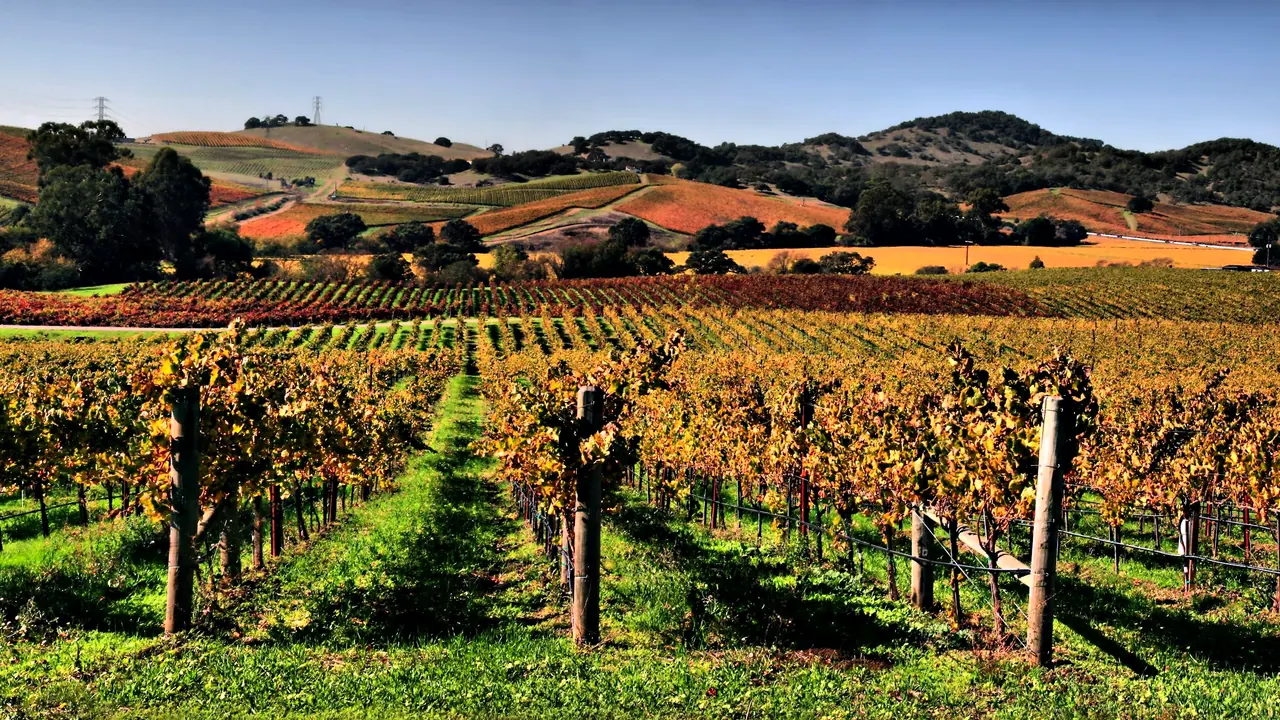
Autumn vineyards between soft hills in Napa Valley
- Food & drink82
- Wellness & relaxation80
- Day trips72
Photo: Brocken Inaglory, CC BY-SA 3.0, cropped
Napa Valley lies in California, which has its own page.
Match
40
Every category weighted equally
- Beach & sun41
- Culture & arts41
- Food & nightlife41
- Family trip38
- Outdoors46
- Relax & unwind47
- Shopping & style42
- On a budget36
Napa Valley in twelve categories
Our verdict on each, scored 0 to 100 against the same fixed benchmark cities, so a score means the same thing on every page.
Beaches & swimming. Scores 14 out of 100.
Food & drink. Scores 82 out of 100.
Culture & sights. Scores 22 out of 100.
Nightlife. Scores 12 out of 100.
Nature & outdoors. Scores 52 out of 100.
Day trips. Scores 72 out of 100.
Good for families. Scores 28 out of 100.
Getting around. Scores 35 out of 100.
Shopping & style. Scores 38 out of 100.
Affordability. Scores 8 out of 100.
Live music & performing arts. Scores 35 out of 100.
Wellness & relaxation. Scores 80 out of 100.
Napa Valley category by category
Beaches & swimming
14The valley is inland, and swimming is not part of a stay here. In summer the clear choice is Lake Berryessa, a large reservoir over the eastern hills that warms well in the heat and has coves and day-use areas for a swim or a paddle. The Pacific is about an hour and a half away on the Sonoma coast around Bodega Bay. It makes a dramatic drive, but the water stays near 12°C, with strong currents, so nobody goes there to bathe. For most visitors, swimming means the pool at their hotel.
Food & drink
82Eating and drinking are the reason to come. Hundreds of wineries line the valley floor and climb into the hills. The valley is best known for Cabernet Sauvignon, and tasting rooms run from grand estates on Highway 29 and the Silverado Trail to small appointment-only cellars on Howell Mountain and Spring Mountain. Yountville is a small town with a concentration of fine dining that few places anywhere can match. St. Helena and Calistoga add farm-driven bistros, and the culinary school at the old Greystone cellars draws keen cooks.
Downtown Napa has the most casual range. Oxbow Public Market is the place for oysters, charcuterie and local cheese, and there are wine bars along the river. What the valley lacks is cheap, everyday eating: there is little street food, and a meal here is usually an occasion.
Culture & sights
22The valley's heritage is its winemaking past, and you see it best in the buildings: nineteenth-century stone cellars built by the early wine families, the old Greystone cellars in St. Helena, and estate architecture that ranges from Spanish mission style to a mock medieval castle. Downtown Napa keeps a run of Victorian commercial buildings along the river. The Bale Grist Mill near St. Helena is a restored water-powered mill from the 1840s, and there are small local museums in Yountville and Calistoga. All of this is pleasant background to a wine trip. Visitors who want serious museums and landmarks go to the city for the day.
Nightlife
12Evenings here end with dinner. Downtown Napa is the only place with any going out, with wine bars, a few taprooms and cocktail bars along the riverfront and First Street. Even there it is quiet well before midnight, and up-valley towns such as Yountville, St. Helena and Calistoga close down soon after the restaurants do. Most visitors have spent the afternoon tasting wine and are glad of an early night.
Nature & outdoors
52This is a gentle agricultural landscape: a long, narrow valley floor of vineyards between the oak-covered Mayacamas and Vaca ranges. It is at its best in autumn, when the vines turn gold and red, and in late winter, when mustard flowers yellow between the rows. The classic outdoor experience is a dawn hot-air balloon flight over the vines. Cycling on the quiet Silverado Trail and the paved valley path is popular too.
For a proper hike, the climb up Mount St. Helena at the head of the valley gives wide views on clear days, and the redwood groves of Bothe-Napa Valley State Park and the trails of Skyline Wilderness Park are closer to town. It is pleasant country to walk and ride through, though not wild or dramatic.
Day trips
72The best day out is San Francisco, about an hour and a half by road, or partly by ferry from Vallejo across the bay. Nearer by, Sonoma is just over the hills, with a historic plaza, the last of California's Spanish missions and a softer, more rustic wine country. Further north, Healdsburg and the Russian River and Dry Creek valleys make a full day of tasting and small-town strolling.
Berkeley's university campus and Sausalito on the bay are other easy choices, and Sacramento's old riverfront town is about an hour east. The list is good but leans heavily towards wine. Outside San Francisco, most outings are another valley of vineyards with a pretty town at its centre.
Good for families
28The valley is designed for adults. Days revolve around tasting rooms and long dinners, many resorts aim at couples, and children are tolerated rather than catered for. Families can still put together a few days. Calistoga has a small geyser and a petrified forest. The state parks have shaded creekside trails, and the hot springs resorts have warm pools children enjoy. A wildlife and amusement park in Vallejo, just south of the valley, makes a full day out. Summer afternoons are hot, and getting around means a lot of time in the car, so most families treat the valley as a short stop rather than the whole trip.
Getting around
35The valley is compact, about 50km from Napa to Calistoga, and the roads are easy, so it is simple to reach what you came for. The catch is that nearly everything needs a car. Local buses run up the valley but are too infrequent to plan tastings around, and only the downtowns of Napa, Yountville and St. Helena are walkable. Highway 29 is slow on weekends and in the harvest season, and the quieter Silverado Trail is the better route. Since the main activity is drinking wine, many visitors hire a driver, join a tour, or cycle the flatter stretches of the valley floor.
Shopping & style
38The real shopping is wine bought at the cellar door, often bottles that never reach shops elsewhere, and many estates will ship cases home. Beyond that the choice is small and polished. St. Helena's Main Street has homeware, kitchen and clothing boutiques, and Yountville has a few galleries. In Napa, the public market sells local olive oil, cheese and preserves. There is a large outlet centre on the edge of Napa town. There is little fashion depth and no real markets or crafts tradition.
Affordability
8This is one of the most expensive places to travel in the country. Hotels and inns up-valley are priced for special occasions, especially at weekends and during harvest. Tasting fees add up quickly over a day of visits, and dinners at the well-known restaurants cost a great deal. Staying in Napa town or further south brings room rates down somewhat, and picnics from the delis and markets cut the cost of lunch. Even planned carefully, a stay here is a splurge.
Live music & performing arts
35The valley has a busier calendar than its size suggests, though it comes mainly in seasons. Each late spring a big rock and pop festival takes over the Napa Valley Expo grounds for a long weekend. In summer, classical, jazz and opera concerts are held at wineries and at the theatre in Yountville. All year round, downtown Napa has two handsome venues: the restored nineteenth-century opera house and an Art Deco theatre that books touring bands and comedians. Wineries also host evening concerts on their lawns in the warm months. There is no resident opera, orchestra or theatre company of real reputation.
Wellness & relaxation
80Calistoga, at the north end of the valley, was founded as a hot-springs resort in the nineteenth century, and that tradition is still central to the town. Visitors come for volcanic-ash mud baths, mineral soaks and pools fed by geothermal water, and they range from plain old bathhouses to polished modern ones. The rest of the valley adds full spas at many of its resorts, often set among vineyards or hillside olive trees.
The pace helps just as much: unhurried days, long lunches outdoors and quiet country roads. Calistoga is the place to stay for the waters and a slower small-town feel. Yountville and the Silverado Trail suit those who want a resort spa with fine dining close by.
Where to stay in Napa Valley
The valley is only about 50km long, so one base is enough for a whole stay. The choice comes down to mood and budget rather than distance. Napa, at the southern end, is the most practical: it has the widest range of places to eat, the only real evening life along the river, walkable streets of Victorian buildings, and room rates a little lower than up-valley. It suits a first visit, groups of friends and anyone who wants to stroll out after dinner.
Yountville, a short drive north, is the base for food lovers, with fine dining within walking distance and resort spas close by. St. Helena, in the middle of the valley, puts you among the old stone cellars, the grand estates and the boutiques of Main Street, and suits couples planning serious tastings. Calistoga, at the head of the valley, is quieter and slower, built around mud baths and mineral pools, and handy for walkers heading up Mount St. Helena. Families tend to do best here too, with warm pools and the geyser nearby.
Wherever you stay, the wineries need a car, a driver or a bike. Inns along the Silverado Trail give vineyard views and quieter roads, but you will be driving to dinner.
When should you go?
Pick a month to see what it is like. The climate figures are measured averages, not a forecast.
Napa Valley in July
Daytime high, °C
Rainfall in the month, mm
The whole year
Shaded against this destination’s own year: the deepest cell is its best month for that figure and the palest its weakest.
Where the figures come from
Napa Valley has no rain gauge within 25 km of the centre, so its rainfall comes from a gridded climate dataset read at the destination rather than from a gauge further away.
Napa Valley's sunshine is measured 76 km from the centre, at Sacramento Executive Airport.
Temperature and rainfall are climate normals, averaged over the years shown. Napa Valley: 1991-2020 (sunshine 1981-2010) normals, Napa / Middleton (21.9 km from centre).
Before you go
| Measure | Napa Valley |
|---|---|
| Currency | US Dollar (USD) |
| Sockets | AB120 V, 60 Hz |
| Driving side | Right |
| Time zone | UTC-8, UTC-7 in summer |
| Emergency number | 911 |
| Main airport | San Francisco International Airport (SFO)143 non-stop destinations |
| Public holidays this year | 13 days |
Compare Napa Valley with
Every comparison with a written verdict behind it.
- Arches
- Big Sur
- Bordeaux
- Bryce Canyon
- Burgundy
- Canyonlands
- Death Valley
- Finger Lakes
- Grand Canyon
- Grand Teton
- Hudson Valley
- Joshua Tree
- Kings Canyon
- Lake Tahoe
- Margaret River
- Mendoza
- Mount Rainier
- Olympic National Park
- Redwood National Park
- Sequoia
- Sonoma
- Stellenbosch
- Tuscany
- Yellowstone
- Yosemite
- Zion