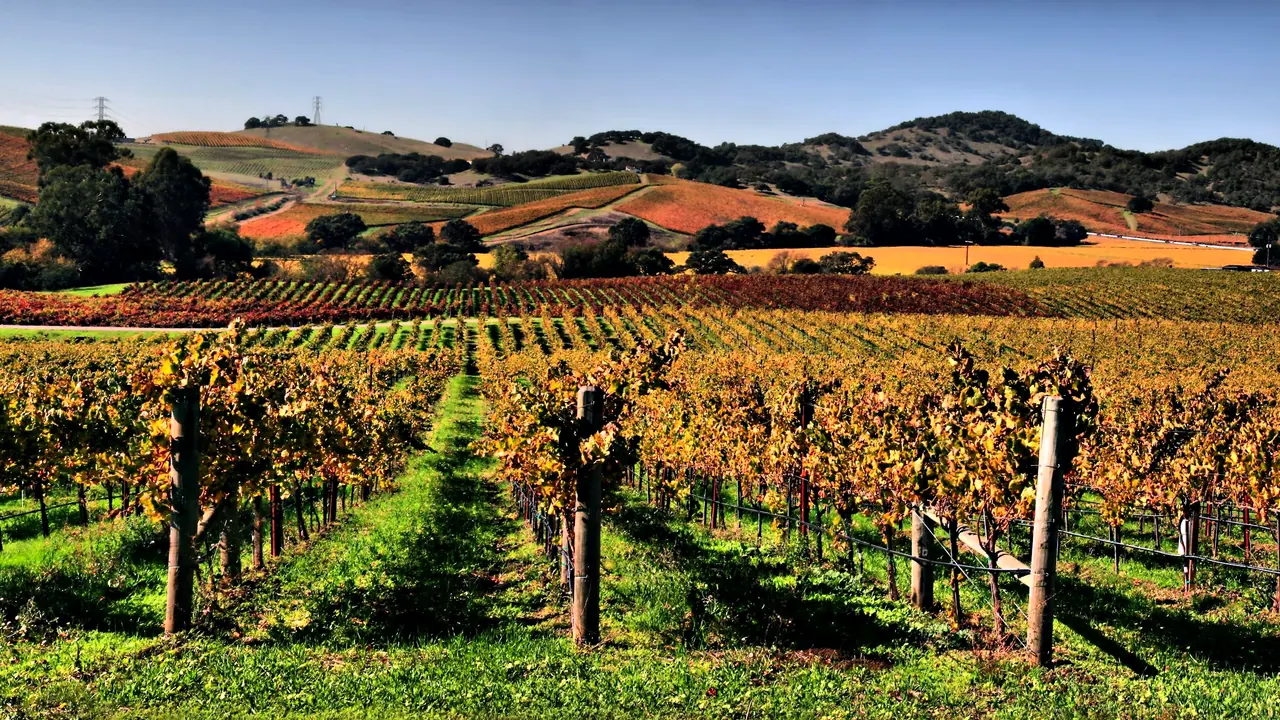
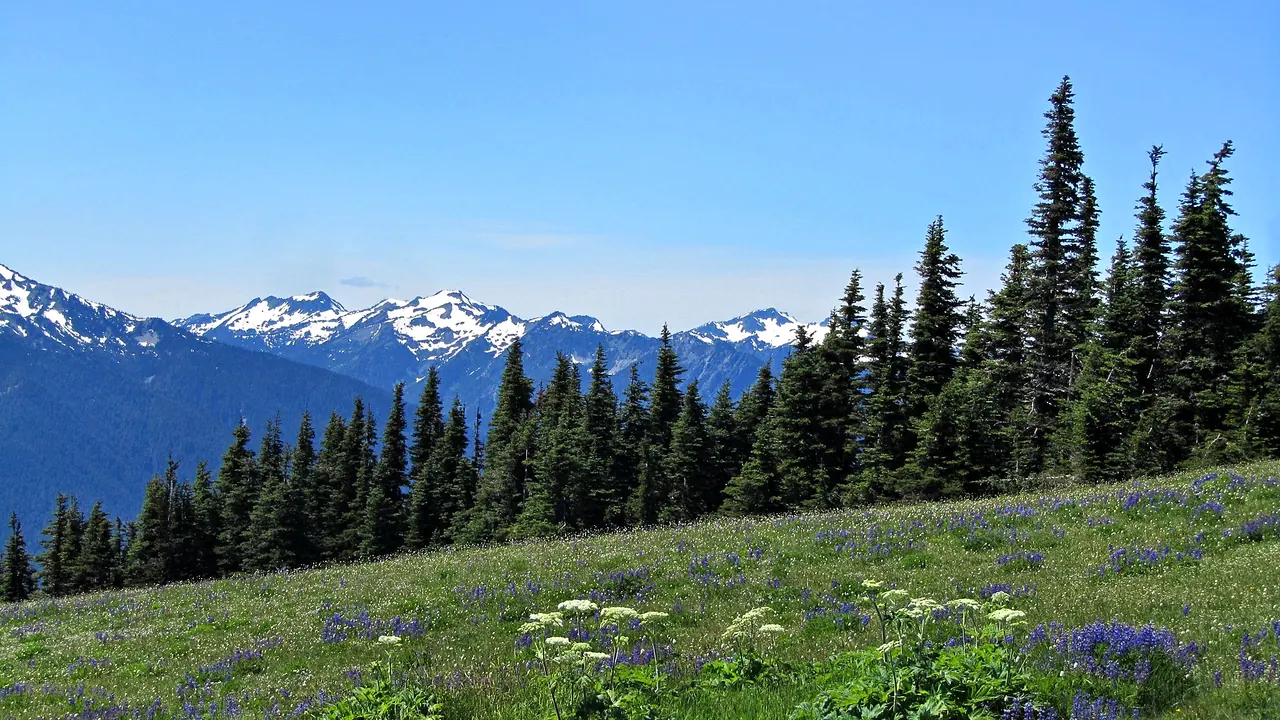
Photos: Napa Valley by Brocken Inaglory, CC BY-SA 3.0, cropped; Olympic National Park by Jeffhollett, CC BY-SA 4.0, cropped.
Napa Valley or Olympic National Park?
Our verdict in twelve categories, each scored against the same fixed benchmark cities, and the climate month by month, so you can choose for your trip.
Choose Napa Valley for
- food and drink
- wellness
- shopping
Napa Valley suits couples and groups of friends who want a trip built around the table and the glass: Cabernet tastings at cellar doors along Highway 29 and the Silverado Trail, a serious dinner in Yountville, then a mud bath and mineral soak in Calistoga the next morning. It is an indulgent, adult trip that costs a lot at every turn, and San Francisco is close enough for a day in the city.
Choose Olympic National Park for
- nature and the outdoors
- families
- prices
If the landscape is the point, choose Olympic National Park. Glaciated peaks, rainforest valleys hung with moss and a roadless coast of sea stacks give hikers, wildlife watchers and outdoor families far more than Napa's farmed vineyard country can. Camping and roadside motels also keep the cost well below the valley's. In return you get simple food, long drives around the edge of the park and rain gear in every bag.
Scoreboard
Twelve categories on one fixed scale from 0 to 100. The shaded stretch is the gap between the two.
Your match
Pick a travel style or drag the sliders, and both match scores follow your weighting.
Wins on food and drink and wellness with your weighting.
Wins on nature and the outdoors and families with your weighting.
What matters to you?
Category by category
What the scores mean for a trip.
Beaches & swimming
Neither is a swimming destination, but they disappoint in different ways. Napa's best swim is Lake Berryessa, a reservoir over the eastern hills that warms well in summer, and otherwise you have the hotel pool. The cold Pacific is a long drive away on the Sonoma coast.
The Olympic coast is a sight in itself, with driftwood, sea stacks and tide pools at Rialto and Ruby Beach, but it is for walking, never for bathing. Swimming means a brisk dip in Lake Crescent or Lake Quinault on a warm afternoon.
Food & drink
Napa Valley is in another league here. Eating and drinking are the whole point of a visit: hundreds of wineries from grand estates to appointment-only mountain cellars, Yountville's rare concentration of fine dining, and oysters and local cheese at Oxbow Public Market. The catch is that meals are occasions and cheap everyday food is scarce.
On the Olympic Peninsula the good eating is in the north-shore towns, Port Townsend above all, with Dungeness crab, Hood Canal oysters and late-summer berries. On the west side it shrinks to diners, lodge dining rooms and picnics.
Culture & sights
Neither will fill a trip with sights, but the Olympic Peninsula has a little more to show. Port Townsend survives almost intact as a Victorian seaport, with Fort Worden on its edge. Out at Neah Bay, the Makah Museum's Ozette artefacts tell of the coast's Native whaling culture, which gives the peninsula a depth Napa lacks.
Napa's heritage is winemaking: stone cellars from the nineteenth century, Greystone in St. Helena and the Bale Grist Mill. These are pleasant background to a day of tasting rather than reasons to come.
Nightlife
Both are early-to-bed places, and nobody should come to either for a night out. In Napa the evening is a long dinner, perhaps followed by a wine bar on First Street, and things are quiet well before midnight. On the peninsula it is a pub in Port Townsend or Port Angeles, or deep in the park a campfire under a clear, dark sky.
Nature & outdoors
Here Olympic National Park is far ahead. It holds three separate worlds: the glaciated Olympic Mountains with wildflower meadows at Hurricane Ridge, temperate rainforest in the Hoh and Quinault valleys, and a wild Pacific coast with multi-day hikes timed to the tides. Elk, black bears and marmots make it real wildlife country.
Napa's outdoors is gentle and farmed: vineyards between oak-covered ranges, balloon flights at dawn, cycling on the Silverado Trail and a climb up Mount St. Helena for the views. It is lovely to look at, but it is not wild.
Day trips
Napa Valley has more good days out, and they are closer. San Francisco is about an hour and a half away, and Sonoma's mission plaza, Healdsburg, Berkeley and Sausalito are all easy, though most outings away from the city mean more vineyards.
The peninsula's best excursion is a different country: the ferry from Port Angeles to Victoria in British Columbia, for which you need a passport. Port Townsend, Whidbey Island and the long drive to Cape Flattery round it out, but Seattle is too far for a comfortable return trip in a day.
Good for families
Olympic National Park is the clear choice for families who like the outdoors. Children can hunt through tide pools, watch elk in the Hoh valley and manage short trails such as the Hall of Mosses, and Port Angeles and Sequim add a marine life centre and a drive-through animal park. Long drives and frequent rain are the price.
Napa is built for adults. Calistoga's small geyser and petrified forest and the warm hot-spring pools fill a day or two, but most families treat the valley as a brief stop.
Getting around
You need a car in both, but the distances are very different. Napa is compact, about 50km from end to end. The real difficulty is that you are drinking, so many visitors hire a driver, join a tour or cycle the flat valley floor.
On the peninsula no road crosses the mountains, so everything means driving the Highway 101 loop and long spur roads. That is why most visitors split their stay between a north-side and a west-side base.
Shopping & style
Napa offers more to buy, mostly wine. Bottles bought at the cellar door that never reach shops elsewhere can be shipped home by the case. St. Helena's Main Street adds polished homeware and clothing boutiques, and there is a large outlet centre at Napa town.
The peninsula's shopping is small and local: antiques, books and galleries on Port Townsend's Victorian main street, lavender in every form in Sequim, and a few Native carvings and prints. Beyond that it is outdoor gear.
Affordability
Olympic National Park is much easier on the wallet. The historic park lodges are dear, but camping is plentiful, motels in Port Angeles, Sequim and Forks are modest, and once you have paid the entry fee the hiking costs nothing.
Napa is a splurge whatever you do. Up-valley inns are priced for special occasions, and tasting fees and famous dinners add up fast. Staying in Napa town and picnicking from the delis only softens the bill.
Live music & performing arts
Napa has a little more on, and more of it is polished. Downtown has the restored opera house and an Art Deco theatre that books touring acts, a big rock and pop festival fills the Expo grounds each late spring, and summer brings jazz, classical and opera at wineries.
The peninsula's music centres on Fort Worden in Port Townsend, whose long-running summer workshops and festivals lean towards jazz, blues and old-time fiddle. Elsewhere in the park an evening's entertainment is a ranger talk.
Wellness & relaxation
For pampering, Napa is clearly ahead. Calistoga has been a hot-springs town since the nineteenth century, with volcanic-ash mud baths and geothermal pools, and resorts across the valley add full spas set among vines and olive trees.
Olympic's version of relaxation is rougher and quieter: a simple soak in the Sol Duc pools at the end of a forest road, open only in the warmer months, then a lakeside lodge where there is often no phone signal and the sound of rain on the trees.
When should you go?
Pick your month. The climate figures are measured averages, not a forecast.
Napa Valley in July
Olympic National Park in July
Daytime high, °C
Rainfall in the month, mm
Where the figures come from
Napa Valley has no rain gauge within 25 km of the centre, so its rainfall comes from a gridded climate dataset read at the destination rather than from a gauge further away.
Napa Valley's sunshine is measured 76 km from the centre, at Sacramento Executive Airport.
Olympic National Park has no rain gauge within 25 km of the centre, so its rainfall comes from a gridded climate dataset read at the destination rather than from a gauge further away.
Olympic National Park's sunshine is measured 87 km from the centre, at Quillayute State Airport.
Temperature and rainfall are climate normals, averaged over the years shown. Napa Valley: 1991-2020 (sunshine 1981-2010) normals, Napa / Middleton (21.9 km from centre). Olympic National Park: 2006-2020 (sunshine 1981-2010, rainfall 1991-2020) normals, Port Angeles / Firwest Mobile Home Park (5.1 km from centre).
Napa Valley has the gentler climate, with a long dry season. From June to September afternoons reach about 26°C and rain almost never falls, so it is warm enough for a pool or a swim in the lake. October stays warm and mostly dry while the vines turn colour. Winter brings the rain, around 140mm a month from December to February, but days stay mild enough for tastings and walks around town, and spring is sunny long before summer arrives.
Olympic National Park is cool all year, and its season is much shorter. In July and August, where most visitors stay, highs of about 21°C and the year's driest, sunniest weather make for comfortable hiking. The west-side rainforest stays wetter than that. From November to January rain reaches about 150mm a month, days are dark and cold, and snow keeps the high trails closed into early summer. The sea peaks at around 12°C, so the coast is for walking in any month, never for swimming.
Which traveller are you?
For an outdoors trip, Olympic National Park wins by a long way. Within one park you can hike from glaciated high country down to the Hoh rainforest and out to a wild coast. Elk, bears and passing whales add wildlife that Napa's vineyards cannot offer.
On a relaxing and wellness trip, Napa Valley is the better choice. Calistoga's volcanic-ash mud baths and geothermal pools, polished resort spas among the vines and long, slow lunches outdoors add up to far more pampering than the single seasonal soak at Sol Duc.
On a family trip with children, Olympic National Park works better. Tide pools, elk spotting and short, flat rainforest trails keep children busy outdoors. Napa is built around tasting rooms and long dinners, and children there are tolerated rather than catered for.
Before you go
| Measure | Napa Valley | Olympic National Park |
|---|---|---|
| Currency | US Dollar (USD) | US Dollar (USD) |
| Sockets | AB120 V, 60 Hz | AB120 V, 60 Hz |
| Driving side | Right | Right |
| Time zone | UTC-8, UTC-7 in summer | UTC-8, UTC-7 in summer |
| Emergency number | 911 | 911 |
| Main airport | San Francisco International Airport (SFO)143 non-stop destinations | Seattle–Tacoma International Airport (SEA)136 non-stop destinations |
| Public holidays this year | 13 days | 11 days |
By the numbers
| Measure | Napa Valley | Olympic National Park |
|---|---|---|
| Swim season, months above 21 °C | - | None |
Where else could you go?
Every comparison below shares a destination with this one, so you can follow Napa Valley or Olympic National Park somewhere new.
- Sonomavs Napa Valley
- Vancouver Islandvs Olympic National Park
- Mount Rainiervs Olympic National Park
- Lake Tahoevs Napa Valley
- Big Survs Napa Valley
- Yosemitevs Napa Valley