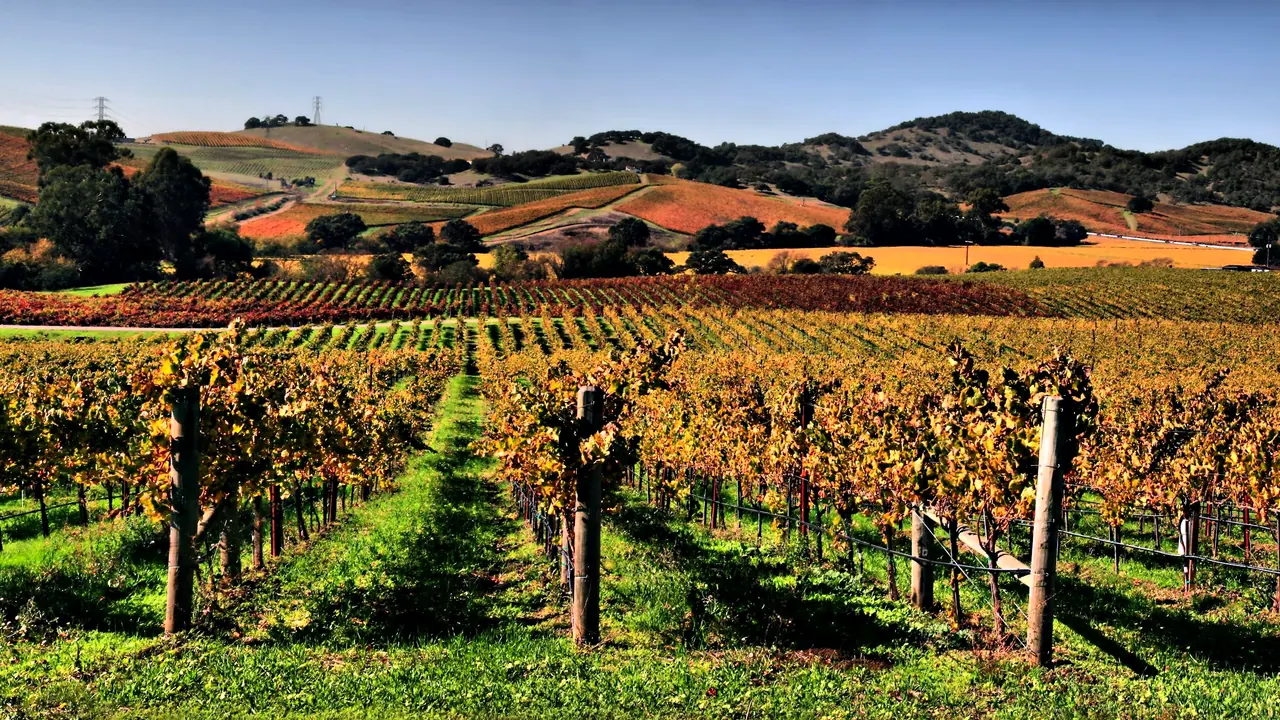
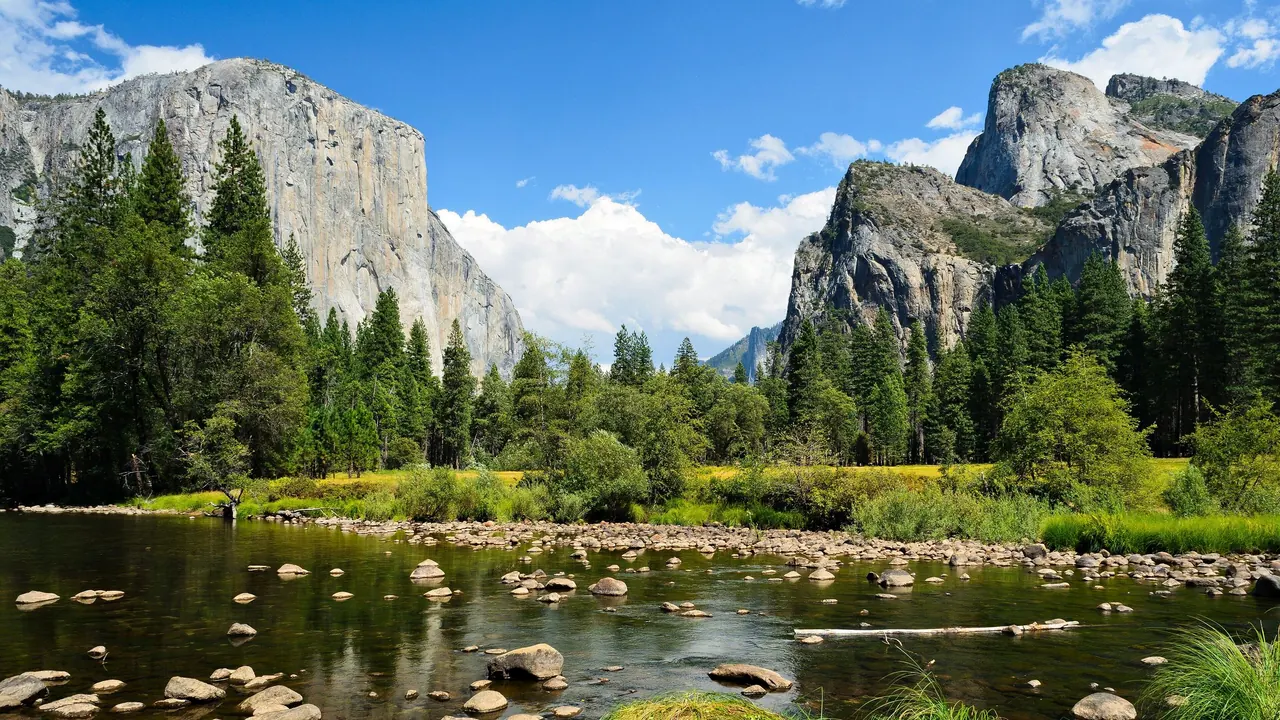
Photos: Napa Valley by Brocken Inaglory, CC BY-SA 3.0, cropped; Yosemite by King of Hearts, CC BY-SA 3.0, cropped.
Napa Valley or Yosemite?
Our verdict in twelve categories, each scored against the same fixed benchmark cities, and the climate month by month, so you can choose for your trip.
Choose Napa Valley for
- food and drink
- wellness
- day trips
Choose Napa Valley if the trip is about the table and the glass. It suits couples and friends who want slow days of Cabernet tastings, long lunches among the vines, a mud bath in Calistoga and a serious dinner in Yountville, with San Francisco close enough for a day out. It is a polished, adult and very expensive place, and it asks almost nothing of you physically.
Choose Yosemite for
- nature and the outdoors
- prices
- families
Yosemite is for people who want the landscape to be the whole point. The granite walls of the Valley, the spring waterfalls, the sequoias of Mariposa Grove and the summer high country around Tuolumne Meadows give days of hiking, climbing-watching and camping that no vineyard can match. In return, meals are simple, evenings end at the campfire, and you will be in boots far more than at a table.
Scoreboard
Twelve categories on one fixed scale from 0 to 100. The shaded stretch is the gap between the two.
Your match
Pick a travel style or drag the sliders, and both match scores follow your weighting.
Wins on food and drink and wellness with your weighting.
Wins on nature and the outdoors and prices with your weighting.
What matters to you?
Category by category
What the scores mean for a trip.
Beaches & swimming
Neither has a coast worth swimming from, but Yosemite gives slightly better chances of a natural swim. In late summer the Merced River slows into calm pools and sandbars on the Valley floor, Tenaya Lake has a sandy shore with very cold water, and Bass Lake, just south of the park, feels like a proper summer lake resort.
Napa's best option is Lake Berryessa over the eastern hills, which warms well in the heat. The Sonoma coast is too cold for bathing, so most visitors swim in the hotel pool. In Yosemite, keep well away from the spring rivers, which are fast and dangerous.
Food & drink
This is the widest gap between the two. In Napa Valley, eating and drinking are the trip: Cabernet from the grand estates on Highway 29 to small hillside cellars on Howell Mountain, a cluster of top restaurants in Yountville, farm bistros in St. Helena and Calistoga, and oysters and cheese at Oxbow Public Market.
In Yosemite, food is fuel. You eat at lodge cafeterias, pizza counters and gateway-town diners, and the historic dining room in the Valley is the one meal that feels like an occasion. A campsite supper after a long hike is often the best of it.
Culture & sights
Neither is a destination for culture, but Napa has a little more built heritage to look at. Its nineteenth-century stone wine cellars, the old Greystone cellars, the Bale Grist Mill and the Victorian buildings along the river in downtown Napa make a pleasant background to a day of tasting.
Yosemite's man-made sights are few and rustic: the grand timber-and-stone hotel in the Valley, the Yosemite Museum's Miwok basketry, Ansel Adams's photographs and the pioneer cabins at Wawona. Each takes an hour or two, and the real monuments are the cliffs.
Nightlife
Both are early-to-bed places, though Napa at least has somewhere to go. The wine bars, taprooms and cocktail bars on downtown Napa's riverfront and First Street keep going into the evening, even if they are quiet well before midnight. In Yosemite, after dark means a drink in a lodge lounge, a ranger talk or a sky full of stars over the high country.
Nature & outdoors
Yosemite is one of the great landscapes of the world, and here Napa cannot compete. Sheer granite walls rise about 1,000m above the Valley meadows, with El Capitan, Half Dome and waterfalls that are at their strongest in spring. Add the giant sequoias of Mariposa Grove, the alpine lakes and domes of Tuolumne Meadows, and black bears and mule deer.
Napa's outdoors are gentle and farmed: vineyards between oak-covered ranges, a dawn balloon flight, cycling on the Silverado Trail, redwood groves in Bothe-Napa Valley State Park and the climb up Mount St. Helena. It is lovely to ride through, but it is not wild.
Day trips
Napa is far better placed for days out. San Francisco is about an hour and a half away, partly by ferry from Vallejo if you like, and Sonoma's mission plaza, Healdsburg, Berkeley and Sausalito are all close, although most of the other outings lead to more vineyards.
From Yosemite you mostly stay inside the park. The gold-rush streets of Columbia and Sonora are to the west, and in summer the drive over Tioga Pass reaches the ghost town of Bodie and Mammoth Lakes. That eastern side closes with the winter snow.
Good for families
Yosemite is the better choice for children, provided they like being outdoors. They have the flat Valley floor to cycle, short walks to Lower Yosemite Fall, shallow river edges in late summer, Junior Ranger badges to earn and the giant sequoias to stand under. Cliff edges, spring rivers and bears call for real supervision.
Napa is set up for adults tasting wine and lingering over dinner. A few days can work with the small geyser and the petrified forest at Calistoga, the warm hot-spring pools, and the wildlife and amusement park in Vallejo.
Getting around
Both are car country, but in different ways. Napa is compact, about 50km from end to end, with easy roads. Because the day is spent drinking wine, though, many visitors hire a driver, join a tour or cycle the flat valley floor, and only the small downtowns are walkable.
Yosemite Valley itself is the easier place without a car, with free shuttles, bike paths and a regional bus from Merced's train station. Glacier Point, Mariposa Grove and Tuolumne Meadows, however, are each a long winding drive away, and Tioga Road is closed for much of the year.
Shopping & style
Napa is the only one of the two where shopping adds anything. You can buy wine at the cellar door that rarely reaches shops elsewhere, browse the homeware and kitchen boutiques on St. Helena's Main Street, pick up olive oil and preserves at the public market, and visit a large outlet centre. Yosemite offers park stores with maps and souvenirs, a gallery of landscape prints and a few outfitters in the gateway towns.
Affordability
Yosemite is the cheaper of the two, although neither is a bargain. In Napa nearly everything you come for costs money: a night in one of the up-valley inns, each cellar you visit through the afternoon, and the dinners that are the point of the trip. A base in Napa town and a deli picnic at midday help a little, but there is no cheap way to do a wine-country stay.
Yosemite's lodges and summer motels are expensive too, and the food in the park is poor value, yet its main pleasures are free. Once you are through the gate, the trails, the waterfalls and the Valley shuttles cost nothing, and a campsite costs very little if you manage to get one. Coming in winter or sleeping down in the foothills brings the cost down further.
Live music & performing arts
Napa has a real if seasonal calendar: a large rock and pop festival at the Expo grounds in late spring, summer classical, jazz and opera at wineries and in Yountville, and touring acts all year at the restored opera house and the Art Deco theatre downtown. Yosemite's evenings bring ranger campfire talks and the odd one-person historical show, with a small repertory theatre in Sonora.
Wellness & relaxation
For pampering, Napa is clearly ahead. Calistoga has been a hot-springs town since the nineteenth century, offering volcanic-ash mud baths and geothermal pools, and resort spas among the vines around Yountville and the Silverado Trail add to that. The unhurried pace of long lunches and quiet roads does the rest.
Yosemite restores you the way wild country does, with few treatments on offer beyond a couple of resort spas near the southern entrance and open-air hot springs near Bridgeport and Mammoth Lakes in summer. The Valley in July is crowded, so go up to the high country or come in winter for real quiet.
When should you go?
Pick your month. The climate figures are measured averages, not a forecast.
Napa Valley in July
Yosemite in July
Daytime high, °C
Rainfall in the month, mm
Where the figures come from
Napa Valley has no rain gauge within 25 km of the centre, so its rainfall comes from a gridded climate dataset read at the destination rather than from a gauge further away.
Napa Valley's sunshine is measured 76 km from the centre, at Sacramento Executive Airport.
Yosemite has no weather station within reach, so its figures come from a gridded climate model rather than a measured record, and read a broad area rather than one spot.
Temperature and rainfall are climate normals, averaged over the years shown. Napa Valley: 1991-2020 (sunshine 1981-2010) normals, Napa / Middleton (21.9 km from centre). Yosemite: 1991-2020 normals, TerraClimate 4 km grid at the town, no weather station within 90 km.
Napa Valley is the milder of the two through the year. From May to October afternoons sit in the low to mid twenties, reaching about 26°C in high summer, the valley is almost completely dry and the sun shines for long hours, which makes this the easy season for tasting, cycling and eating outdoors. Autumn brings the harvest colours in mild, dry weather. Winter is the wet season, with about 140mm of rain in each month from December to February, but days stay cool rather than cold, and late winter brings the mustard flowers.
Yosemite, measured in the Valley, has much sharper seasons. Winter highs sit around 8°C, with heavy rain and snow, quiet trails and gentle skiing at Badger Pass. Spring is cool, but it is when the waterfalls are at their fullest. July and August are the warmest and driest months, at about 28°C, a little hotter than Napa, and that is the window for the high country, the river pools and Tioga Road. By November it is cold and wet again.
Which traveller are you?
For a food and nightlife trip, Napa Valley is the clear pick: estate tastings, Yountville's fine dining, Oxbow Public Market and wine bars along downtown Napa's river. Its evenings are mostly over by midnight. Yosemite has lodge cafeterias, campfire suppers and almost nothing after dark.
On an outdoors trip, Napa gives you balloon flights, cycling along the valley and the climb up Mount St. Helena. Yosemite is in another league, with the Mist Trail, Glacier Point, Half Dome by cable, climbers on El Capitan and the Tuolumne high country.
On a family trip with children, Napa centres on tasting rooms and long adult dinners, and few places there are really set up for the young. Yosemite suits families who like camping and walking, with the flat Valley floor, bike paths, Junior Ranger badges and the giant sequoias.
Before you go
| Measure | Napa Valley | Yosemite |
|---|---|---|
| Currency | US Dollar (USD) | US Dollar (USD) |
| Sockets | AB120 V, 60 Hz | AB120 V, 60 Hz |
| Driving side | Right | Right |
| Time zone | UTC-8, UTC-7 in summer | UTC-8, UTC-7 in summer |
| Emergency number | 911 | 911 |
| Main airport | San Francisco International Airport (SFO)143 non-stop destinations | Fresno Yosemite International Airport (FAT)15 non-stop destinations |
| Public holidays this year | 13 days | 13 days |
Where else could you go?
Every comparison below shares a destination with this one, so you can follow Napa Valley or Yosemite somewhere new.
- Sonomavs Napa Valley
- Kings Canyonvs Yosemite
- Lake Tahoevs Yosemite
- Sequoiavs Yosemite
- Lake Tahoevs Napa Valley
- Big Survs Napa Valley