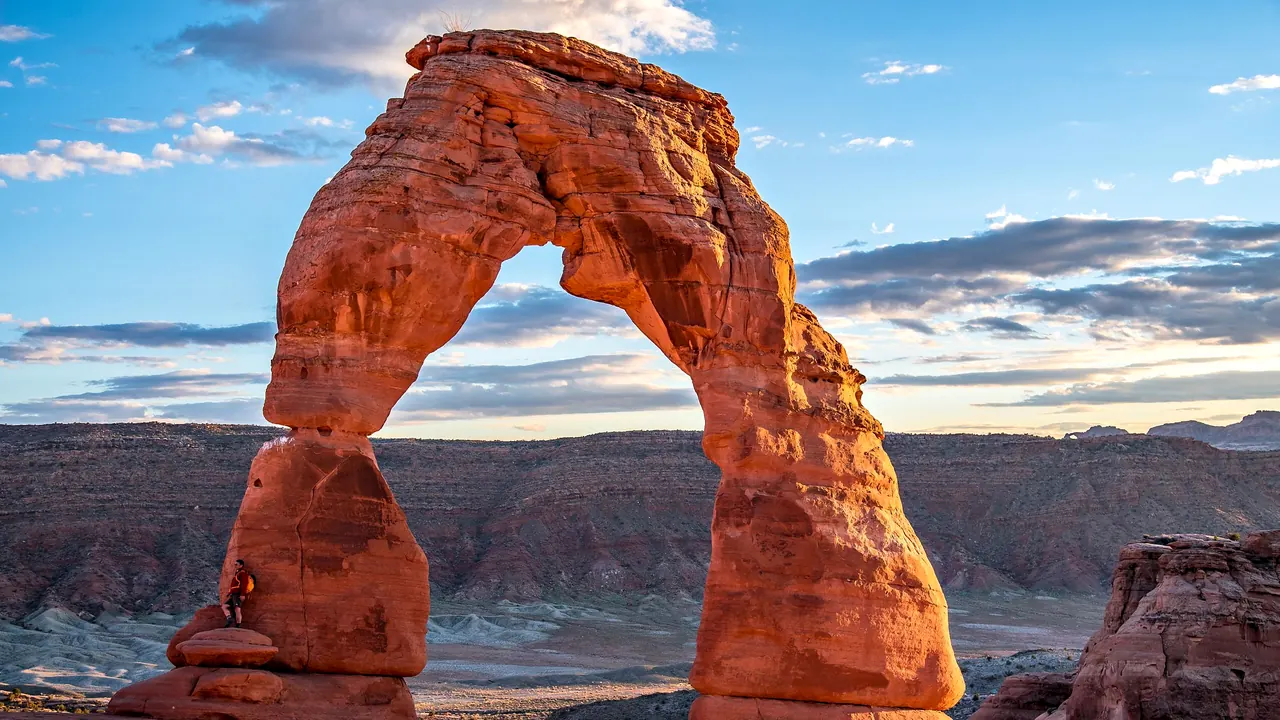
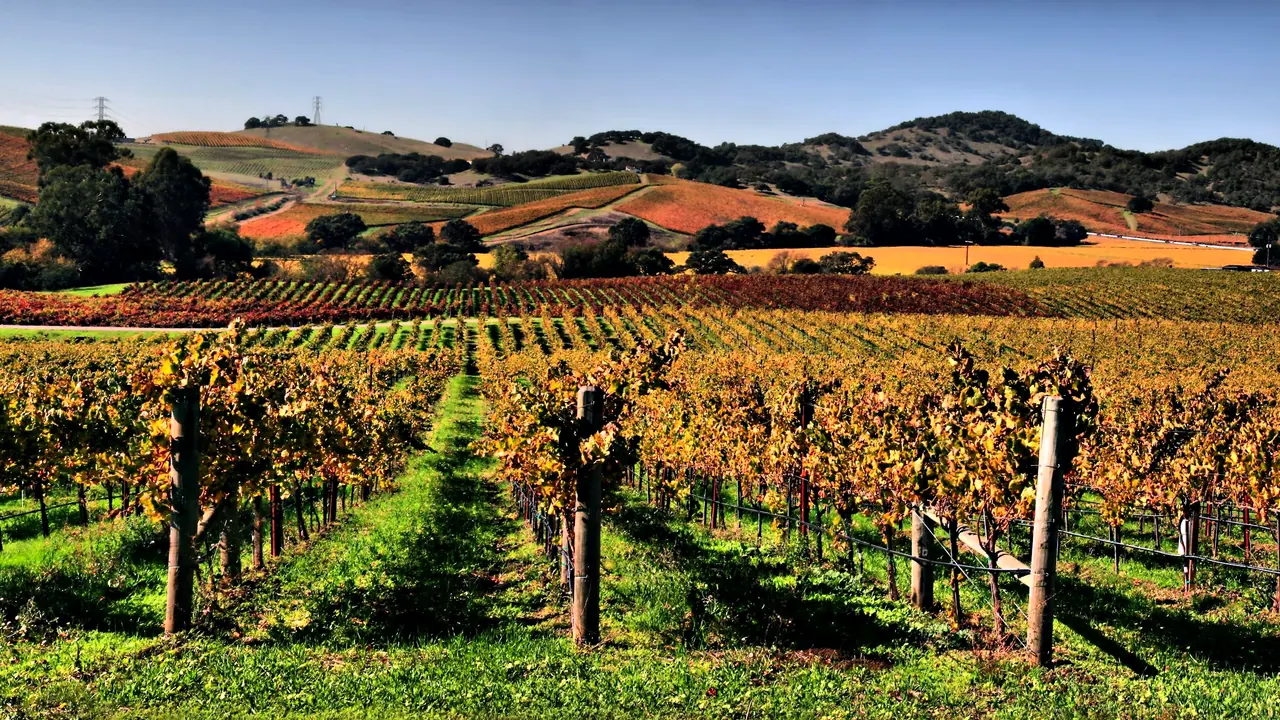
Photos: Arches by Jan Tang, Pexels License; Napa Valley by Brocken Inaglory, CC BY-SA 3.0, cropped.
Arches or Napa Valley?
Our verdict in twelve categories, each scored against the same fixed benchmark cities, and the climate month by month, so you can choose for your trip.
Choose Arches for
- nature and the outdoors
- prices
- families
Arches suits travellers who want to spend their days moving through wild country: walking out to Delicate Arch at dawn, riding slickrock, rafting the Colorado and looking down into Canyonlands from Island in the Sky. Moab is a plain base with filling food and early nights, and it costs less than Napa, especially if you camp. It is best for active couples, groups of friends and families with older children who will give up comfort and evenings out for some of the most striking landscape in the country.
Choose Napa Valley for
- day trips
- wellness
- food and drink
Napa Valley is for a slower, more indulgent trip built around food and wine. Tasting rooms on the valley floor and up the mountains, Yountville's fine dining, Calistoga's mud baths and mineral pools, and an easy day out to San Francisco make it a natural pick for a celebration or a long weekend of eating well. The scenery is gentle rather than dramatic and the bill is high, so come to be looked after, not to test yourself.
Scoreboard
Twelve categories on one fixed scale from 0 to 100. The shaded stretch is the gap between the two.
Your match
Pick a travel style or drag the sliders, and both match scores follow your weighting.
Wins on nature and the outdoors and prices with your weighting.
Wins on day trips and wellness with your weighting.
What matters to you?
Category by category
What the scores mean for a trip.
Beaches & swimming
Neither is a place to swim, but Napa Valley at least has Lake Berryessa over the eastern hills. This large reservoir warms up in summer and has coves for swimming or paddling. The cold Sonoma coast is a scenic drive, not somewhere to bathe.
Around Moab, the Colorado is for rafting, not swimming. Beyond a small reservoir south of town and the odd creek pool after a hike, the motel pool is the answer on a hot afternoon.
Food & drink
The two could hardly be further apart here. Napa Valley is built around eating and drinking: Cabernet from cellars on Highway 29 and the Silverado Trail, small appointment-only wineries on the mountains, Yountville's cluster of fine dining, and oysters and local cheese at Oxbow Public Market. The catch is that cheap, everyday meals are hard to find.
Moab feeds hungry hikers rather than gourmets, with brewpubs, burgers, tacos and green chile, and Utah's liquor rules make even a glass of wine with dinner more complicated. Many visitors cook at camp and treat a meal out as a reward.
Culture & sights
The heritage around Moab is carved and painted, not built. Petroglyph and pictograph panels line the rock at Courthouse Wash, beside Wolfe Ranch and in long galleries along Potash Road. Add a pioneer cabin, dinosaur trackways and a small town museum, and you have a few hours to fill between hikes.
Napa's past is the story of its wine families, told in stone. There are nineteenth-century cellars, the old Greystone building in St. Helena, estates ranging from mission style to a mock castle, Victorian shopfronts in downtown Napa and the restored Bale Grist Mill. It all makes a pleasant backdrop to a day of tasting, but anyone after serious museums heads for the city.
Nightlife
Both are quiet well before midnight. Moab's few brewpubs are where climbers and bikers trade stories over a beer, and the wine bars and cocktail bars along downtown Napa's riverfront are for a last glass after dinner. The night Arches is remembered for happens outside, on a walk among the fins under an exceptionally dark sky.
Nature & outdoors
Arches is one of the world's great desert landscapes, with more than two thousand stone arches among red fins and balanced rocks. The canyons of Canyonlands and the snowy La Sal Mountains are close by, and this is country to hike, bike, raft, climb and canyoneer in.
Napa's countryside is gentle and farmed: vineyards between oak-covered ranges, best seen from a balloon at dawn or by bike on the Silverado Trail. Mount St. Helena and the redwoods at Bothe-Napa Valley State Park make good walks, but nothing here comes close to the drama of the desert.
Day trips
Napa Valley is far better placed for days out. San Francisco is about an hour and a half away by road, or partly by ferry. Sonoma's mission and plaza, Healdsburg, Berkeley and Sausalito are all easy to reach, even if most outings lean towards wine.
From Moab, almost everything within reach is wilderness. Green River and Bluff make modest outings, and Mesa Verde and Monument Valley are far enough away to need a night.
Good for families
Arches has the edge for children old enough to walk a few kilometres and enjoy a scramble. The sandy slot to Sand Dune Arch, the Junior Ranger booklet, dinosaur tracks and calm float trips on the Colorado add up to a real adventure. Unfenced drops and summer heat make it hard going with toddlers, though.
Napa is designed for adults, and most days centre on tasting rooms and long dinners. Calistoga's geyser and petrified forest, warm resort pools and the wildlife park in Vallejo are enough for a short stop, but not for a whole trip.
Getting around
You need a car for both, and the driving is easy in each, so the difference lies in what slows you down. At Arches it is crowds: in spring and autumn the park road and small trailhead car parks fill by mid-morning, so an early start pays off.
In Napa it is the wine. A day of tastings and driving do not mix, so many visitors hire a driver, join a tour or cycle the flat valley floor. Highway 29 slows down at weekends, and the Silverado Trail is the calmer route.
Shopping & style
Napa Valley has more worth buying, and most of it is wine: bottles bought at the cellar door that rarely reach shops elsewhere, often shipped home by the case. St. Helena's boutiques, olive oil and cheese from the public market, and an outlet centre round out the choice.
Moab's Main Street is practical rather than tempting, with bike and outdoor gear, geodes and fossils, landscape photography and some Native American jewellery and pottery.
Affordability
Arches is much the cheaper trip, and its costs fall in a few predictable places. In the busy spring and autumn seasons, Moab's motels and condos charge far more than their plain comforts suggest, meals cost what they would in a big city, and you also need a car. The largest spend is optional: guided rafting, canyoneering and jeep tours.
In Napa the expense is the visit itself. Up-valley room rates climb at weekends and during harvest, and a day of tasting fees followed by dinner at a well-known table soon adds up. Staying in Napa town or further south brings room rates down a little, but the valley never becomes cheap.
Live music & performing arts
Napa Valley has the fuller calendar, though it comes in seasons. There is a big rock and pop festival every late spring, summer concerts at wineries and in Yountville, and touring bands and comedians at downtown Napa's restored opera house and Art Deco theatre.
Moab's one real event is its chamber music festival at the end of summer, remembered for concerts in a sandstone grotto reached by boat. The rest of the year, live music means a local band in a brewpub.
Wellness & relaxation
For rest and pampering, Napa Valley is the clear winner. Calistoga grew up around its hot springs, and its mud baths, mineral soaks and geothermal pools sit alongside resort spas set among vines and olive trees.
Arches has no hot springs and only a few massage studios, and most days are early, hot and active. What it offers instead is stillness: a quiet campsite, red cliffs at dusk and a sky full of stars.
When should you go?
Pick your month. The climate figures are measured averages, not a forecast.
Arches in July
Napa Valley in July
Daytime high, °C
Rainfall in the month, mm
Where the figures come from
Arches has no rain gauge within 25 km of the centre, so its rainfall comes from a gridded climate dataset read at the destination rather than from a gauge further away.
Napa Valley has no rain gauge within 25 km of the centre, so its rainfall comes from a gridded climate dataset read at the destination rather than from a gauge further away.
Napa Valley's sunshine is measured 76 km from the centre, at Sacramento Executive Airport.
Temperature and rainfall are climate normals, averaged over the years shown. Arches: 2006-2020 (rainfall 1991-2020) normals, Moab / Crescent Junction (19.4 km from centre). Napa Valley: 1991-2020 (sunshine 1981-2010) normals, Napa / Middleton (21.9 km from centre).
The weather around Moab changes sharply through the year. Spring and autumn are the seasons to come, with April and October reaching about 20°C, which is ideal for long walks among the fins. By July highs touch 35°C, so hiking moves into the first hours of the day. Midwinter days barely rise above freezing, and they are quiet and sometimes bring snow to the arches. Rain is scarce in every month, so it is heat and cold, not wet weather, that shape a visit.
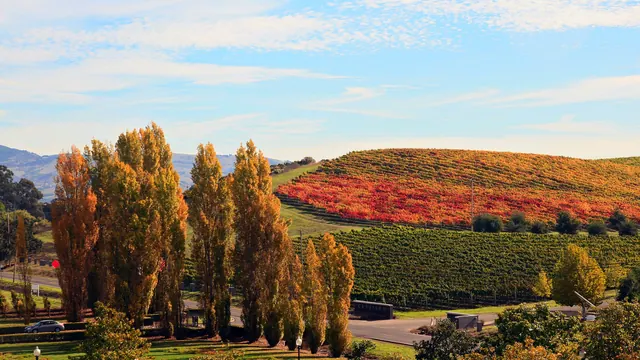
On the floor of Napa Valley the year follows a different pattern and is milder. Winter is the wet season, with around 140mm in January, and the mustard flowers come out between the vines then. Summer is dry, long and very sunny, with highs holding near 26°C from June to September. Late spring to October suits tasting and cycling, and autumn, when the vines turn gold and red, is the pick. Neither place has a beach season, and Napa's summer at Lake Berryessa is the only real chance of a warm swim outdoors.
Which traveller are you?
On an outdoors trip, Arches is in a different league. The park's arches and fins, the canyon views from Dead Horse Point, slickrock biking, rafting on the Colorado and tower climbing can fill a week. Napa offers balloon flights, gentle cycling and a climb up Mount St. Helena.
For a relaxing and wellness trip, Napa Valley wins easily. Calistoga's volcanic-ash mud baths and geothermal pools, resort spas among the vines and long lunches outdoors are made for rest. Arches offers silence and stars, but its days mean early starts and hot trails.
On a tight budget, Arches is the easier of two expensive places. Hiking is free, park entry is modest and campgrounds on public land along the river keep nights cheap. In Napa, the up-valley inns, tasting fees and dinners make even a careful stay a splurge.
Before you go
| Measure | Arches | Napa Valley |
|---|---|---|
| Currency | US Dollar (USD) | US Dollar (USD) |
| Sockets | AB120 V, 60 Hz | AB120 V, 60 Hz |
| Driving side | Right | Right |
| Time zone | UTC-7, UTC-6 in summer | UTC-8, UTC-7 in summer |
| Emergency number | 911 | 911 |
| Main airport | Canyonlands Regional Airport (CNY)2 non-stop destinations | San Francisco International Airport (SFO)143 non-stop destinations |
| Public holidays this year | 12 days | 13 days |
Where else could you go?
Every comparison below shares a destination with this one, so you can follow Arches or Napa Valley somewhere new.
- Sonomavs Napa Valley
- Canyonlandsvs Arches
- Lake Tahoevs Napa Valley
- Big Survs Napa Valley
- Bryce Canyonvs Arches
- Yosemitevs Napa Valley