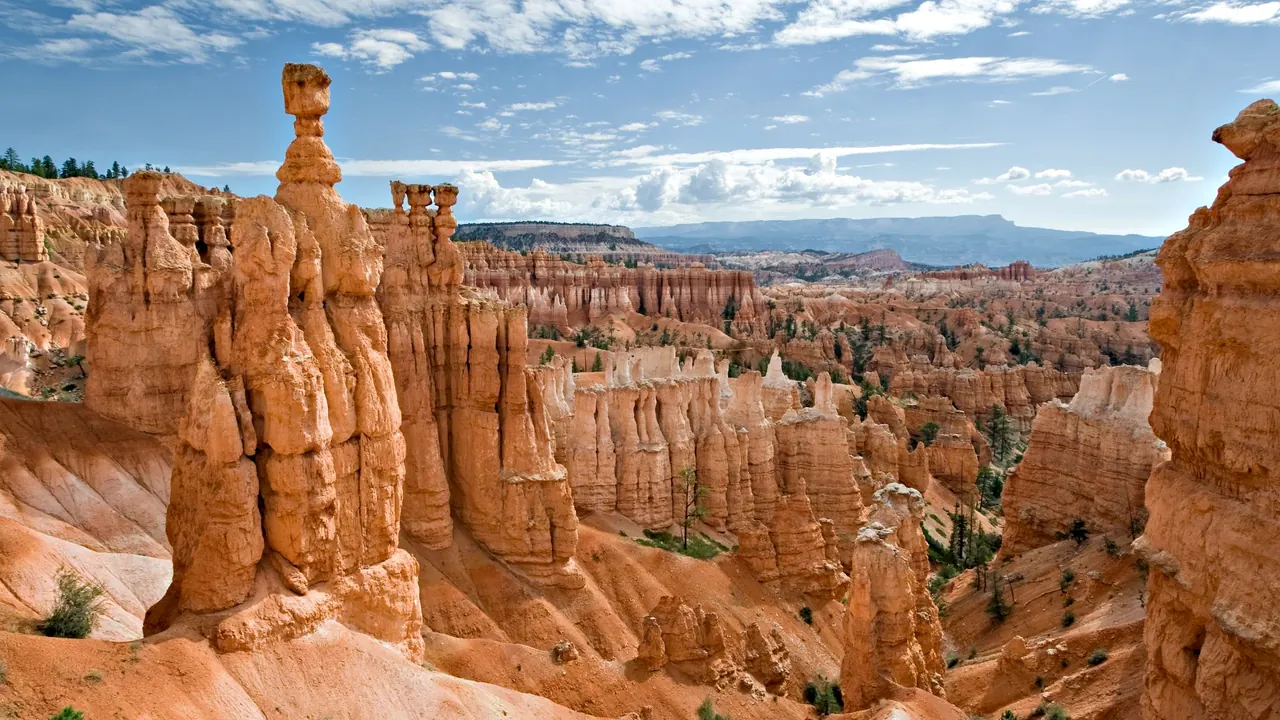
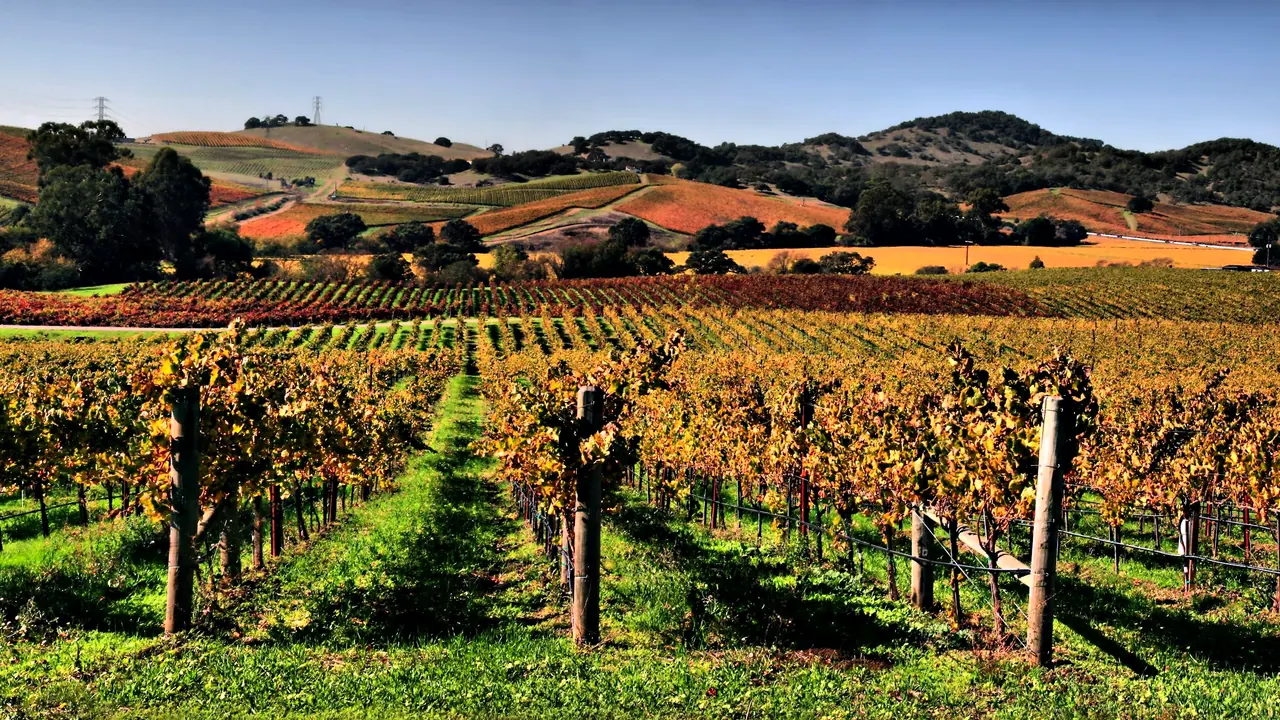
Photos: Bryce Canyon by Luca Galuzzi (Lucag), CC BY-SA 2.5, cropped; Napa Valley by Brocken Inaglory, CC BY-SA 3.0, cropped.
Bryce Canyon or Napa Valley?
Our verdict in twelve categories, each scored against the same fixed benchmark cities, and the climate month by month, so you can choose for your trip.
Choose Bryce Canyon for
- nature and the outdoors
- prices
- families
Bryce Canyon is for travellers who want the landscape to be the whole point. The hoodoo amphitheatre, the trails down among the spires, the snow-frosted winter plateau and some of the darkest skies in the country reward early starts and tired legs. Families with older children who like walking will find it easier going, and cheaper, than wine country. Expect simple food, early nights and long drives.
Choose Napa Valley for
- food and drink
- wellness
- day trips
Choose Napa Valley for a slower, more indulgent trip built around the table and the glass. Cellar doors, Yountville's fine dining, Calistoga's mud baths and mineral pools, and an easy day in San Francisco make it a natural fit for couples and food lovers. The trade-off is cost: a stay here is a splurge, the countryside is gentle rather than dramatic, and children are an afterthought.
Scoreboard
Twelve categories on one fixed scale from 0 to 100. The shaded stretch is the gap between the two.
Your match
Pick a travel style or drag the sliders, and both match scores follow your weighting.
Wins on nature and the outdoors and prices with your weighting.
Wins on food and drink and wellness with your weighting.
What matters to you?
Category by category
What the scores mean for a trip.
Beaches & swimming
Neither destination is a place to swim. Around Bryce Canyon, Tropic Reservoir and Panguitch Lake are cold mountain water used for fishing and paddling, so a motel pool is the only real option. Napa Valley at least has Lake Berryessa over the eastern hills, which warms enough in summer for a proper swim from its coves, while the Pacific is a scenic drive away but far too cold for bathing.
Food & drink
This is the widest gap between the two. Bryce Canyon feeds hikers rather than diners, with ranch breakfasts, burgers, Navajo tacos and pie in the gateway towns, and a lodge dining room with more atmosphere than ambition. A few serious kitchens in Escalante and Boulder are worth the drive, but choice shrinks after dark and Utah's rules limit alcohol.
In Napa Valley, eating and drinking are the reason to come. Cabernet from the grand estates on Highway 29 and the small mountain cellars, Yountville's run of fine dining and the farm-driven bistros of St. Helena and Calistoga turn every meal into an event. The one gap is cheap everyday food.
Culture & sights
Neither is a culture trip, but Napa Valley has more to look at. Its heritage is wine history in stone: nineteenth-century cellars, the old Greystone building in St. Helena, the Victorian frontages of downtown Napa and the 1840s Bale Grist Mill.
Bryce Canyon's list is shorter still. It runs to the 1920s lodge, the visitor centre's account of the geology and the Paiute stories, Panguitch's red-brick pioneer houses and the excavated Puebloan village at Boulder, and an afternoon covers it.
Nightlife
Evenings end early in both, but Napa Valley has a little more going on. Downtown Napa's riverfront and First Street have wine bars, taprooms and cocktail bars, though they are quiet well before midnight. Bryce Canyon's small, largely Mormon towns have almost no bars, so the evening is spent watching the night sky before an early start for sunrise.
Nature & outdoors
Here Bryce Canyon is in another league. The amphitheatre's orange and pink hoodoos are among the strangest sights in the American West. The Navajo Loop and Queen's Garden trails lead down among them, Fairyland and Peekaboo are quieter, and the slot canyons and slickrock of Grand Staircase-Escalante lie beyond. Winter brings snowshoeing, and ranger astronomy fills the nights.
Napa Valley's outdoors is pastoral: vineyards between oak-covered ranges, a dawn balloon flight, cycling on the Silverado Trail, a climb up Mount St. Helena or a walk in the redwoods of Bothe-Napa Valley State Park. It is lovely, especially when the vines colour in autumn, but it is not wild.
Day trips
Napa Valley is far better placed for days away. San Francisco is about an hour and a half off, partly by ferry from Vallejo if you prefer. Sonoma's plaza and mission, Healdsburg, Berkeley and Sausalito are all easy too, though most outings outside the city lead to more wine country.
From Bryce Canyon, the outings worth making are mostly into more landscape. Panguitch's pioneer main street, Kanab's Western film past and the college town of Cedar City are pleasant stops, but none fills a day on its own.
Good for families
Bryce Canyon works better with children, as long as they are old enough to walk. The flat paved rim between Sunrise and Sunset Points, the Junior Ranger programme, the Queen's Garden descent, horse rides and stargazing fill a few days. The thin air and unfenced drops make it hard going with toddlers.
Napa Valley is built around adult pleasures, and families have to piece their days together from Calistoga's small geyser and petrified forest, the warm hot-springs pools, the shaded creekside trails and the wildlife and amusement park in Vallejo.
Getting around
You need a car in both, and Bryce Canyon is a little easier once you arrive. The park road runs along the plateau with a pull-out at every viewpoint, a free summer shuttle links the gateway town with the busiest overlooks, and the Rim Trail lets you walk between them. The effort lies in the long drive from distant airports and on to Zion or along Highway 12.
Napa Valley is compact and much nearer to big airports, but its buses are too sparse to rely on, only three small downtowns are walkable and Highway 29 clogs at weekends. Because the day is spent tasting wine, many visitors hire a driver or join a tour.
Shopping & style
Napa Valley has the better shopping, and most of it is wine: bottles bought at the cellar door that rarely reach shops elsewhere, often shipped home by the case. St. Helena's boutiques, Yountville's galleries, the public market's olive oil and cheese, and an outlet centre add to it.
Bryce Canyon offers a general store with camping kit and Western wear, park books and maps, and roadside rock shops selling fossils and geodes, which make odd but fitting souvenirs.
Affordability
What keeps Bryce Canyon within reach is that the landscape costs nothing more once you are through the park gate, because trails, viewpoints, the summer shuttle and ranger programmes are all included. Rooms are the hard part, scarce and firmly priced in summer, but camping in the park or the national forest, or a room in one of Panguitch's older motels, brings them down. Winter is far cheaper, though much of the area closes or scales back then.
Napa Valley is a splurge however you plan it. Up-valley inns, tasting fees across a day and dinners at the famous restaurants mount up quickly. Staying in Napa town or packing a deli picnic only softens the bill.
Live music & performing arts
Napa Valley has a real calendar, though much of it is seasonal. A large rock and pop festival comes each late spring, summer brings classical, jazz and opera concerts at wineries and in Yountville, and downtown Napa's restored opera house and Art Deco theatre run all year.
Around Bryce Canyon, the offer is a summer cowboy music show with dinner. The one serious draw is the Utah Shakespeare Festival in Cedar City, about an hour and a half away and worth one evening on a summer or autumn trip.
Wellness & relaxation
Napa Valley is made for a restful stay. Calistoga has offered volcanic-ash mud baths, mineral soaks and geothermal pools since the nineteenth century, and resort spas among the vines near Yountville and along the Silverado Trail add polish.
Bryce Canyon's calm is of a different kind: empty roads, cool mountain air and an evening on a lodge porch under dark skies. Days spent climbing in and out of the canyon at altitude are tiring rather than restoring, though, and beyond a hotel hot tub there is little pampering.
When should you go?
Pick your month. The climate figures are measured averages, not a forecast.
Bryce Canyon in July
Napa Valley in July
Daytime high, °C
Rainfall in the month, mm
Where the figures come from
Bryce Canyon has no rain gauge within 25 km of the centre, so its rainfall comes from a gridded climate dataset read at the destination rather than from a gauge further away.
Napa Valley has no rain gauge within 25 km of the centre, so its rainfall comes from a gridded climate dataset read at the destination rather than from a gauge further away.
Napa Valley's sunshine is measured 76 km from the centre, at Sacramento Executive Airport.
Temperature and rainfall are climate normals, averaged over the years shown. Bryce Canyon: 2004-2020 (rainfall 1991-2020) normals, Bryce Canyon / Bryce Canyon City (3.9 km from centre). Napa Valley: 1991-2020 (sunshine 1981-2010) normals, Napa / Middleton (21.9 km from centre).
Bryce Canyon sits high on a plateau, and its weather swings hard through the year. Winter days hover around freezing, with highs of about 1°C in December and January, and snow on the hoodoos. That suits snowshoeing better than long hikes. Late May to early October is the walking season, with summer highs near 27°C that feel comfortable at altitude. Late summer is the wettest stretch, with about 42mm in August, and autumn turns crisp.
Napa Valley gets its rain at the opposite time of year. Winter is the wet season, with around 141mm in January, while June to September is almost completely dry, with long sunny days and steady highs around 26°C. Spring and autumn stay mild. Its winters are far gentler than Bryce's, so the valley works in almost any month, while Bryce is a summer and autumn trip unless you come for the snow. Neither has a sea to swim in.
Which traveller are you?
On an outdoors trip, Bryce Canyon is the clear choice. Trails drop among thousands of hoodoos, and Red Canyon, Kodachrome Basin and the slot canyons of Grand Staircase-Escalante fill more days. Napa's balloon flights and vineyard rides are gentle by comparison.
For a food and nightlife trip, Bryce Canyon offers diner fare and early nights, so Napa Valley wins easily. Cellar-door tastings, Yountville's fine dining and the market hall in downtown Napa fill the days, and riverside wine bars make a quiet end to the evening.
On a tight budget, Bryce Canyon goes further. The main sight is the landscape itself, so a day on the trails costs little beyond park entry and a packed lunch. In Napa Valley, every tasting and every dinner adds to the bill.
Before you go
| Measure | Bryce Canyon | Napa Valley |
|---|---|---|
| Currency | US Dollar (USD) | US Dollar (USD) |
| Sockets | AB120 V, 60 Hz | AB120 V, 60 Hz |
| Driving side | Right | Right |
| Time zone | UTC-7, UTC-6 in summer | UTC-8, UTC-7 in summer |
| Emergency number | 911 | 911 |
| Main airport | Harry Reid International Airport (LAS)160 non-stop destinations | San Francisco International Airport (SFO)143 non-stop destinations |
| Public holidays this year | 12 days | 13 days |
Where else could you go?
Every comparison below shares a destination with this one, so you can follow Bryce Canyon or Napa Valley somewhere new.
- Sonomavs Napa Valley
- Zionvs Bryce Canyon
- Grand Canyonvs Bryce Canyon
- Lake Tahoevs Napa Valley
- Canyonlandsvs Bryce Canyon
- Big Survs Napa Valley