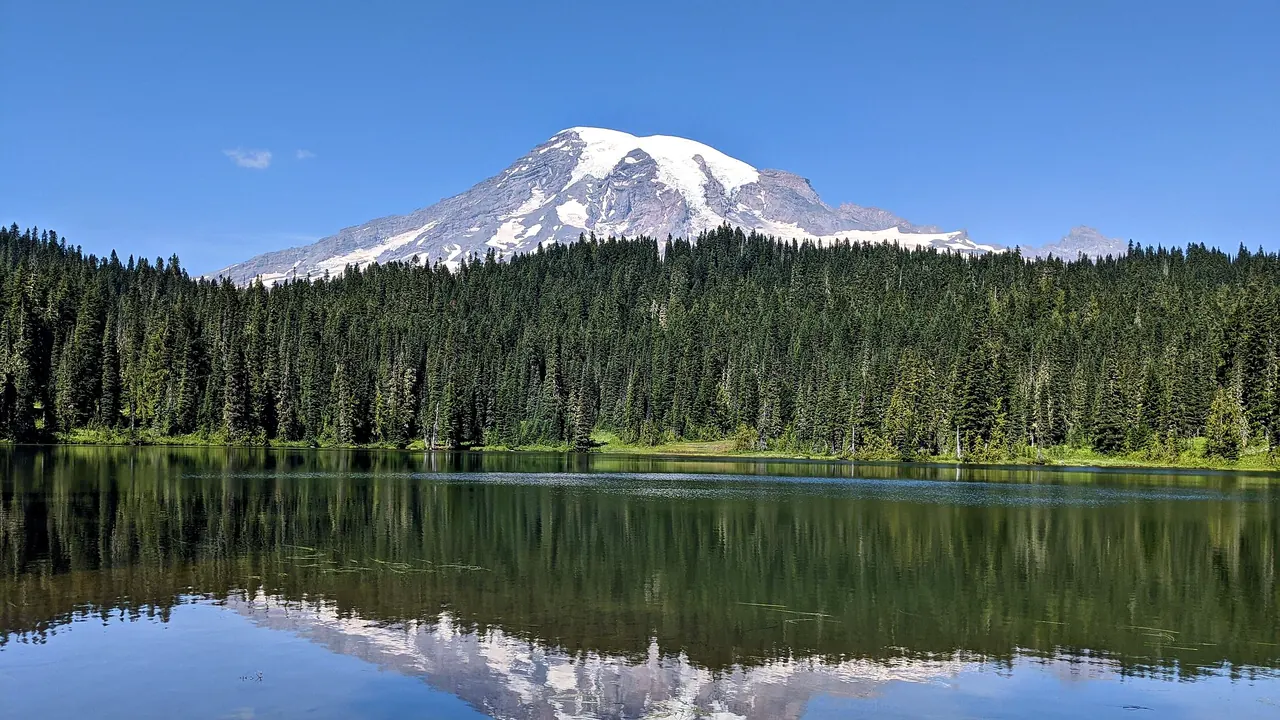
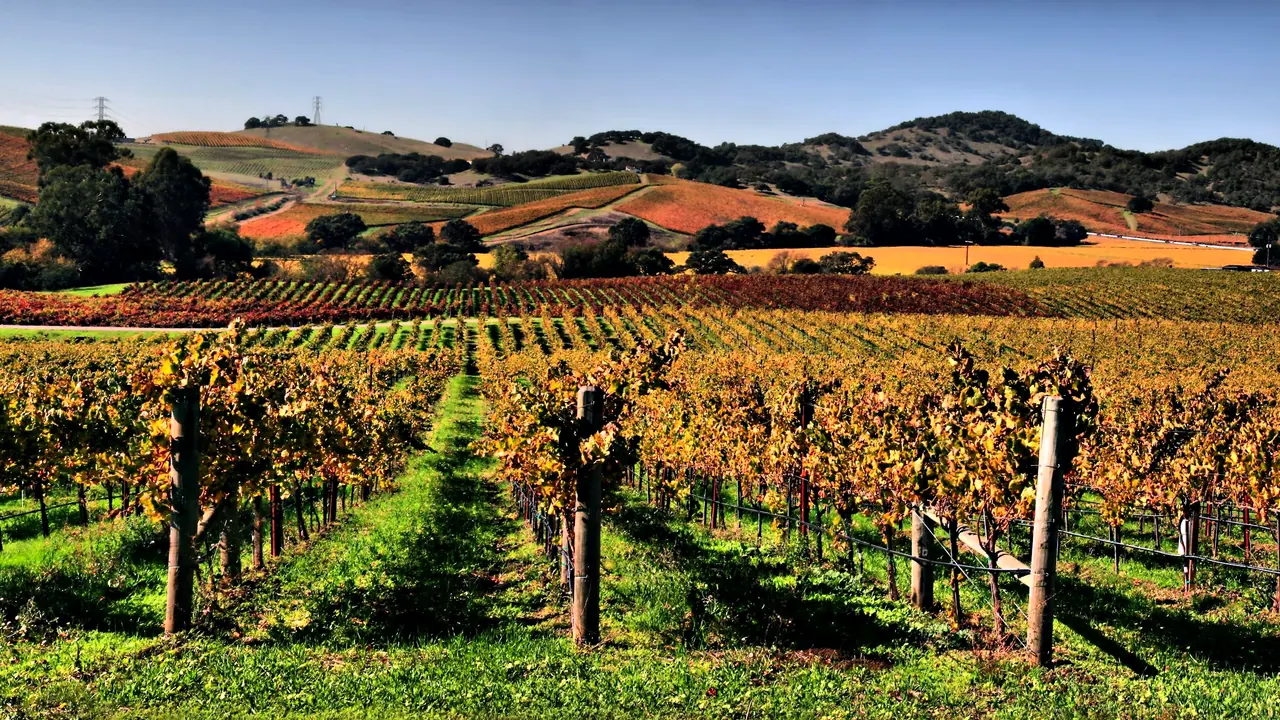
Photos: Mount Rainier by Angelina Suzuki, CC BY-SA 4.0, cropped; Napa Valley by Brocken Inaglory, CC BY-SA 3.0, cropped.
Mount Rainier or Napa Valley?
Our verdict in twelve categories, each scored against the same fixed benchmark cities, and the climate month by month, so you can choose for your trip.
Choose Mount Rainier for
- nature and the outdoors
- prices
- families
Mount Rainier is for travellers who want the mountain itself: glacier views from Paradise and Sunrise, wildflower meadows in late summer, long forest trails and nights in a cabin or a campground. It gives up almost everything else, from restaurants to evenings out. In return it is far easier on the wallet, especially if you camp, and children who like being outdoors get more from it.
Choose Napa Valley for
- food and drink
- wellness
- day trips
Choose Napa Valley for a trip built around the table and the glass. Its Cabernet tasting rooms, Yountville's fine dining and Calistoga's mud baths and mineral pools make for a slow, indulgent stay for adults, and San Francisco and Sonoma are each an easy day out. You will pay heavily for it, and the landscape is gentle vineyard country rather than wilderness.
Scoreboard
Twelve categories on one fixed scale from 0 to 100. The shaded stretch is the gap between the two.
Your match
Pick a travel style or drag the sliders, and both match scores follow your weighting.
Wins on nature and the outdoors and prices with your weighting.
Wins on food and drink and wellness with your weighting.
What matters to you?
Category by category
What the scores mean for a trip.
Beaches & swimming
You will not swim much at either. The lakes in Mount Rainier's park are fed by snowmelt and stay cold, so the only real swimming is at lowland reservoirs such as Alder Lake near Elbe, where local families paddle in high summer.
Napa Valley does a little better because Lake Berryessa, over the eastern hills, warms up properly in the summer heat, and most hotels have a pool. The Sonoma coast makes a scenic drive, but nobody goes there to swim.
Food & drink
The gap here is wide. Napa Valley is worth the trip for the food and wine alone: Cabernet tastings from the big Highway 29 estates to small cellars on Howell Mountain, Yountville's cluster of fine dining, farm-driven bistros in St. Helena and Calistoga, and oysters and cheese at Oxbow Public Market in Napa town.
At Mount Rainier, eating is practical: diners and pizza in Ashford or Packwood, and hearty meals in the dining rooms of the Paradise and Longmire lodges. A picnic at the trailhead often beats both. If dinner matters to you, you will feel the difference every evening.
Culture & sights
In both places heritage is a backdrop rather than the reason to visit. At Mount Rainier it is the history of the park: the old headquarters at Longmire, the timbered lobby of Paradise Inn and the fire lookouts on the ridges.
Napa Valley's heritage is its winemaking past. You see it in nineteenth-century stone cellars, the Greystone building in St. Helena, the restored Bale Grist Mill and the Victorian commercial buildings of downtown Napa. Neither can stand in for a day in a city museum.
Nightlife
Neither keeps late hours, but Napa Valley at least has an evening out. Downtown Napa's riverfront and First Street have wine bars, taprooms and cocktail bars, though they are quiet well before midnight.
Around Mount Rainier, a beer in an Ashford or Packwood tavern is as far as it goes. The night belongs to the campfire and the stars.
Nature & outdoors
Mount Rainier is in another league. It is a glaciated volcano of 4,392m, with the Skyline Trail across the meadows at Paradise, the Emmons Glacier seen from Sunrise, giant cedars along the Ohanapecosh and moss-covered rainforest in the Carbon River valley. The two-week Wonderland Trail circles the mountain, and in winter there is snowshoeing.
Napa Valley is pleasant, tame country: vineyards between oak-covered ranges, a balloon flight at dawn, cycling on the Silverado Trail and a climb up Mount St. Helena for the view. It is good for a walk or a ride, not an expedition.
Day trips
Napa Valley is far better placed for days out. San Francisco is about an hour and a half away, partly by ferry from Vallejo if you like. Sonoma, Healdsburg, Berkeley and Sausalito are all close, though many of the outings are more wine country.
From Mount Rainier, the trips worth making are down in the lowlands: Tacoma's waterfront museums, including the glass museum with its working hot shop, or the domed capitol in Olympia. Seattle is a stretch for a single day.
Good for families
Families do better at Mount Rainier, as long as they enjoy being outside. Easy trails at Longmire and Paradise, the footbridge over Box Canyon, the junior ranger programme, snow at Paradise into early summer and the tram past bison and wolves at Northwest Trek can fill several days.
Napa Valley is aimed at adults, and its days revolve around tasting rooms and long dinners. Calistoga's small geyser, the petrified forest, warm resort pools and the wildlife park in Vallejo help, but most families pass through rather than stay.
Getting around
You need a car in both, but Napa Valley is the easier drive. It is about 50km from Napa to Calistoga on gentle roads, and the centres of Napa, Yountville and St. Helena are walkable. Because the day involves wine, many visitors hire a driver, join a tour or cycle.
Mount Rainier's sights are spread around a large mountain, and Paradise and Sunrise are about two hours apart on winding roads. The east side roads open only from early summer to autumn, and in winter you need chains to drive up to Paradise.
Shopping & style
Napa Valley has the edge, mainly because of the wine. You can buy bottles at the cellar door that rarely reach shops elsewhere, and many estates will ship cases home. St. Helena's Main Street boutiques, local olive oil and cheese at the market in Napa, and an outlet centre add a little more.
Around Mount Rainier, shopping stops at park gift shops and general stores. Buy your boots and gear in Seattle or Tacoma before you arrive.
Affordability
Mount Rainier is by far the cheaper trip. Entry costs little, the trails and viewpoints are free once you are inside, and the campgrounds in the park and the national forest around it make a very economical stay possible. The catch is a roof over your head: beds in the gateway towns are few, and in July and August they fill early at full summer rates, so June or late September is kinder to the budget.
Napa Valley sits at the other end of the scale, a splurge however carefully you plan. Up-valley inns are priced for special occasions, tasting fees mount up over a day of cellar visits, and dinner at the well-known tables costs a great deal. Sleeping in Napa town and taking picnic lunches from the delis and markets helps only a little.
Live music & performing arts
Napa Valley has a real calendar for a place its size. A large rock and pop festival comes each late spring, there are summer classical, jazz and opera concerts at wineries and in Yountville, and the restored opera house and Art Deco theatre in downtown Napa put on shows all year.
At Mount Rainier, the evening programme is a ranger talk at a campground amphitheatre.
Wellness & relaxation
Napa Valley is the place to be pampered. Calistoga was founded as a hot-springs resort and still offers volcanic-ash mud baths and pools fed by geothermal water, and there are resort spas among the vines and olive trees across the rest of the valley.
Mount Rainier offers a different kind of rest: a cabin under the firs near Ashford or Packwood, the sound of the river at night and no phone signal. The hot springs at Ohanapecosh are something to look at on a walk, not somewhere to soak.
When should you go?
Pick your month. The climate figures are measured averages, not a forecast.
Mount Rainier in July
Napa Valley in July
Daytime high, °C
Rainfall in the month, mm
Where the figures come from
Mount Rainier has no weather station within reach, so its figures come from a gridded climate model rather than a measured record, and read a broad area rather than one spot.
Napa Valley has no rain gauge within 25 km of the centre, so its rainfall comes from a gridded climate dataset read at the destination rather than from a gauge further away.
Napa Valley's sunshine is measured 76 km from the centre, at Sacramento Executive Airport.
Temperature and rainfall are climate normals, averaged over the years shown. Mount Rainier: 1991-2020 normals, TerraClimate 4 km grid at the town, no weather station within 90 km. Napa Valley: 1991-2020 (sunshine 1981-2010) normals, Napa / Middleton (21.9 km from centre).
Around Mount Rainier the good season is short. July and August are the dry months, with daytime highs of about 21°C to 23°C and little rain. That fits the time when the high trails are clear and the meadows are in flower. September is still pleasant but wetter. From October heavy rain returns, more than 300mm a month in the depths of winter, and the high ground turns to snow country.
Napa Valley is warmer and stays dry for much longer. From May to October it hardly rains, with highs of around 26°C and long sunny days, though summer afternoons on the valley floor are hot for cycling between wineries. Spring and autumn are milder and better for being out in the vineyards. Winter brings most of the year's rain, but the days are still far milder than on the mountain. If you want to visit both on one trip, late summer works for each.
Which traveller are you?
On an outdoors trip, Mount Rainier is the clear choice. Glacier views from the high roads, wildflower meadows in late July, old-growth forest and elk and marmots on the trails go far beyond Napa's gentle vineyard rides and balloon flights.
For a food and nightlife trip, Napa Valley wins easily. Days of Cabernet tasting, Yountville's fine dining and evenings in downtown Napa's wine bars beat Rainier's roadside diners and early nights, even though the valley goes quiet before midnight.
On a tight budget, Mount Rainier is the realistic option. The trails and viewpoints cost nothing, and camping in the park or the national forest around it keeps a stay cheap. In Napa, the inns, tasting fees and restaurants make even a careful visit a splurge.
Before you go
| Measure | Mount Rainier | Napa Valley |
|---|---|---|
| Currency | US Dollar (USD) | US Dollar (USD) |
| Sockets | AB120 V, 60 Hz | AB120 V, 60 Hz |
| Driving side | Right | Right |
| Time zone | UTC-8, UTC-7 in summer | UTC-8, UTC-7 in summer |
| Emergency number | 911 | 911 |
| Main airport | Seattle–Tacoma International Airport (SEA)136 non-stop destinations | San Francisco International Airport (SFO)143 non-stop destinations |
| Public holidays this year | 11 days | 13 days |
By the numbers
| Measure | Mount Rainier | Napa Valley |
|---|---|---|
| Population | 875 | - |
Where else could you go?
Every comparison below shares a destination with this one, so you can follow Mount Rainier or Napa Valley somewhere new.
- Sonomavs Napa Valley
- Olympic National Parkvs Mount Rainier
- Vancouver Islandvs Mount Rainier
- Lake Tahoevs Napa Valley
- Big Survs Napa Valley
- Yosemitevs Napa Valley