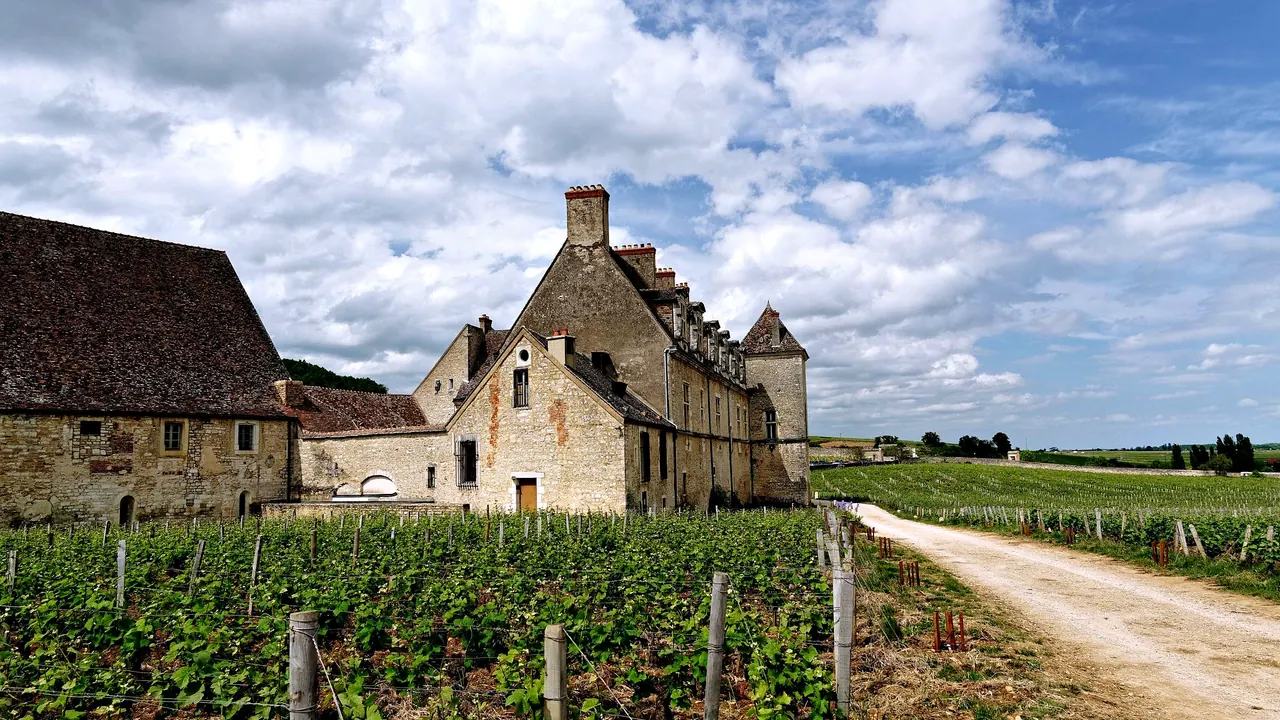
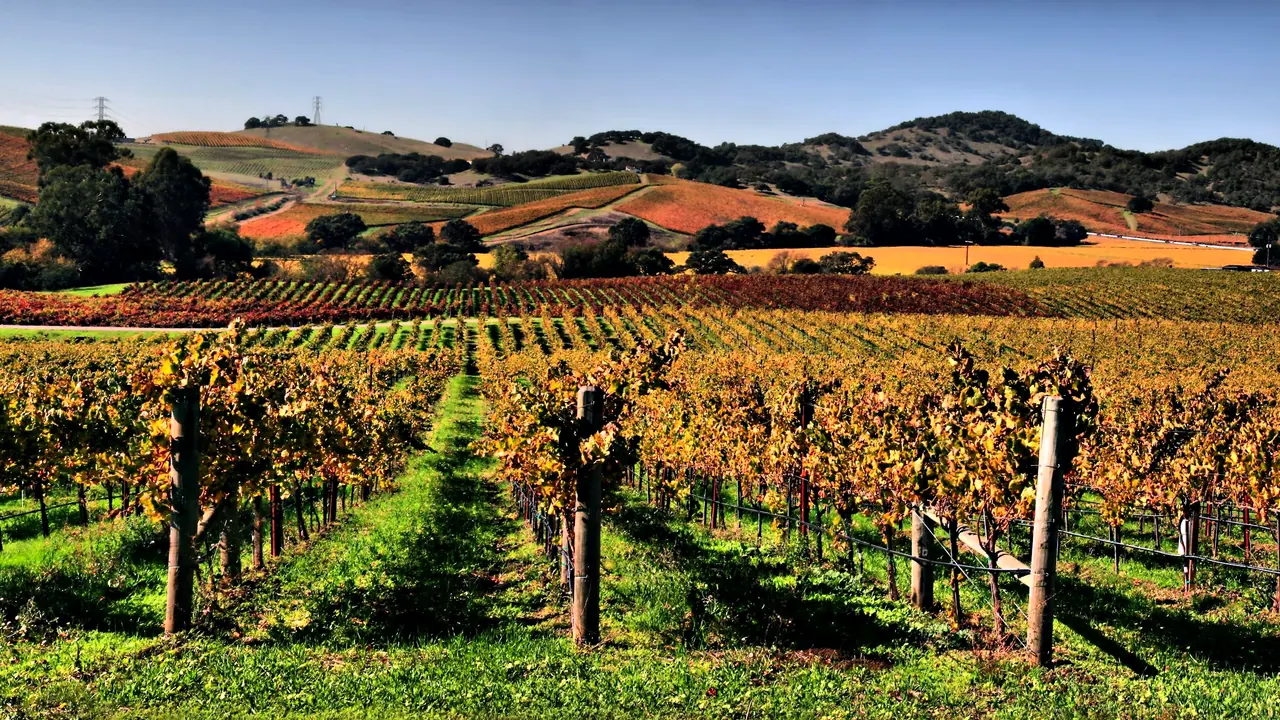
Photos: Burgundy by Gu Bra, Pexels License; Napa Valley by Brocken Inaglory, CC BY-SA 3.0, cropped.
Burgundy or Napa Valley?
Our verdict in twelve categories, each scored against the same fixed benchmark cities, and the climate month by month, so you can choose for your trip.
Choose Burgundy for
- culture and sights
- prices
- families
Burgundy suits a traveller who wants the wine trip to carry history as well. Between tastings on the Côte there are ducal Dijon, the Hospices in Beaune, Vézelay, Fontenay and Cluny, and a string of walled medieval towns to drive out to. It also costs far less, works better with children and has trains between its main towns. The price is grey, cool winters and evenings that end at the dinner table.
Choose Napa Valley for
- wellness
Napa Valley is the stronger pick for a short, indulgent stay built around Cabernet, fine dining in Yountville and the hot springs of Calistoga. Its mud baths and vineyard resort spas make rest a real reason to go, and the dry, sunny summers are dependable. Expect to pay a great deal, to need a car or a driver for almost everything, and to find little history beyond the old stone cellars.
Scoreboard
Twelve categories on one fixed scale from 0 to 100. The shaded stretch is the gap between the two.
Your match
Pick a travel style or drag the sliders, and both match scores follow your weighting.
Wins on culture and sights and prices with your weighting.
Wins on wellness with your weighting.
What matters to you?
Category by category
What the scores mean for a trip.
Beaches & swimming
Neither place is for a beach trip. Both send swimmers to inland water in high summer, and they do it in different ways. Burgundy has supervised lake beaches with sailing and pedalos at Lac des Settons in the Morvan, plus Lac Kir on the edge of Dijon. In Napa the hotel pool does most of the work, Lake Berryessa over the eastern hills is the only proper swim, and the Pacific coast is too cold for bathing.
Food & drink
For eating and drinking the two are close, and the real difference is old country against new. Burgundy's wine comes from small plots in the villages of the Côte de Nuits and Côte de Beaune, where family domaines pour alongside the grand names, and Chablis, the Côte Chalonnaise and the Mâconnais offer whites and lighter reds for less. The cooking is old and regional, from boeuf bourguignon and eggs poached in red wine to Époisses, with starred country inns in Saulieu and Chagny and good set lunches in ordinary villages. What Burgundy lacks is street food and anything much beyond French cooking.
Napa is built on Cabernet Sauvignon, poured at grand estates on Highway 29 and the Silverado Trail and in small cellars on Howell Mountain and Spring Mountain that take visitors by appointment. Its dining is driven by chefs more than by tradition, with Yountville's remarkable cluster of fine restaurants at the centre and farm-driven bistros in St. Helena and Calistoga. Downtown Napa is the most casual corner, but cheap everyday eating is scarce, and dinner here is usually an occasion.
Culture & sights
This is where the two differ most. Burgundy has a thousand years of heritage to explore: the dukes' palace and its great art museum in Dijon, the tiled roof of the Hospices in Beaune, Vézelay's hilltop basilica, Fontenay Abbey, Cluny, Autun cathedral and Renaissance châteaux. The catch is that each site takes a drive and most of a day.
Napa's history is short and tied to wine: nineteenth-century stone cellars, the Greystone building, Victorian shopfronts in downtown Napa and the restored Bale Grist Mill. These make a pleasant backdrop to tasting, but anyone wanting major museums heads to San Francisco.
Nightlife
Neither region is for a big night out, but Burgundy at least has one. Dijon is a university city, with pubs, wine bars and a couple of clubs near the old centre that fill up on student nights, and Beaune's wine bars stay busy late in summer.
Napa's only evening scene is downtown Napa, along the river and First Street, and even that is winding down well before midnight. Yountville, St. Helena and Calistoga close soon after dinner.
Nature & outdoors
Both are gentle, farmed landscapes, not wild ones, and both offer dawn balloon flights over the vines. Burgundy is greener and better for slow travel. There are the beech forests and reservoirs of the Morvan, towpaths along the Canal de Bourgogne and Canal du Nivernais, a week on a self-drive boat, and the short climb up the Roche de Solutré.
Napa is a narrow valley between oak-covered ranges. Its walks are the climb up Mount St. Helena and the redwood groves of Bothe-Napa Valley State Park, and it has a colourful season in late winter, when yellow mustard flowers bloom between the vines.
Day trips
Burgundy's outings lead mostly into history. From Beaune or Dijon the wine villages of the Côte are minutes apart, and beyond them lie walled and hilltop towns such as Semur-en-Auxois, Noyers and Flavigny-sur-Ozerain. Cluny and Tournus are to the south, Chablis and Auxerre to the north, and Lyon is under two hours away.
Napa has one outing that is different in kind: San Francisco, about an hour and a half by road, or partly by ferry from Vallejo, with Berkeley and Sausalito close by. Most other days out lead to more wine country in Sonoma, Healdsburg and the Russian River valley, so there is less variety. In both regions a car is close to essential.
Good for families
Burgundy is the easier of the two with children, though neither is really planned around them. Its best family days involve doing and watching: at Guédelon children can see masons and blacksmiths raising a castle the medieval way, Alésia turns the Roman siege into a story, and the Morvan lakes have pedalos and canoes in summer. A week steering a hired boat along the canals, opening the locks and cycling beside the water, gives the whole trip a shape that children enjoy.
Napa gives a family much less to build a trip around. Its days run from tasting room to long dinner, and many of its resorts have couples in mind. Calistoga's little geyser and petrified forest, the warm pools at the hot-springs resorts and a wildlife and amusement park down in Vallejo will fill a couple of days. After that, the hot afternoons and long stretches in the car mean most families pass through rather than stay.
Getting around
In both regions, tasting wine and driving pull against each other, but Burgundy gives more ways round it. Fast trains reach Dijon, and regional lines link Beaune, Chalon, Mâcon and Auxerre. Dijon has a tram, and the flat Côte is easy to cycle from village to village.
Napa is compact, about 50km from end to end, but the buses are too infrequent to rely on, and only a few downtowns are walkable. Many visitors end up hiring a driver or joining a tour, and Highway 29 gets slow at weekends.
Shopping & style
Burgundy's shopping is mostly for food lovers. Wine from the cellar door comes first, followed by mustard from Dijon's long-established mustard shops, cassis, gingerbread and Époisses. Dijon's covered market hall and Beaune's Saturday market are good for browsing, and there are antique dealers scattered through the countryside.
Napa has less to buy, and what there is is more polished. Estates sell bottles that rarely reach shops elsewhere and will ship cases home, St. Helena's Main Street has homeware and kitchen boutiques, and the public market in Napa sells local olive oil and cheese. Beyond an outlet centre on the edge of town, there are no markets like Burgundy's.
Affordability
The gap is wide. Burgundy is mid-priced, with fair guesthouses and cottages in Dijon, the Morvan and the Yonne, and good set lunches in villages. Only Beaune, the Côte and the great bottles push costs up.
Napa is among the most expensive places to travel in the United States. Rooms up-valley, tasting fees and the famous dinners all cost a lot. Staying in Napa town and picnicking help, but the trip remains a splurge.
Live music & performing arts
Both are small, seasonal scenes, but they differ in kind. Burgundy has a resident opera company performing in Dijon's historic Grand Théâtre. Its summer festivals are classical and street-based: baroque opera in Beaune, street theatre filling Chalon-sur-Saône, jazz at Cluny and concerts in the basilica at Vézelay.
Napa's calendar leans towards popular music. A large rock and pop festival takes place in late spring, there are concerts on winery lawns, and touring bands and comedians play the restored opera house and Art Deco theatre downtown.
Wellness & relaxation
Napa is much the better choice for a restful stay. Calistoga was founded as a hot-springs resort, and its mud baths, mineral soaks and geothermal pools are a reason to come in themselves, with resort spas among the vineyards elsewhere in the valley.
Burgundy relaxes by its pace: long lunches, quiet villages and days drifting through locks on a barge. Its spa towns of Bourbon-Lancy and Saint-Honoré-les-Bains are mostly for medical cures, and wine-based treatments at hotels near Beaune are an extra rather than the point of the trip.
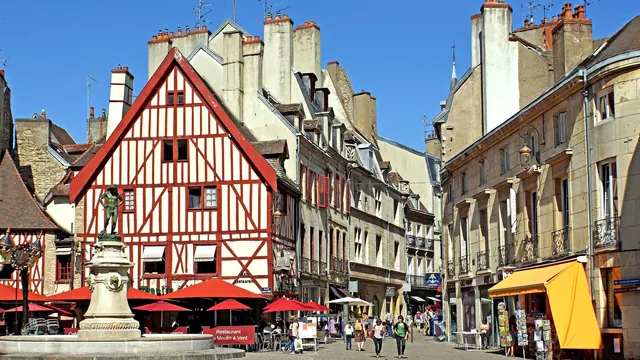
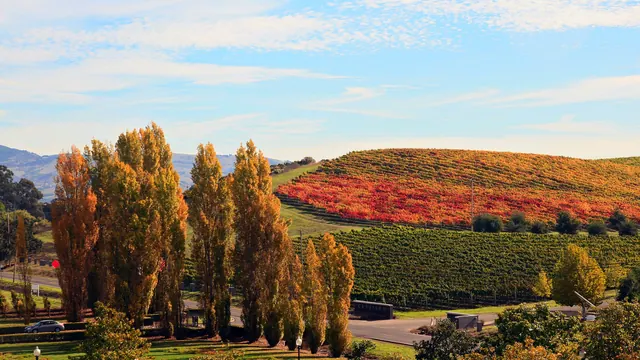
When should you go?
Pick your month. The climate figures are measured averages, not a forecast.
Burgundy in July
Napa Valley in July
Daytime high, °C
Rainfall in the month, mm
Where the figures come from
Burgundy's temperatures are measured 33 km from the centre, at Dijon.
Burgundy has no rain gauge within 25 km of the centre, so its rainfall comes from a gridded climate dataset read at the destination rather than from a gauge further away.
Napa Valley has no rain gauge within 25 km of the centre, so its rainfall comes from a gridded climate dataset read at the destination rather than from a gauge further away.
Napa Valley's sunshine is measured 76 km from the centre, at Sacramento Executive Airport.
Temperature and rainfall are climate normals, averaged over the years shown. Burgundy: 1991-2020 normals, Dijon (32.7 km from centre). Napa Valley: 1991-2020 (sunshine 1981-2010) normals, Napa / Middleton (21.9 km from centre).
Burgundy has a true continental year. Winters are cold and dull, with highs around 6°C and little sun, so the season really runs from May to September. July and August are warm enough for the Morvan lakes. Rain falls fairly evenly in every month and is heaviest in autumn, so a grey day is possible even in summer. Late spring and September are the most comfortable for walking villages and cellars.
Napa Valley is milder and much more clear-cut. Winter highs stay around 13°C but December to February bring heavy rain, about 140mm a month. From May to September it is almost completely dry and very sunny, with highs steady near 26°C and hot afternoons, so Lake Berryessa is at its best then. October stays warm and dry in Napa while Burgundy is already turning wet and cool, which makes autumn the clearest month for choosing California.
Which traveller are you?
For a culture and arts trip, Burgundy is the clear choice. Romanesque basilicas, Cistercian abbeys, the Palace of the Dukes and Dijon's fine art museum sit alongside summer baroque opera in Beaune, while Napa offers mostly old winery cellars as background.
On a relaxing and wellness trip, Napa Valley pulls ahead. Calistoga's volcanic-ash mud baths and geothermal pools, plus resort spas set among the vines, give it a real bathing culture, while Burgundy's slow pace comes without much in the way of spas.
On a trip with a tight budget, Burgundy is much easier. Guesthouses in Dijon and the Morvan, self-catering cottages and village set lunches keep costs moderate, whereas Napa is priced as a splurge, with tasting fees and dear rooms adding up even in Napa town.
Before you go
| Measure | Burgundy | Napa Valley |
|---|---|---|
| Official language | French | - |
| Currency | Euro (EUR) | US Dollar (USD) |
| Sockets | CE230 V, 50 Hz | AB120 V, 60 Hz |
| Driving side | Right | Right |
| Time zone | UTC+1, UTC+2 in summer | UTC-8, UTC-7 in summer |
| Emergency number | 112 | 911 |
| Main airport | Lyon Saint-Exupéry Airport (LYS)141 non-stop destinations | San Francisco International Airport (SFO)143 non-stop destinations |
| Public holidays this year | 11 days | 13 days |
By the numbers
| Measure | Burgundy | Napa Valley |
|---|---|---|
| Population | 1,642,687 | - |
Where else could you go?
Every comparison below shares a destination with this one, so you can follow Burgundy or Napa Valley somewhere new.
- Sonomavs Napa Valley
- French Alpsvs Burgundy
- Lake Tahoevs Napa Valley
- Swiss Alpsvs Burgundy
- Big Survs Napa Valley
- Black Forestvs Burgundy