France
Burgundy
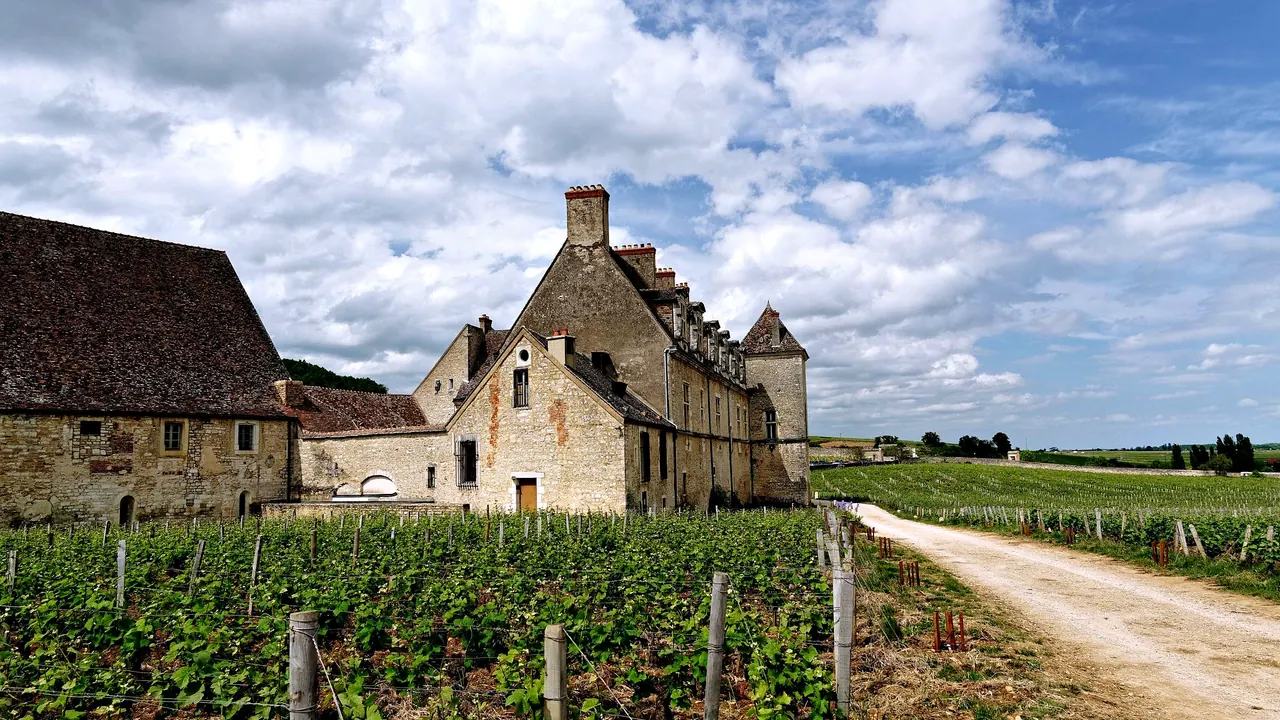
The Chateau du Clos de Vougeot among its vineyards
- Food & drink85
- Day trips77
- Culture & sights76
Photo: Gu Bra, Pexels License
Match
51
Every category weighted equally
- Beach & sun47
- Culture & arts57
- Food & nightlife52
- Family trip51
- Outdoors55
- Relax & unwind51
- Shopping & style53
- On a budget51
Burgundy in twelve categories
Our verdict on each, scored 0 to 100 against the same fixed benchmark cities, so a score means the same thing on every page.
Beaches & swimming. Scores 14 out of 100.
Food & drink. Scores 85 out of 100.
Culture & sights. Scores 76 out of 100.
Nightlife. Scores 27 out of 100.
Nature & outdoors. Scores 55 out of 100.
Day trips. Scores 77 out of 100.
Good for families. Scores 44 out of 100.
Getting around. Scores 50 out of 100.
Shopping & style. Scores 46 out of 100.
Affordability. Scores 50 out of 100.
Live music & performing arts. Scores 40 out of 100.
Wellness & relaxation. Scores 45 out of 100.
Burgundy category by category
Beaches & swimming
14Burgundy is about as far from the sea as France gets, and nobody comes here for the beach. Swimming in summer means lakes. The Morvan reservoirs, Lac des Settons above all, have supervised beaches, sailing clubs and water that warms to swimmable levels in July and August. Dijon has its own small lake beach at Lac Kir on the western edge of town. These are pleasant for a cool-off on a hot afternoon, but a lake beach is a side trip here, never the reason for the stay.
Food & drink
85Eating and drinking are the main reason most people come to Burgundy. The Côte de Nuits and Côte de Beaune, the slope of villages between Dijon and Santenay, produce some of the most famous wine on earth, and a visitor can taste in cellars from grand names to small family domaines. Chablis in the north, the Côte Chalonnaise and the Mâconnais in the south add whites and lighter reds at gentler prices. Beaune is the natural base, with wine bars and serious restaurants in a small walled town.
The cooking is rich and rooted: boeuf bourguignon, coq au vin, snails in garlic butter, eggs poached in red wine, jambon persillé, the pungent Époisses cheese, Dijon mustard and gingerbread, with Bresse chicken just over the border. Old country inns hold Michelin stars in villages such as Saulieu and Chagny. What the region lacks is street food and much beyond French cuisine, and Sunday evenings in small towns can be quiet.
Culture & sights
76Burgundy's heritage is that of the medieval dukes and the great monasteries. Dijon keeps the Palace of the Dukes, home to one of the oldest and richest fine art museums in France, and a centre of half-timbered houses and patterned glazed roofs. In Beaune the Hospices, with their famous polychrome tiled roof, are the region's best-known image, and the vineyard plots of the Côte are themselves a UNESCO-listed landscape.
The region holds some of the finest Romanesque and Cistercian architecture in Europe: the hilltop basilica of Vézelay, the austere Fontenay Abbey, what remains of the vast abbey at Cluny, and the carved cathedral of Autun. Add Renaissance châteaux such as Ancy-le-Franc and Tanlay, Sens cathedral and the Alésia battlefield museum. The catch is distance: these sites are scattered across the countryside and most need a car and a day each.
Nightlife
27Evenings in Burgundy revolve around long dinners and a bottle from the cellar. Dijon, a university city, has a handful of streets near the old centre with pubs, wine bars and a couple of clubs that fill on student nights, and Beaune has wine bars that stay busy until late in summer. Beyond those two towns the villages go quiet early, and a visitor looking for a real night out will find little.
Nature & outdoors
55Burgundy is gentle country: vine-covered slopes, limestone escarpments, pastures of white Charolais cattle and long wooded valleys. The Morvan, a regional nature park of granite hills, beech and oak forest and reservoirs, is the wildest part, good for walking, canoeing and mountain biking. In the south the Roche de Solutré rises above the Mâconnais vineyards and makes a short, rewarding climb.
The region is best explored slowly. Cycle paths run through the Côte vineyards and along the towpaths of the Canal de Bourgogne and the Canal du Nivernais, and hiring a self-drive boat on the canals is a classic way to spend a week. Hot-air balloon flights over the vines are common in summer. There are no high mountains or coast, so this suits gentle walkers and cyclists more than anyone seeking adventure.
Day trips
77With a base in Beaune or Dijon, the outings are many and varied. The wine villages of the Côte, such as Meursault, Pommard and Gevrey-Chambertin, are minutes apart. Further out lie small towns with intact medieval streets: Semur-en-Auxois on its rocky spur, the aniseed-sweet village of Flavigny-sur-Ozerain, Noyers inside its walls, Châteauneuf-en-Auxois above the canal, and Tournus on the Saône. The north offers Chablis and Auxerre, the south the Mâconnais villages and Cluny.
Just beyond the region, Lyon is about an hour and three quarters from Beaune, and the Jura wine town of Arbois and the Bresse country are within reach. Most of this calls for a car, since trains link the larger towns but not the villages.
Good for families
44Burgundy is a calm, safe and easy region, but it is built around wine and food rather than children. The standout for families is Guédelon in the Yonne, where craftsmen are building a castle using medieval methods, and children can watch masons, blacksmiths and carpenters at work. The Alésia museum brings the Roman siege to life, and the Morvan lakes offer summer beaches, pedalos and canoes.
A week on a hired canal boat, with locks to work and towpaths to cycle, is the region's best family vacation. Beyond that, much of the day is driving between cellars, abbeys and restaurants, which few children enjoy.
Getting around
50Fast trains bring visitors to Dijon, and regional trains link Dijon, Beaune, Chalon-sur-Saône, Mâcon and Auxerre. Dijon has a tram, and the centres of Dijon and Beaune are easy to walk. Beyond those lines, buses to the villages are sparse, so most visitors hire a car. The roads are quiet and well kept and distances are short, so driving is pleasant, but tasting wine and driving do not mix. Bicycles work well along the Côte, where villages sit a few kilometres apart on flat or gently rolling paths.
Shopping & style
46What people buy in Burgundy is to eat and drink. Wine bought at the cellar door is the main purchase, along with mustard from Dijon's long-established mustard shops, cassis liqueur, gingerbread, Époisses and other cheeses. The covered market hall in Dijon and the Saturday market in Beaune are excellent for food. Dijon has a respectable centre of chain stores and independent shops, and antique dealers are scattered through the countryside, but there is little fashion or luxury shopping.
Affordability
50Burgundy is mid-priced by Western European standards. Dijon, the Morvan and the rural Yonne and Nièvre offer fairly priced guesthouses, self-catering cottages and good set lunches in village restaurants. Beaune and the villages of the Côte cost noticeably more, especially in summer and during the autumn harvest, and the region's great wines and starred restaurants can make a trip expensive for those who want them. Car hire is usually needed and adds to the cost.
Live music & performing arts
40Dijon is the centre for performance, with an opera company that stages opera, concerts and dance in the historic Grand Théâtre and a modern auditorium. Summer brings the region's best moments: Beaune hosts a long-established international festival of baroque opera in July, Chalon-sur-Saône fills its streets with a large street-theatre festival, Cluny has a jazz festival in August, and classical concerts are held in the basilica at Vézelay. Outside summer, the scene is small and mostly limited to Dijon.
Wellness & relaxation
45The great appeal of Burgundy for rest is its pace: long lunches, quiet villages, slow days on a canal barge drifting through locks. Bathing culture is limited. The small spa towns of Bourbon-Lancy and Saint-Honoré-les-Bains have thermal springs, though they serve mostly medical cures, and some country hotels around Beaune offer spas with treatments based on grapes and wine. A visitor who wants to unwind will find it easy here, but would not choose the region mainly for its spas.
Where to stay in Burgundy
Beaune is the natural base for a wine trip. The small walled centre is easy to walk, the Côte villages lie a short drive or bike ride away, and evenings go to wine bars and long dinners. It is also the most expensive place to stay, especially in summer and at harvest. Dijon suits travellers arriving by fast train, those on a tighter budget and anyone who wants a city: it has the fine art museum, the opera and the region's only real nightlife, with regional trains running on to Beaune. Between them, these two make the best first visit, and the Côte de Nuits is close to either.
The Morvan suits walkers, canoeists and anyone after a quiet stay in a self-catering cottage, and its lakes give families summer beaches. In the north, a base near Chablis or Auxerre puts Vézelay, Noyers and Guédelon within reach. In the south, the Mâconnais pairs gentler wine prices with Cluny and the Roche de Solutré.
Burgundy's abbeys and châteaux are spread across the countryside, so a second visit works best from one of these outer bases. Two bases are plenty for a week, and anywhere beyond Dijon and Beaune you will need a car.
When should you go?
Pick a month to see what it is like. The climate figures are measured averages, not a forecast.
Burgundy in July
Daytime high, °C
Rainfall in the month, mm
The whole year
Shaded against this destination’s own year: the deepest cell is its best month for that figure and the palest its weakest.
Where the figures come from
Burgundy's temperatures are measured 33 km from the centre, at Dijon.
Burgundy has no rain gauge within 25 km of the centre, so its rainfall comes from a gridded climate dataset read at the destination rather than from a gauge further away.
Temperature and rainfall are climate normals, averaged over the years shown. Burgundy: 1991-2020 normals, Dijon (32.7 km from centre).
Before you go
| Measure | Burgundy |
|---|---|
| Official language | French |
| Currency | Euro (EUR) |
| Sockets | CE230 V, 50 Hz |
| Driving side | Right |
| Time zone | UTC+1, UTC+2 in summer |
| Emergency number | 112 |
| Main airport | Lyon Saint-Exupéry Airport (LYS)141 non-stop destinations |
| Public holidays this year | 11 days |
By the numbers
| Measure | Burgundy |
|---|---|
| Population | 1,642,687 |
Compare Burgundy with
Every comparison with a written verdict behind it.
- Austrian Alps
- Black Forest
- Bordeaux
- Brittany
- Cinque Terre
- Corsica
- Dordogne
- French Alps
- French Riviera
- Lake Como
- Lake Garda
- Lake Maggiore
- Loire Valley
- Napa Valley
- Normandy
- Piedmont
- Provence
- Swiss Alps
- Tuscany