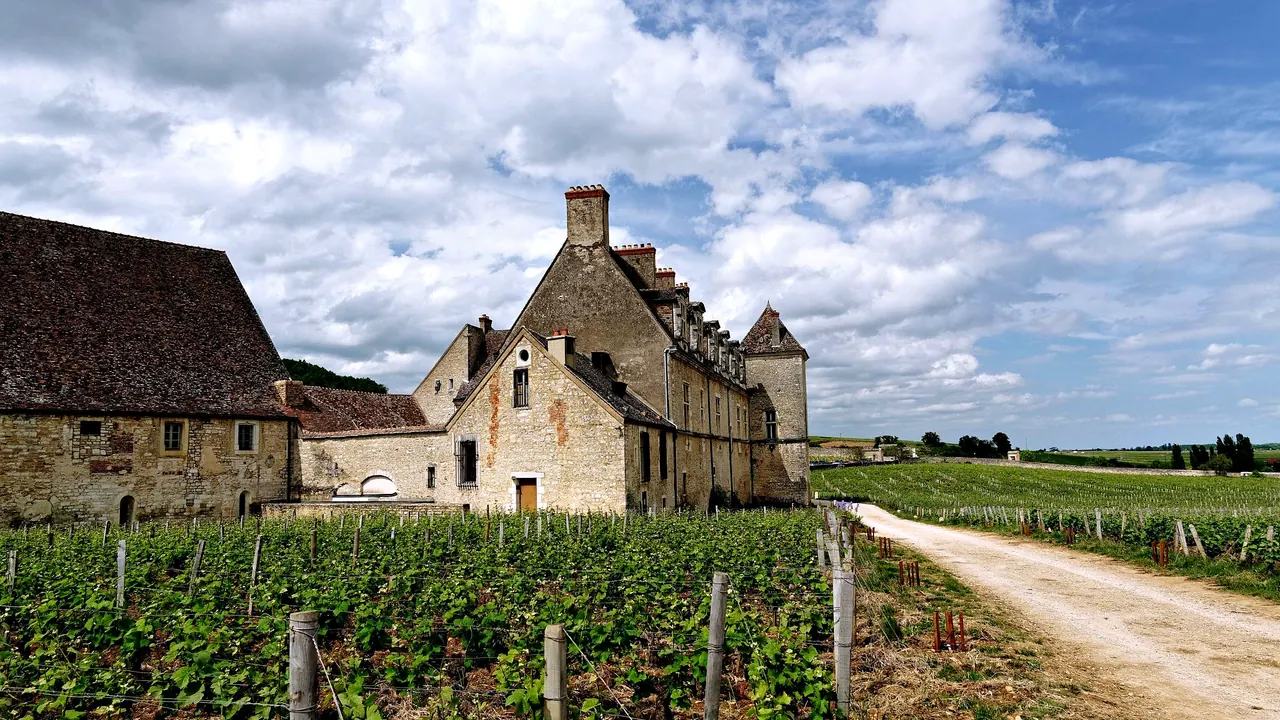
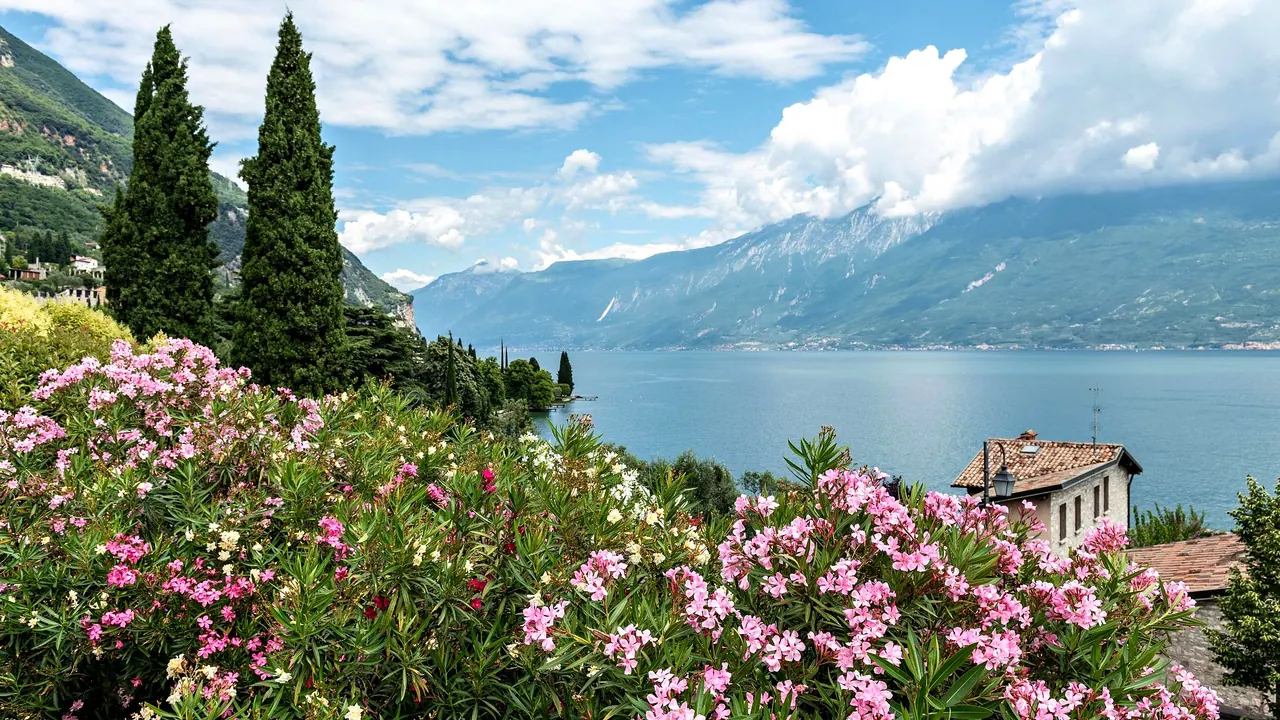
Photos: Burgundy by Gu Bra, Pexels License; Lake Garda by Wolfgang Weiser, Pexels License.
Burgundy or Lake Garda?
Our verdict in twelve categories, each scored against the same fixed benchmark cities, and the climate month by month, so you can choose for your trip.
Choose Burgundy for
- culture and sights
- food and drink
- shopping
Burgundy is the choice for a trip built around the table and the past. You come for cellar tastings along the Côte between Dijon and Santenay, long lunches in country inns, and Romanesque and Cistercian landmarks such as Vézelay and Fontenay. It suits adults who are happy to drive between villages and don't need water or theme parks. Away from Beaune and the Côte, it is also the gentler of the two on the budget.
Choose Lake Garda for
- beaches
- families
- nature and the outdoors
Choose Lake Garda for a summer of swimming, mountains and easy excursions. The north shore around Riva, Torbole and Arco is a serious base for outdoor sport. The south-east shore is made for families, and the railway at Peschiera and Desenzano puts Verona and Venice within a day's reach. The food is good rather than the main event, and the sights in the towns fill half-days rather than a whole vacation.
Scoreboard
Twelve categories on one fixed scale from 0 to 100. The shaded stretch is the gap between the two.
Your match
Pick a travel style or drag the sliders, and both match scores follow your weighting.
Wins on culture and sights and food and drink with your weighting.
Wins on beaches and families with your weighting.
What matters to you?
Category by category
What the scores mean for a trip.
Beaches & swimming
This is no contest. Burgundy is landlocked, so a swim means one of the Morvan reservoirs such as Lac des Settons, or Lac Kir on the edge of Dijon. These are fine for a hot afternoon but never the point of a stay.
Lake Garda makes lake bathing the centre of a summer trip. The water is properly warm in July and August. The south and east shores, from the rock shelves below Sirmione to the lidos of Lazise, Bardolino and Desenzano, have lawns, loungers and jetties. Expect pebbles rather than sand.
Food & drink
Food and wine are why most people go to Burgundy, and here it clearly comes out ahead. Along the Côte de Nuits and Côte de Beaune you can taste in cellars ranging from grand names to small domaines. The cooking, from boeuf bourguignon to Époisses, is rich and deeply regional, and there are starred country inns in villages such as Saulieu.
Lake Garda eats well but more simply: lake fish, risotto, its own olive oil, and wines such as Lugana and Bardolino, with Amarone in the hills beyond. The best tables are in the agriturismi up in the hills, while the harbour fronts lean on pizza and set menus.
Culture & sights
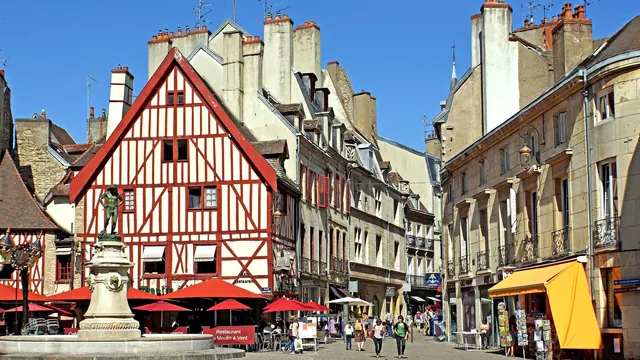
Burgundy carries far more weight. It has Dijon's ducal palace and fine art museum, the tiled roof of the Hospices in Beaune, and the Romanesque and Cistercian masterpieces at Vézelay, Fontenay, Cluny and Autun. Together they could fill a week, though the sites are scattered and need a car.
Garda's sights are a string of pleasant stops. The best are the Scaliger castle and Roman villa ruins at Sirmione, d'Annunzio's eccentric Vittoriale at Gardone, and the castles of Malcesine and Riva. They make good half-days around a lake vacation rather than a reason to go.
Nightlife
Neither is a place for a big night out, and in both an evening mostly means a long dinner. The difference is where the life is. In Burgundy it is in Dijon, a university city whose streets near the old centre have pubs and a couple of clubs that fill on student nights, plus Beaune's wine bars in summer.
At Garda it is in Desenzano, which has lakefront bars and large clubs nearby that fill on summer weekends. Elsewhere on the lake, an aperitivo on the harbour front is the evening, and outside summer there is little to go out for.
Nature & outdoors
Lake Garda is the stronger outdoor destination by a distance. Its narrow northern end is walled in by mountains. A cable car climbs Monte Baldo from Malcesine, Arco has its climbing walls, via ferrate and bike trails run up the valleys, and a reliable afternoon wind makes Torbole a classic for windsurfing.
Burgundy is gentler and slower. It offers vineyard slopes, the beech forests and reservoirs of the Morvan, the short climb up the Roche de Solutré, and canal towpaths made for cycling or a week on a self-drive boat. It suits easy walkers and cyclists rather than anyone after adventure.
Day trips
Both make good bases, but Garda's railway gives it the edge. From Peschiera or Desenzano, Verona is under an hour away and Venice an easy train ride. Vicenza, Padua, Brescia and Bergamo are on the same line, and Mantua is close by road.
Burgundy's outings are nearer at hand and more rural. Wine villages such as Meursault and Pommard are minutes apart, there are medieval towns like Semur-en-Auxois and Noyers, and Lyon is under two hours from Beaune. Almost all of it calls for a car.
Good for families
Lake Garda is by far the better pick with children. The south-east shore around Peschiera is built for families, with Gardaland, an aquarium, water parks and a safari park, plus campsites with pools and shallow lidos. The north suits older children who want to bike or windsurf.
Burgundy is calm and safe but made for adults. Watching the castle being built at Guédelon, the Alésia museum and a week on a canal boat are real highlights. Even so, days spent driving between cellars and abbeys test young patience.
Getting around
Neither is easy without a car, and the weakness is similar: good links between the main towns and sparse buses beyond them. Burgundy's backbone is the railway joining Dijon, Beaune, Chalon, Mâcon and Auxerre, and Dijon also has a tram. The roads are quiet, but tasting wine and driving don't mix, though bikes work well along the Côte.
Garda moves by water. Ferries and hydrofoils link most of the towns, if slowly, while trains touch only the south and the shore roads are narrow and congested in summer. Staying in one town and using the boats works better than touring by car.
Shopping & style
Burgundy is the place to fill the boot of the car. Wine bought at the cellar door is the main purchase, with Dijon mustard, cassis and Époisses alongside it, and Dijon's covered market hall and Beaune's Saturday market are a pleasure to browse for food. Dijon also has a decent centre of shops, and there are antique dealers out in the countryside.
Garda has less to offer: weekly markets with clothes and leather stalls, plus olive oil, Lugana wine and lemon products from Limone. Outdoor gear in Riva and Arco is its one real speciality, and anything more serious means a trip to Verona or Milan.
Affordability
Burgundy is the gentler on the budget, as long as you avoid Beaune and the Côte in high season and resist the great wines and starred tables. Dijon, the Morvan and the rural Yonne have fairly priced guesthouses and cottages and good set lunches, though you will almost certainly need a hire car.
Garda costs more in summer. Lakefront hotels in Sirmione, Malcesine and Limone charge high-season rates, and theme parks and ferries add up for a family. Campsites, agriturismi in the hills and spring or autumn stays bring the cost down.
Live music & performing arts
Both are quiet outside summer and come alive in it, but in different ways. Burgundy has a scene of its own. Dijon's opera company performs in the Grand Théâtre, Beaune holds a baroque opera festival in July, and there is street theatre at Chalon-sur-Saône, jazz at Cluny and concerts in the basilica at Vézelay.
Garda's big night is borrowed: opera in Verona's Roman arena, under an hour from the southern shore. Locally there are the Vittoriale's open-air amphitheatre and band concerts in town squares.
Wellness & relaxation
Garda has a real spa tradition that Burgundy lacks. Sirmione's warm sulphurous springs rise from the lake bed and feed thermal pools that look out over the water. A historic villa park near Lazise has large open-air thermal pools, and hotels on the western shore at Gardone and Salò add spas.
In Burgundy, rest comes from the pace rather than from bathing: slow lunches, quiet villages and a barge drifting through locks. Its spa towns mostly serve medical cures, though some country hotels near Beaune offer treatments based on grapes and wine.
When should you go?
Pick your month. The climate figures are measured averages, not a forecast.
Burgundy in July
Lake Garda in July
Daytime high, °C
Rainfall in the month, mm
Where the figures come from
Burgundy's temperatures are measured 33 km from the centre, at Dijon.
Burgundy has no rain gauge within 25 km of the centre, so its rainfall comes from a gridded climate dataset read at the destination rather than from a gauge further away.
Lake Garda's sunshine is measured 28 km from the centre, at Verona / Villafranca.
Temperature and rainfall are climate normals, averaged over the years shown. Burgundy: 1991-2020 normals, Dijon (32.7 km from centre). Lake Garda: 2005-2025 (sunshine 1991-2020, rainfall 1991-2020) normals, Verona / Rivoltella (1.6 km from centre).
Both are summer destinations, but Lake Garda runs warmer and sunnier. Around the shore, highs reach 29°C in July, and the lake is warm enough for proper swimming from June into September. Spring and early autumn stay mild, which makes them the best seasons for walking and climbing. Late spring can be showery, and late autumn is wetter still: November, at 121mm, is the wettest month of either destination.
Burgundy is a few degrees cooler all year and peaks around 27°C in July. That makes summer comfortable for cycling the Côte and touring abbeys rather than hot. Its rain is spread fairly evenly, with no real dry season. Winters are cold and grey in both places, but Burgundy's are colder and darker, with highs around 6°C. Its best window is May to September.
Which traveller are you?
On a culture and arts trip, Burgundy is the better match. Spend the first days on foot in Dijon, then hire a car and give each of the great abbeys a day of its own. At Garda, history fits around swimming rather than shaping the trip.
On a family trip with children, Lake Garda is the easier choice. Stay in a resort village or campsite on the south-east shore between Peschiera and Lazise, and everything children want is a short hop away. Burgundy suits only families happy with an adult pace.
For an outdoors trip, Lake Garda is the place. Stay at the narrow northern end, where Riva, Torbole and Arco sit close together, and plan mountain days for spring or autumn and the water for summer. In Burgundy, the countryside is mostly scenery for cycling between wine villages.
Before you go
| Measure | Burgundy | Lake Garda |
|---|---|---|
| Official language | French | Italian |
| Currency | Euro (EUR) | Euro (EUR) |
| Sockets | CE230 V, 50 Hz | CFL230 V, 50 Hz |
| Driving side | Right | Right |
| Time zone | UTC+1, UTC+2 in summer | UTC+1, UTC+2 in summer |
| Emergency number | 112 | 112 |
| Main airport | Lyon Saint-Exupéry Airport (LYS)141 non-stop destinations | Verona Villafranca Valerio Catullo Airport (VRN)96 non-stop destinations |
| Public holidays this year | 11 days | 13 days |
By the numbers
| Measure | Burgundy | Lake Garda |
|---|---|---|
| Population | 1,642,687 | - |
Where else could you go?
Every comparison below shares a destination with this one, so you can follow Burgundy or Lake Garda somewhere new.
- Lake Comovs Lake Garda
- Lake Maggiorevs Lake Garda
- Cinque Terrevs Lake Garda
- Dolomitesvs Lake Garda
- Tuscanyvs Lake Garda
- French Alpsvs Burgundy