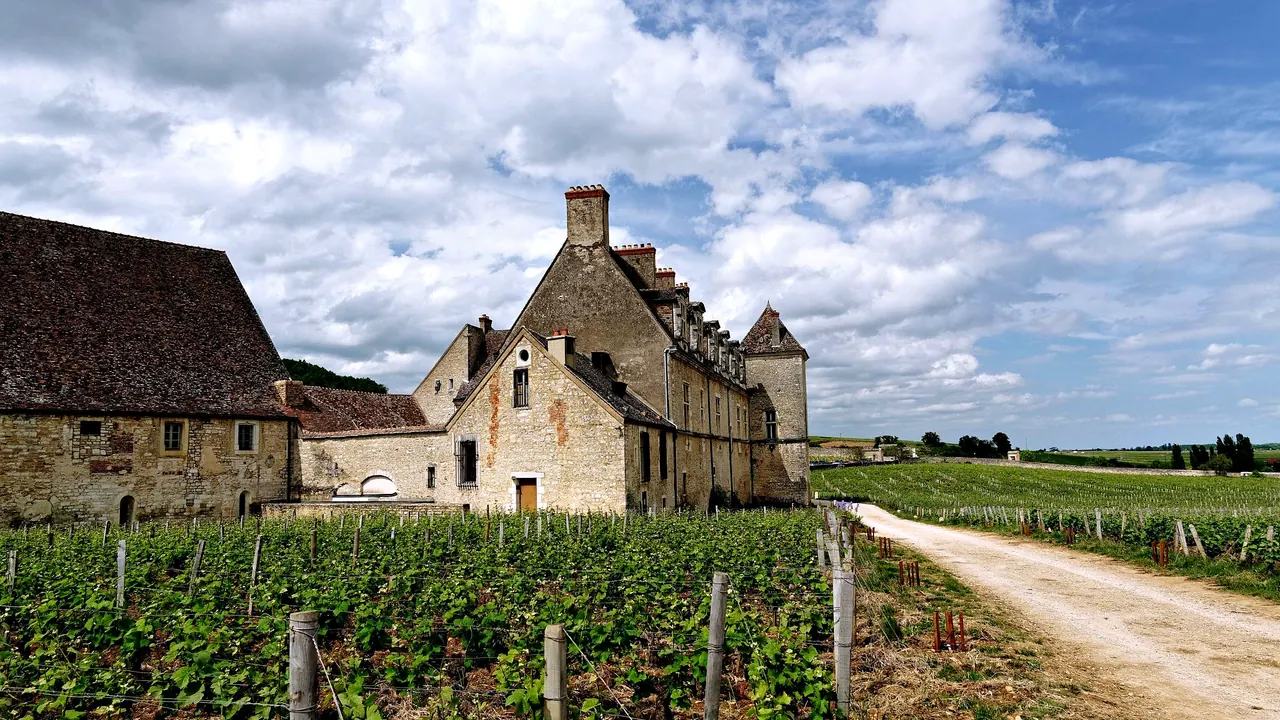
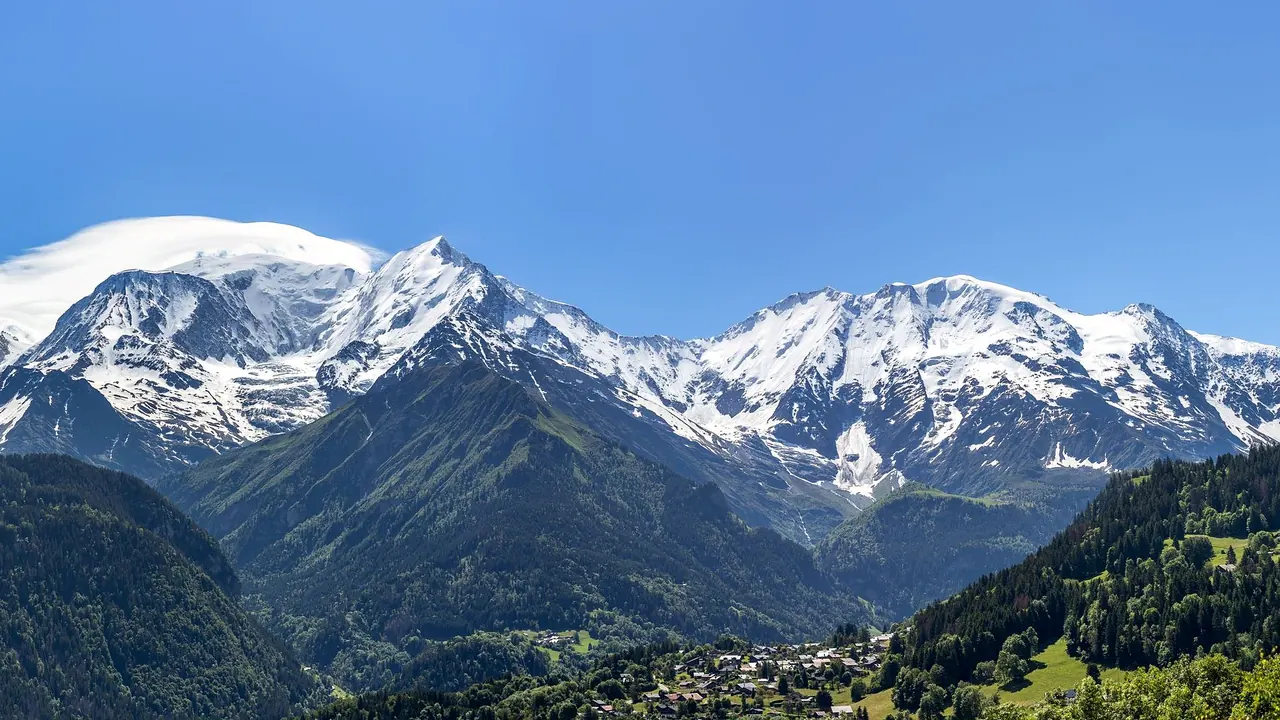
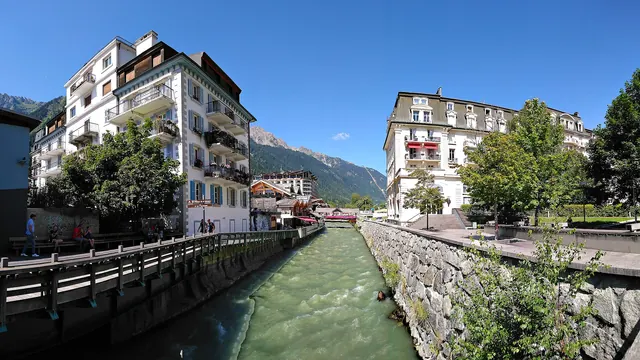
Photos: Burgundy by Gu Bra, Pexels License; French Alps by Marek Piwnicki, Pexels License.
Burgundy or French Alps?
Our verdict in twelve categories, each scored against the same fixed benchmark cities, and the climate month by month, so you can choose for your trip.
Choose Burgundy for
- culture and sights
- prices
- food and drink
Burgundy suits travellers who plan their days around the table and the cellar. The wine slope between Dijon and Santenay, the rich country cooking and the Romanesque abbeys of Vézelay, Fontenay and Cluny make it a region for slow touring from Beaune or Dijon by car or bicycle. It also costs less to stay. What you give up is drama: the hills are gentle, the lakes are small and the evenings end early.
Choose French Alps for
- nature and the outdoors
- beaches
- nightlife
Pick the French Alps if the landscape is the point of the trip. That might mean skiing the huge linked areas of the Tarentaise, walking below Mont Blanc or spending a summer week by Lake Annecy. The region also works better for families, with ski schools and car-free resorts, and its spa towns offer proper thermal bathing. In return you get mountain cheese where Burgundy has grand cuisine, a much bigger bill in the ski season, and fewer great buildings to visit.
Scoreboard
Twelve categories on one fixed scale from 0 to 100. The shaded stretch is the gap between the two.
Your match
Pick a travel style or drag the sliders, and both match scores follow your weighting.
Wins on culture and sights and prices with your weighting.
Wins on nature and the outdoors and beaches with your weighting.
What matters to you?
Category by category
What the scores mean for a trip.
Beaches & swimming
Neither region has a coast, but the Alps do lake swimming far better. Burgundy's options are the supervised reservoir beaches of the Morvan, Lac des Settons above all, and the small lake beach at Lac Kir on Dijon's edge. They are fine for an hour on a hot afternoon and not much more.
Lake Annecy is in another league. Its water is clear, and grassy beaches and jetties line the shore at Sévrier, Talloires and Menthon-Saint-Bernard. Lac d'Aiguebelette is often warmer still, and the pebbly lidos at Évian look across Lake Geneva to Switzerland. A summer lake stay in the Alps can be built around swimming in a way Burgundy's cannot, though the beaches are small and crowd up at weekends.
Food & drink
Burgundy is the place for eating and drinking. You can taste wine in cellars along the Côte de Nuits and Côte de Beaune, from grand names to small domaines, and Chablis and the Mâconnais add cheaper bottles. The cooking runs from boeuf bourguignon and eggs poached in red wine to Époisses, and starred country inns in places like Saulieu make a meal the high point of a day.
Savoyard food is warming and good, with fondue, tartiflette and farm-bought Reblochon and Beaufort, plus lake perch and crisp Savoie whites. The best tables in Megève, Courchevel and around Lake Annecy are excellent. Lower down, though, resort menus repeat the same melted-cheese dishes, and by midweek many visitors want the variety that Burgundy offers.
Culture & sights
Burgundy has far more to see. Dijon's Palace of the Dukes holds one of France's oldest fine art museums. The tiled roof of the Hospices in Beaune is the region's best-known image. Above all there are the abbeys: Vézelay on its hill, the plain stone of Fontenay, the remains of Cluny and the carved cathedral at Autun. They are spread out, so each needs a car and most of a day.
In the Alps, culture fills the gaps between mountain days. Annecy's canal-lined old town, the ducal château in Chambéry, Grenoble's fine-arts museum and Briançon's Vauban walls are all worth a visit, and so are the painted Baroque churches of the Maurienne. None of it matches the scale of Burgundy's medieval heritage.
Nightlife
The Alps offer more, but only in winter. From December to April, Val Thorens, Val d'Isère and Méribel go from table-dancing at mountain restaurants to clubs that stay open into the small hours. Chamonix has a younger, climbing crowd. In summer, evenings move to Annecy's lakeside terraces and Grenoble's student bars, and quiet family villages are best avoided.
In Burgundy the evening is a long dinner with a good bottle. Dijon's student streets and Beaune's wine bars give some life after dark, but the villages are quiet early, at any time of year.
Nature & outdoors
The mountains are the whole reason the Alps rank among Europe's great outdoor regions. Cable cars run from Chamonix to the glaciers below Mont Blanc. The Vanoise and Écrins have ibex and high passes, the Tarentaise has vast linked ski areas, and summer brings via ferrata, rafting on the Isère and road climbs over the Galibier.
Burgundy offers a quieter kind of outdoors: vine-covered slopes, forests and reservoirs in the Morvan, and the short climb up the Roche de Solutré. Its real strength is slow travel, cycling the canal towpaths or drifting through locks on a hired boat. That suits gentle walkers and cyclists, not anyone after altitude or adrenaline.
Day trips
Both make good bases for outings, but the outings are different. From Beaune or Dijon, the wine villages of Pommard and Gevrey-Chambertin are minutes away. Walled towns such as Semur-en-Auxois and Noyers, Cluny in the south and Lyon beyond the border all make full days, and nearly all of it needs a car.
From the Alps the outings cross borders. Geneva is under an hour from Annecy, ferries run from Évian to Lausanne and the Lavaux terraces, and from Chamonix the Mont Blanc tunnel reaches Aosta in Italy. Pick your base carefully, because the deep Tarentaise valleys leave little within easy reach.
Good for families
The Alps are much easier with children. French ski schools are built around them, and car-free resorts such as Avoriaz and Flaine let families walk from the apartment to the nursery slope. Summer brings the rack railway to the Mer de Glace, marmot spotting and shallow lake beaches near Annecy. The catch is the cold mornings and long transfer days, which tire small children.
Burgundy has a few real highlights. At Guédelon, craftsmen are building a castle by medieval methods, and a canal-boat week with locks to work is a lovely family trip. Beyond that, the days revolve around cellars and abbeys, which hold few children's interest for long.
Getting around
Neither is easy without a car, but for different reasons. In Burgundy the distances are short and the roads flat and quiet. Fast trains reach Dijon, which has a tram, and both Dijon and Beaune are easy on foot. Bicycles work well between the Côte villages, which helps, since tasting wine and driving do not mix.
The Alps are simple once you arrive, because lifts link whole valleys of resorts. Getting there means a flight to Geneva, Lyon or Grenoble and then a transfer. In winter that can mean Saturday queues up the Tarentaise and snow chains, and in summer, winding drives between valleys.
Shopping & style
There is little to separate them, but they sell very different things. In Burgundy you shop for food: wine at the cellar door, mustard in Dijon, cassis and Époisses, with Dijon's covered market and Beaune's Saturday market as the best places to browse. Antique dealers dot the countryside.
The Alps lean towards gear and glamour. Chamonix is one of Europe's best places to buy climbing and ski equipment, and Courchevel and Megève have luxury boutiques. Opinel knives and wheels of Beaufort make the classic things to take home.
Affordability
Burgundy is the cheaper trip. Dijon, the Morvan and the rural Yonne have fairly priced guesthouses and good village set lunches. Costs rise in Beaune and along the Côte, and the great wines and starred tables can push them much higher.
A ski week in the Alps adds up fast, between lift passes, equipment hire, ski school, mountain lunches and school-vacation lodging. The smartest addresses in Courchevel and Val d'Isère are among the most expensive in Europe. Summer stays, self-catering in purpose-built resorts, and places such as Grenoble or the Bauges bring the Alps back to ordinary French prices.
Live music & performing arts
Burgundy offers a little more, mostly in summer. Beaune holds a long-established baroque opera festival in July, Chalon-sur-Saône fills its streets with theatre, Cluny has jazz in August, and concerts are held in the basilica at Vézelay. Dijon's opera company plays in the Grand Théâtre all year.
In the Alps, Grenoble's arts centre and chamber orchestra carry the year-round programme, and Évian hosts its chamber music gatherings in summer. In ski season, though, live music mostly means bands at après-ski bars, and for opera you would have to go to Lyon or Geneva.
Wellness & relaxation
The Alps have proper spa towns, and Burgundy does not. Aix-les-Bains has its Belle Époque thermal tradition, Évian its spring water and lakeside promenades, and Saint-Gervais its baths in a gorge below Mont Blanc. In winter, hotel spas and the Chamonix baths face the snow, though a busy ski resort is hardly restful.
In Burgundy, the rest comes from the pace rather than the water. Long lunches, quiet villages and days on a canal barge do the work. Its thermal springs at Bourbon-Lancy serve mostly medical cures, and the wine-based treatments at country hotels near Beaune are a pleasant extra, not a reason to choose the region.
When should you go?
Pick your month. The climate figures are measured averages, not a forecast.
Burgundy in July
French Alps in July
Daytime high, °C
Rainfall in the month, mm
Where the figures come from
Burgundy's temperatures are measured 33 km from the centre, at Dijon.
Burgundy has no rain gauge within 25 km of the centre, so its rainfall comes from a gridded climate dataset read at the destination rather than from a gauge further away.
French Alps's temperatures are measured 35 km from the centre, at Bourg-St-Maurice.
French Alps's station stands 179 m below the place it is measured for, so that place is likely a little cooler than the figures say.
French Alps has no rain gauge within 25 km of the centre, so its rainfall comes from a gridded climate dataset read at the destination rather than from a gauge further away.
Temperature and rainfall are climate normals, averaged over the years shown. Burgundy: 1991-2020 normals, Dijon (32.7 km from centre). French Alps: 1999-2020 (rainfall 1991-2020) normals, Bourg-St-Maurice (35.1 km from centre).
Burgundy is warm enough for walking village streets and cycling the Côte from May to September. July is both its warmest and its sunniest month, with afternoons around 27°C, and that is also when the Morvan lakes are good for a swim. Rain falls steadily through the year without ever being heavy, and the wettest stretch comes in late autumn, peaking at 83mm in November. From November to February the days are short, grey and cold, which makes it a poor time to tour the vineyards.
In the lower valleys and around the lakes, where most visitors stay, the Alps follow almost the same temperature curve: warm in July and August and in single figures through the winter. The high resorts and glaciers are always much colder. The bigger difference is rain. From December to April the Alps get more than twice as much as Burgundy, peaking at 169mm in December, and higher up much of it falls as snow for the ski season. Summer is the Alps' drier season, but the rain there is still close to double Burgundy's, with 107mm in August against 55mm. Late June to early September is the time for lake swimming and high walks. In both regions, spring and late autumn fall between the main seasons.
Which traveller are you?
On a culture and arts trip, Burgundy is the stronger choice. It has the ducal palace and fine art museum in Dijon, the Hospices de Beaune, and Romanesque and Cistercian abbeys across the countryside, plus a summer baroque opera festival in Beaune. Alpine towns fill a half day.
For an outdoors trip, choose the French Alps without hesitation. You get glaciers seen from the Aiguille du Midi, the Tour du Mont Blanc, ibex in the Vanoise, enormous ski areas, paragliding over Annecy and famous cycling passes. Burgundy's canals and Morvan forests are pleasant but much milder.
On a trip with a tight budget, Burgundy goes further. Guesthouses and cottages in Dijon, the Morvan and the rural Yonne are fairly priced, and village set lunches are good. In the Alps, lift passes, ski hire and resort prices drain a budget quickly unless you come in summer.
Before you go
| Measure | Burgundy | French Alps |
|---|---|---|
| Official language | French | French |
| Currency | Euro (EUR) | Euro (EUR) |
| Sockets | CE230 V, 50 Hz | CE230 V, 50 Hz |
| Driving side | Right | Right |
| Time zone | UTC+1, UTC+2 in summer | UTC+1, UTC+2 in summer |
| Emergency number | 112 | 112 |
| Main airport | Lyon Saint-Exupéry Airport (LYS)141 non-stop destinations | Geneva International Airport (GVA)150 non-stop destinations |
| Public holidays this year | 11 days | 11 days |
By the numbers
| Measure | Burgundy | French Alps |
|---|---|---|
| Population | 1,642,687 | - |
Where else could you go?
Every comparison below shares a destination with this one, so you can follow Burgundy or French Alps somewhere new.
- Swiss Alpsvs French Alps
- Lake Maggiorevs French Alps
- Piedmontvs French Alps
- Lake Comovs French Alps
- Swiss Alpsvs Burgundy
- Black Forestvs French Alps