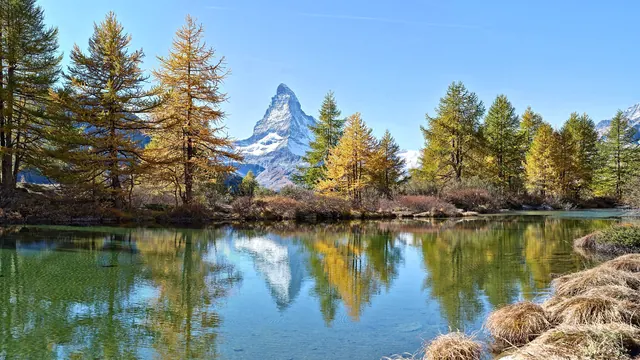
Photos: Burgundy by Gu Bra, Pexels License; Swiss Alps by Jean-Paul Wettstein, Pexels License.
Burgundy or Swiss Alps?
Our verdict in twelve categories, each scored against the same fixed benchmark cities, and the climate month by month, so you can choose for your trip.
Choose Burgundy for
- prices
- food and drink
- culture and sights
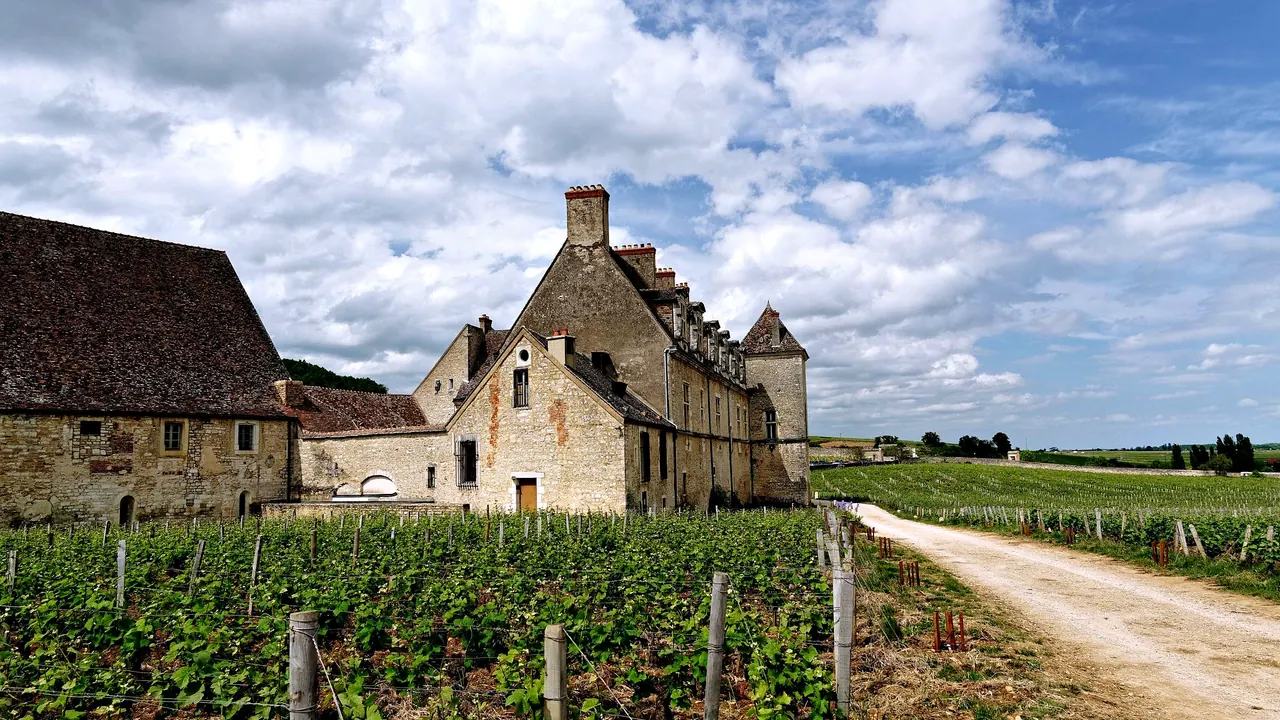
Burgundy suits travellers who plan their days around wine and the table, and who enjoy old stones as much as old vintages. Tastings along the Côte, rich regional cooking, Romanesque abbeys and the Palace of the Dukes in Dijon make for a slow, rewarding trip, and it costs far less than the mountains. You will need a car, though, because the best of it lies out in the countryside.
Choose Swiss Alps for
- nature and the outdoors
- wellness
- getting around
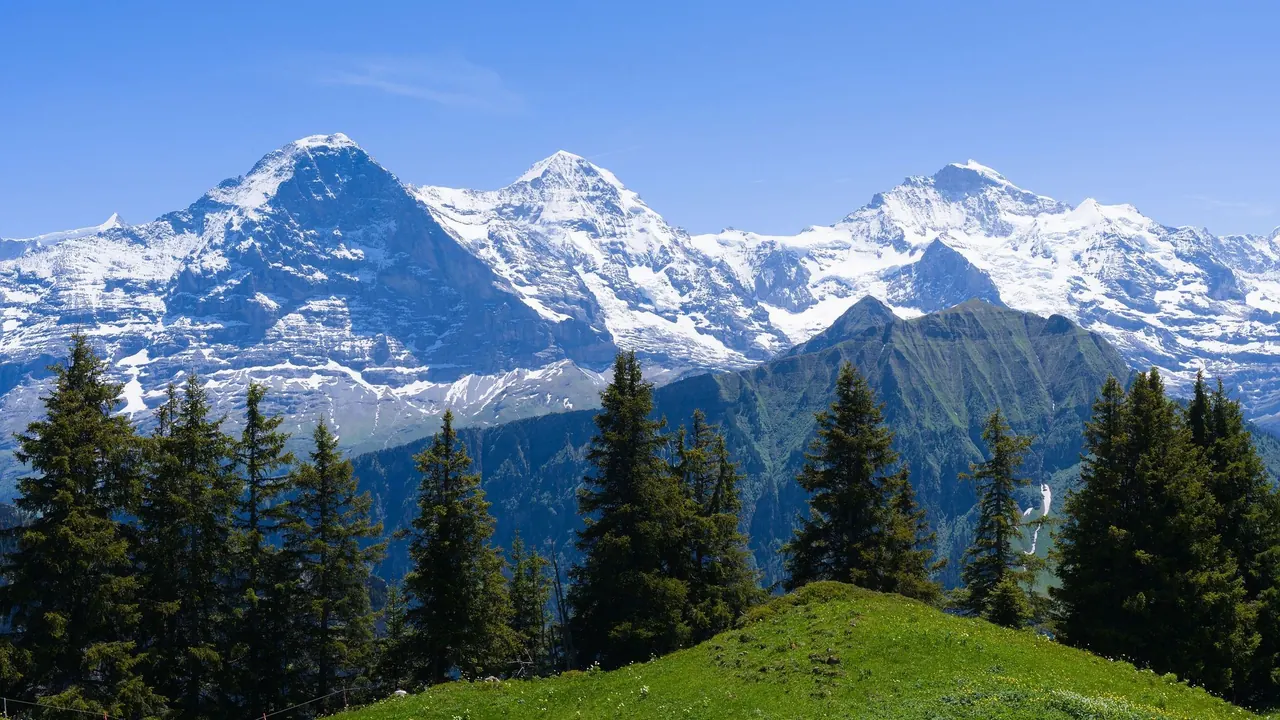
For scenery, fresh air and activity, the Swiss Alps are in a different class. Hikers, skiers, families and anyone after hot springs and quiet car-free villages will find that trains and lifts carry them almost everywhere without driving. The bill is high, the food narrower and the culture slighter, so this is a trip for the landscape above all.
Scoreboard
Twelve categories on one fixed scale from 0 to 100. The shaded stretch is the gap between the two.
Your match
Pick a travel style or drag the sliders, and both match scores follow your weighting.
Wins on prices and food and drink with your weighting.
Wins on nature and the outdoors and wellness with your weighting.
What matters to you?
Category by category
What the scores mean for a trip.
Beaches & swimming
Neither has a coastline, so swimming in either means a lake. The Alps have the better choice: lidos with jetties and diving boards on Lake Thun and Lake Brienz, the surprisingly warm Caumasee near Flims, and, in Ticino, Lake Lugano and Lake Maggiore, which get warm enough in high summer for a proper swim. Burgundy has the supervised beaches at Lac des Settons in the Morvan and Lac Kir on the edge of Dijon, which are fine for cooling off on a hot afternoon but not much more.
Food & drink
Burgundy is a place to travel for food and wine, and the Alps are not. You can taste along the Côte de Nuits and Côte de Beaune, at grand houses and small family domaines alike, or head to Chablis and the Mâconnais for gentler wines. Beaune puts wine bars and serious restaurants inside its walls, and the cooking is rich and rooted, from boeuf bourguignon and eggs poached in red wine to Époisses and the starred country inns of Saulieu and Chagny.
Alpine food is good but narrow: fondue, raclette and rösti, best eaten on a hut terrace at the top of the lifts, with Valais wines such as Petite Arvine that are rarely seen abroad. Beyond the ambitious kitchens of Zermatt, St Moritz and Gstaad, most villages offer little more than a few hotel dining rooms.
Culture & sights
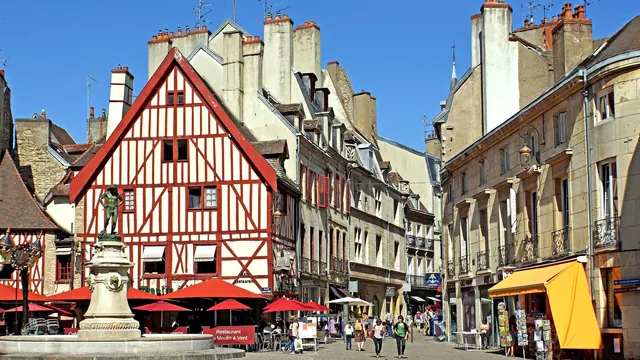
Burgundy has much the deeper heritage. Vézelay, Fontenay, Cluny and Autun make it one of Europe's great regions for Romanesque and Cistercian architecture, and Dijon's Palace of the Dukes holds a major fine art museum. The catch is that these sites are spread out, and each one takes a day by car.
In the Alps the sights are part of the scenery: sgraffito houses in Guarda, the Bernina railway line, the two castles facing each other at Sion, the Carolingian frescoes at Müstair. They are pleasant to come across along the way, but none would be worth the journey for culture alone.
Nightlife
Neither is a place for big nights out, but the Alps offer more of one if you come in winter. Après-ski on the terraces and in the late clubs of Verbier, and in the bars at the foot of Zermatt's pistes, is lively, while St Moritz and Gstaad lean towards smart hotel bars.
Evenings in Burgundy mean long dinners, with Dijon's student pubs and Beaune's wine bars the main exceptions. The two also peak in opposite seasons: the Alps go quiet in summer, which is exactly when Beaune stays up latest.
Nature & outdoors
This is where the two differ most. The Alps have the Eiger and Jungfrau above the Lauterbrunnen valley, the Matterhorn, the Aletsch Glacier and ibex in the Swiss National Park, with marked trails starting from cable-car stations and excellent skiing in winter.
Burgundy is gentle by comparison: vine-covered slopes, the beech forests and reservoirs of the Morvan, and the short climb up the Roche de Solutré. Its pleasure is moving slowly, cycling through the Côte or steering a hired boat along the Canal du Nivernais, rather than high country or adventure.
Day trips
Both make good bases for days out, and the real difference is how you travel. From Beaune or Dijon you can reach wine villages a few minutes apart, small medieval towns such as Semur-en-Auxois and Noyers, and Lyon. Nearly all of it needs a car, which does not sit well with wine tasting.
From the Bernese Oberland the train does the work, to Bern, Thun, Lucerne over the Brünig Pass, and further west to Gruyères and the Château de Chillon. Burgundy packs more old towns into a small area, while the Alps spread their outings across lakes, cities and valleys.
Good for families
The Alps are much easier with children. Ski schools and nursery slopes in Grindelwald or Saas-Fee, summer toboggan runs and playgrounds at the top of the lifts, and the simple fun of cogwheel trains and lake steamers fill the days. Car-free Zermatt and Wengen also let children walk around freely.
Burgundy has some good moments, above all watching a castle being built at Guédelon and a week working the locks on a canal boat. Much of a typical day, though, is spent driving between cellars and abbeys, which tests young patience.
Getting around
The Alps are far easier without a car. Trains, postbuses, lake steamers and cable cars run on connected timetables to almost every village, though crossing between regions, say from the Bernese Oberland to the Engadine, takes a long day.
In Burgundy, trains link Dijon, Beaune, Chalon-sur-Saône and Auxerre, and the two main towns are easy to walk, but the villages and abbeys need a hire car. Cycling between the closely spaced villages of the Côte is the pleasant exception, and the safer choice after a tasting.
Shopping & style
In both regions the best buys are things to eat and drink, and Burgundy does this better. Wine from the cellar door, Dijon mustard, cassis and Époisses, together with Dijon's covered market hall and Beaune's Saturday market, give it the market life the Alps lack. Dijon also has a decent town centre for ordinary shopping.
The Alps offer alpine cheese bought from the dairy, woodcarving from Brienz, and serious mountain gear in Zermatt and Interlaken. Their one advantage is luxury: St Moritz and Gstaad have the fashion and jewellery boutiques Burgundy does without.
Affordability
Burgundy is far easier on the budget. Guesthouses and cottages in the Morvan and the rural Yonne and set lunches in village restaurants keep it mid-priced. Costs climb mainly in Beaune, on the Côte and at the top tables, and car hire adds to the bill.
The Swiss Alps are at the opposite extreme: hotels, meals in mountain restaurants and above all the lifts and mountain railways add up fast. Self-catering, picnics, travel passes and quieter valleys such as Goms bring the cost down, but never make it cheap.
Live music & performing arts
Neither is a destination for the stage, and both come alive mainly in summer. Burgundy has the only year-round company, Dijon's opera in the Grand Théâtre, and a wider summer mix: baroque opera in Beaune, street theatre in Chalon-sur-Saône and jazz at Cluny.
The Alps focus on classical music, with the Verbier Festival and the Menuhin Festival around Gstaad bringing in top soloists. Outside summer there is little beyond brass bands and alphorn evenings.
Wellness & relaxation
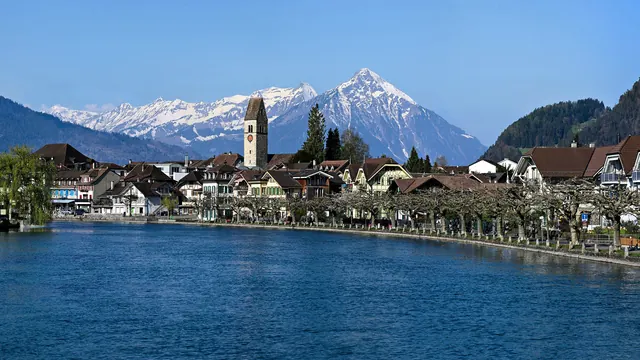
For rest with real bathing, the Alps are well ahead. They have Leukerbad's open-air hot pools beneath the cliffs, the stone thermal bath at Vals, Bad Ragaz and Scuol, plus the large spas of the grand hotels in St Moritz and Gstaad, all set among car-free villages with clean air and quiet nights.
Burgundy relaxes you through its pace, with long lunches and canal barges drifting through locks, rather than through its waters. Bourbon-Lancy and Saint-Honoré-les-Bains mostly serve medical cures, and the grape-based treatments at a few country hotels near Beaune are an extra, not a reason to come.
When should you go?
Pick your month. The climate figures are measured averages, not a forecast.
Burgundy in July
Swiss Alps in July
Daytime high, °C
Rainfall in the month, mm
Where the figures come from
Burgundy's temperatures are measured 33 km from the centre, at Dijon.
Burgundy has no rain gauge within 25 km of the centre, so its rainfall comes from a gridded climate dataset read at the destination rather than from a gauge further away.
Swiss Alps has no rain gauge within 25 km of the centre, so its rainfall comes from a gridded climate dataset read at the destination rather than from a gauge further away.
Swiss Alps's sunshine is measured 66 km from the centre, at Sion.
Temperature and rainfall are climate normals, averaged over the years shown. Burgundy: 1991-2020 normals, Dijon (32.7 km from centre). Swiss Alps: 2005-2020 (sunshine 1961-1990, rainfall 1991-2020) normals, Meiringen / Unterbach (19.5 km from centre).
Burgundy is the warmer and drier of the two in summer. Around its main bases, July reaches about 27°C with roughly 64mm of rain, which is good weather for cycling the vineyards and swimming in the Morvan lakes in July and August. Spring and September are pleasant for walking the towns and visiting abbeys. Late autumn turns wet and dull, and winter is cold and grey.
The Alps figures are measured where most visitors stay. They run a few degrees cooler, with July near 24°C, and summer is the wettest season there, at around 126mm a month, so plan hikes with spare days for bad weather. July is the sunniest month in both places. The high trails and passes are at their best from late June to September. Winter in the Alps is cold, around 3°C by day in January, but that is the ski season, when Burgundy has little to offer.
Which traveller are you?
For an outdoors trip, the Swiss Alps are the obvious pick. Trails start straight from cable-car stations, glaciers and the Matterhorn are within easy reach, and winter brings excellent skiing. Burgundy's gentle cycling and canal boating are pleasant but tame by comparison.
On a relaxing and wellness trip, the Alps win again. The hot springs at Leukerbad and Vals, serious hotel spas and quiet car-free villages make it easy to slow down. Burgundy relaxes you with long lunches and canal barges, but has little bathing culture.
On a tight budget, Burgundy is the realistic choice. Guesthouses, self-catering cottages and set lunches in village restaurants in the Morvan and the Yonne keep costs moderate. The Alps stay among Europe's most expensive places even if you live on picnics and buy travel passes.
Before you go
| Measure | Burgundy | Swiss Alps |
|---|---|---|
| Official language | French | French, German, Italian, Romansh |
| Currency | Euro (EUR) | Swiss Franc (CHF) |
| Sockets | CE230 V, 50 Hz | CJ230 V, 50 Hz |
| Driving side | Right | Right |
| Time zone | UTC+1, UTC+2 in summer | UTC+1, UTC+2 in summer |
| Emergency number | 112 | 112 |
| Main airport | Lyon Saint-Exupéry Airport (LYS)141 non-stop destinations | Zürich Airport (ZRH)226 non-stop destinations |
| Public holidays this year | 11 days | 10 days |
By the numbers
| Measure | Burgundy | Swiss Alps |
|---|---|---|
| Population | 1,642,687 | - |
Where else could you go?
Every comparison below shares a destination with this one, so you can follow Burgundy or Swiss Alps somewhere new.
- Lake Maggiorevs Swiss Alps
- French Alpsvs Swiss Alps
- Lake Comovs Swiss Alps
- Black Forestvs Swiss Alps
- French Alpsvs Burgundy
- Piedmontvs Swiss Alps