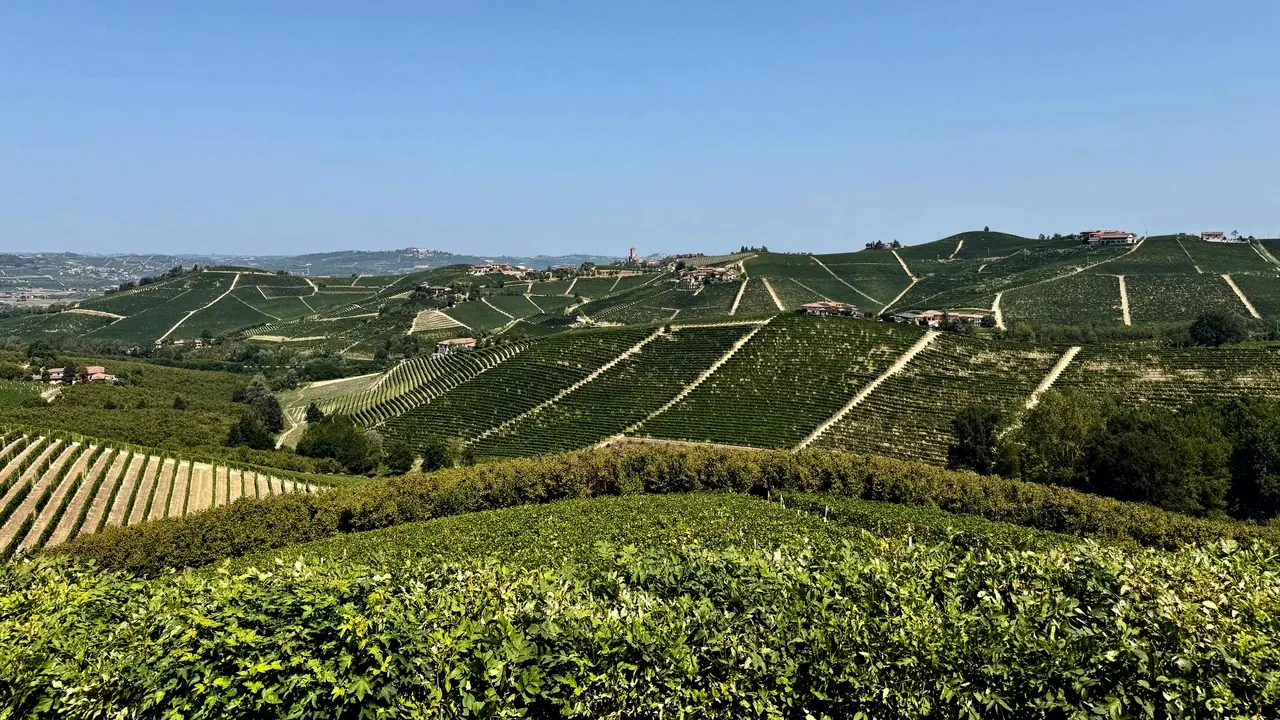
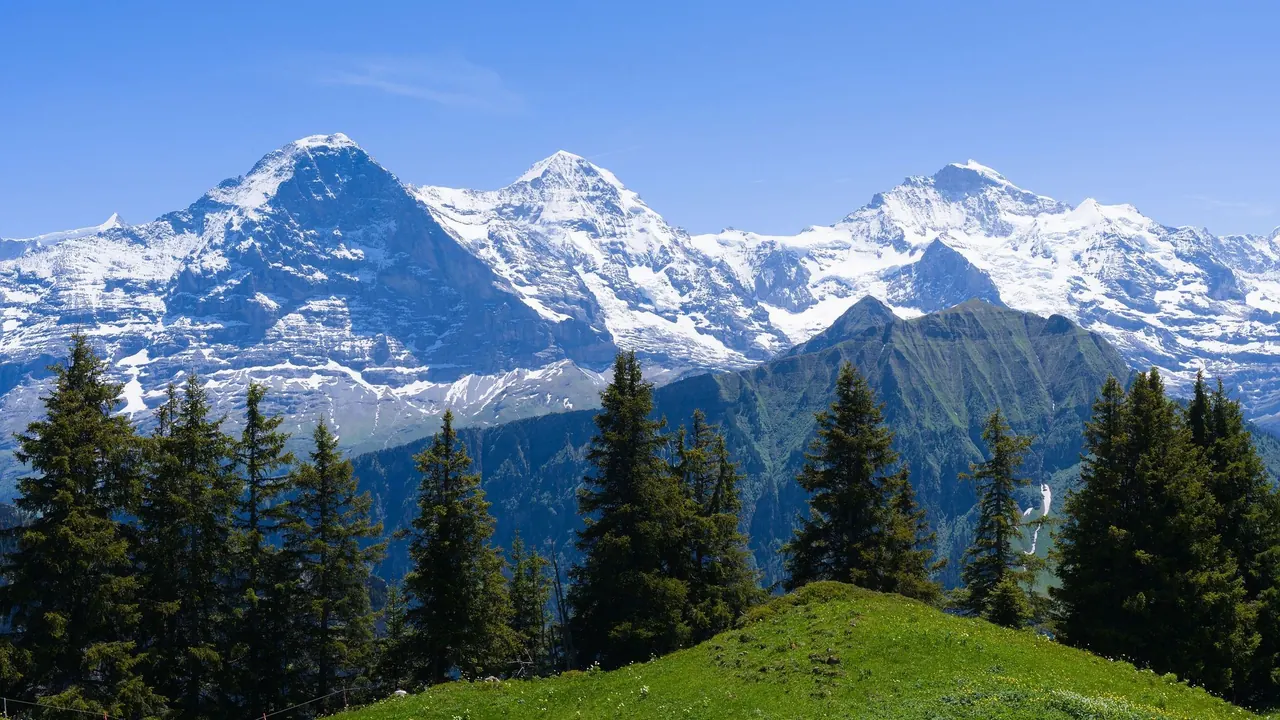
Photos: Piedmont by Martina Amaro, Pexels License; Swiss Alps by Jean-Paul Wettstein, Pexels License.
Piedmont or Swiss Alps?
Our verdict in twelve categories, each scored against the same fixed benchmark cities, and the climate month by month, so you can choose for your trip.
Choose Piedmont for
- prices
- food and drink
- culture and sights
Piedmont suits a traveller who plans the day around the table. Barolo cellars and truffle trattorias in the Langhe, Turin's coffee houses and aperitivo, the Egyptian Museum and the Savoy palaces make it a richer trip for food, wine and culture. It also costs far less than its northern neighbour. A car helps once you leave Turin and the lake.
Choose Swiss Alps for
- wellness
- getting around
- nature and the outdoors
The Swiss Alps are the choice when the mountains themselves are the trip. The peaks are grander, the trails start at the top of a cable car, the trains reach almost every village, and the thermal baths and car-free resorts make rest easy. Families do well here too. In return the bill is much higher, and the evenings and the cooking have less to offer.
Scoreboard
Twelve categories on one fixed scale from 0 to 100. The shaded stretch is the gap between the two.
Your match
Pick a travel style or drag the sliders, and both match scores follow your weighting.
Wins on prices and food and drink with your weighting.
Wins on wellness and getting around with your weighting.
What matters to you?
Category by category
What the scores mean for a trip.
Beaches & swimming
Neither has a coast, and in both a swim means a lake. They even share one: Lake Maggiore runs from Piedmont's western shore at Stresa and Baveno up to the Swiss end in Ticino. Piedmont's lake swimming means pebble beaches, lidos and bathing platforms on warmer water, plus the grassy spots on quieter Lake Orta.
The Swiss lakes under the Jungfrau, Thun and Brienz, are clearer and noticeably cooler. Their lidos have lawns and diving boards, and Caumasee near Flims is a lovely surprise. In both places a swim fits into a summer day rather than defining it.
Food & drink
Piedmont is one of Italy's great places to eat, and the gap here is wide. The Langhe and Roero hills supply Barolo and Barbaresco, white truffles in autumn and dishes such as tajarin and vitello tonnato. Turin adds bicerin in historic coffee houses, vermouth and generous aperitivo, and Porta Palazzo shows the region's produce at scale.
The Swiss Alps eat well but narrowly: fondue, raclette, rösti and air-dried beef on hut terraces at the top of the lifts. The Valais wines, Petite Arvine and Cornalin, are worth seeking out. Beyond the costly tables of Zermatt and St Moritz, most villages offer little more than a few hotel dining rooms.
Culture & sights
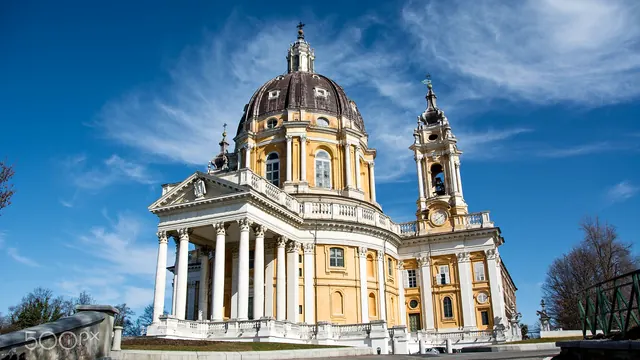
Piedmont has a capital city and the Alps do not, and that decides it. Turin's Egyptian Museum is a reason to travel in itself. The Baroque squares, the Royal Palace and the Savoy residences at Venaria Reale and Stupinigi fill several days, and beyond the city lie the Sacra di San Michele on its crag and the island palaces of Lake Maggiore.
Swiss Alpine heritage is smaller and spread through the landscape: sgraffito houses in Guarda, the Rhaetian Railway's Albula line, Bellinzona's three castles and the Carolingian frescoes at Müstair. It makes good sightseeing between walks, but there is no collection on Turin's scale.
Nightlife
Neither is a party destination, and the difference is mostly about when. Piedmont's evenings run all year in Turin: aperitivo, then the crowded pavements of San Salvario and Vanchiglia, and the riverside along the Po in summer.
The Alps come alive only in the ski season, with Verbier's slope-side terraces and late clubs, Zermatt's bars at the foot of the pistes and the glossier hotel bars of St Moritz. In summer the hiking villages are asleep by eleven.
Nature & outdoors
Piedmont's mountains are serious ones. Monte Rosa rises above Alagna and Macugnaga, ibex graze below Gran Paradiso at the head of the Orco valley, and the Val Grande is wild enough to have no villages at its heart. They do need their own base, well above Turin. The region's other strength lies lower down: the rolling Langhe and Monferrato wine hills, a short way from Turin, for road cycling and vineyard walks, and Lake Orta and Lake Maggiore for kayaking under the mountains.
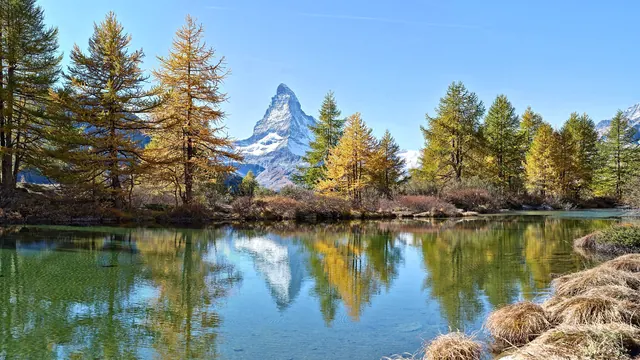
The Swiss Alps are the grander mountain trip, and the easier one to use. Cable cars carry walkers up to the Eiger, Mönch and Jungfrau above Lauterbrunnen, the Matterhorn and the Aletsch glacier, so high country is reached without a long climb. In winter the ski areas of Zermatt, Verbier and Davos are among the best anywhere.
Day trips
Piedmont has the bigger names within reach. From Turin, Milan is about an hour by fast train, and Genoa and the Ligurian coast are not much further. Inside the region, the Barolo villages, Alba, Saluzzo, Orta San Giulio and the spa town of Acqui Terme fill the remaining days.
The Swiss Alps offer plenty of smaller outings, all made simple by rail. From the Bernese Oberland you can reach Bern, Thun and Lucerne, and further west Gruyères and the Château de Chillon. Few of them are as famous as Milan or Genoa.
Good for families
The Swiss Alps are the easier choice with children. Ski schools at Grindelwald or Saas-Fee have gentle nursery slopes, and in summer the same lifts lead to toboggan runs, adventure playgrounds and paddling lakes. Car-free Zermatt and Wengen let children walk freely, and a cogwheel train is a day out in itself.
Piedmont works best as a mix of city and outdoors: the mummies in the Egyptian Museum, boats to the Borromean Islands and their white peacocks, and lidos on Lake Maggiore. The wine hills hold less for children, and neither region has a big theme park.
Getting around
The Swiss Alps are far easier without a car. Trains, postbuses, steamers and cable cars run on connected timetables to almost every village, and several resorts ban cars outright. The only catch is distance, since crossing between regions takes a long day of slow, scenic lines.
In Piedmont, the trains cover Turin, Asti, Alba and the Stresa shore well. The Langhe hilltop villages and the Alpine valleys, however, really need a car. The roads are good, so driving is a pleasure rather than a chore.
Shopping & style
Piedmont offers more, and most of it is in Turin. The arcaded Via Roma and pedestrian Via Garibaldi are good for browsing, Porta Palazzo and the Saturday Balon flea market for markets. You can take home gianduiotti, vermouth and Barolo bought at the cellar door, and Biella's cashmere mills add something to wear.
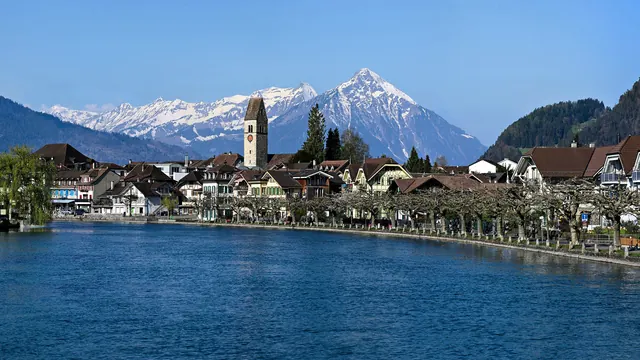
Swiss Alpine shopping is a few resort streets: luxury boutiques in St Moritz and Gstaad, watch and serious mountain-gear shops in Zermatt and Interlaken. Beyond those, dairy cheese and Brienz woodcarving are the best souvenirs.
Affordability
This is the widest gap between the two. Piedmont is mid-priced and generous: fair hotels in Turin, aperitivo with plenty to eat, long trattoria meals and good wine bought at the cellar door. Costs rise in the Langhe during truffle season, in the lake resorts in high summer and at the ski resorts in winter, but a base in Turin or a farm stay keeps a trip moderate.
The Swiss Alps are among the most expensive places anywhere. Rooms, simple meals and every cable-car ride all add to the bill. Self-catering, travel passes and quieter valleys such as Goms or the Ticino side reduce the cost, but none of them makes the Alps cheap.
Live music & performing arts
Piedmont has a resident season, because Turin has one. The Teatro Regio stages opera and ballet, the RAI National Symphony Orchestra plays in its own auditorium, and the Teatro Carignano is one of Italy's loveliest historic theatres. Stresa adds summer concerts on the lake.
The Swiss Alps have no opera house or theatre company, but their summer festivals are distinguished: the Verbier Festival in July and the Menuhin Festival in the churches around Gstaad. A classical music lover can plan a summer week around them, while the rest of the year offers little beyond brass bands and alphorn evenings.
Wellness & relaxation
The Swiss Alps are made for slowing down. Leukerbad's hot pools are open under the cliffs even in snow, Vals has its stone bath cut into the hillside, and Bad Ragaz and Scuol have bathing traditions centuries old. The grand hotels have serious spas, and the car-free villages are quiet almost everywhere.
Piedmont has real thermal waters too, at the Bollente spring in Acqui Terme and the mountain baths of Valdieri and Vinadio. Its other kind of rest is a wine resort or farm stay in the Langhe, with long lunches over the vineyards.
When should you go?
Pick your month. The climate figures are measured averages, not a forecast.
Piedmont in July
Swiss Alps in July
Daytime high, °C
Rainfall in the month, mm
Where the figures come from
Piedmont has no weather station within reach, so its figures come from a gridded climate model rather than a measured record, and read a broad area rather than one spot.
Swiss Alps has no rain gauge within 25 km of the centre, so its rainfall comes from a gridded climate dataset read at the destination rather than from a gauge further away.
Swiss Alps's sunshine is measured 66 km from the centre, at Sion.
Temperature and rainfall are climate normals, averaged over the years shown. Piedmont: 1991-2020 normals, TerraClimate 4 km grid at the town, no weather station within 90 km. Swiss Alps: 2005-2020 (sunshine 1961-1990, rainfall 1991-2020) normals, Meiringen / Unterbach (19.5 km from centre).
Piedmont's figures come from the lowlands where most visitors stay, around Turin and the wine hills, and its summers there are properly warm, with highs near 29°C in July and August. Those are the months for swimming in Lake Maggiore, though street walking in Turin can feel heavy at midday. Spring and September are easier for the cities and the vineyards. The rain comes in autumn, peaking at 89mm in November, just as the truffle and harvest season runs. Winters are cool and fairly dry, good for skiing in the mountains above.
In the Swiss Alps the valleys are much cooler, with summer highs of about 24°C that suit hiking rather than lying by a lake. Summer is also the wettest time, with up to 127mm a month in afternoon storms, but July is the sunniest month too, at around 270 hours. From December to March the cold and snow belong to the skiers, and November and the end of spring are the quiet in-between weeks, when many high passes and lifts are closed.
Which traveller are you?
On a food and nightlife trip, Piedmont wins easily. You get Barolo and truffles in the Langhe, agnolotti and long lunches in village trattorias, and Turin's aperitivo leading on to the bars of San Salvario. The Alps offer fondue and après-ski, and only in winter.
For a trip on a tight budget, Piedmont is the realistic choice. Turin hotels, set lunches and farm stays keep costs moderate. The Swiss Alps are among the world's dearest places to vacation, and the lifts and mountain railways add to the cost of every outing.
On a relaxing and wellness trip, the Swiss Alps come out ahead. You can soak in Leukerbad's open-air pools or the stone baths at Vals, then sleep in a car-free village with clean air and quiet nights. Piedmont's spas at Acqui Terme are genuine, but fewer.
Before you go
| Measure | Piedmont | Swiss Alps |
|---|---|---|
| Official language | Italian | French, German, Italian, Romansh |
| Currency | Euro (EUR) | Swiss Franc (CHF) |
| Sockets | CFL230 V, 50 Hz | CJ230 V, 50 Hz |
| Driving side | Right | Right |
| Time zone | UTC+1, UTC+2 in summer | UTC+1, UTC+2 in summer |
| Emergency number | 112 | 112 |
| Main airport | Turin Airport (TRN)65 non-stop destinations | Zürich Airport (ZRH)226 non-stop destinations |
| Public holidays this year | 13 days | 10 days |
By the numbers
| Measure | Piedmont | Swiss Alps |
|---|---|---|
| Population | 4,341,375 | - |
| Swim season, months above 21 °C | 4 months | - |
Where else could you go?
Every comparison below shares a destination with this one, so you can follow Piedmont or Swiss Alps somewhere new.
- Lake Maggiorevs Swiss Alps
- French Alpsvs Swiss Alps
- Lake Comovs Swiss Alps
- Lake Maggiorevs Piedmont
- Cinque Terrevs Piedmont
- French Rivieravs Piedmont