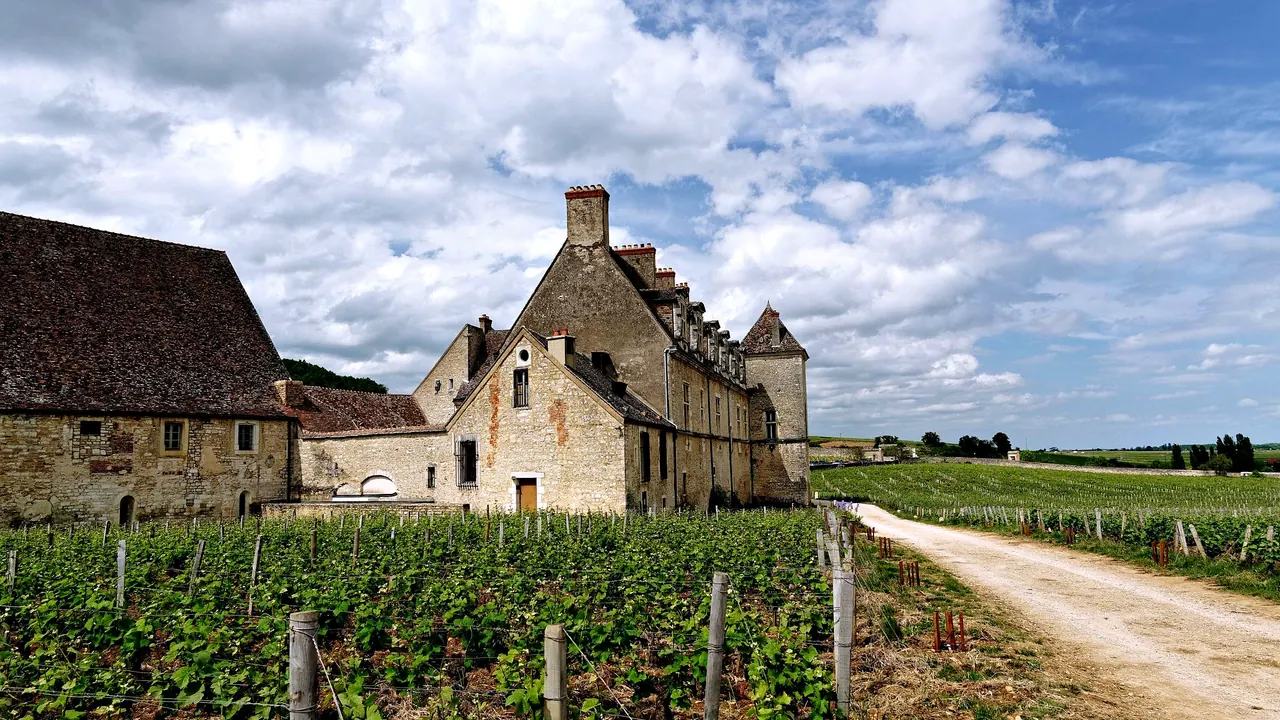
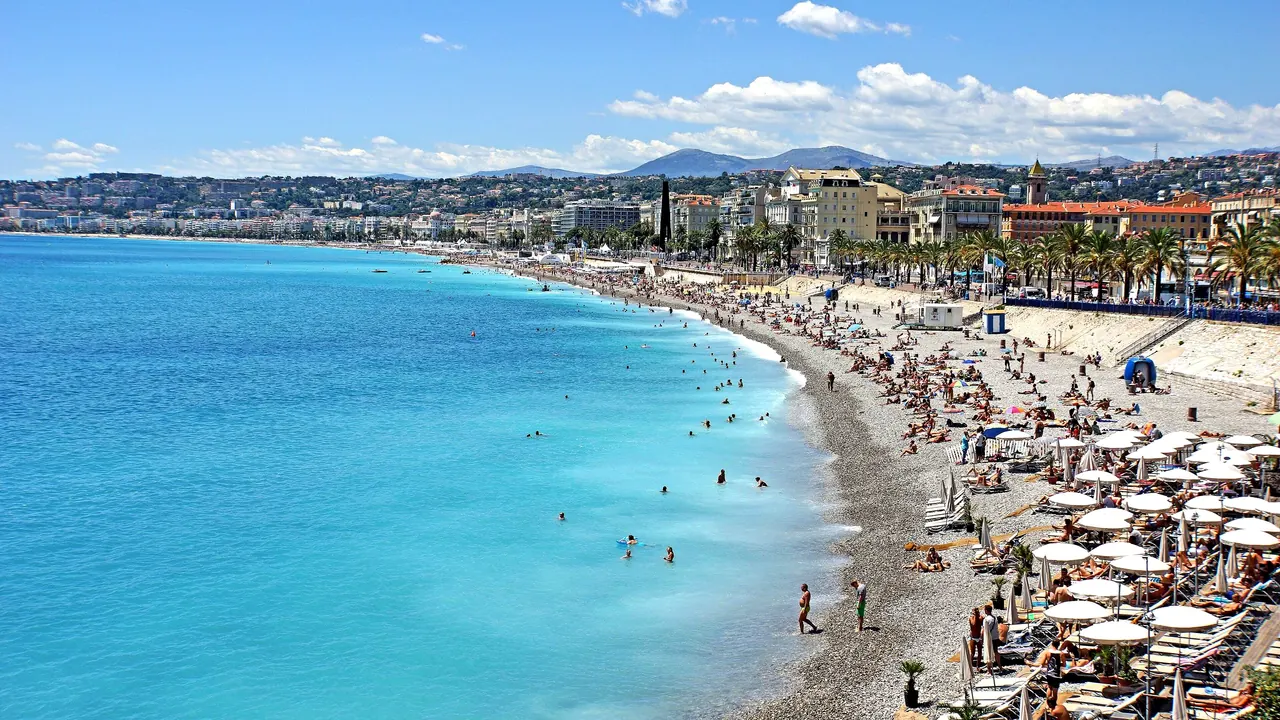
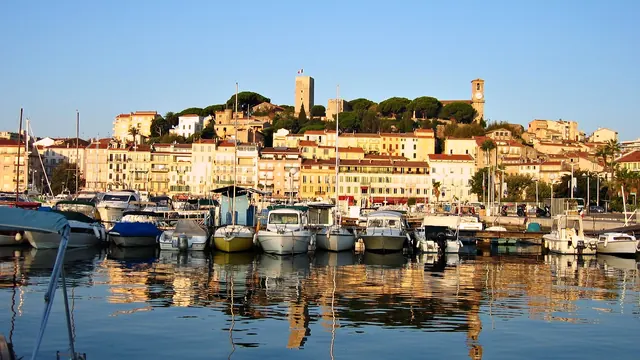
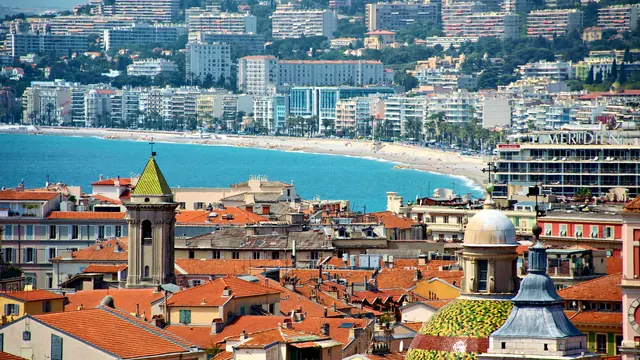
Photos: Burgundy by Gu Bra, Pexels License; French Riviera by Dennis G. Jarvis, CC BY-SA 2.0, cropped.
Burgundy or French Riviera?
Our verdict in twelve categories, each scored against the same fixed benchmark cities, and the climate month by month, so you can choose for your trip.
Choose Burgundy for
- prices
- food and drink
- day trips
Burgundy is the choice for a trip built around the table. You get cellar tastings along the Côte between Dijon and Santenay, long lunches of boeuf bourguignon and Époisses, and Romanesque abbeys such as Vézelay and Fontenay between meals. It costs less than the coast and moves at a slow pace. It suits couples with a car who need neither a beach nor late nights.
Choose French Riviera for
- beaches
- nightlife
- nature and the outdoors
For sea, sun and livelier evenings, the French Riviera wins clearly. Its shore runs from the pebbles of Nice to the sand of Pampelonne, with mountains rising straight behind it, and a coastal railway links Monaco, Menton and Antibes without a car. It is the more expensive trip, especially in midsummer. In return, families, walkers and anyone who wants to go out after dinner will find far more to do.
Scoreboard
Twelve categories on one fixed scale from 0 to 100. The shaded stretch is the gap between the two.
Your match
Pick a travel style or drag the sliders, and both match scores follow your weighting.
Wins on prices and food and drink with your weighting.
Wins on beaches and nightlife with your weighting.
What matters to you?
Category by category
What the scores mean for a trip.
Beaches & swimming
Burgundy is landlocked, so swimming means a lake. Lac des Settons in the Morvan has supervised beaches and sailing clubs, and Dijon has a small lake beach at Lac Kir. Either is fine for cooling off on a hot July afternoon.
The Riviera is a true beach destination. There are long pebble beaches at Nice and Menton, sand at Cannes, Juan-les-Pins and Pampelonne, and small clear coves in the red rock of the Esterel. Private concessions take much of the best sand and the public stretches fill up in midsummer, but the sea stays swimmable from June into early October.
Food & drink
Burgundy has the edge for anyone who travels to eat and drink. Its wines from the Côte de Nuits and Côte de Beaune are among the best known anywhere. The cooking is rich and hearty, from snails in garlic butter and eggs poached in red wine to Bresse chicken, and old country inns in villages such as Saulieu hold Michelin stars.
The Riviera cooks lighter, Mediterranean food based on olive oil. The Niçois dishes are socca, pissaladière and stuffed vegetables, and the market on the Cours Saleya is the place to find the produce. Its street food is better than anything Burgundy offers, but the set menus on the seafront are best avoided.
Culture & sights
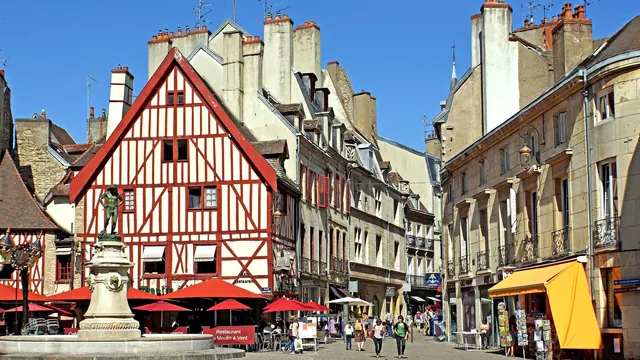
Both regions are rich in sights, but from very different centuries. Burgundy's heritage is medieval and monastic: the Palace of the Dukes and its fine art museum in Dijon, the tiled roof of the Hospices in Beaune, and the Romanesque and Cistercian buildings at Vézelay, Fontenay and Cluny. They are spread across the countryside, and most need a car and a day each.
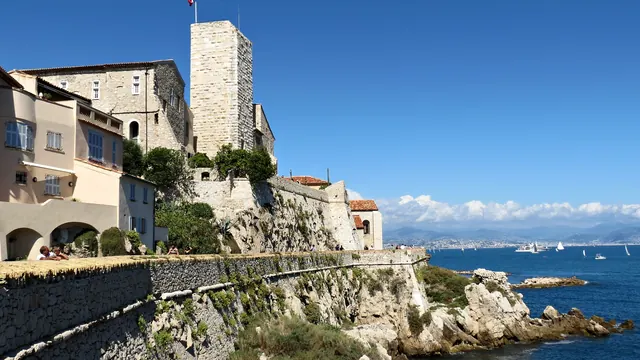
The Riviera's strength is twentieth-century art made on this coast: the Matisse and Chagall museums in Nice, the Picasso collection at Antibes and the Fondation Maeght. It adds Belle Epoque villas, Monaco's palace and the Roman trophy at La Turbie, and most of it is within easy reach of Nice.
Nightlife
In Burgundy, an evening out usually means a long dinner and a good bottle. Dijon has a few student pubs and clubs, and Beaune has wine bars that stay busy late in summer. Beyond those two towns, the villages go quiet early.
The Riviera has far more choice, at least from June to September. Saint-Tropez and Monaco have beach clubs and table-service clubs, Cannes has late bars along the Croisette and Juan-les-Pins has a strip of bars and clubs. Nice's old town and port are more relaxed. Wherever you go, a night out on this coast is expensive.
Nature & outdoors
Burgundy's countryside is gentle and pastoral: vine slopes, pastures of Charolais cattle, the beech forests and reservoirs of the Morvan, and canal towpaths for cycling or a slow week on a hired boat. The short climb up the Roche de Solutré is about as dramatic as it gets.
The Riviera is far grander, with mountains dropping almost straight into the sea. It has coastal paths around Cap Ferrat and Cap d'Antibes, the red rock of the Esterel and diving off the Lérins islands. The high trails of the Mercantour National Park are about an hour and a half from Nice. Spring and autumn are the best seasons for walking.
Day trips
From Beaune or Dijon, the outings have more historic weight, but they are spread out. There are walled medieval towns such as Semur-en-Auxois and Noyers, Chablis to the north, Cluny to the south, and Lyon within about two hours. Wine villages such as Meursault and Gevrey-Chambertin are only minutes apart, but nearly everything else needs a car.
The Riviera's outings are shorter and easier to reach. From Nice, the coastal train reaches Villefranche, Monaco and Menton in well under an hour, Dolceacqua and Sanremo lie just across the Italian border, and boats cross to the Lérins islands. The trade-off is variety, because many days turn out to be one more pretty hill village.
Good for families
Burgundy has two real highlights for children. At Guédelon, craftsmen are building a castle using medieval methods, and a week on a canal boat lets children work the locks. The Morvan lakes add beaches and canoes, but days of cellars and abbeys soon bore children.
The Riviera is the easier family vacation. Gently shelving sand at Juan-les-Pins, Cannes and Fréjus, the aquarium in Monaco's Oceanographic Museum, Parc Phoenix and the water parks near Antibes fill a week without effort. June and September avoid the worst heat and traffic.
Getting around
In Burgundy, trains link Dijon, Beaune, Chalon-sur-Saône and Mâcon, but buses to the villages are sparse, so most visitors hire a car. The roads are quiet and pleasant, though tasting days need someone who stays sober to drive. Cycling between the closely spaced Côte villages is a good alternative.
The Riviera is easier without a car. A coastal railway links Cannes, Antibes, Nice, Monaco and Menton, and Nice has a tram to the airport. The hill villages and Saint-Tropez are harder to reach and slow going in summer.
Shopping & style
Shopping in Burgundy is almost all food and drink. People buy wine at the cellar door, Dijon mustard, cassis, gingerbread and cheese from Dijon's covered market or Beaune's Saturday market. There are antique dealers in the countryside but very little fashion.
The Riviera offers far more. There are luxury boutiques along the Croisette and around the Monte-Carlo casino, and Nice has department stores. Its crafts are distinctive too: perfume in Grasse, bubbled glass in Biot, pottery in Vallauris, and the Monday antiques market on the Cours Saleya.
Affordability
Burgundy is the cheaper vacation, especially from a base in Dijon, the Morvan or the rural Yonne, where guesthouses, cottages and set lunches are fairly priced. Beaune, the great wines and the starred restaurants can push the bill up, and car hire adds to it.
On the Riviera, summer rooms in Saint-Tropez, Monaco and Cannes are among the most expensive in Europe, and private beaches and seafront lunches quickly add up. Staying in Nice, using the cheap regional trains and travelling outside July and August all reduce the cost.
Live music & performing arts
Burgundy's live performance mostly happens in summer. Beaune holds a baroque opera festival, Chalon-sur-Saône a street-theatre festival and Cluny a jazz festival, and concerts are held in the basilica at Vézelay. For the rest of the year there is little beyond Dijon's opera company.
The Riviera has more on, and across two seasons. In winter there is the opera house in the Monte-Carlo casino building, the Ballets de Monte-Carlo and Nice's opera. In summer, jazz festivals fill the pine grove at Juan-les-Pins and Place Masséna in Nice.
Wellness & relaxation
The two regions offer different kinds of rest. Burgundy relaxes you by its slow pace: long lunches, quiet villages and days drifting through locks on a canal barge. There are a few country-hotel spas near Beaune, and small thermal towns that mainly offer medical cures.
The Riviera offers more formal spa treatment, with seawater thalassotherapy centres in Monaco and on the capes and large spas in grand hotels on Cap Ferrat. How restful it is depends on the season, because the resorts are loud in July and August.
When should you go?
Pick your month. The climate figures are measured averages, not a forecast.
Burgundy in July
French Riviera in July
Daytime high, °C
Rainfall in the month, mm
Where the figures come from
Burgundy's temperatures are measured 33 km from the centre, at Dijon.
Burgundy has no rain gauge within 25 km of the centre, so its rainfall comes from a gridded climate dataset read at the destination rather than from a gauge further away.
Temperature and rainfall are climate normals, averaged over the years shown. Burgundy: 1991-2020 normals, Dijon (32.7 km from centre). French Riviera: 1991-2020 normals, Nice (9.8 km from centre).
Burgundy is at its best from late spring to early autumn. From May to September the days are warm enough for walking the villages and vineyards, peaking at about 27°C in July, which is warm but rarely too hot for sightseeing. Winters are cold and grey, close to 6°C with little sun. Rain falls fairly evenly all year with no truly dry month, and late autumn is the wettest stretch.
Where most visitors stay on the coast, the Riviera is milder in every season. Winter days of around 13°C are pleasant for exploring the old towns on foot. May to August is the dry stretch, and July is almost rainless, very sunny and hot enough that midday walking is hard work. The sea is good for swimming from June to September and is warmest in August, at about 25°C. September stays warm with a mild sea but brings the first autumn rain, and October and November are the wettest months, each well over 100mm. For warmth with dry weather, choose late spring or early summer. Choose September for warmth and a warm sea.
Which traveller are you?
For a beach and sun trip, the French Riviera is the obvious answer. In Burgundy, swimming means the lake beaches of the Morvan. The coast has sandy bays at Cannes and Juan-les-Pins, clear coves under the Esterel and a warm summer sea.
On a trip on a tight budget, your money goes further in Burgundy. Guesthouses and cottages in Dijon, the Morvan and the rural Yonne are fairly priced, and village set lunches are good. Summer rooms on the coast cost as much as anywhere in Europe.
For a wine-focused trip, Burgundy is the clear choice. Cellars ranging from grand names to small family domaines line the Côte de Nuits and Côte de Beaune, with Chablis and the Mâconnais further afield. The Riviera mainly offers rosé and the small Bellet appellation.
Before you go
| Measure | Burgundy | French Riviera |
|---|---|---|
| Official language | French | French |
| Currency | Euro (EUR) | Euro (EUR) |
| Sockets | CE230 V, 50 Hz | CE230 V, 50 Hz |
| Driving side | Right | Right |
| Time zone | UTC+1, UTC+2 in summer | UTC+1, UTC+2 in summer |
| Emergency number | 112 | 112 |
| Main airport | Lyon Saint-Exupéry Airport (LYS)141 non-stop destinations | Nice-Côte d'Azur Airport (NCE)130 non-stop destinations |
| Public holidays this year | 11 days | 11 days |
By the numbers
| Measure | Burgundy | French Riviera |
|---|---|---|
| Population | 1,642,687 | - |
| Swim season, months above 21 °C | - | 4 months |
Where else could you go?
Every comparison below shares a destination with this one, so you can follow Burgundy or French Riviera somewhere new.
- Piedmontvs French Riviera
- Provencevs French Riviera
- French Alpsvs Burgundy
- Cinque Terrevs French Riviera
- Corsicavs French Riviera
- Swiss Alpsvs Burgundy