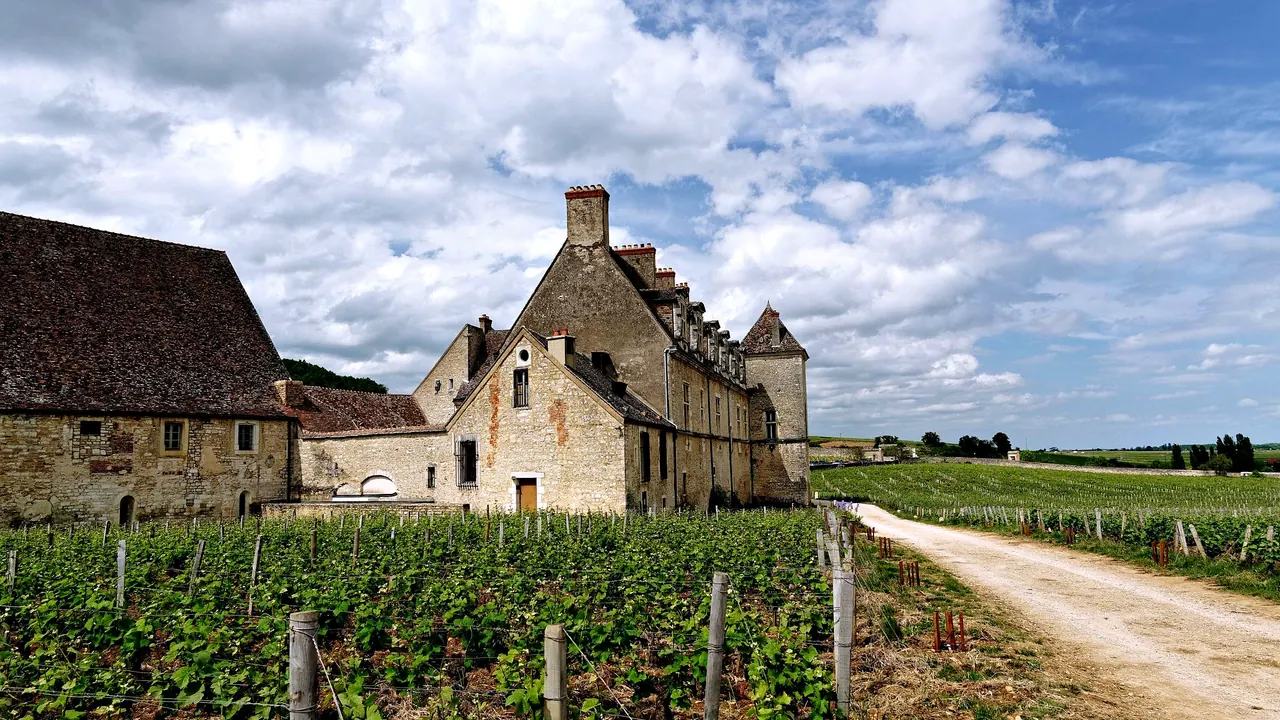
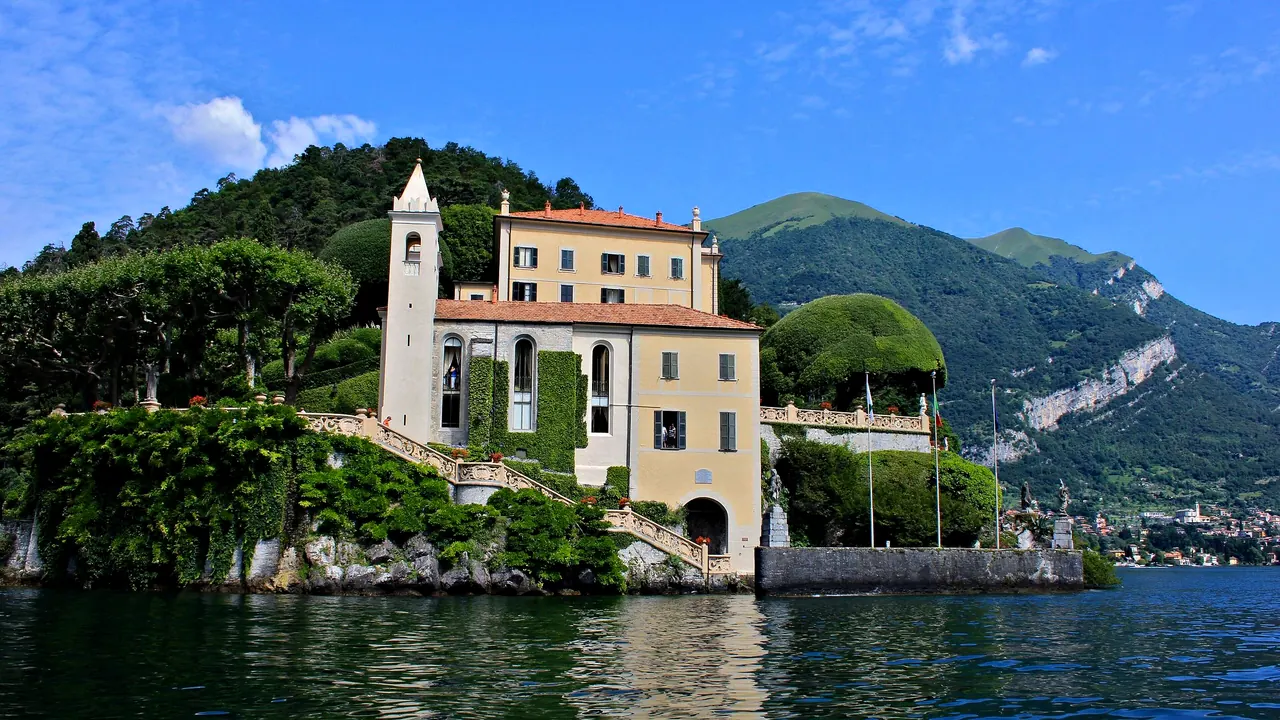
Photos: Burgundy by Gu Bra, Pexels License; Lake Como by Navin75, CC BY-SA 2.0, cropped.
Burgundy or Lake Como?
Our verdict in twelve categories, each scored against the same fixed benchmark cities, and the climate month by month, so you can choose for your trip.
Choose Burgundy for
- food and drink
- prices
- culture and sights
Burgundy suits travellers who plan their days around the table. You can taste in cellars along the Côte, take long lunches in country inns and fill the time in between with Romanesque abbeys and walled medieval towns. It costs less than the lake, but to see the best of it you need a hire car and someone willing to skip the tastings and drive.
Choose Lake Como for
- beaches
- nature and the outdoors
- wellness
If you want scenery and time on the water, pick Lake Como. Mountains rise straight out of the lake, and ferries link villa gardens and stepped villages, so you can manage without a car. Mountain paths, lidos and spa hotels fill the days. The trade-off is a higher bill, especially in summer, and simpler cooking than Burgundy's.
Scoreboard
Twelve categories on one fixed scale from 0 to 100. The shaded stretch is the gap between the two.
Your match
Pick a travel style or drag the sliders, and both match scores follow your weighting.
Too close to call, 1 point apart
Wins on food and drink and prices with your weighting.
Wins on beaches and nature and the outdoors with your weighting.
What matters to you?
Category by category
What the scores mean for a trip.
Beaches & swimming
Neither has a coast, but Lake Como makes swimming part of a summer stay. There are lidos at Bellagio, Lenno and Menaggio, jetties to swim from between ferry rides, and longer, more open shores on the upper lake around Domaso and Gravedona. In Burgundy a swim means driving to a Morvan reservoir such as Lac des Settons, or to Lac Kir on Dijon's western edge, as a break from a hot afternoon rather than a daily habit. Don't expect sand at either: it is pebble and stone at Como, lake beaches in Burgundy.
Food & drink
Burgundy is one of the reasons people travel in France. You can taste through the Côte de Nuits and Côte de Beaune from grand names to small domaines, and find gentler prices in Chablis and the Mâconnais. The cooking is boeuf bourguignon, coq au vin, snails, Époisses, and starred country inns in Saulieu and Chagny.
Lake Como eats more simply. Perch with sage butter on risotto, dried missoltini and polenta are best found in hill-village trattorias and rock-cellar crotti rather than on the lakefront terraces. Valtellina Nebbiolo is good drinking, but it is not a pilgrimage the way the Côte is.
Culture & sights
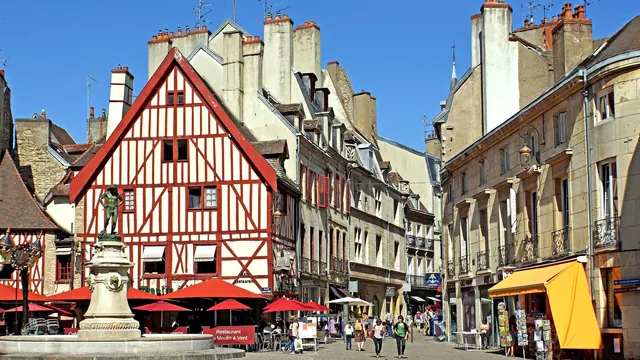
Burgundy has the greater heritage. Dijon's Palace of the Dukes holds one of France's oldest fine art museums, Beaune has the tiled roof of the Hospices, and Vézelay, Fontenay, Cluny and Autun make up a Romanesque and Cistercian collection with few equals in Europe. The cost is driving, often a day for each site.
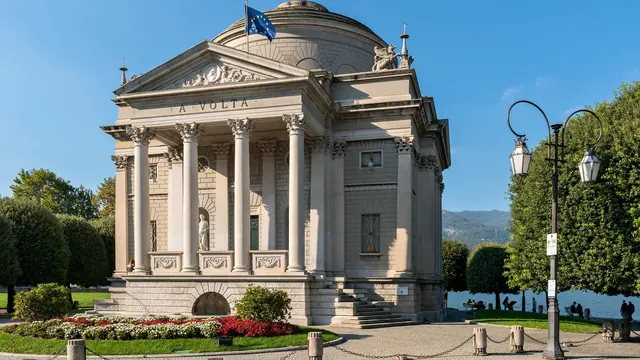
Lake Como's sights are of a different kind: villas and gardens such as Carlotta, Balbianello and Melzi, most of them reached by boat, plus Como's marble cathedral and its 1930s rationalist buildings. There are no major museums, so it suits someone happy to wander gardens and old villages rather than someone working through a list of great monuments.
Nightlife
Both are quiet after dinner, but in different ways. Dijon is a university city, so it has a few streets of pubs and wine bars and a couple of clubs that fill on student nights, while Beaune's wine bars stay lively on summer evenings. On Lake Como the evening is a drink on a terrace by the water, with cocktail bars in Como town. Elsewhere the villages empty after the last ferry, and anyone wanting more takes the train to Milan.
Nature & outdoors
This is Lake Como's great strength. A deep glacial lake is ringed by peaks above 2,000m, with mule tracks and summit trails above both shores and the Brunate funicular for Alpine views. The afternoon breva wind makes the upper lake a serious place for windsurfing and kitesurfing.
Burgundy's countryside is softer: vine-covered slopes, Charolais pastures and the beech forests and reservoirs of the Morvan, with a short climb up the Roche de Solutré. It is best for gentle cycling along the Canal de Bourgogne towpaths, or a week drifting on a hired boat, rather than for anything steep.
Day trips
Burgundy's outings are drives into the countryside, while Lake Como's are train rides to big cities. From Beaune or Dijon, Côte villages such as Pommard and Gevrey-Chambertin lie close together. The walled and hilltop towns of Semur-en-Auxois, Noyers and Flavigny, Chablis to the north and Cluny to the south fill further days, and Lyon is within reach. Almost all of it needs a car.
From Como or Varenna, Milan's Duomo and the Last Supper are about an hour away by train. Bergamo's walled upper town is as close from Lecco, and Lugano is just over the Swiss border. Nearer to hand, hopping by ferry between Bellagio, Varenna and Menaggio fills a day without any planning.
Good for families
Neither is built for children, and both are safe and calm. Burgundy's highlights are Guédelon, where you can watch a castle being built by medieval methods, and a canal-boat week working the locks. The rest of the trip tends to be car journeys between cellars. Lake Como offers boat rides, the Brunate funicular and summer lidos, but the steep stepped lanes of Bellagio and Varenna and the narrow shore roads are hard work with a pushchair, which makes the flatter upper lake the easier family base.
Getting around
In Burgundy you need a car, and on Lake Como a car mostly gets in the way. Fast trains reach Dijon, and Dijon and Beaune are easy to walk, but the villages depend on quiet, well-kept roads, which sits awkwardly with wine tasting. Cycling the short, gentle stretches between villages along the Côte is the pleasant way round that.
Lake Como's shore roads are narrow and winding, they clog in summer, and parking in the villages is scarce. Ferries across the central basin and the train up the eastern shore make a car-free stay in Bellagio, Varenna or Menaggio straightforward.
Shopping & style
Burgundy's shopping is for the cellar and the larder. You buy wine at the cellar door, Dijon mustard, cassis, gingerbread and Époisses, ideally at Dijon's covered market hall or Beaune's Saturday market, and antique dealers are scattered through the countryside.
Como's speciality is silk: scarves, ties and fabric from local mills and factory outlets, with the Silk Museum to explain the trade and Bellagio's lanes for leather. Neither place is much good for fashion, and from Como that means a trip to Milan.
Affordability
Burgundy is clearly the cheaper trip. Dijon, the Morvan and the rural Yonne have fairly priced guesthouses and village set lunches, and only Beaune, the Côte villages and the great bottles push costs up. Car hire is the main extra.
Lake Como in summer is one of Italy's dearer corners: villa hotels around Bellagio and Tremezzo, terraces that charge for the view, and boat taxis that add up. Staying in Como town or Lecco, or at the upper lake's campsites, and travelling in spring or autumn makes a real difference.
Live music & performing arts
Burgundy has somewhat more to offer, mostly in summer. Beaune's baroque opera festival, Chalon-sur-Saône's street theatre, jazz at Cluny and concerts in the basilica at Vézelay join Dijon's opera company in the Grand Théâtre. Lake Como has the handsome Teatro Sociale and summer concerts in villas and churches. For anything more ambitious, its audiences go to La Scala in Milan.
Wellness & relaxation
Lake Como is the better place for pampering. The grand hotels on the central lake and around Cernobbio have serious spas, some with pools set over the water, and the quiet villages away from Bellagio make calm bases.
Burgundy relaxes you through its pace rather than its spas: long lunches, a slow barge through the locks, a few country hotels near Beaune with grape-based treatments. Its thermal towns, Bourbon-Lancy and Saint-Honoré-les-Bains, lean towards medical cures.
When should you go?
Pick your month. The climate figures are measured averages, not a forecast.
Burgundy in July
Lake Como in July
Daytime high, °C
Rainfall in the month, mm
Where the figures come from
Burgundy's temperatures are measured 33 km from the centre, at Dijon.
Burgundy has no rain gauge within 25 km of the centre, so its rainfall comes from a gridded climate dataset read at the destination rather than from a gauge further away.
Temperature and rainfall are climate normals, averaged over the years shown. Burgundy: 1991-2020 normals, Dijon (32.7 km from centre). Lake Como: 1991-2020 normals, Lugano (22.8 km from centre).
Summer is equally warm in both places. Daytime highs reach about 27°C in July, warm enough to swim in a lake from late June to early September. The real difference is rain. In Burgundy it is spread fairly evenly through the year, and even the wettest months stay moderate, so May to September is reliable for walking, cycling and touring the vineyards. Lake Como gets much more rain from April to November, peaking at about 178mm in May, against roughly 64mm in a Burgundy summer month. Plan for some wet days there even in high season.
Winter goes the other way. Both are cold for sightseeing from December to February, but the lake is a little milder and gets about twice as much sunshine as Burgundy's grey winters, where December has around 52 hours. That makes a crisp, clear winter visit to Como more pleasant than one to Dijon or Beaune. For both places, late spring and September give the best balance of warmth and comfortable walking.
Which traveller are you?
On a culture and arts trip, choose Burgundy. The ducal palace and its fine art museum in Dijon, the Hospices de Beaune, Vézelay, Fontenay and Cluny add up to more than Como's villas, and the summer festivals and Dijon opera add more performance too.
For an outdoors trip, Lake Como is the stronger choice by a wide margin. It has mountains above 2,000m rising from the water, the Sentiero del Viandante and Grigna summit routes, and windsurfing, kayaking and paragliding on the upper lake. Burgundy offers gentle canal towpaths and vineyard cycling.
On a tight budget, go to Burgundy. Guesthouses, self-catering cottages and village set lunches in Dijon, the Morvan and the Yonne cost far less than the central lake's villa hotels and view-priced terraces. On Lake Como you can only save by retreating to Lecco or the campsites around Domaso.
Before you go
| Measure | Burgundy | Lake Como |
|---|---|---|
| Official language | French | Italian |
| Currency | Euro (EUR) | Euro (EUR) |
| Sockets | CE230 V, 50 Hz | CFL230 V, 50 Hz |
| Driving side | Right | Right |
| Time zone | UTC+1, UTC+2 in summer | UTC+1, UTC+2 in summer |
| Emergency number | 112 | 112 |
| Main airport | Lyon Saint-Exupéry Airport (LYS)141 non-stop destinations | Milan Malpensa International Airport (MXP)207 non-stop destinations |
| Public holidays this year | 11 days | 13 days |
By the numbers
| Measure | Burgundy | Lake Como |
|---|---|---|
| Population | 1,642,687 | - |
Where else could you go?
Every comparison below shares a destination with this one, so you can follow Burgundy or Lake Como somewhere new.
- Lake Maggiorevs Lake Como
- Lake Gardavs Lake Como
- Swiss Alpsvs Lake Como
- Piedmontvs Lake Como
- French Alpsvs Lake Como
- French Alpsvs Burgundy