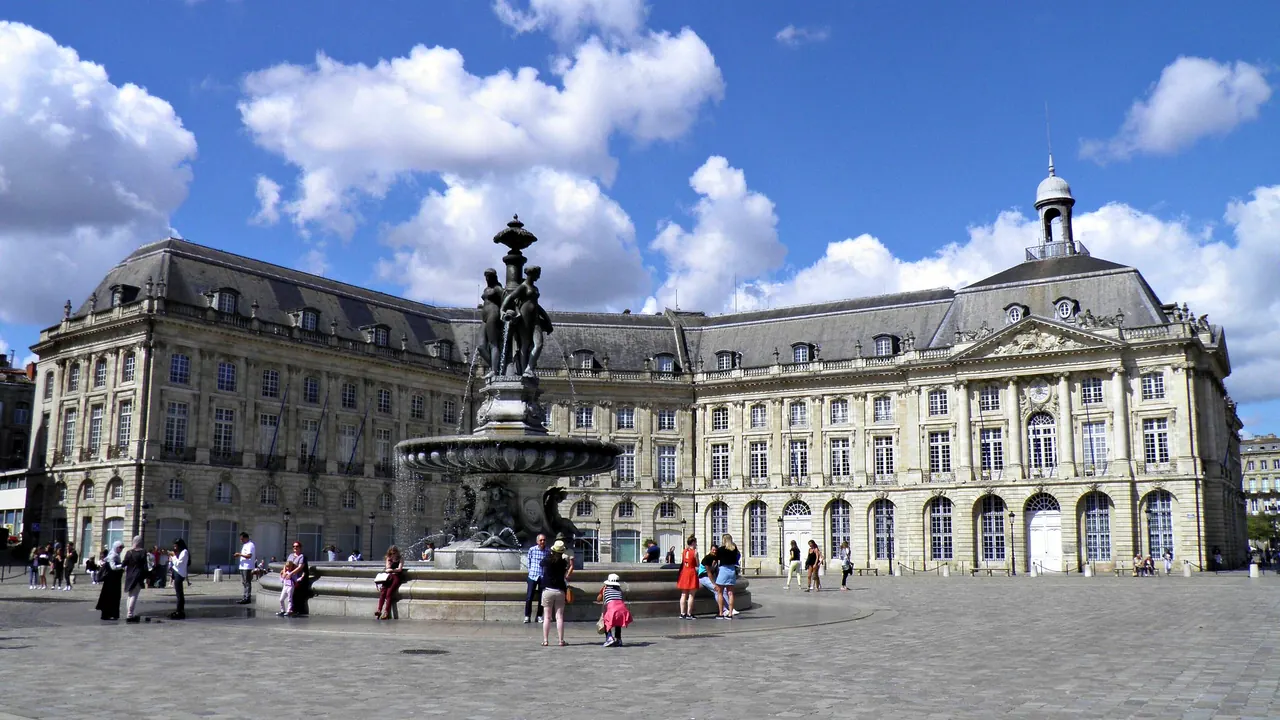
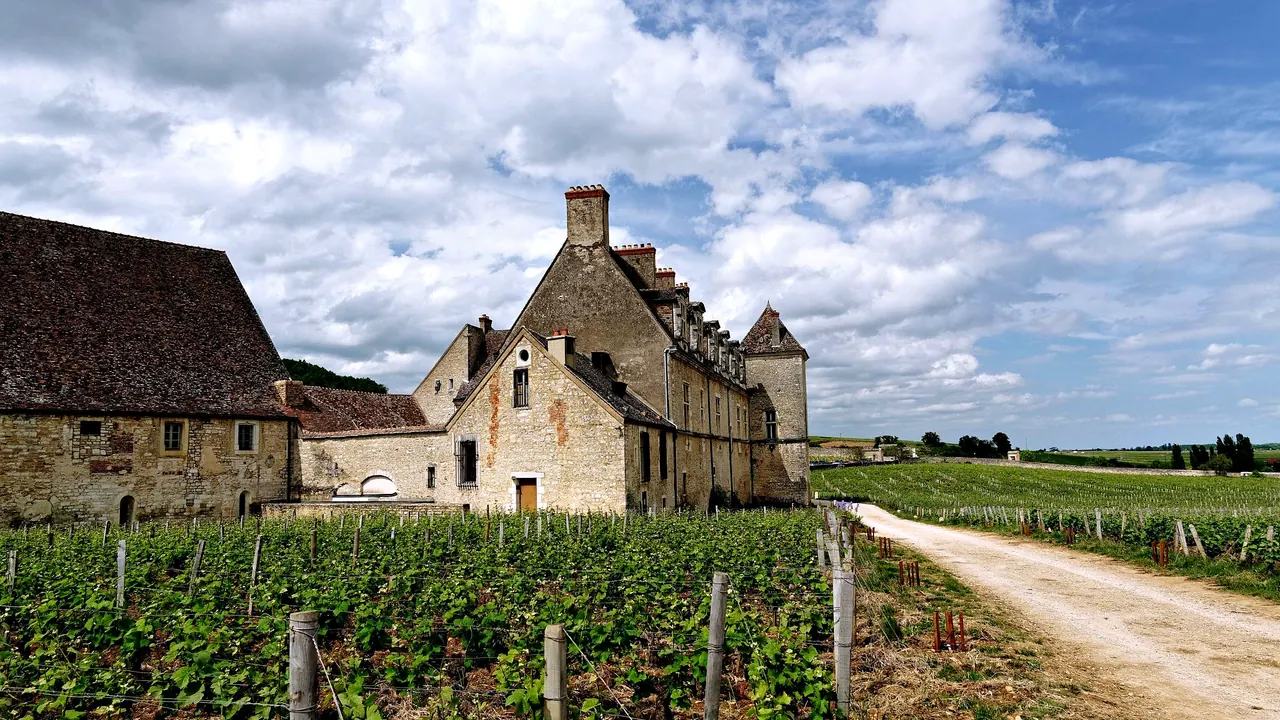
Photos: Bordeaux by Gzen92, CC BY-SA 4.0, cropped; Burgundy by Gu Bra, Pexels License.
Bordeaux or Burgundy?
Our verdict in twelve categories, each scored against the same fixed benchmark cities, and the climate month by month, so you can choose for your trip.
Choose Bordeaux for
- beaches
- getting around
- nightlife
Bordeaux suits a traveller who wants a real city. It has a classical UNESCO centre to walk, trams instead of a hire car, an opera house and clubs for later in the evening, and the Atlantic beaches and Arcachon about an hour away. It works for a long weekend or for a week with day trips to Saint-Émilion and the Médoc, and it is the easier of the two with children.
Choose Burgundy for
- culture and sights
- prices
- food and drink
Choose Burgundy if the table and the cellar are the point of the trip. The Côte between Dijon and Beaune offers deeper wine country and richer cooking, and the abbeys of Vézelay, Fontenay and Cluny add a Romanesque heritage that Bordeaux cannot match. In return it asks for a car and a slower pace, with quiet evenings and lakes instead of the sea, and it costs a little less if you stay away from Beaune.
Scoreboard
Twelve categories on one fixed scale from 0 to 100. The shaded stretch is the gap between the two.
Your match
Pick a travel style or drag the sliders, and both match scores follow your weighting.
Wins on beaches and getting around with your weighting.
Wins on culture and sights and prices with your weighting.
What matters to you?
Category by category
What the scores mean for a trip.
Beaches & swimming
Neither is a beach destination in itself, but Bordeaux has the Atlantic within about an hour. There are long surf beaches at Lacanau and along the Médoc, and the Arcachon basin, reached by train, has calm water that suits children in July and August.
Burgundy has no coast at all. Swimming there means lakes, such as Lac des Settons in the Morvan or Lac Kir on the edge of Dijon. They are fine for cooling off on a hot afternoon, but they are no match for a day on the ocean.
Food & drink
Both put wine first, and both serve generous French cooking with little range beyond it. Bordeaux gathers it all in one city: wine by the glass from Médoc to Sauternes, the Cité du Vin, oysters at the Marché des Capucins and canelés in every bakery.
Burgundy goes deeper, and food and wine are the reason most visitors come. You can taste in cellars along the Côte de Nuits and Côte de Beaune, eat boeuf bourguignon, Époisses and Dijon mustard, and book a table at starred country inns in villages such as Saulieu and Chagny. The difference is that it is spread across villages, not concentrated in city streets.
Culture & sights
Bordeaux's culture is one splendid whole: the 18th-century limestone centre curving along the Garonne, with the Place de la Bourse and the Grand Théâtre. Add solid museums such as the Musée d'Aquitaine and the CAPC, and three or four days on foot covers it.
Burgundy has more, and of greater weight. There is the Palace of the Dukes in Dijon with its great fine art museum, the tiled roof of the Hospices de Beaune, and Romanesque and Cistercian landmarks at Vézelay, Fontenay, Cluny and Autun. These are scattered across the countryside, so each takes a drive and most of a day, while Bordeaux's sights are a short walk apart.
Nightlife
Bordeaux offers a proper night out: terraces in Saint-Pierre, students around Place de la Victoire, bars on boats along the Garonne and clubs on the Quai de Paludate that run until morning. In Burgundy the evening means dinner and a bottle. Dijon has a few pubs and a couple of clubs, Beaune's wine bars stay busy late in summer, and the villages go quiet early.
Nature & outdoors
Both are gentle country with no mountains nearby, so the difference is in kind. Bordeaux's best scenery lies on the coast: the Dune du Pilat, the tidal flats and bird island of the Arcachon basin, and the surf at Lacanau, with flat greenways you can cycle from the city out to the ocean.
Burgundy is inland and wooded. The granite hills and forests of the Morvan are good for walking, canoeing and mountain biking, the Roche de Solutré makes a short climb, and the canal towpaths suit cycling or a slow week on a hired boat.
Day trips
From Bordeaux the outings fan out over longer distances, and several of them go by train. Saint-Émilion and Arcachon are easy rail trips, while the Médoc châteaux and Sauternes need a car or a tour. Cognac and Biarritz sit at the edge of a day.
Burgundy's outings sit closer together and vary more in scale. The Côte villages are minutes apart, there are walled towns such as Semur-en-Auxois and Noyers, Chablis lies to the north and Lyon is within reach. Almost all of it is done by car.
Good for families
Bordeaux is the easier choice with children. The centre is flat and largely car-free, which suits pushchairs, the Miroir d'eau becomes a paddling pool on hot days, and there are the Jardin Public and Cap Sciences, with the Dune du Pilat and Arcachon's calm beaches nearby.
Burgundy has a few strong draws: the castle being built by medieval methods at Guédelon, the Morvan lakes and, best of all, a week on a canal boat. Otherwise the days tend to be spent driving between cellars and abbeys, which few children enjoy.
Getting around
In Bordeaux you can do without a car. The centre is flat and largely pedestrianised, trams reach the Cité du Vin, the right bank and the station, and cycling feels natural. You only need to drive for estate visits in the Médoc or Sauternes.
In Burgundy it is the other way round. Trains link Dijon, Beaune and the larger towns, but buses to the villages are sparse, so most visitors hire a car, which does not mix well with wine tasting. Cycling between the Côte villages is the pleasant exception.
Shopping & style
Bordeaux offers the shopping of a large city: the long, pedestrian Rue Sainte-Catherine, luxury labels in the Triangle d'Or, and antiques and independent boutiques on Rue Notre-Dame in Chartrons, as well as wine cellars that ship abroad. Burgundy's shopping is almost entirely food and drink, with wine from the cellar door, mustard, cassis, Époisses and Dijon's covered market, and little fashion to speak of.
Affordability
Neither is cheap, but Burgundy leaves more room to economise. Guesthouses and self-catering cottages around Dijon, the Morvan and the rural Yonne cost less than hotels in central Bordeaux, although Beaune and the Côte are as expensive as anywhere and car hire adds up.
In Bordeaux the savings come from walking the city and taking inexpensive trams, not from cheap rooms. Set lunches are the best-value way to eat well, and tastings and good bottles are where the money goes.
Live music & performing arts
For most of the year Bordeaux has more on. Opera and ballet fill the gilded 1780 Grand Théâtre, the national orchestra plays nearby, a right-bank hall puts on jazz and world music, and an arena hosts touring acts, though the seasons pause in high summer.
Burgundy's calendar runs the opposite way. Apart from Dijon's opera company, the region comes alive with summer festivals: baroque opera in Beaune, street theatre in Chalon-sur-Saône, jazz in Cluny and concerts in the basilica at Vézelay.
Wellness & relaxation
In Bordeaux rest takes the form of a city's calm: long lunches, evening walks on the quays and the shade of the Jardin Public. Vinotherapy at spa hotels among the nearby vineyards is the local speciality, and for thermal waters you go to Dax, about an hour and a half south.
Burgundy has spa towns of its own, Bourbon-Lancy and Saint-Honoré-les-Bains, though they mostly serve medical cures, and it has country hotels around Beaune with grape-based treatments. Its real draw is a slower pace, drifting through locks on a canal barge or staying in quiet villages.
When should you go?
Pick your month. The climate figures are measured averages, not a forecast.
Bordeaux in July
Burgundy in July
Daytime high, °C
Rainfall in the month, mm
Where the figures come from
Burgundy's temperatures are measured 33 km from the centre, at Dijon.
Burgundy has no rain gauge within 25 km of the centre, so its rainfall comes from a gridded climate dataset read at the destination rather than from a gauge further away.
Temperature and rainfall are climate normals, averaged over the years shown. Bordeaux: 1991-2020 normals, Bordeaux / Merignac (9.5 km from centre). Burgundy: 1991-2020 normals, Dijon (32.7 km from centre).
Bordeaux is the milder of the two in the cool months. Its winter days reach about 11°C, against 6°C in Burgundy where most visitors stay, and spring arrives earlier on the Garonne. Summers are much alike, with Bordeaux peaking at 28°C in August and Burgundy only a degree cooler in July. Both are warm enough then for walking towns and vineyards, and July and August are the months for Bordeaux's Atlantic beaches and Burgundy's lakes.
The rain falls differently. In Bordeaux it builds through late autumn and winter and is heaviest in November, at 114mm. Burgundy's is spread more evenly, but it too is wettest in November, at 83mm, with May and October not far behind, and its driest spell is late winter. Both are sunniest from May to August. Burgundy's winters are long and grey, with cold days and little sun from November to February, so for either destination late May to September is the best window.
Which traveller are you?
For a beach and sun trip, Bordeaux is the clear choice. The surf beaches of Lacanau and the calm, child-friendly Arcachon basin are about an hour away. Burgundy offers only lake beaches, in the Morvan and at Dijon's Lac Kir.
For a short city break, Bordeaux again. Its classical centre, trams, wine bars, clubs and Grand Théâtre are all within a walk or a short ride. Burgundy's best sights and cellars are spread across countryside that needs a car and several days.
On a trip on a tight budget, Burgundy stretches further as long as you avoid Beaune. Guesthouses, self-catering cottages and village set lunches in the Morvan and the Yonne cost less than central Bordeaux hotels, though hiring a car eats into the savings.
Before you go
| Measure | Bordeaux | Burgundy |
|---|---|---|
| Official language | French | French |
| Currency | Euro (EUR) | Euro (EUR) |
| Sockets | CE230 V, 50 Hz | CE230 V, 50 Hz |
| Driving side | Right | Right |
| Time zone | UTC+1, UTC+2 in summer | UTC+1, UTC+2 in summer |
| Emergency number | 112 | 112 |
| Elevation | 1 m | - |
| Main airport | Bordeaux–Mérignac Airport (BOD)11 km from centre95 non-stop destinations | Lyon Saint-Exupéry Airport (LYS)141 non-stop destinations |
| Public holidays this year | 11 days | 11 days |
By the numbers
| Measure | Bordeaux | Burgundy |
|---|---|---|
| Population | 267,991 | 1,642,687 |
| People per km² | 5,425 | - |
| Museums within 10 km | 18 | - |
| UNESCO World Heritage sites within 50 km | 4 | - |
Where else could you go?
Every comparison below shares a destination with this one, so you can follow Bordeaux or Burgundy somewhere new.
- Biarritzvs Bordeaux
- French Alpsvs Burgundy
- San Sebastianvs Bordeaux
- Toulousevs Bordeaux
- Basque Countryvs Bordeaux
- Swiss Alpsvs Burgundy