Photos: Bordeaux by Gzen92, CC BY-SA 4.0, cropped; Toulouse by ZbebVial, CC BY-SA 3.0, cropped.
Bordeaux or Toulouse?
Our verdict in twelve categories, each scored against the same fixed benchmark cities, and the climate month by month, so you can choose for your trip.
Choose Bordeaux for
- beaches
- wellness
- food and drink
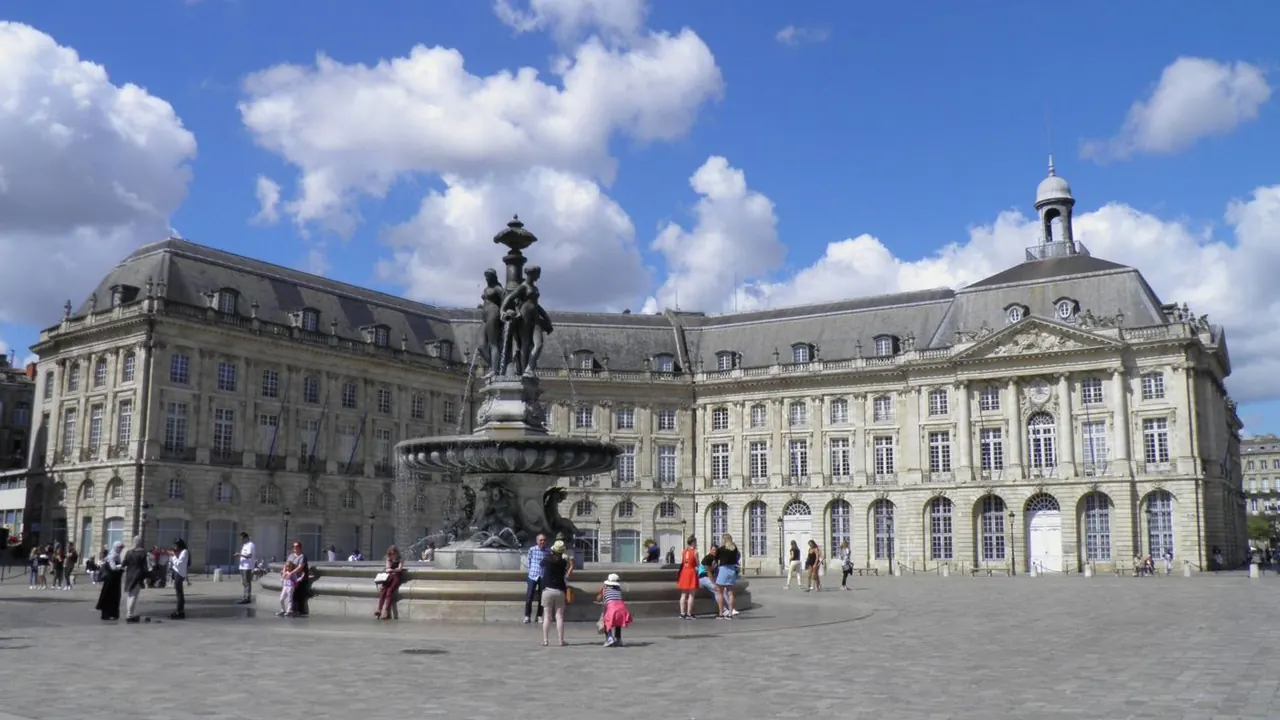
Bordeaux suits travellers who come for wine and want the sea within reach. Its pale limestone centre is easy to walk, the famous vineyards start just beyond the city, and the Atlantic coast and the Arcachon basin are close enough for a summer day on the sand. It is the better pick for slow eating and drinking, for a polished city to wander, and for a trip that mixes town, château country and coast.
Choose Toulouse for
- nightlife
- families
- prices
Families with curious children and anyone drawn to the mountains will get more from Toulouse. Its space and aircraft museums give children whole days of their own, the Pyrenees are near enough for hiking or skiing, and a large student population keeps the evenings lively. It is also a little drier and a touch easier on the wallet, though the nearest beach is a long way off.
Scoreboard
Twelve categories on one fixed scale from 0 to 100. The shaded stretch is the gap between the two.
Your match
Pick a travel style or drag the sliders, and both match scores follow your weighting.
Wins on beaches and wellness with your weighting.
Wins on nightlife and families with your weighting.
What matters to you?
Category by category
What the scores mean for a trip.
Beaches & swimming
Bordeaux is clearly the better base for the sea. Within about an hour you reach two very different coasts: the wild Atlantic sand of Lacanau and the Médoc, with surf and strong currents, and the sheltered Arcachon basin, where the water is calm enough for small children and the Dune du Pilat rises behind the beaches.
Toulouse has nothing comparable. The Mediterranean at Gruissan and Narbonne is about two hours away, so most visitors cool off at the supervised leisure lakes on the city's edge or in a hotel pool.
Food & drink
Both cities serve generous south-western cooking, but Bordeaux pulls ahead because of its wine. You can taste Médoc, Saint-Émilion and Sauternes in a single week, and Arcachon oysters, lamprey and entrecôte grilled over vine cuttings make the table more varied. The oyster counters of the Marché des Capucins on a weekend morning are a highlight.
Toulouse is earthier and cheaper. Cassoulet, duck confit and foie gras are the reason to come, the Victor Hugo market shows them off best, and the student quarters keep casual meals inexpensive. Its local wines, Fronton and Gaillac, are pleasant but not the main event they are in Bordeaux.
Culture & sights
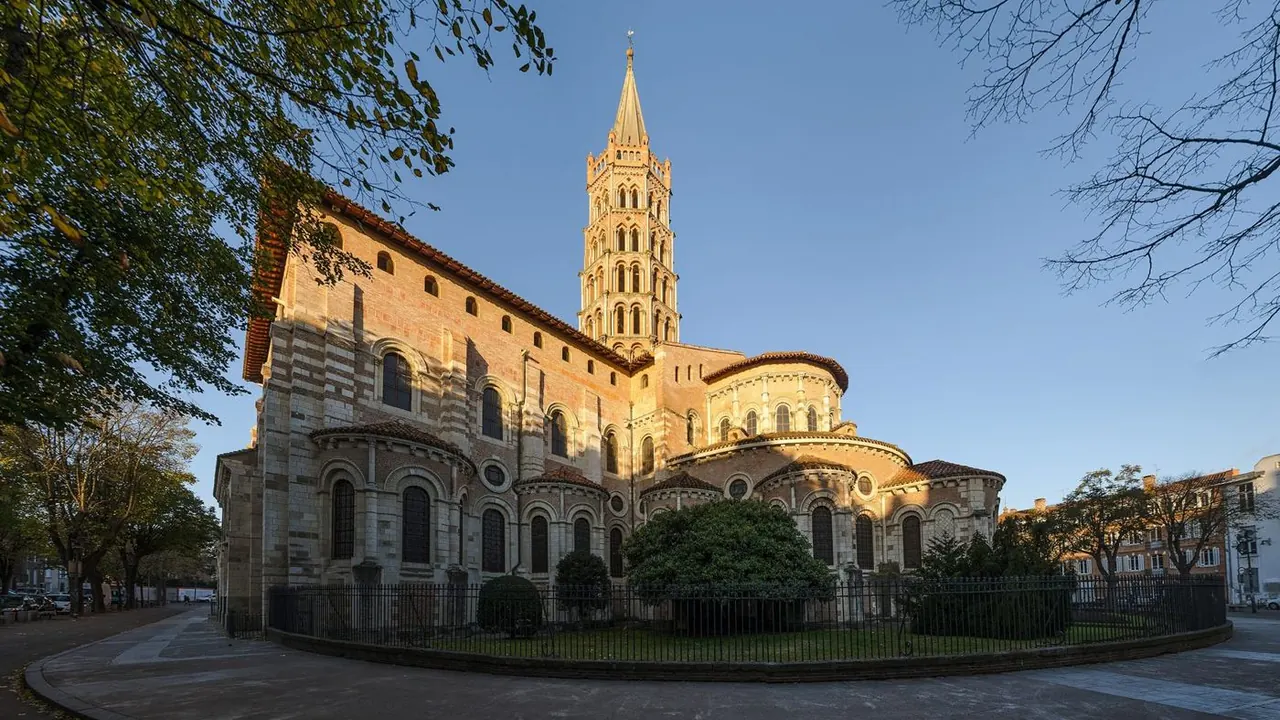
Neither city leads here, but they look and feel very different. Bordeaux's appeal is one complete 18th-century townscape of pale stone along the curve of the Garonne, with the Place de la Bourse, the Grand Théâtre and Gothic Saint-Michel, and it takes three or four unhurried days. Toulouse is rose-red brick and older at its core, built around the great Romanesque basilica of Saint-Sernin and the palm-tree vault of the Jacobins.
The museums differ too. In Bordeaux, the Musée d'Aquitaine faces the city's slave-trading past and the CAPC fills a colonial warehouse with contemporary art. Toulouse pairs its Renaissance mansions and the Augustins cloister with something Bordeaux has no answer to: aircraft museums and a space centre that grew out of the city's aerospace industry. Its essentials fit into two days.
Nightlife
Toulouse goes out harder. Its huge student population packs the terraces and cheap bars of Place Saint-Pierre on the river, and an older crowd fills the wine and cocktail bars of Carmes. Clubs are scattered across the centre and the outskirts, with a solid electronic scene.
Bordeaux, which also has a Saint-Pierre quarter full of terraces, is more about long dinners and wine bars. Its clubs are concentrated in one strip, the Quai de Paludate near the station. Both cities quieten when the students leave in summer.
Nature & outdoors
The two are evenly matched, but the scenery points in opposite directions. Around Bordeaux everything is flat, so the outdoors means the coast: climbing the Dune du Pilat, kayaking and birdwatching among the oyster beds of Arcachon, surfing at Lacanau and cycling the greenways through Entre-Deux-Mers.
Toulouse looks to the mountains. The Pyrenees are close enough for real hiking, cycling climbs and winter skiing, and the Aveyron gorges and the Montagne Noire are nearer still. The Canal du Midi towpath gives it a long, shaded cycling route of its own.
Day trips
Both are excellent bases, and Bordeaux comes out slightly ahead because so much famous wine country lies around it. Saint-Émilion is about forty minutes by train, the châteaux of Margaux and Pauillac line the Médoc, Sauternes is to the south and Arcachon gives you a seaside day. The catch is that most estate tastings need a car or a tour.
From Toulouse, the best outings are towns rather than vineyards. Carcassonne's walled Cité and brick Albi are each about an hour by train, and the Moissac cloister and hilltop Cordes-sur-Ciel add Romanesque and medieval depth.
Good for families
Toulouse is the stronger choice with children, thanks to its aerospace attractions. Walking through a Mir module and a Concorde, and watching giant mechanical creatures in Montaudran, are things children remember, and the safari park and natural history museum fill quieter days.
Bordeaux works well enough. Its flat, tram-served centre is easy with a pushchair, the Miroir d'eau becomes a paddling pool in hot weather and the Jardin Public has its puppet theatre. Its best family days are out at the Dune du Pilat and the calm Arcachon beaches, though, and a city built around wine and long meals can feel slow to older children.
Getting around
Both centres are flat and walkable, but Bordeaux is a little easier. Its sights sit in a line along the left bank from Chartrons to Saint-Michel, long pedestrian streets join them, and the trams reach the Cité du Vin and the station. The trains to Saint-Émilion and Arcachon also cover the two most popular trips without a car.
Toulouse adds two automated metro lines to its compact centre inside the boulevards. Several of its main draws, though, including the space centre, the aircraft museum and above all the Pyrenees, sit on the edges or beyond and need a bus or a car.
Shopping & style
Bordeaux has more to offer a shopper. Besides the long Rue Sainte-Catherine, it has a proper luxury quarter in the Triangle d'Or and antique dealers along Rue Notre-Dame in Chartrons. Its wine cellars, which sell everything up to rare vintages and ship abroad, are a real reason to bring an empty suitcase.
Toulouse covers the chains well and has independent boutiques in Saint-Étienne, but no luxury district. Its best buys are edible: violet sweets, Armagnac and jars of cassoulet, plus the sprawling Sunday market around Saint-Sernin.
Affordability
Costs are much the same, and neither city is cheap, though Toulouse is a shade easier on the budget. Its student quarters keep drinks and simple meals inexpensive, and several municipal museums have free days.
In both cities the set lunch menu is the smart way to eat well. In Bordeaux, the real expense is the wine itself: château tastings, guided tours and a serious bottle at dinner add up quickly.
Live music & performing arts
The two are on a par, and each has an opera and ballet company at a fine historic theatre. In Bordeaux the Grand Théâtre is the star, and its gilded 1780 auditorium is worth a visit for the building alone, but the city goes quiet in high summer.
Toulouse has the stronger orchestra, which plays in the round Halle aux Grains, and its festivals carry on into the warm months: Rio Loco on the riverside in early summer and the piano festival in the Jacobins cloister later on. That gives summer visitors more to hear.
Wellness & relaxation
Bordeaux has more to offer here, mainly through vinotherapy. The spa hotels among the vineyards just outside the city use grape and vine treatments and make a restful day or two, and the thermal waters of Dax are about an hour and a half away.
Toulouse has hotel spas, a few hammam-style day spas and its big open-air pools in summer. For hot springs you need to go up to Luchon or Ax-les-Thermes in the Pyrenees, a trip of up to two hours that works best with an overnight stay.
When should you go?
Pick your month. The climate figures are measured averages, not a forecast.
Bordeaux in July
Toulouse in July
Daytime high, °C
Rainfall in the month, mm
Temperature and rainfall are climate normals, averaged over the years shown. Bordeaux: 1991-2020 normals, Bordeaux / Merignac (9.5 km from centre). Toulouse: 1991-2020 normals, Toulouse / Blagnac (7 km from centre).
The two cities share much the same warm season. Both are pleasant for walking from May to early October, and both are hottest in July and August, when afternoons reach about 28°C in Bordeaux and a degree or so more in Toulouse. Midday sightseeing is tiring in either city then, but high summer is also when the air is warm enough for a day on the sand near Bordeaux, while in Toulouse it is the season for the leisure lakes. Late May, June and September are the sweet spot for a city stay, with warm days in the low to mid twenties and long hours of sunshine in both.
Rain is where they part. Bordeaux, closer to the Atlantic, turns properly wet from September, and November is its rainiest month at 114mm, so late autumn and winter there are grey and damp. Toulouse is drier all year, with no month much above 75mm, and its winters are cool rather than soggy. In both cities, December to February brings highs of only about 10°C, too chilly for long days on foot.
Which traveller are you?
For a beach and sun trip, Bordeaux is the only real option of the two. The surf beaches of Lacanau and the calm Arcachon basin are about an hour away, while Toulouse's nearest sea is a long day out to the Mediterranean.
On a family trip with children, Toulouse has the edge. The Cité de l'espace, the walk-through Concorde and the giant mechanical creatures fill several days, where Bordeaux's best family outings mostly mean leaving the city for the dune and the basin.
For skiers and mountain walkers, Toulouse wins clearly. The high Pyrenean valleys and ski stations around Luchon and the Ariège are within about two hours, while flat Bordeaux has no hiking terrain nearby and the mountains are a long journey south.
Before you go
| Measure | Bordeaux | Toulouse |
|---|---|---|
| Official language | French | French |
| Currency | Euro (EUR) | Euro (EUR) |
| Sockets | CE230 V, 50 Hz | CE230 V, 50 Hz |
| Driving side | Right | Right |
| Time zone | UTC+1, UTC+2 in summer | UTC+1, UTC+2 in summer |
| Emergency number | 112 | 112 |
| Elevation | 1 m | 115 m |
| Main airport | Bordeaux–Mérignac Airport (BOD)11 km from centre95 non-stop destinations | Toulouse-Blagnac Airport (TLS)7 km from centre84 non-stop destinations |
| Public holidays this year | 11 days | 11 days |
By the numbers
| Measure | Bordeaux | Toulouse |
|---|---|---|
| City population | 267,991 | 514,819 |
| People per km² | 5,425 | 4,352 |
| Museums within 10 km | 18 | 24 |
| UNESCO World Heritage sites within 50 km | 4 | 2 |
Where else could you go?
Every comparison below shares a destination with this one, so you can follow Bordeaux or Toulouse somewhere new.