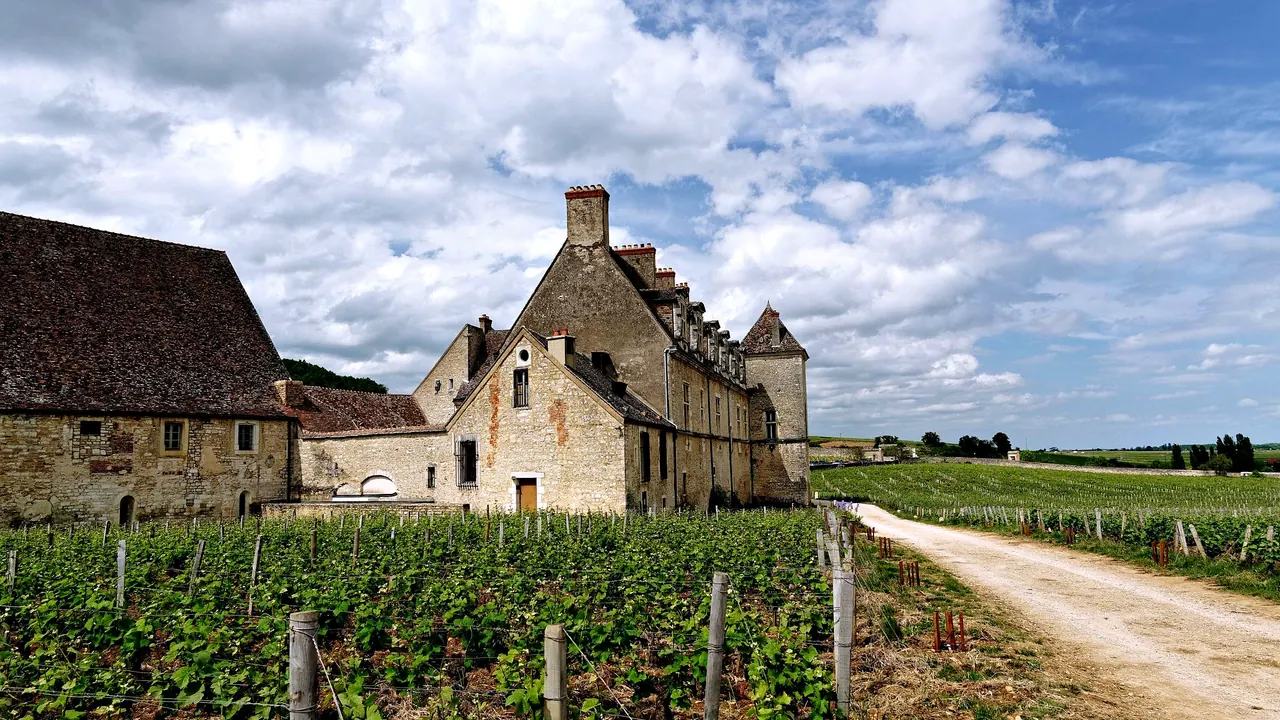
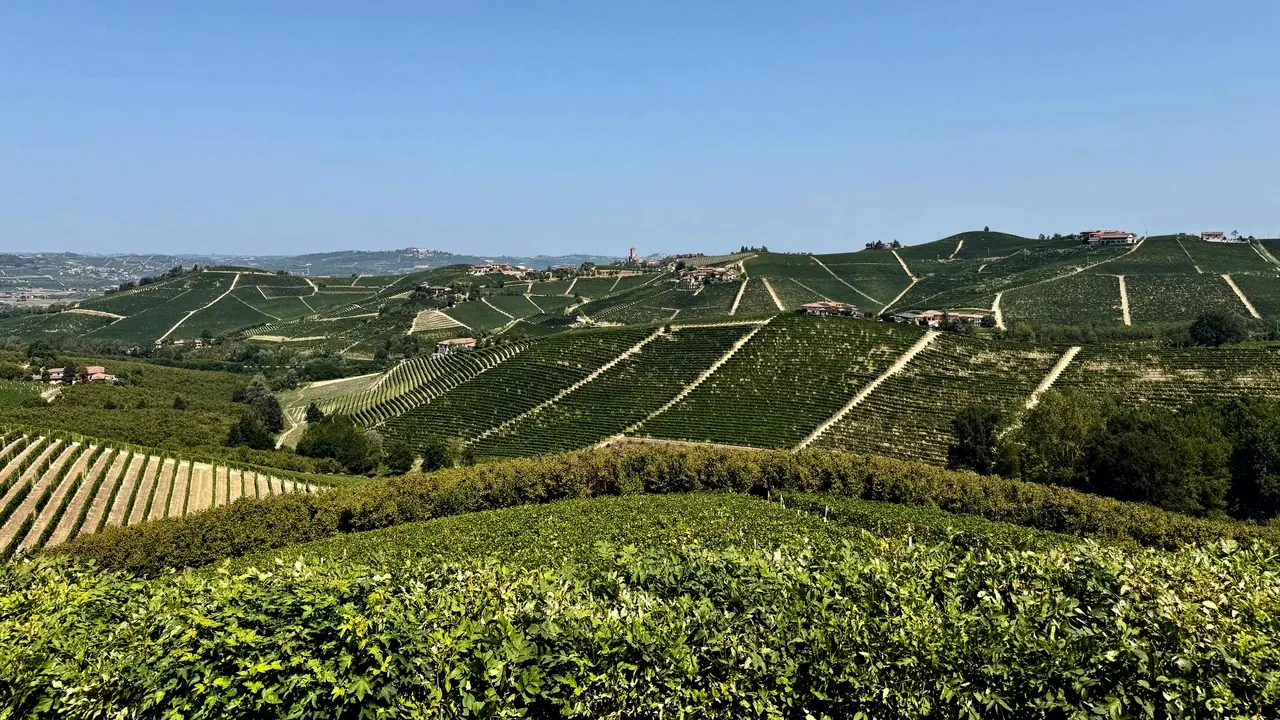
Photos: Burgundy by Gu Bra, Pexels License; Piedmont by Martina Amaro, Pexels License.
Burgundy or Piedmont?
Our verdict in twelve categories, each scored against the same fixed benchmark cities, and the climate month by month, so you can choose for your trip.
Choose Burgundy for
Burgundy does not lead in any category we score.
Burgundy is for the traveller whose trip is about wine first. The slope of the Côte between Dijon and Santenay lets you walk or cycle from one famous cellar to the next, and the rest of the stay fills with Romanesque abbeys, walled market towns and long country lunches. It also suits a slow week on a canal boat. It is quieter and narrower than Piedmont, with few nights out, gentle hills instead of mountains and very little to keep children busy.
Choose Piedmont for
- nature and the outdoors
- beaches
- nightlife
Piedmont offers the same serious table, with Barolo, truffles and Turin's coffee houses, and much more around it. The Alps rise on three sides for hiking and skiing, Lake Maggiore has lidos and island gardens, and Turin is a real city with opera, museums and evening aperitivo. There are thermal springs at Acqui Terme too. Choose it for a varied trip that moves between city, hills and mountains, or for a family that needs more than vineyards.
Scoreboard
Twelve categories on one fixed scale from 0 to 100. The shaded stretch is the gap between the two.
Your match
Pick a travel style or drag the sliders, and both match scores follow your weighting.
Has no clear advantage with the weighting you have chosen.
Wins on nature and the outdoors and beaches with your weighting.
What matters to you?
Category by category
What the scores mean for a trip.
Beaches & swimming
Neither region has a coast, but Piedmont's lakes give a proper summer swim. Lake Maggiore has lidos, pebble beaches and bathing platforms around Stresa and Baveno, and quieter Lake Orta has grassy spots below the hill villages. The Ligurian sea is within a day's reach.
Burgundy can offer only a cool-off: the supervised beaches at Lac des Settons in the Morvan, or Lac Kir on the edge of Dijon on a hot afternoon.
Food & drink
Both regions are first-class places to eat and drink, and the difference is in the setting. Burgundy is almost all countryside: cellar doors along the Côte de Nuits and Côte de Beaune, cheaper whites in Chablis and the Mâconnais, and starred country inns in places like Saulieu, with Beaune as the obvious base.
Piedmont pairs the Barolo and Barbaresco hills around Alba, which are at their best in the autumn truffle season, with a city table in Turin. There you get historic coffee houses, bicerin, vermouth, the evening aperitivo and the Porta Palazzo market. Bra, where Slow Food began, adds another reason to visit.
Culture & sights
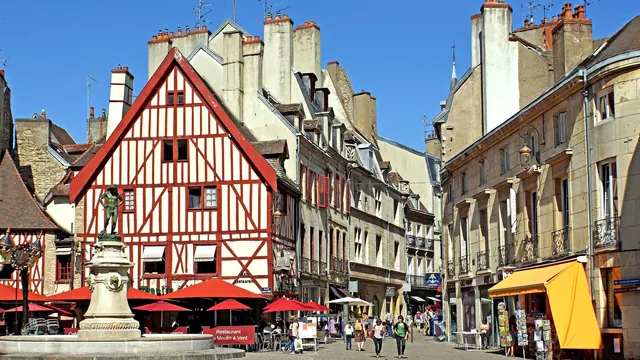
These two are evenly matched, but they show their heritage differently. Burgundy's is medieval and spread across the countryside: the abbeys at Vézelay, Fontenay and Cluny, Autun cathedral, the Hospices in Beaune and the dukes' palace in Dijon. Each site tends to need its own day by car.
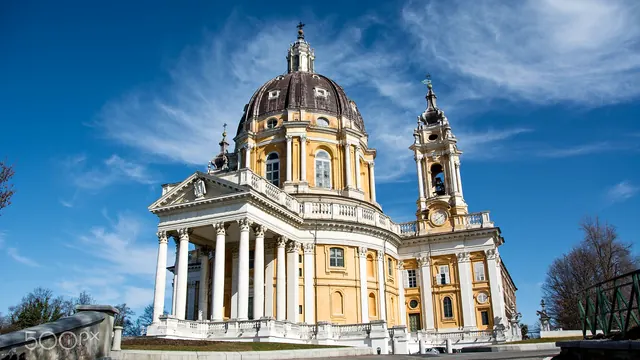
Piedmont gathers most of its culture in one city. Turin has the Egyptian Museum, Baroque squares, the Cinema Museum in the Mole and the Savoy palaces at Venaria Reale and Stupinigi. The Sacra di San Michele and the island palaces on Lake Maggiore are further out.
Nightlife
Piedmont has the better nights out, almost entirely thanks to Turin. Aperitivo runs into the bar streets of San Salvario and Vanchiglia and, in summer, the bars along the Po. Burgundy's choice is a few student pubs and clubs in Dijon and the late wine bars of Beaune, and the villages go quiet early. In both regions the countryside is for dinner, not dancing.
Nature & outdoors
The landscapes are of a different scale. Piedmont has high Alps on three sides, with refuges and ski-touring under Monte Rosa, ibex at Gran Paradiso, the roadless Val Grande and Olympic ski slopes around Sestriere. Lower down are lakes and vineyard roads for cycling.
Burgundy is soft country: vine slopes, Charolais pastures, the beech forests of the Morvan and a short climb up the Roche de Solutré. Its strength is slow travel by bike or boat along the Canal de Bourgogne and the Nivernais, which suits gentle walkers rather than anyone after mountains.
Day trips
Both make good bases, but Piedmont's outings reach further and many work without a car. From Turin, Milan is about an hour by fast train, and Genoa and Aosta are not much further. Boats on Lake Maggiore cross to the Swiss shore, and the Barolo villages and Acqui Terme are within reach of a Langhe base.
Burgundy's outings are closer to home: wine villages a few minutes apart, and small walled towns such as Semur-en-Auxois, Noyers and Flavigny. Lyon is the big outing. Nearly all of it needs a car.
Good for families
Piedmont is easier with children because it mixes city and outdoors. Turin has the mummies of the Egyptian Museum and the hands-on Cinema Museum, Lake Maggiore has island boats and peacock gardens, and the Via Lattea resorts have ski schools.
Burgundy's best family moments are fewer but memorable: watching a castle being built the medieval way at Guédelon, or a week on a canal boat working the locks. Otherwise the days are spent driving between cellars and abbeys.
Getting around
Piedmont is somewhat easier without a car, because Turin is a proper transport hub. It has trams, a metro, arcaded streets for walking in the rain, and regional trains to Alba, Asti and Stresa, plus lake boats. Dijon has a tram and both Dijon and Beaune are walkable, and Burgundy's short, flat distances along the Côte make cycling between wine villages easy.
Both regions need a car for their hill villages. In Burgundy that sits awkwardly with a day of wine tasting, and in Piedmont the drives into the Alpine valleys are long and winding.
Shopping & style
In both regions the best things to bring home are edible, but Piedmont has more to browse. Turin offers the arcades of Via Roma, pedestrian Via Garibaldi, the huge Porta Palazzo market and the Saturday Balon flea market, and the Biella mills sell cashmere.
Burgundy's purchases are mustard from Dijon's long-established shops, cassis, gingerbread and wine from the cellar door, with Dijon's covered market and Beaune's Saturday market for food.
Affordability
Both are mid-priced for Western Europe, so the difference is where costs climb. In Burgundy that means Beaune and the Côte villages in summer and at harvest time, plus the near-unavoidable car hire. Dijon, the Morvan and the rural Yonne stay fair.
In Piedmont prices rise in the Langhe during truffle season, in the Lake Maggiore resorts in high summer and in the ski resorts in winter. A base in Turin with its generous aperitivo, or a farm stay in the hills, keeps the bill moderate.
Live music & performing arts
Piedmont has more going on all year. Turin's Teatro Regio stages opera and ballet, the RAI orchestra plays in its own hall and the Teatro Carignano is a fine historic house, and Stresa holds summer concerts by the lake.
Burgundy comes alive mainly in summer, with Beaune's baroque opera festival, Chalon-sur-Saône's street theatre, jazz in Cluny and concerts in Vézelay's basilica. The rest of the year there is little beyond the opera house in Dijon.
Wellness & relaxation
Piedmont has real thermal bathing. Acqui Terme is built around a spring that rises hot in the middle of town, the Maritime Alps have mountain baths at Valdieri and Vinadio, and many Langhe wine resorts have spas.
Burgundy's springs at Bourbon-Lancy and Saint-Honoré-les-Bains serve mostly medical cures, so its appeal is the pace itself: long lunches, quiet villages and a barge drifting through the locks, with grape-based treatments at a few country hotels near Beaune.
When should you go?
Pick your month. The climate figures are measured averages, not a forecast.
Burgundy in July
Piedmont in July
Daytime high, °C
Rainfall in the month, mm
Where the figures come from
Burgundy's temperatures are measured 33 km from the centre, at Dijon.
Burgundy has no rain gauge within 25 km of the centre, so its rainfall comes from a gridded climate dataset read at the destination rather than from a gauge further away.
Piedmont has no weather station within reach, so its figures come from a gridded climate model rather than a measured record, and read a broad area rather than one spot.
Temperature and rainfall are climate normals, averaged over the years shown. Burgundy: 1991-2020 normals, Dijon (32.7 km from centre). Piedmont: 1991-2020 normals, TerraClimate 4 km grid at the town, no weather station within 90 km.
Measured where most visitors stay, Burgundy warms to around 27°C in July, and July and August are the only months when its lakes are pleasant for swimming. Rain falls steadily all year with no real dry season, though it is heaviest from October to December. Sunshine peaks from June to August. Winters are grey and cold, around 6°C by day, so the best months for walking villages and touring cellars are May, June and September.
Piedmont runs a few degrees warmer through the year, reaching about 29°C in July and August, when afternoons in Turin and the hills get hot. Its summers are drier than Burgundy's, which suits the lake season from June to early September, and the nearest sea, on the Ligurian coast, reaches about 25°C in August. Autumn is the wet season, peaking at 89mm in November, but October's mild days fall in the truffle and harvest season. Winter days are milder than in Burgundy and January is fairly dry, while the snow sits up in the Alpine resorts.
Which traveller are you?
For an outdoors trip, Piedmont is the clear choice. It has real Alpine country under Monte Rosa and Gran Paradiso, the wild Val Grande, ski slopes in winter and lakes for kayaking. Burgundy offers gentle canal towpaths and the Morvan forests.
For a relaxing and wellness trip, Piedmont again comes out ahead. You can soak in Acqui Terme's hot springs or the mountain baths near Cuneo, and many Langhe wine resorts have their own spas. Burgundy's rest comes from its slow pace and drifting canal barges, not from bathing.
On a food and nightlife trip, the two are level at the table, but Piedmont wins after dark. Turin's aperitivo leads on to the bar streets of San Salvario and Vanchiglia, while Burgundy's evenings mostly end with dinner and a bottle in Beaune or Dijon.
Before you go
| Measure | Burgundy | Piedmont |
|---|---|---|
| Official language | French | Italian |
| Currency | Euro (EUR) | Euro (EUR) |
| Sockets | CE230 V, 50 Hz | CFL230 V, 50 Hz |
| Driving side | Right | Right |
| Time zone | UTC+1, UTC+2 in summer | UTC+1, UTC+2 in summer |
| Emergency number | 112 | 112 |
| Main airport | Lyon Saint-Exupéry Airport (LYS)141 non-stop destinations | Turin Airport (TRN)65 non-stop destinations |
| Public holidays this year | 11 days | 13 days |
By the numbers
| Measure | Burgundy | Piedmont |
|---|---|---|
| Population | 1,642,687 | 4,341,375 |
| Swim season, months above 21 °C | - | 4 months |
Where else could you go?
Every comparison below shares a destination with this one, so you can follow Burgundy or Piedmont somewhere new.
- Lake Maggiorevs Piedmont
- Cinque Terrevs Piedmont
- French Rivieravs Piedmont
- French Alpsvs Piedmont
- Lake Comovs Piedmont
- French Alpsvs Burgundy