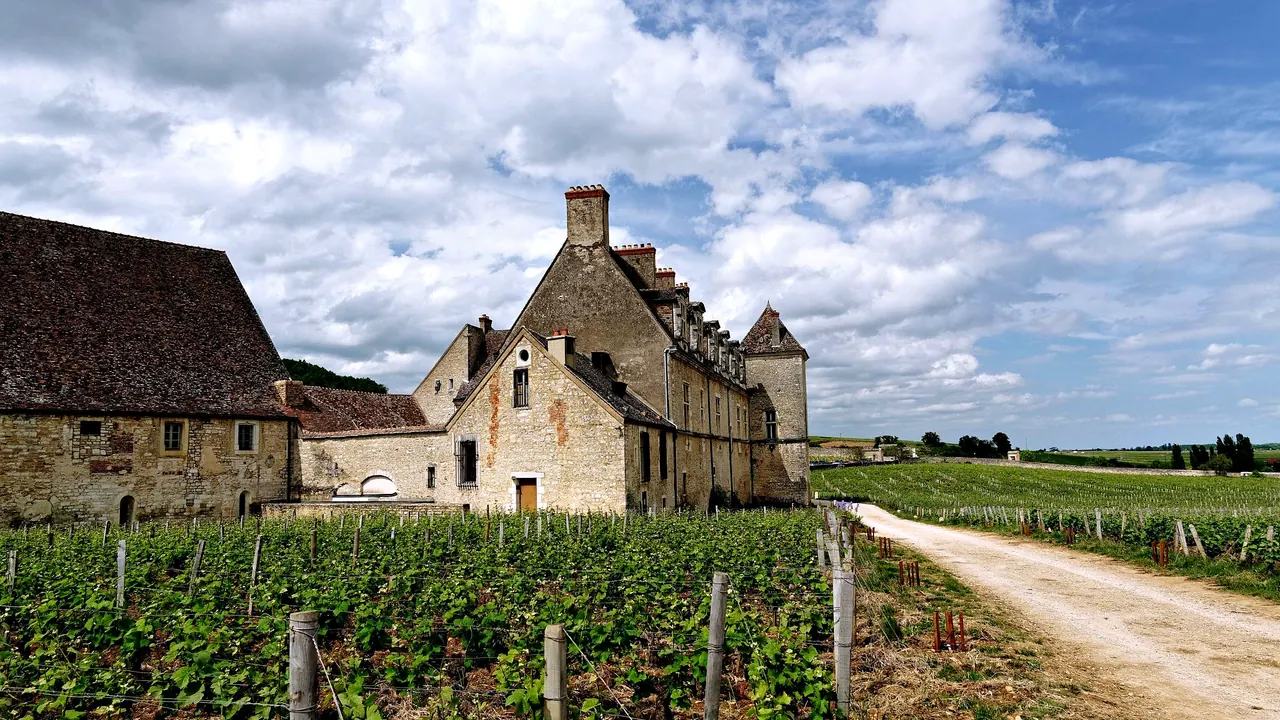
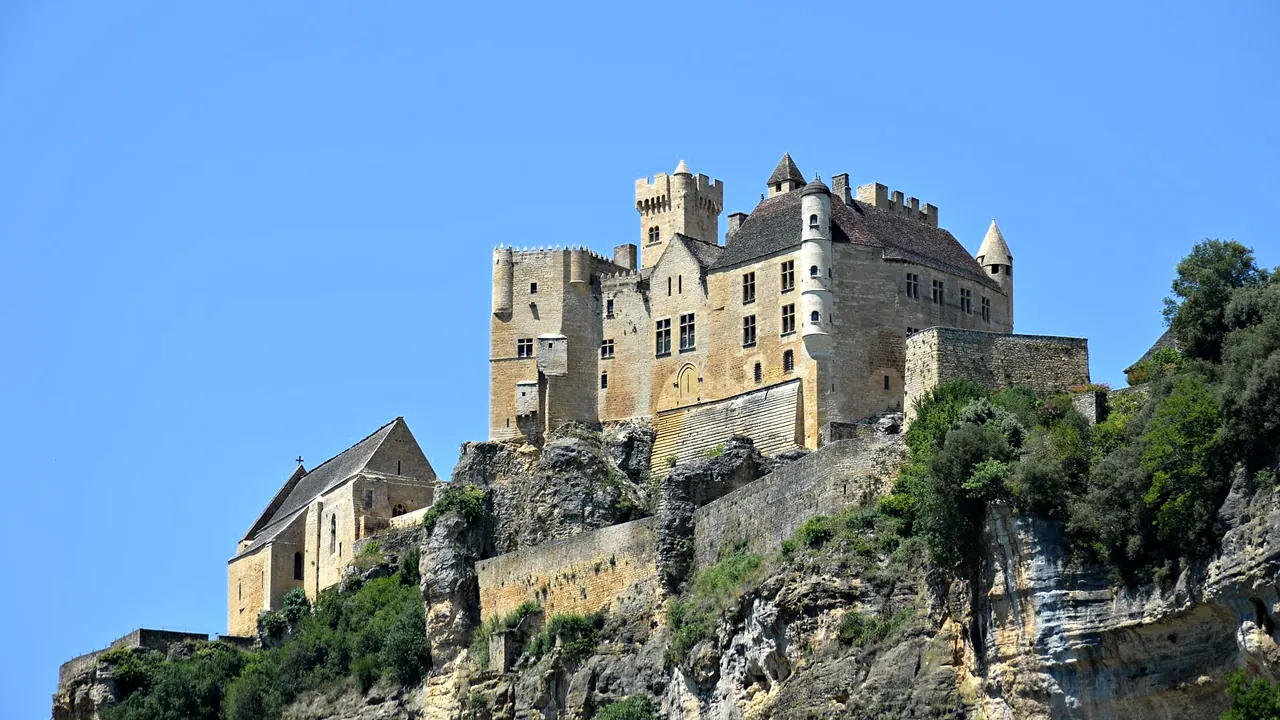
Photos: Burgundy by Gu Bra, Pexels License; Dordogne by Edouard CHASSAIGNE, Pexels License.
Burgundy or Dordogne?
Our verdict in twelve categories, each scored against the same fixed benchmark cities, and the climate month by month, so you can choose for your trip.
Choose Burgundy for
- nightlife
- shopping
- food and drink
Burgundy is the choice for a trip built around the table and the cellar. The Côte de Nuits and Côte de Beaune put world-famous wine villages minutes apart. Beaune and Dijon are walkable towns with wine bars, a rail link and an opera house. The Romanesque abbeys reward a traveller who is happy to drive out for a day at a time. It suits couples and adults more than children.
Choose Dordogne for
- families
- beaches
- nature and the outdoors
Families with school-age children, and anyone who wants a warm summer spent outdoors, will do better in the Dordogne. Canoeing past the castles of Beynac and Castelnaud, swimming from gravel banks in the river and visiting the painted caves of the Vézère give children plenty to do. Sarlat's old town and its market are a good base for a slower week. In return you give up Burgundy's depth of food and wine and its town life, because evenings here end early.
Scoreboard
Twelve categories on one fixed scale from 0 to 100. The shaded stretch is the gap between the two.
Your match
Pick a travel style or drag the sliders, and both match scores follow your weighting.
Wins on nightlife and shopping with your weighting.
Wins on families and beaches with your weighting.
What matters to you?
Category by category
What the scores mean for a trip.
Beaches & swimming
Neither region has a coast, but the Dordogne makes better use of its water. Swimming there fits easily into a summer afternoon: gravel banks on the Dordogne and the Vézère below Beynac and La Roque-Gageac, sandy-shored lakes such as Rouffiac, and the pool that comes with most rented houses.
In Burgundy, swimming means a trip to the Morvan reservoirs, with Lac des Settons the main draw, or to Lac Kir on the edge of Dijon. These are pleasant on a hot day, but they are further from where most visitors stay among the vineyards.
Food & drink
Food and wine are the main reason to visit both regions, but Burgundy has more to offer. The Côte de Nuits and Côte de Beaune are among the most famous vineyard slopes anywhere, and Chablis and the Mâconnais add more wine at gentler prices. The cooking runs from boeuf bourguignon and Époisses to starred country inns in Saulieu and Chagny.
The Dordogne's cooking is narrower but has its own strengths: duck and goose in every form, walnuts, cèpes and winter truffles. The weekly markets of Sarlat and Périgueux are the highlight. Bergerac and sweet Monbazillac make good drinking but do not have the standing of the Côte.
Culture & sights
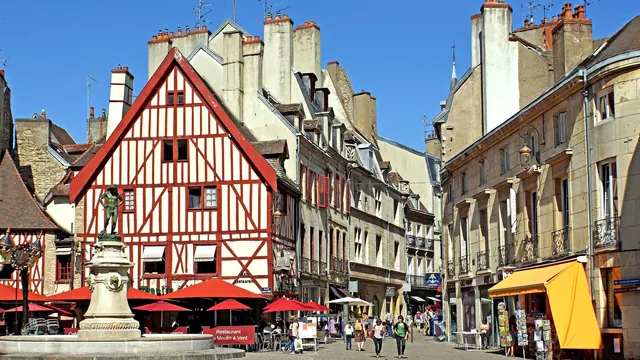
The two are evenly matched for sightseeing, but they cover different periods. Burgundy is the land of the dukes and the monks. It has the Palace of the Dukes and its fine art museum in Dijon, the tiled roof of the Hospices in Beaune, and Romanesque and Cistercian masterpieces at Vézelay, Fontenay, Cluny and Autun.
The Dordogne goes much further back, with the painted caves and rock shelters of the Vézère valley and the National Museum of Prehistory at Les Eyzies. It adds Sarlat's golden-stone old town and castles facing each other across the river. Its sights are also closer together, mostly within half an hour of Sarlat, while each of Burgundy's abbeys takes a day's drive.
Nightlife
Neither region is built for late nights, but Burgundy at least has towns where you can stay out. Dijon's student population keeps a small bar and club scene going, so a younger visitor based there can find a crowd and somewhere to dance. Beaune suits an older evening: dinner followed by an unhurried drink in a wine bar, with the town staying lively well after dark in summer.
In the Dordogne, evenings happen in the village rather than the town. In summer, night markets and fêtes bring locals and visitors together at shared tables and food stalls, with an open-air dance floor. That suits families and anyone happy with a gentle evening outdoors. Out of season, and away from those events, there is really nothing to go out for, and Périgueux and Bergerac add little.
Nature & outdoors
Both are gentle farming country without mountains, and the difference is in how you get around it. The Dordogne is best seen from the water, by canoe beneath limestone cliffs and castles on the main river or along the quieter Vézère. The Marqueyssac gardens look down on the river from their cliff.
Burgundy is better seen by bicycle or by boat on the canals, along the towpaths of the Canal de Bourgogne and the Canal du Nivernais. The granite hills and beech forest of the Morvan give it a slightly wilder corner for walking and mountain biking.
Day trips
Both regions are excellent bases for touring, with a fine village or town around almost every bend. From Beaune, Meursault and Gevrey-Chambertin are minutes away, the walled towns of Semur-en-Auxois and Noyers lie further out, and Lyon is within reach for a day.
The Dordogne's outings are to clifftop and riverside villages such as Domme and Brantôme, with Rocamadour and Saint-Cirq-Lapopie just over the border and Saint-Émilion and Bordeaux to the west. Burgundy's outings lean towards wine and medieval towns, the Dordogne's towards dramatic settings on cliffs and rivers, and both need a car.
Good for families
The Dordogne is the much easier choice for families. Canoeing, river beaches, the siege engines and armour at Castelnaud, prehistoric sites and treetop parks fill a week, and campsites and gîtes with pools are set up for children. Toddlers and pushchairs struggle on the castle steps, though.
Burgundy has a few strong outings, above all the castle at Guédelon, where craftsmen build with medieval methods, and a week on a canal boat working the locks. Otherwise, much of a typical day is spent driving between cellars and abbeys.
Getting around
Both are car country, but Burgundy lets you see more without one. Fast trains reach Dijon, and regional lines connect Beaune, Chalon-sur-Saône, Mâcon and Auxerre. Dijon has a tram, and the flat paths of the Côte make it easy to cycle between wine villages, which also saves you from driving after a tasting.
In the Dordogne, trains stop at Périgueux, Bergerac and Sarlat, and little else reaches the valleys, so a car is essential. In July and August the riverside road through La Roque-Gageac and Beynac backs up, and parking in Sarlat on market day fills early.
Shopping & style
In both regions most of the shopping is for food and drink, but Burgundy has a little more. It offers wine from the cellar door, Dijon mustard, cassis and gingerbread, Dijon's covered market hall and a proper town centre of chains and independent shops. Fashion is thin, though.
In the Dordogne you buy foie gras, confit in jars, walnut oil and Bergerac wine at the markets of Sarlat, Issigeac and Ribérac, and there are brocantes in summer. Beyond that, Sarlat's shops all sell the same regional products, and there is no real town shopping.
Affordability
Costs are much the same in both: mid-priced rural France, with good set lunches in village restaurants and wine bought from the grower. What differs is where the money goes.
In Burgundy, Beaune and the Côte villages cost more, as do great bottles and starred tables if you want them, while Dijon and the Morvan stay fairly priced. In the Dordogne, rented houses with pools cost more in July and August, and entry fees and canoe hire add up for a family, so June or September bring the bill down.
Live music & performing arts
Burgundy has a year-round home for performance in Dijon, whose opera company stages opera, concerts and dance at the Grand Théâtre. In summer it adds the baroque opera festival in Beaune, street theatre in Chalon-sur-Saône and jazz at Cluny.
The Dordogne has no opera or resident orchestra. Its season is summer only, with Sarlat's theatre festival, mime and street theatre in Périgueux, and classical concerts in Romanesque churches. Outside summer there is little to see.
Wellness & relaxation
Only Burgundy has thermal springs, at Bourbon-Lancy and Saint-Honoré-les-Bains, though they mostly serve medical cures. Some country hotels around Beaune also offer treatments based on grapes and wine. Still, the most restful week here is spent drifting through the locks on a canal barge.
The Dordogne has no bathing tradition. Rest there means a pool at a stone farmhouse and quiet evenings in riverside villages. It is calmest in the Périgord Vert and in late spring and September, because the August crowds around Sarlat break the peace.
When should you go?
Pick your month. The climate figures are measured averages, not a forecast.
Burgundy in July
Dordogne in July
Daytime high, °C
Rainfall in the month, mm
Where the figures come from
Burgundy's temperatures are measured 33 km from the centre, at Dijon.
Burgundy has no rain gauge within 25 km of the centre, so its rainfall comes from a gridded climate dataset read at the destination rather than from a gauge further away.
Temperature and rainfall are climate normals, averaged over the years shown. Burgundy: 1991-2020 normals, Dijon (32.7 km from centre). Dordogne: 1991-2020 normals, Gourdon (21.2 km from centre).
Burgundy has the cooler, more continental climate of the two. Around Beaune and Dijon, July and August reach about 27°C, which is warm enough for a swim at the Morvan lakes, and April is a little sunnier here than in the Dordogne. Winters are raw, with highs of 6°C and short, grey days. The rain is heaviest in late autumn and peaks in November. May, June and September are the most comfortable months for walking among the vines.
Through late spring and summer, the Dordogne valley is only a degree or two warmer. July and August reach 28°C, which is welcome for river swimming from late June but tiring on castle steps at midday. April and May are its wettest months, and April there is much wetter and slightly duller than in Burgundy. The gap widens from autumn onwards. September and October are sunnier and milder, which makes them ideal for walking and sightseeing. Winter highs of around 10°C are three or four degrees above Burgundy's and come with noticeably more sun.
Which traveller are you?
On a family trip with children, the Dordogne is the better choice. Gentle canoe trips, river beaches, the siege engines at Castelnaud and the prehistoric sites around Les Eyzies suit eight-to-fourteen-year-olds. Burgundy's days of cellars and abbeys tend to lose them.
For a food and nightlife trip, Burgundy wins. Its cooking and its great wines are richer and more varied than the Dordogne's duck-based menus. Dijon's student streets and Beaune's late wine bars also give you somewhere to go after dinner, which the Dordogne's silent villages do not.
For a short city break, Burgundy has Dijon. It is reached by fast train and has a tram, a walkable old centre, the Palace of the Dukes with its museum, and a covered market. The Dordogne has no city to match, and you need a car from the start.
Before you go
| Measure | Burgundy | Dordogne |
|---|---|---|
| Official language | French | French |
| Currency | Euro (EUR) | Euro (EUR) |
| Sockets | CE230 V, 50 Hz | CE230 V, 50 Hz |
| Driving side | Right | Right |
| Time zone | UTC+1, UTC+2 in summer | UTC+1, UTC+2 in summer |
| Emergency number | 112 | 112 |
| Main airport | Lyon Saint-Exupéry Airport (LYS)141 non-stop destinations | Bergerac Dordogne-Périgord airport (EGC)9 non-stop destinations |
| Public holidays this year | 11 days | 11 days |
By the numbers
| Measure | Burgundy | Dordogne |
|---|---|---|
| Population | 1,642,687 | 417,614 |
| People per km² | - | 46 |
Where else could you go?
Every comparison below shares a destination with this one, so you can follow Burgundy or Dordogne somewhere new.
- French Alpsvs Burgundy
- Swiss Alpsvs Burgundy
- Black Forestvs Burgundy
- Loire Valleyvs Dordogne
- Loire Valleyvs Burgundy
- Lake Maggiorevs Burgundy