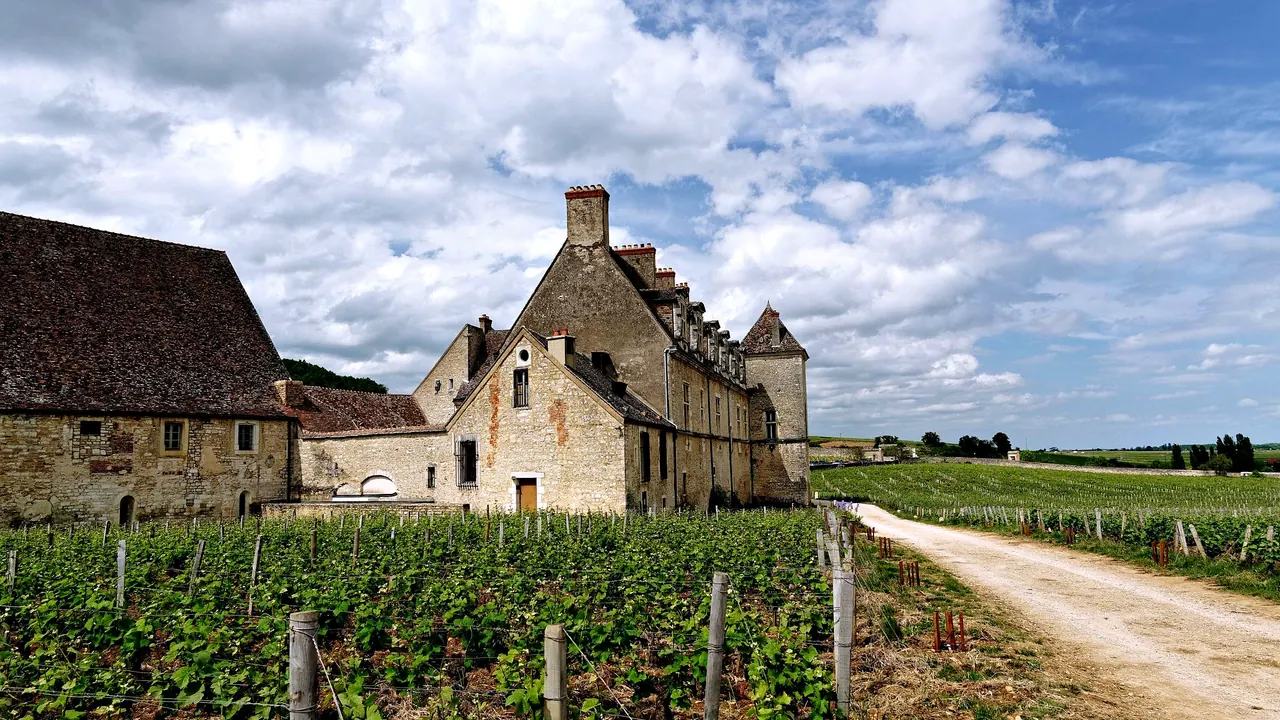
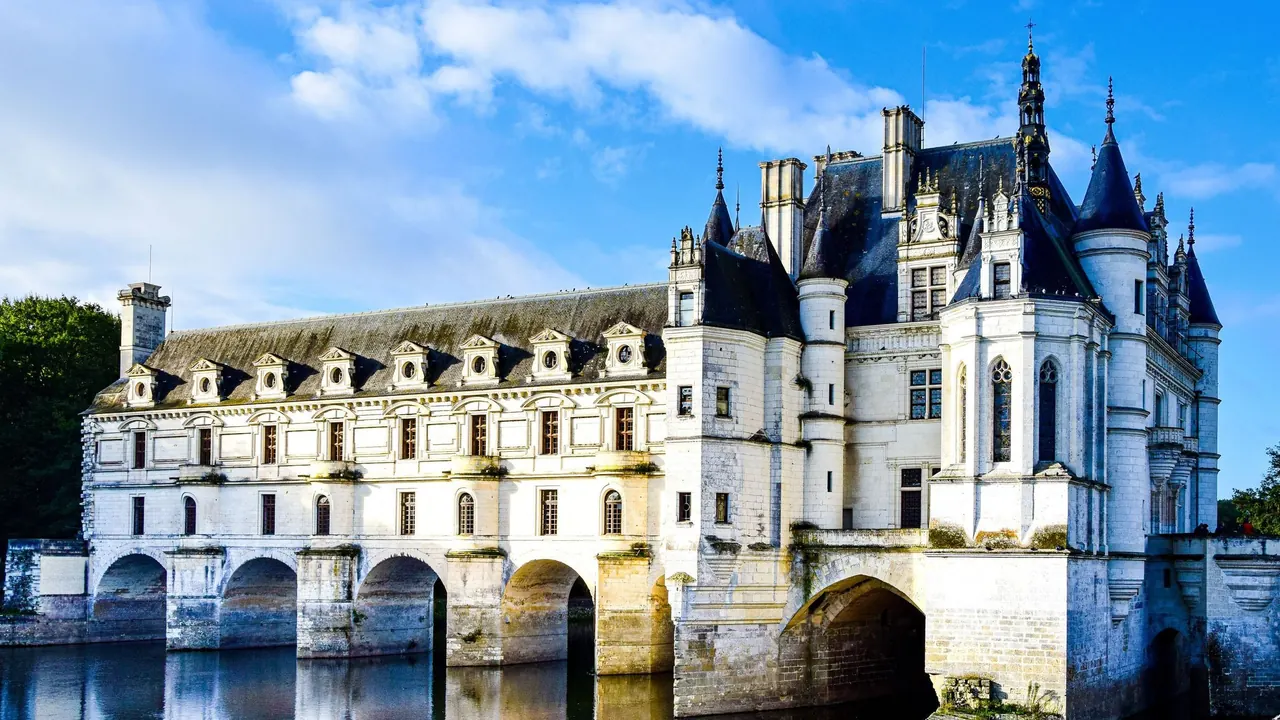
Photos: Burgundy by Gu Bra, Pexels License; Loire Valley by AXP Photography, Pexels License.
Burgundy or Loire Valley?
Our verdict in twelve categories, each scored against the same fixed benchmark cities, and the climate month by month, so you can choose for your trip.
Choose Burgundy for
- food and drink
- shopping
- wellness
Burgundy is the choice when the table is the point of the trip. The Côte between Dijon and Beaune puts famous cellars a few minutes apart, and the cooking, from boeuf bourguignon to Époisses, is reason enough to come. Add the great Romanesque abbeys and slow days on a canal barge, and it suits couples and wine lovers who are happy to drive between scattered sights and linger over long lunches.
Choose Loire Valley for
- families
- culture and sights
- day trips
The Loire Valley is better for sightseeing and for families. Its Renaissance châteaux sit close together around Tours and Amboise, a riverside railway and a flat cycle route tie the towns together, and Beauval zoo and Leonardo's machines at Clos Lucé keep children happy. The wine is lighter and the food simpler, but a first visit to France's château country is easier to organise here.
Scoreboard
Twelve categories on one fixed scale from 0 to 100. The shaded stretch is the gap between the two.
Your match
Pick a travel style or drag the sliders, and both match scores follow your weighting.
Too close to call, level with your weighting
Wins on food and drink and shopping with your weighting.
Wins on families and culture and sights with your weighting.
What matters to you?
Category by category
What the scores mean for a trip.
Beaches & swimming
Neither region is a beach destination, and in both a summer swim means a lake. Burgundy has the better freshwater option, the Morvan reservoirs, where Lac des Settons has supervised beaches and sailing clubs, plus Lac Kir on the edge of Dijon. In the Loire the river itself is dangerous to swim in, so visitors use the Lac de Maine at Angers or, more often, the pool at their gîte, with the Atlantic a long drive west of Nantes.
Food & drink
This is where Burgundy pulls clearly ahead. The slope of the Côte de Nuits and Côte de Beaune holds some of the world's most celebrated vineyards, with tasting rooms from grand houses to family domaines, and Beaune makes a compact base for serious eating. The cooking is the hearty, sauce-rich French food people travel for, with Époisses, Dijon mustard and starred inns in villages such as Saulieu.
The Loire eats well too, but on a lighter scale: Vouvray, Chinon and sparkling Saumur from tufa caves, rillettes, beurre blanc and goat cheeses, best found in the markets of Tours, Amboise and Saumur. It is pleasant wine-country eating rather than a pilgrimage.
Culture & sights
The Loire has the edge, mainly because its riches sit so close together. Chambord, Chenonceau, royal Blois and Amboise, Villandry's gardens, Fontevraud Abbey and the Apocalypse Tapestry in Angers can all be reached from a base around Tours, and several of the great houses fit into a single day.
Burgundy's heritage is older and more austere: the dukes' palace and fine art museum in Dijon, the tiled roof of the Hospices in Beaune, and Romanesque and Cistercian masterpieces at Vézelay, Fontenay, Cluny and Autun. It is just as rewarding for lovers of medieval architecture, but the sites are spread out and most need a car and a day each.
Nightlife
Nights out are equally thin in both, and evenings mostly mean a long dinner with a local bottle. Burgundy's going-out is in Dijon, with pubs, wine bars and a couple of clubs near the old centre, plus Beaune's late wine bars in summer. The Loire's equivalent is the terrace life around Place Plumereau in medieval Tours, with a smaller student quarter in Angers; in both regions the villages go quiet straight after dinner.
Nature & outdoors
Both offer gentle countryside rather than drama, but of different shapes. Burgundy has more relief, with the granite hills and beech forests of the Morvan, the short climb up the Roche de Solutré and long canal towpaths where a hired barge sets the pace for a week.
The Loire is flatter and built around the river itself: willow-lined sandbanks and islands with nesting terns and herons, troglodyte cliffs, the Loire à Vélo cycle route and the heaths and ponds of the Sologne, where deer can be heard in the autumn rut.
Day trips
The Loire offers the richer chain of outings. From Tours, Amboise, Blois, Chinon, Loches, Saumur and Angers are all easy trips, the troglodyte villages around Saumur are unlike anything in Burgundy, and Paris is only about an hour away by high-speed train, with Chartres within about two hours.
Burgundy's outings are shorter hops: wine villages such as Meursault and Gevrey-Chambertin minutes apart, then walled or hilltop towns like Semur-en-Auxois, Noyers and Flavigny-sur-Ozerain, with Lyon reachable for a day. The catch is that nearly all of it needs a car.
Good for families
The Loire is much the easier choice with children. Beauval, near Saint-Aignan, is one of Europe's leading zoos and fills a whole day, Clos Lucé has a park of Leonardo's machines, Blois has its magic museum facing the château, and the flat river cycle route suits young riders. Gîtes with pools make the days around the sightseeing simple.
Burgundy has a few real highlights, above all the medieval castle being built at Guédelon and a week working the locks on a canal boat. Beyond those, its days of cellars, abbeys and long restaurant meals hold little for most children.
Getting around
The Loire is somewhat easier without a car. A regional railway follows the river through Orléans, Blois, Amboise, Tours, Saumur and Angers, Chenonceau and Chinon have their own stations, and bikes can be hired widely with luggage sent ahead along the riverside route.
Burgundy's trains link Dijon, Beaune, Chalon, Mâcon and Auxerre, and Dijon has a tram, but buses to villages are sparse and most visitors hire a car. That sits awkwardly with wine tasting, though cycling between the closely spaced villages of the Côte is a good answer.
Shopping & style
Shopping in both is mostly about food and drink, but Burgundy gives more to take home. Dijon's long-established mustard shops, cassis, gingerbread and its covered market hall, plus Beaune's Saturday market and antique dealers in the countryside, make a better haul, and Dijon's centre has a fair spread of shops. The Loire offers cellar-door wine, goat cheese and rillettes, with Gien faience and Saumur leather as its crafts, and Tours as the only real shopping town.
Affordability
Costs are broadly similar, mid-range for Western Europe, and both regions usually need a hire car. Where the money goes differs. In Burgundy it is Beaune and the Côte villages, along with the great wines and starred tables, while Dijon, the Morvan and the rural Yonne stay cheaper. In the Loire it is the separate entrance fee at each château and the pricey rentals around Amboise and Chenonceau, although cellar-door wine there is very good value.
Live music & performing arts
Neither region is a reason to travel for performance, and both come alive mostly in summer. Burgundy's high points are festivals in different towns: baroque opera in Beaune in July, street theatre in Chalon-sur-Saône, jazz in Cluny and concerts in the basilica at Vézelay, with Dijon's opera carrying the rest of the year.
The Loire's summer means sound-and-light shows at châteaux such as Blois and Amboise, chamber music at the Grange de Meslay and Angers' street-arts festival in September. Out of season its offer is shared between three cities, Tours, Angers and Orléans, rather than one.
Wellness & relaxation
Burgundy has a little more to offer. It has actual thermal springs at Bourbon-Lancy and Saint-Honoré-les-Bains, though these are geared to medical cures, and a drifting barge on the canals is about as restful as a week can be. The Loire has no spa towns at all, relying on hotel spas in converted châteaux, but its riverside cycling, the gardens of Villandry and Chaumont and quiet guesthouses in Touraine make unwinding just as natural.
When should you go?
Pick your month. The climate figures are measured averages, not a forecast.
Burgundy in July
Loire Valley in July
Daytime high, °C
Rainfall in the month, mm
Where the figures come from
Burgundy's temperatures are measured 33 km from the centre, at Dijon.
Burgundy has no rain gauge within 25 km of the centre, so its rainfall comes from a gridded climate dataset read at the destination rather than from a gauge further away.
Temperature and rainfall are climate normals, averaged over the years shown. Burgundy: 1991-2020 normals, Dijon (32.7 km from centre). Loire Valley: 1991-2020 normals, Tours (20.4 km from centre).
The two share a continental rhythm: cold, grey winters, a long pleasant spring and summers warm enough for lake swimming in July and August. Burgundy runs a little more extreme. Its winters are colder, with highs around 6°C in January and December, and its summer is slightly hotter but noticeably wetter, with May the rainiest month of the warm season at 78mm. Neither region gets too hot for walking towns and vineyards.
The Loire is milder at both ends of the year and drier in high summer, with only 43mm in August, which suits cycling the river route. September is a particular strength there, sunnier than in Burgundy and still warm at 22°C, so late summer and early autumn are good months for the châteaux. For Burgundy, June and September give warmth without the peak heat, and the autumn harvest brings the vineyards to life before the November rain sets in.
Which traveller are you?
For a food and nightlife trip, Burgundy is the one, because the eating decides it. Chablis whites, Mâconnais reds, jambon persillé and eggs poached in red wine reward days built around the table, and Loire evenings are no livelier anyway.
On a culture and arts trip, the Loire Valley is the stronger pick. Burgundy rewards lovers of Romanesque stone, but the Loire tells the story of the Renaissance court, from Chambord's spiral staircase to Leonardo's last home at Amboise, and its château towns line one railway.
On a family trip with children, choose the Loire Valley. Burgundy has the Alésia siege museum and pedalos on the Morvan lakes, but the Loire has more close together: carriage rides at Chambord, boats out to river islands and the troglodyte cave homes around Saumur.
Before you go
| Measure | Burgundy | Loire Valley |
|---|---|---|
| Official language | French | French |
| Currency | Euro (EUR) | Euro (EUR) |
| Sockets | CE230 V, 50 Hz | CE230 V, 50 Hz |
| Driving side | Right | Right |
| Time zone | UTC+1, UTC+2 in summer | UTC+1, UTC+2 in summer |
| Emergency number | 112 | 112 |
| Main airport | Lyon Saint-Exupéry Airport (LYS)141 non-stop destinations | Tours Val de Loire Airport (TUF)5 non-stop destinations |
| Public holidays this year | 11 days | 11 days |
By the numbers
| Measure | Burgundy | Loire Valley |
|---|---|---|
| Population | 1,642,687 | - |
Where else could you go?
Every comparison below shares a destination with this one, so you can follow Burgundy or Loire Valley somewhere new.
- French Alpsvs Burgundy
- Swiss Alpsvs Burgundy
- Normandyvs Loire Valley
- Black Forestvs Burgundy
- Dordognevs Loire Valley
- Brittanyvs Loire Valley