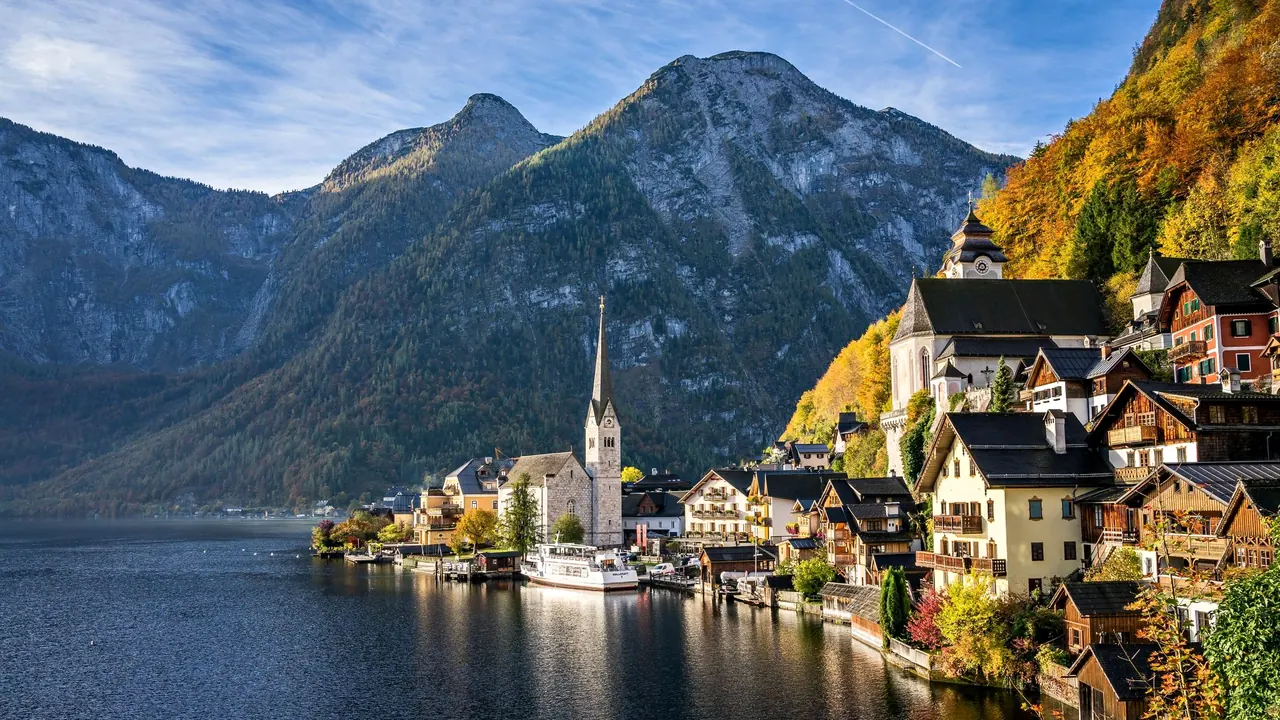
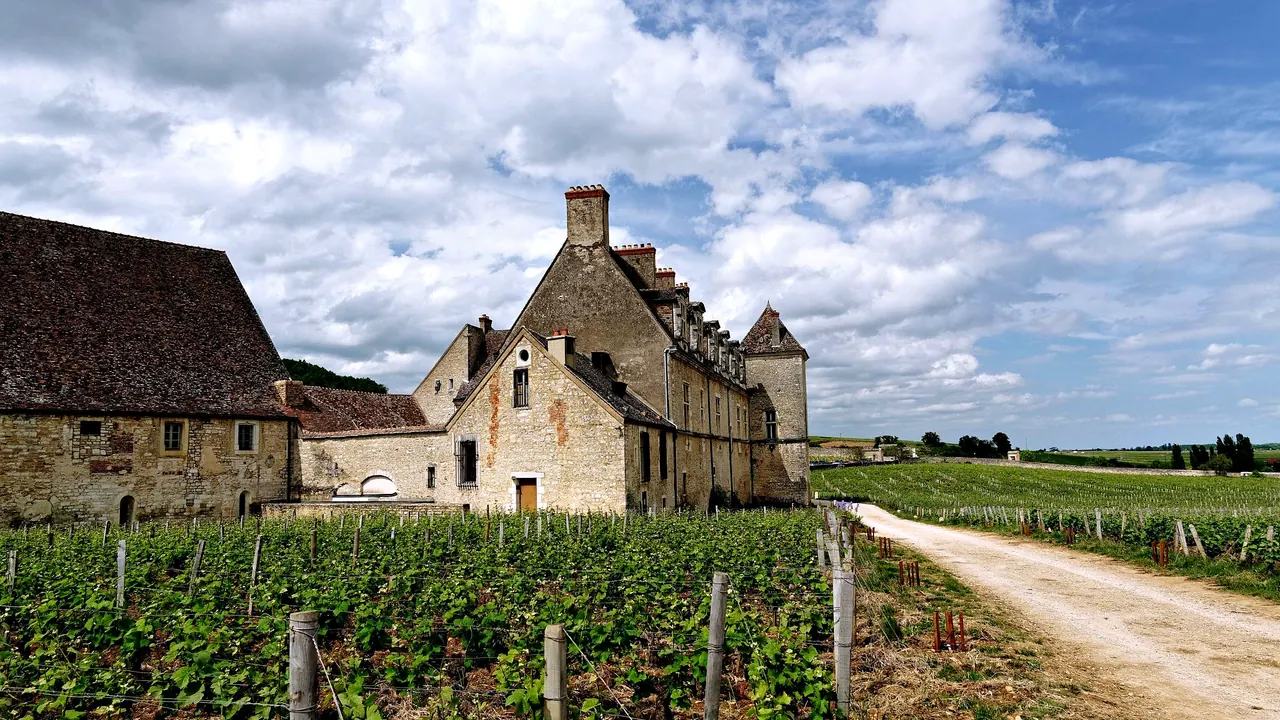
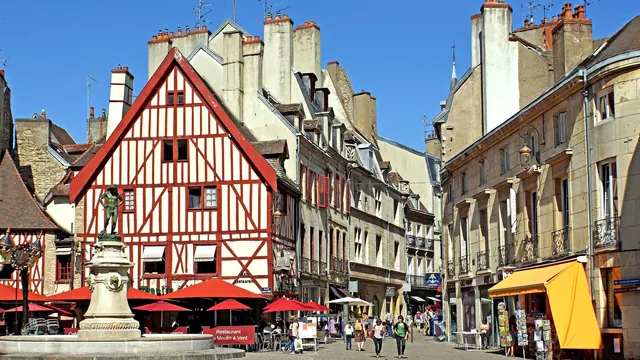
Photos: Austrian Alps by Leonhard Niederwimmer, Pexels License; Burgundy by Gu Bra, Pexels License.
Austrian Alps or Burgundy?
Our verdict in twelve categories, each scored against the same fixed benchmark cities, and the climate month by month, so you can choose for your trip.
Choose Austrian Alps for
- nature and the outdoors
- wellness
- beaches
Choose the Austrian Alps if your trip is about being outdoors: skiing from December to April, or hut walks, via ferratas and lake swimming in summer, with thermal baths and sauna worlds at the end of the day. It is also much easier with children, thanks to ski schools, family hotels and short distances between village and lift. In winter it has the livelier nights, and in summer it has Salzburg's festival. In return you get less variety at the table, and it is not a cheap trip.
Choose Burgundy for
- food and drink
- prices
- culture and sights
Burgundy suits travellers who plan their days around the table and the cellar. Tastings along the Côte, long lunches in country inns and evenings in Beaune give it a depth of food and wine that the Alps cannot match. It also costs rather less, as long as you skip the starred addresses. Romanesque abbeys and medieval towns fill the hours between meals. Expect a slower, quieter trip, with gentle walking and canal cycling rather than summits, early nights, and a hired car to reach most places.
Scoreboard
Twelve categories on one fixed scale from 0 to 100. The shaded stretch is the gap between the two.
Your match
Pick a travel style or drag the sliders, and both match scores follow your weighting.
Wins on nature and the outdoors and wellness with your weighting.
Wins on food and drink and prices with your weighting.
What matters to you?
Category by category
What the scores mean for a trip.
Beaches & swimming
Neither has a sea, but the Austrian Alps make far more of their lakes. Carinthia's Wörthersee and Millstätter See get properly warm in high summer, and towns such as Velden build their summers around grassy lidos with piers and diving boards. A stay there can be a real swimming vacation.
In Burgundy, swimming is a way to cool off rather than a plan. The supervised beaches at Lac des Settons in the Morvan or Lac Kir on the edge of Dijon are worth an afternoon in July or August.
Food & drink
Alpine cooking is hearty and tastes best on a hut terrace after a hike: Kaiserschmarrn, Gröstl, Käsespätzle and Speck, with a pine schnapps. Salzburg's cafés and the fine kitchens of Kitzbühel and the Arlberg cover the top end, but menus in the big resorts tend to repeat themselves.
Burgundy is a different level of eating. The wine alone justifies the trip, tasted at domaines along the Côte between Dijon and Santenay. The cooking has the depth to carry a whole trip of meals, from boeuf bourguignon and eggs poached in red wine to Époisses and Bresse chicken, and Beaune keeps serious restaurants and wine bars within a few streets of each other.
Culture & sights
Both have heritage of real quality, and in both it is spread out. The Alps' strengths are urban and courtly: Salzburg's baroque old town and Mozart's birthplace, Innsbruck's Hofburg and Hofkirche, and the old salt-mining landscape around Hallstatt.
Burgundy's heritage is medieval and monastic: the Palace of the Dukes and its art museum in Dijon, the tiled roof of the Hospices in Beaune, and the Romanesque and Cistercian buildings of Vézelay, Fontenay and Cluny. Salzburg and Innsbruck pack a lot into one walkable town, while Burgundy's abbeys usually take a drive and most of a day each.
Nightlife
In winter the Austrian Alps have one of the loudest party scenes in the mountains. Après-ski in Ischgl, St Anton and Saalbach starts in the slopeside huts and moves into village clubs that stay open late. Out of season it shrinks to Innsbruck's student bars.
In Burgundy the evening is the dinner itself. There are a few late wine bars in Beaune and student pubs and clubs in Dijon, and the villages go quiet early.
Nature & outdoors
This is the widest gap between the two. The Austrian Alps have glaciers, the Grossglockner and the Krimml waterfalls, skiing across the Arlberg and Ski Amadé areas, and summers of via ferratas, mountain biking and walking between huts. Innsbruck sits right under the peaks.
Burgundy's countryside is pastoral: vineyard slopes, Charolais pastures and the granite forests of the Morvan. Its pleasures are cycling the canal towpaths, the short climb up the Roche de Solutré or a week on a hired boat. They are lovely at a slow pace but no match for Alpine terrain.
Day trips
Both make excellent bases, and the difference is in what you go out to see. Trips from Salzburg and Innsbruck cross borders and change scenery: Hallstatt and the Salzkammergut lakes, the Königssee, Munich by train, or Bolzano and Merano over the passes.
From Beaune or Dijon the outings are shorter and closer in theme. The wine villages are minutes apart, walled medieval towns such as Semur-en-Auxois and Noyers are within easy reach, and Lyon is not far off. Nearly all of it needs a car.
Good for families
The Austrian Alps are far easier with children. Nursery slopes, ski schools and childcare are standard in resorts such as Serfaus-Fiss-Ladis, and family hotels with pools and kids' clubs are an Austrian speciality. Summer adds toboggan runs, mountain play areas and shallow lidos.
Burgundy has a few strong outings, above all Guédelon, where a castle is being built by medieval methods, and a canal-boat week with locks to work. Much of a typical day, though, is cellars and long lunches.
Getting around
The Alps are easier without a car. Trains run along the Inn valley and to Salzburg and the Gastein valley, Postbuses climb into the side valleys, and guest cards often cover local buses. A stay in one valley works well on public transport, but linking several is slower.
In Burgundy, trains connect Dijon, Beaune and the larger towns, but the villages and abbeys need a hire car, which does not sit well with wine tasting. Cycling between the closely spaced Côte villages is the pleasant exception.
Shopping & style
The Austrian Alps give you more to browse. Under the wrought-iron guild signs of Salzburg's Getreidegasse and in Innsbruck's old town, makers sell dirndls, lederhosen and loden coats. Tyrolean valley workshops carve wooden figures and nativity cribs, Wattens has its cut crystal, and Kitzbühel and Lech add a few luxury boutiques. In December the Christmas markets bring out seasonal crafts.
Burgundy's shopping is almost all for the table: wine from the cellar door, Dijon mustard, cassis, gingerbread and Époisses. The best places to find them are Dijon's covered market hall and Beaune's Saturday market. Beyond food there are antique dealers scattered through the countryside, but little fashion.
Affordability
The Austrian Alps are the dearer of the two. Costs peak in the ski season at the famous names, with an Arlberg or Kitzbühel address among the most expensive in the Alps, and Salzburg gets sharply dearer during its summer festival. Prices drop in the quieter valleys, on farm stays and in smaller ski areas, and a summer on a Carinthian lake is noticeably cheaper. Half-board keeps meal costs predictable, and guest cards bundle local buses and sometimes lifts.
Burgundy is easier on the budget overall, and its prices follow the vines. Beaune and the Côte villages cost most, especially in summer and at the autumn harvest, and the great bottles and starred tables can stretch any budget. Away from the Côte, self-catering cottages and village restaurants keep a trip moderate, although most visitors also pay for a hire car.
Live music & performing arts
The Alps have the stronger stages if you time it right. The Salzburg Festival and the opera on the floating stage at Bregenz make July and August a high point of the classical music year, and Salzburg keeps concerts going through the other seasons.
Burgundy's best moments are also in summer but on a smaller scale: baroque opera in Beaune, street theatre in Chalon-sur-Saône and jazz in Cluny. For the rest of the year, Dijon's opera carries the scene.
Wellness & relaxation
For spas the Alps are in a different league. There are Bad Gastein's radon springs and its healing gallery inside the mountain, the Aqua Dome's outdoor pools facing the Ötztal peaks, and hotel sauna worlds in nearly every valley.
Burgundy relaxes you through its pace rather than its baths. Long lunches and a slow barge through the locks do the work. Its spa towns, Bourbon-Lancy and Saint-Honoré-les-Bains, mainly offer medical cures, though a few hotels near Beaune have spas with grape and wine treatments.
When should you go?
Pick your month. The climate figures are measured averages, not a forecast.
Austrian Alps in July
Burgundy in July
Daytime high, °C
Rainfall in the month, mm
Where the figures come from
Burgundy's temperatures are measured 33 km from the centre, at Dijon.
Burgundy has no rain gauge within 25 km of the centre, so its rainfall comes from a gridded climate dataset read at the destination rather than from a gauge further away.
Temperature and rainfall are climate normals, averaged over the years shown. Austrian Alps: 1991-2020 normals, Innsbruck-Flughafen (4.1 km from centre). Burgundy: 1991-2020 normals, Dijon (32.7 km from centre).
The Alpine figures are measured in the main valleys where most visitors stay, and they show two distinct seasons. Winter is cold, with daytime highs around 4°C, and that is the ski season, which runs from December to April. It is also clearly sunnier than a Burgundian winter. Summer is warm, peaking around 26°C in July, and the lakes can be swum from June to early September. Summer is also the wettest stretch, with about 144mm of rain in August, so expect some wet days. May, June and September are the most comfortable months for hiking.
Burgundy peaks a degree warmer, at about 27°C in July, and gets more summer sunshine. Its rain is spread fairly evenly through the year. Summer is in fact one of its drier seasons, and November is the wettest month at 83mm. June to September are the easy months for cycling the Côte, and the Morvan lakes are warm enough for swimming in July and August. Spring and early autumn are mild enough for exploring the towns on foot. Winter is grey and short of sun, Burgundy's weakest season, while in the Alps it is high season.
Which traveller are you?
For an outdoors trip, the Austrian Alps win clearly. The glaciers and high summits of the Hohe Tauern and Tyrol, some of Europe's most extensive skiing, and summer trails with staffed huts and via ferratas go far beyond Burgundy's gentle vineyard walks and canal cycling.
On a trip on a tight budget, Burgundy is the easier fit. Dijon, the Morvan and the rural Yonne have fairly priced guesthouses, self-catering cottages and village set lunches. In the Alps, lift passes, ski hire and resort hotels add up quickly.
For a wine-tasting trip, Burgundy has no rival here. Along the Côte de Nuits and Côte de Beaune you can taste in cellars from village to village, with Chablis and the Mâconnais close by. The Alps offer pine schnapps and beer instead.
Before you go
| Measure | Austrian Alps | Burgundy |
|---|---|---|
| Official language | German, Austrian Sign Language | French |
| Currency | Euro (EUR) | Euro (EUR) |
| Sockets | CF230 V, 50 Hz | CE230 V, 50 Hz |
| Driving side | Right | Right |
| Time zone | UTC+1, UTC+2 in summer | UTC+1, UTC+2 in summer |
| Emergency number | 112 | 112 |
| Main airport | Innsbruck Airport (INN)40 non-stop destinations | Lyon Saint-Exupéry Airport (LYS)141 non-stop destinations |
| Public holidays this year | 16 days | 11 days |
By the numbers
| Measure | Austrian Alps | Burgundy |
|---|---|---|
| Population | - | 1,642,687 |
Where else could you go?
Every comparison below shares a destination with this one, so you can follow Austrian Alps or Burgundy somewhere new.
- Bavariavs Austrian Alps
- Dolomitesvs Austrian Alps
- French Alpsvs Burgundy
- Lake Gardavs Austrian Alps
- Lake Comovs Austrian Alps
- Swiss Alpsvs Burgundy