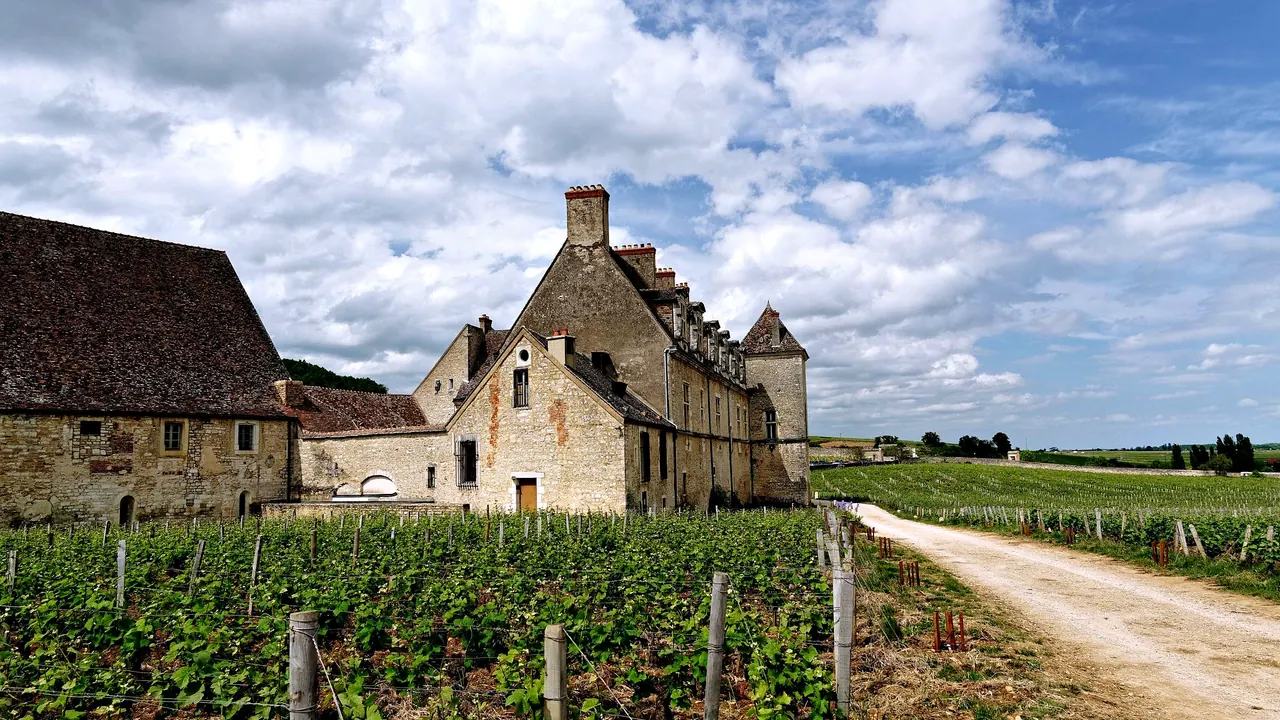
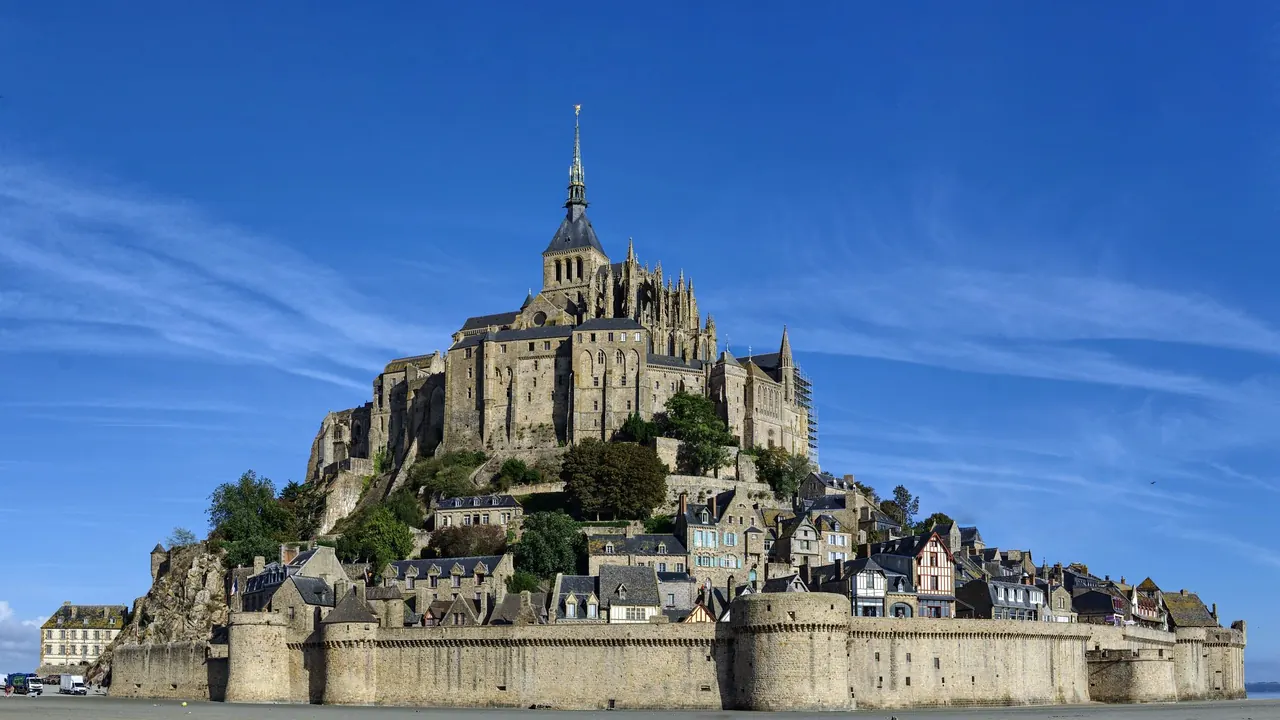
Photos: Burgundy by Gu Bra, Pexels License; Normandy by Jan, Pexels License.
Burgundy or Normandy?
Our verdict in twelve categories, each scored against the same fixed benchmark cities, and the climate month by month, so you can choose for your trip.
Choose Burgundy for
- food and drink
- shopping
- prices
Burgundy is for a trip built around the table and the cellar. The slope of wine villages between Dijon and Beaune lets you taste in famous cellars by day and eat seriously at night, and the Romanesque abbeys and walled medieval towns fill the hours in between. It suits adults who are happy to drive or cycle between villages, or drift along a canal, and who will not miss the sea.
Choose Normandy for
- beaches
- families
- wellness
Normandy makes more sense for a mixed party, and for anyone who wants the coast to be part of the trip. Sandy resort beaches, the chalk cliffs at Étretat, seawater spas and sights such as Mont-Saint-Michel and the D-Day beaches give both children and history-minded adults a reason to come. The cheese, cider and seafood are excellent, but here food is a pleasure along the way, whereas in Burgundy wine is the whole point of the trip.
Scoreboard
Twelve categories on one fixed scale from 0 to 100. The shaded stretch is the gap between the two.
Your match
Pick a travel style or drag the sliders, and both match scores follow your weighting.
Too close to call, 2 points apart
Wins on food and drink and shopping with your weighting.
Wins on beaches and families with your weighting.
What matters to you?
Category by category
What the scores mean for a trip.
Beaches & swimming
Neither is a beach destination, but only Normandy has a coast. The Côte Fleurie resorts of Deauville, Trouville and Cabourg have wide sand, boardwalks and beach cabins, and the west Cotentin is quieter. The cool Channel and big tides mean beach days are brief, but they are real ones.
Burgundy is about as far from the sea as France gets. A swim there means a lake beach at Lac des Settons in the Morvan or at Lac Kir on the edge of Dijon, which is fine for cooling off on a hot afternoon and no more.
Food & drink
Burgundy is the stronger food destination, because its wine is world-famous. You can taste at the cellar door from Gevrey-Chambertin to Santenay, then eat boeuf bourguignon, snails and Époisses, with Michelin-starred inns in villages such as Saulieu and Chagny. Beaune makes a natural base for all of it.
Normandy cooks with butter and cream rather than red wine, and drinks cider and calvados straight from the farms of the Pays d'Auge. Its high points are oysters and scallops eaten on the harbour fronts at Honfleur or Granville. It is excellent eating, but without a famous wine region behind it.
Culture & sights
The two are evenly matched, but their heritage differs in kind. Burgundy's belongs to the medieval dukes and the great monasteries: the Palace of the Dukes and its fine art museum in Dijon, the tiled roof of the Hospices in Beaune, and the Romanesque and Cistercian landmarks of Vézelay, Fontenay, Cluny and Autun. These are scattered across the countryside, and each is worth a day.
Normandy has its own medieval treasures in Mont-Saint-Michel, the Bayeux Tapestry, William the Conqueror's castle and abbeys in Caen, Rouen's cathedral and the ruins of Jumièges, with Monet's garden at Giverny besides. What sets it apart is the twentieth century, which has no counterpart in Burgundy: the D-Day beaches with their cemeteries and the Caen Memorial, and Le Havre, the concrete city rebuilt after the war.
Nightlife
Both regions go to bed early, and the difference lies in where the late hours happen. In Burgundy that means wine bars in Beaune on summer evenings and a few student streets in Dijon. Normandy has two university cities, Rouen around the cathedral and Caen around the Vaugueux quarter, plus the Deauville casino and busier seaside towns on summer weekends.
Nature & outdoors
These are both gentle landscapes, but Normandy has the more dramatic scenery, because it has the sea. There are white cliffs and arches at Étretat, wild granite headlands at Cap de la Hague, and walks across the sands of the Mont-Saint-Michel bay with seals on the banks. The Suisse Normande adds kayaking and climbing.
Burgundy's outdoors is inland and slow. You can walk in the forests and around the reservoirs of the Morvan, make the short climb up the Roche de Solutré, cycle along canal towpaths or take a hot-air balloon over the vines.
Day trips
Both are regions you explore from a base, and both reward it. From Beaune the wine villages are minutes apart, with Semur-en-Auxois, Noyers and Flavigny further out, and Lyon within reach.
Normandy spreads wider, so most trips need two bases. In return it offers harbour towns such as Honfleur and Barfleur, Saint-Malo just over the border in Brittany, summer ferries to Jersey and Paris less than two hours away by train.
Good for families
Normandy works better with children. It has sandy beaches for kites and rock pools, ramparts and tides at Mont-Saint-Michel, the submarine at Cité de la Mer in Cherbourg, the Cerza zoo near Lisieux and Festyland outside Caen.
Burgundy has a few real highlights: watching the castle being built at Guédelon, pedalos on the Morvan lakes and a week working the locks on a hired canal boat. Beyond those, the region is made for adults who want to taste wine and see abbeys.
Getting around
In both regions a car is close to essential beyond the rail lines, but the distances are different. Burgundy is compact: Dijon has a tram, the villages of the Côte are a few kilometres apart and easy to cycle, and the main drawback is that tasting and driving do not mix.
Normandy is long and spread out. Trains from Paris reach Rouen, Caen and Bayeux, but the cliffs, the cider villages and Mont-Saint-Michel need a car or an organised tour, and crossing the region takes about three hours.
Shopping & style
Burgundy has a little more to buy. Wine bought at the cellar door is the main purchase, along with Dijon mustard and cassis, and Dijon's covered market hall and the Saturday market in Beaune are excellent for food. Dijon also has a solid centre of everyday shops.
Normandy's shopping is about farm calvados, caramels and old crafts: lace from Alençon and Bayeux, copper from Villedieu-les-Poêles and faience from Rouen. Add a few smart boutiques in Deauville and the art galleries of Honfleur.
Affordability
Costs are much the same, mid-priced for provincial France, and both regions usually mean hiring a car. In Burgundy the expensive part is Beaune and the Côte, in summer and at harvest time, while the Morvan and the rural Yonne are good value. Normandy's dearer spots are Deauville, Honfleur and the area around Mont-Saint-Michel in high summer, but many of its D-Day sites and beaches cost nothing to visit.
Live music & performing arts
Neither has much on most evenings, and the timing is what differs. Burgundy saves its best for summer: the baroque opera festival in Beaune, street theatre in Chalon-sur-Saône, jazz at Cluny and concerts in the basilica at Vézelay. Normandy has more year-round stages, in Rouen, Caen and Le Havre, and its best-known festival is Jazz sous les Pommiers at Coutances in spring.
Wellness & relaxation
Normandy is the better place to be looked after. Thalassotherapy centres with heated seawater pools run along the coast from Deauville to Granville, and Bagnoles-de-l'Orne is a proper spa town built around its springs.
Burgundy's spa towns mostly serve medical cures, and its treatments are limited to grape-based spas in a few country hotels. Its way of relaxing is the pace itself: long lunches and a barge drifting through the locks.
When should you go?
Pick your month. The climate figures are measured averages, not a forecast.
Burgundy in July
Normandy in July
Daytime high, °C
Rainfall in the month, mm
Where the figures come from
Burgundy's temperatures are measured 33 km from the centre, at Dijon.
Burgundy has no rain gauge within 25 km of the centre, so its rainfall comes from a gridded climate dataset read at the destination rather than from a gauge further away.
Temperature and rainfall are climate normals, averaged over the years shown. Burgundy: 1991-2020 normals, Dijon (32.7 km from centre). Normandy: 1991-2020 normals, Caen (21 km from centre).
Burgundy, measured inland, has the more continental year. Summers are warmer and sunnier, with highs around 27°C in July, and winters are colder, near 6°C in December and January. Late spring and September are the best times for walking the towns and vineyards. July and August are warm enough for a swim in the Morvan lakes, though high summer can feel heavy in the vineyards at midday. Rain falls all year, and May and late autumn are the wettest.
Normandy, on the coast, is milder at both ends of the year. Summer days rarely go above 23°C, so sightseeing never gets too hot, but there is less sunshine than in Burgundy from May to August. The Channel limits swimming: it reaches only 18°C in August and September, so the beach season is short. Both regions get wetter from October, and in Normandy the damp, grey weather lasts until the end of the year.
Which traveller are you?
On a food and nightlife trip, Burgundy is the clear choice for the food: cellar tastings along the Côte, starred country inns and rich classic cooking. Evenings in both regions are mostly long dinners, so neither offers much of a night out.
On a family trip with young children, Normandy is easier. It has sandy beaches with rock pools, a walk-through submarine in Cherbourg, a safari-style zoo and a small theme park. Burgundy has Guédelon and canal boats, but much of a day there is spent going from cellar to cellar.
On a relaxing and wellness trip, Normandy has the stronger tradition: thalassotherapy centres along the coast and the belle-époque spa town of Bagnoles-de-l'Orne. Burgundy relaxes you through its slow pace and canal barges more than through its spas.
Before you go
| Measure | Burgundy | Normandy |
|---|---|---|
| Official language | French | French |
| Currency | Euro (EUR) | Euro (EUR) |
| Sockets | CE230 V, 50 Hz | CE230 V, 50 Hz |
| Driving side | Right | Right |
| Time zone | UTC+1, UTC+2 in summer | UTC+1, UTC+2 in summer |
| Emergency number | 112 | 112 |
| Main airport | Lyon Saint-Exupéry Airport (LYS)141 non-stop destinations | Caen Carpiquet airport (CFR)10 non-stop destinations |
| Public holidays this year | 11 days | 11 days |
By the numbers
| Measure | Burgundy | Normandy |
|---|---|---|
| Population | 1,642,687 | - |
| Swim season, months above 21 °C | - | None |
Where else could you go?
Every comparison below shares a destination with this one, so you can follow Burgundy or Normandy somewhere new.
- Isle of Wightvs Normandy
- French Alpsvs Burgundy
- Jurassic Coastvs Normandy
- Swiss Alpsvs Burgundy
- Brittanyvs Normandy
- Devonvs Normandy