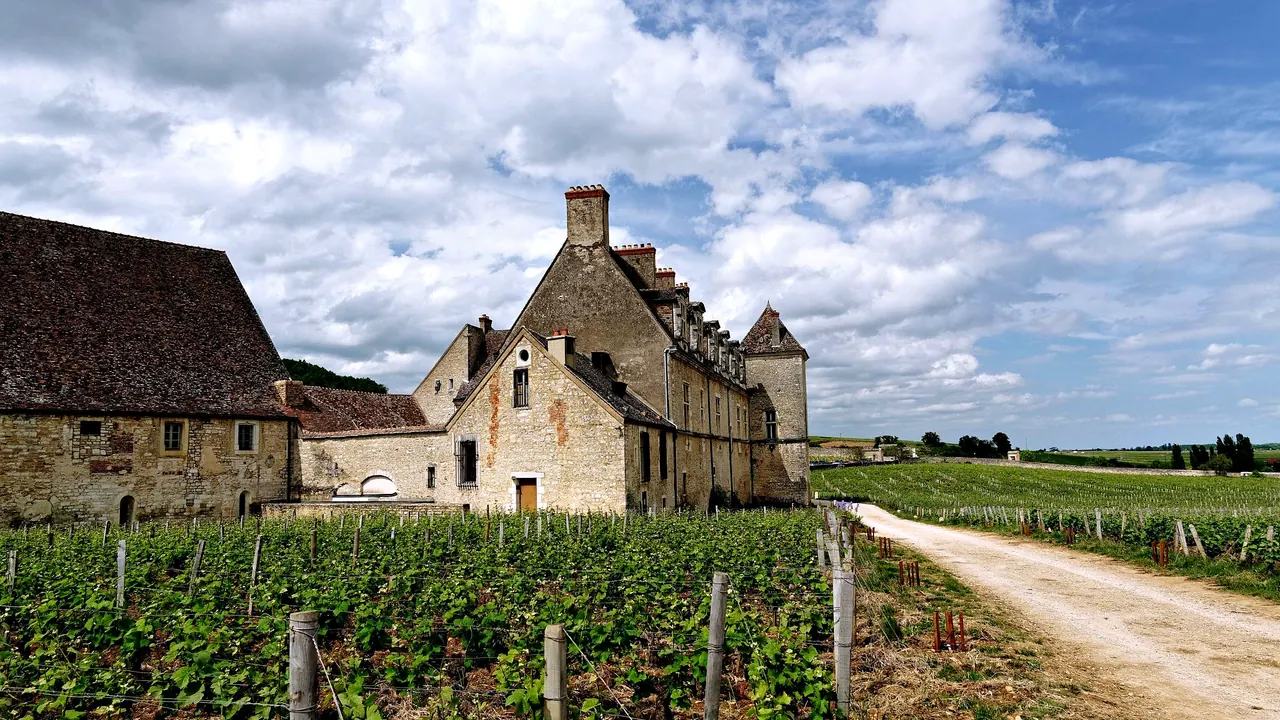
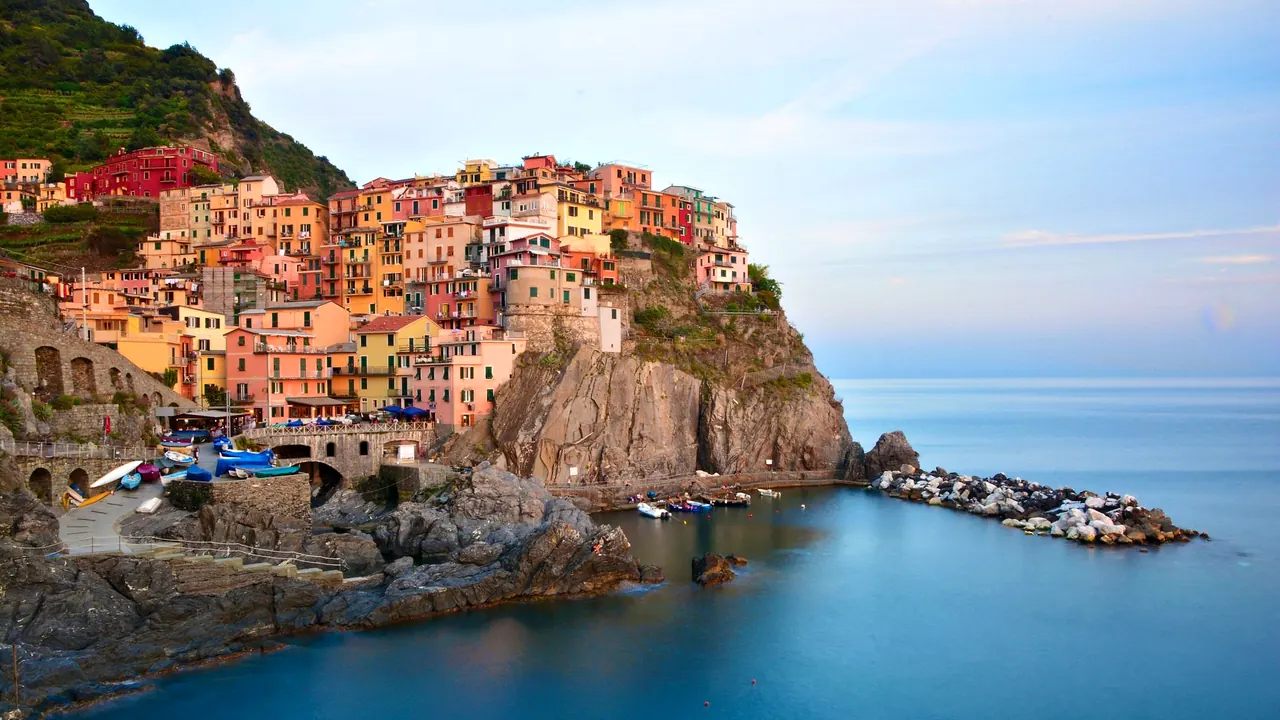
Photos: Burgundy by Gu Bra, Pexels License; Cinque Terre by Narcisa Aciko, Pexels License.
Burgundy or Cinque Terre?
Our verdict in twelve categories, each scored against the same fixed benchmark cities, and the climate month by month, so you can choose for your trip.
Choose Burgundy for
- culture and sights
- food and drink
- live music and the arts
Burgundy suits a trip built around the table and the past. You taste in cellars along the Côte, eat long dinners in Beaune and drive out to Romanesque abbeys such as Vézelay and Fontenay. It costs less and has more going on in the evenings and at summer festivals. It works best as a slower week with a car, and it has no sea at all.
Choose Cinque Terre for
- beaches
- nature and the outdoors
- getting around
Pick Cinque Terre if you want to walk and swim. The cliff path between five villages, the train that links them and the clear water off Monterosso make a compact coastal stay with no car needed. In return, the food is simpler, there are few sights and rooms are expensive. Small children will also struggle with the endless steps.
Scoreboard
Twelve categories on one fixed scale from 0 to 100. The shaded stretch is the gap between the two.
Your match
Pick a travel style or drag the sliders, and both match scores follow your weighting.
Wins on culture and sights and food and drink with your weighting.
Wins on beaches and nature and the outdoors with your weighting.
What matters to you?
Category by category
What the scores mean for a trip.
Beaches & swimming
Cinque Terre has the sea, and Burgundy does not. The sand and fine pebble at Fegina in Monterosso is good for proper beach days. Elsewhere you swim from rocks and slipways at Vernazza or Manarola, which suits a quick dip between walks better than a lazy afternoon.
In Burgundy you swim in lakes: the Morvan reservoirs such as Lac des Settons, or Lac Kir on the edge of Dijon. They are fine for cooling off on a July afternoon but no match for the Ligurian coast.
Food & drink
Burgundy is one of the great food and wine regions of Europe, while Cinque Terre is a pleasant place to eat simply. On the Côte you can taste wine in cellars from Gevrey-Chambertin to Meursault, then eat boeuf bourguignon, Époisses or Bresse chicken. Starred country inns are a short drive away.
The Ligurian table is narrower and lighter: trofie with pesto, focaccia, Monterosso's anchovies and fried fish in a paper cone, with the rare Sciacchetrà as the local treat. In the busiest villages many menus are written for day-trippers, and nothing on the coast compares with the serious restaurants of Beaune.
Culture & sights
Burgundy has far more to see. Dijon has the Palace of the Dukes and its fine art museum, Beaune has the tiled roof of the Hospices, and the Romanesque and Cistercian landmarks at Vézelay, Fontenay, Cluny and Autun are among the finest in Europe. The catch is that each of these takes a drive.
Both regions have a UNESCO-listed landscape shaped by wine growers, the vineyard plots of the Côte in one and the dry-stone terraces in the other. In Cinque Terre, though, that landscape and its five villages are most of the sightseeing. Beyond the striped Ligurian Gothic churches and the Doria tower above Vernazza there are no museums of note, and a day or two covers it.
Nightlife
Neither is a place for a big night out, but Burgundy has a little more. Dijon is a university city, and the streets near its old centre have pubs, wine bars and a couple of clubs that fill on student nights. In summer, Beaune's wine bars stay busy until late.
In Cinque Terre the evening is a glass of white on the harbour wall at sunset. There are no clubs, a few bars in Monterosso and Riomaggiore close a little later, and the coast is asleep before midnight. A real night out means taking the train to La Spezia.
Nature & outdoors
Cinque Terre is the better place for walking. The Sentiero Azzurro runs along the cliffs above the sea, and the higher Sentiero Rosso follows the ridge through pine and chestnut woods. The national park and marine reserve also offer kayaking to sea grottoes and diving.
Burgundy's countryside is gentler: vineyard slopes, the beech forests and reservoirs of the Morvan, and the short climb up the Roche de Solutré. It suits cycling on the canal towpaths and slow boating more than hiking for dramatic views.
Day trips
Both regions make good bases for outings, but the outings are different. From Beaune or Dijon they are rural: wine villages a few minutes apart, walled medieval towns such as Semur-en-Auxois and Noyers, Chablis to the north and Cluny to the south, with Lyon beyond the region. Nearly all of them need a car.
From Cinque Terre, the coastal railway reaches Pisa, Lucca and Genoa, and boats sail to Portovenere. You give up quiet countryside for a wider mix of Tuscan cities and Riviera ports, all reached without driving.
Good for families
Burgundy is the easier choice with children, though neither region is built for them. At Guédelon children can watch masons and blacksmiths build a castle using medieval methods. The Alésia museum and the pedalos on the Morvan lakes add more days, and a week on a canal boat working the locks makes a real family vacation.
Cinque Terre's steps and steep lanes defeat pushchairs, and the summer trains are packed. It suits older children who like walking and swimming off rocks. With younger ones, stay in Monterosso, which is mostly flat and has a gently shelving beach.
Getting around
Cinque Terre is easier to get around without a car. A local train links the five villages, which are only minutes apart, ferries run between the harbours in season, and trails connect the villages on foot. A car is only a burden here. The price is crowded summer platforms and a great many stairs.
Burgundy is the opposite. Trains and Dijon's tram serve the main towns, and the centres of Dijon and Beaune are easy to walk. The villages and abbeys need a hired car, though, which sits badly with wine tasting. Cycling between the Côte villages is a pleasant middle way.
Shopping & style
Burgundy has more to buy, nearly all of it to eat or drink: wine from the cellar door, Dijon mustard, cassis, gingerbread and cheese. Dijon's covered market and Beaune's Saturday market are excellent for food, and there is also a decent shopping centre in Dijon and antique dealers in the countryside. Cinque Terre's village shops sell little beyond pesto, anchovies, lemon liqueur, ceramics and linen, with no fashion or design shopping at all.
Affordability
Burgundy is the cheaper of the two. Guesthouses and cottages in the Morvan or the rural Yonne are fairly priced, and village set lunches are good. Beaune, the great wines and car hire are what push the cost up.
In Cinque Terre the rooms are the expense: there are few of them, they are small and they are in demand all season. Simple meals and the train keep daily costs down, though access to the park's paths is paid. Many budget travellers stay in La Spezia or Levanto and take the train in.
Live music & performing arts
Burgundy has a real performing arts scene, even if it is mostly seasonal. Dijon's opera company performs in the Grand Théâtre, Beaune holds a baroque opera festival in July, Chalon-sur-Saône fills its streets with theatre, Cluny has a jazz festival in August and concerts are held in Vézelay's basilica.
Cinque Terre has almost nothing to compare. There is the odd summer concert in a church or on a village square, and bands play on saints' feast days. For a play or an orchestra you have to travel to La Spezia or Genoa.
Wellness & relaxation
Neither region is a spa destination, but Burgundy gives you more ways to unwind. Slow days on a canal barge, long lunches and country hotels near Beaune with treatments based on grapes and wine are more than Cinque Terre's few guesthouse massages. The region also has thermal springs at Bourbon-Lancy and Saint-Honoré-les-Bains, though they serve mostly medical cures.
Cinque Terre's calm comes from car-free villages and a terrace above the sea. It is restful in spring, in autumn or early in the morning, but not on a summer afternoon when the lanes are packed.
When should you go?
Pick your month. The climate figures are measured averages, not a forecast.
Burgundy in July
Cinque Terre in July
Daytime high, °C
Rainfall in the month, mm
Where the figures come from
Burgundy's temperatures are measured 33 km from the centre, at Dijon.
Burgundy has no rain gauge within 25 km of the centre, so its rainfall comes from a gridded climate dataset read at the destination rather than from a gauge further away.
Cinque Terre's temperatures are measured 78 km from the centre, at Pisa / S. Giusto.
Cinque Terre has no rain gauge within 25 km of the centre, so its rainfall comes from a gridded climate dataset read at the destination rather than from a gauge further away.
Temperature and rainfall are climate normals, averaged over the years shown. Burgundy: 1991-2020 normals, Dijon (32.7 km from centre). Cinque Terre: 1991-2020 normals, Pisa / S. Giusto (77.8 km from centre).
In the heart of Burgundy, summer is warm rather than hot, around 27°C in July, with the most sunshine from June to August. Cellar visits, cycling and canal days are easiest from May to September. Rain is spread fairly evenly through the year, with no real dry season. Winters are cold and grey, with highs near 6°C, so this is a destination for the warmer half of the year.
On the Cinque Terre coast, summer is the time to swim. The sea reaches about 25°C in August, and July is the driest and sunniest month. With highs of 30°C, though, the coastal path is hard going at midday, so walkers do better in May, June and September. The weather turns in autumn, when October and November each bring around 170mm of rain or more, far wetter than any month in Burgundy. Winters on the coast are milder than inland.
Which traveller are you?
For a beach and sun trip, Cinque Terre is the clear choice. It has clear sea that stays warm all summer, sand at Fegina in Monterosso and rocks to swim from at Vernazza and Manarola. Landlocked Burgundy has only lake beaches in the Morvan and at Dijon's Lac Kir.
On a food and nightlife trip, Burgundy is far ahead for food: cellar tastings along the Côte, boeuf bourguignon, Époisses and starred country inns. Evenings mean long dinners and Beaune's wine bars, which is still more than Cinque Terre's early, quiet nights offer.
For an outdoors trip, Cinque Terre has the more dramatic walking: cliff paths from village to village, ridge trails through chestnut woods, and kayaking and diving in the marine reserve. Burgundy's Morvan forests and canal towpaths suit gentle cyclists better than keen hikers.
Before you go
| Measure | Burgundy | Cinque Terre |
|---|---|---|
| Official language | French | Italian |
| Currency | Euro (EUR) | Euro (EUR) |
| Sockets | CE230 V, 50 Hz | CFL230 V, 50 Hz |
| Driving side | Right | Right |
| Time zone | UTC+1, UTC+2 in summer | UTC+1, UTC+2 in summer |
| Emergency number | 112 | 112 |
| Main airport | Lyon Saint-Exupéry Airport (LYS)141 non-stop destinations | Pisa International Airport (PSA)82 non-stop destinations |
| Public holidays this year | 11 days | 13 days |
By the numbers
| Measure | Burgundy | Cinque Terre |
|---|---|---|
| Population | 1,642,687 | - |
| Swim season, months above 21 °C | - | 4 months |
Where else could you go?
Every comparison below shares a destination with this one, so you can follow Burgundy or Cinque Terre somewhere new.
- Portofinovs Cinque Terre
- Tuscanyvs Cinque Terre
- Piedmontvs Cinque Terre
- Elbavs Cinque Terre
- Lake Gardavs Cinque Terre
- French Alpsvs Burgundy