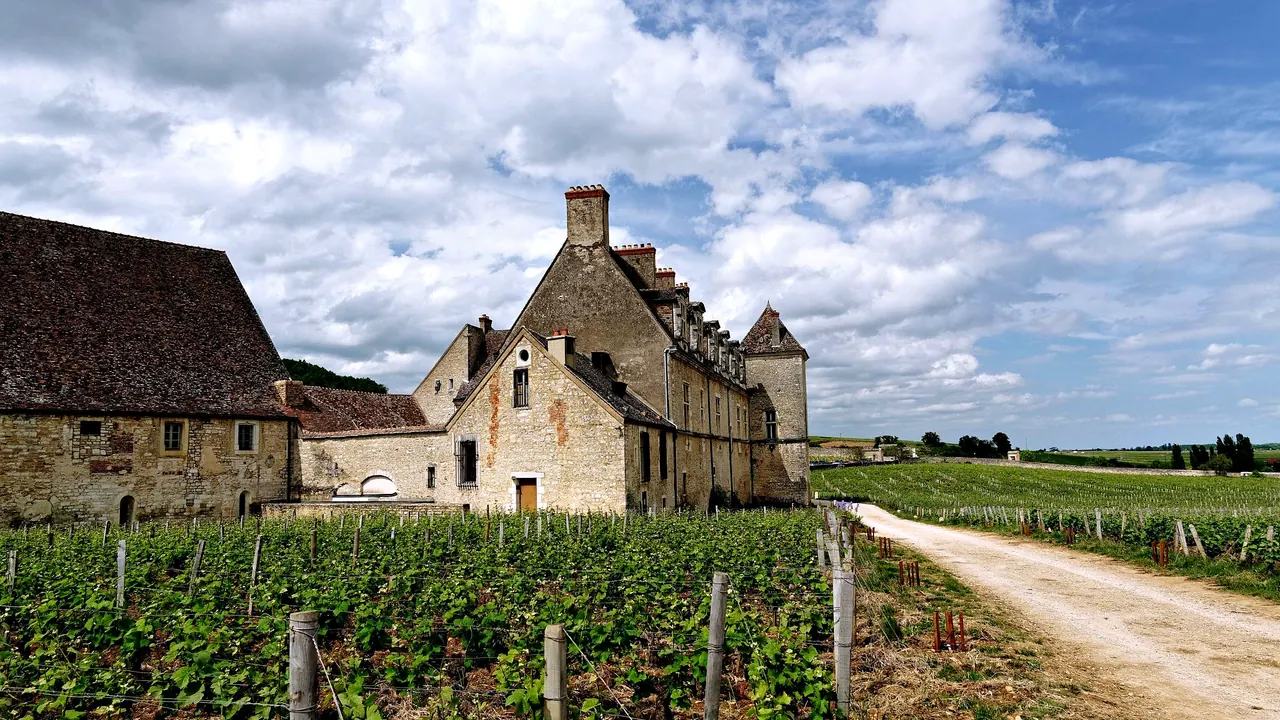
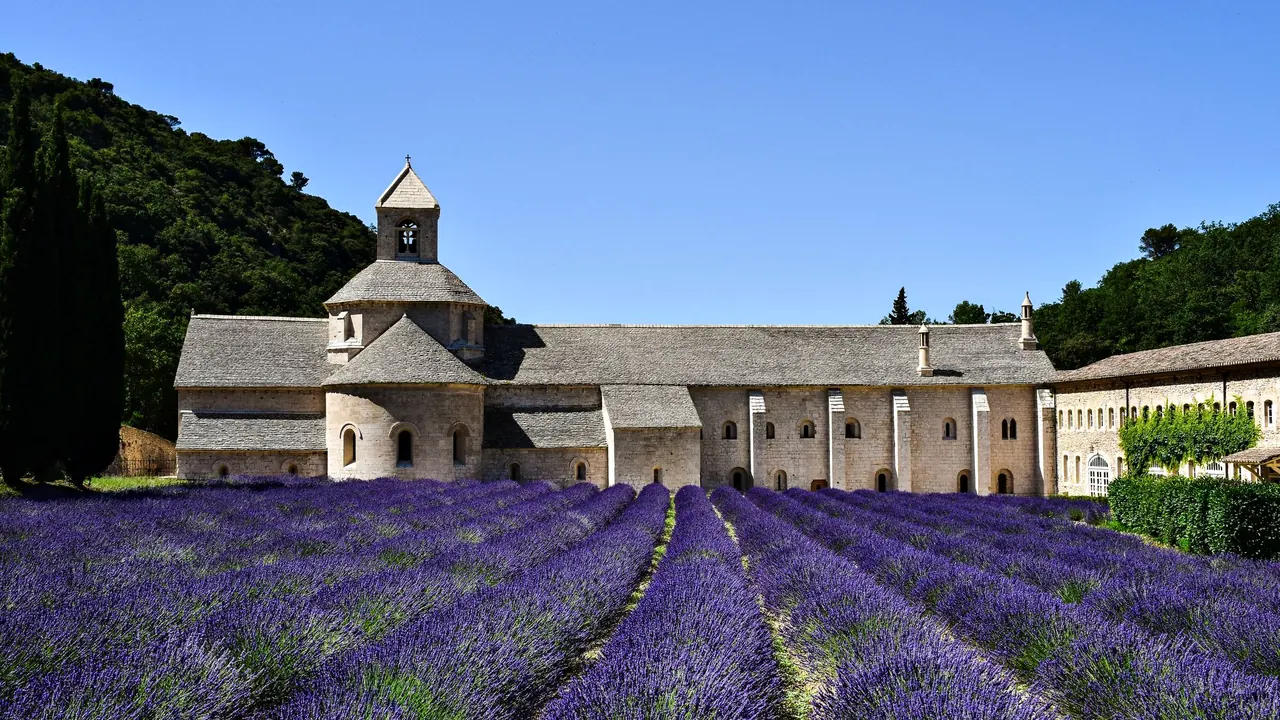
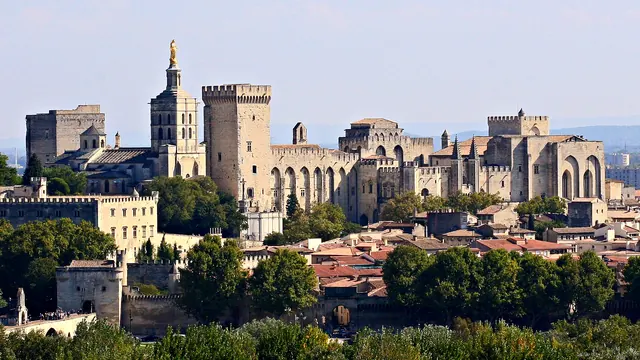
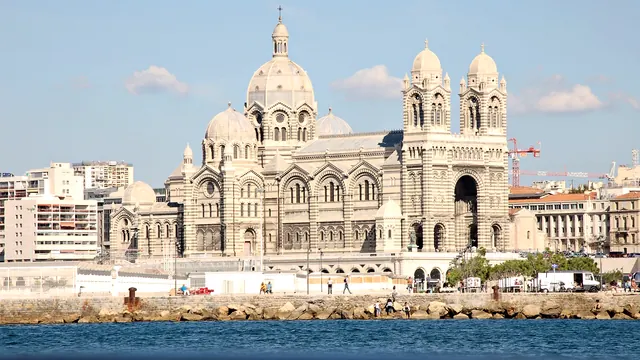
Photos: Burgundy by Gu Bra, Pexels License; Provence by AXP Photography, Pexels License.
Burgundy or Provence?
Our verdict in twelve categories, each scored against the same fixed benchmark cities, and the climate month by month, so you can choose for your trip.
Choose Burgundy for
- prices
- getting around
- food and drink
Burgundy suits a slower, more focused trip built around the table and the cellar: tasting along the Côte de Nuits and Côte de Beaune from a base in Beaune, the Romanesque abbeys of Vézelay and Fontenay, or a week drifting on a canal boat. It is easier on the budget than Provence and cooler in summer. Its evenings are quiet, and the people who choose it usually want them that way.
Choose Provence for
- beaches
- nature and the outdoors
- nightlife
Provence is the broader vacation. It adds what Burgundy cannot: a Mediterranean coast with calanques and sandy bays, the Verdon gorges and the Camargue, the July festivals in Avignon and Aix, and Marseille for a real night out. In return, summer is dearer, July is fiercely hot and the coast roads are crowded, so it suits best those who can travel in June or September.
Scoreboard
Twelve categories on one fixed scale from 0 to 100. The shaded stretch is the gap between the two.
Your match
Pick a travel style or drag the sliders, and both match scores follow your weighting.
Wins on prices and getting around with your weighting.
Wins on beaches and nature and the outdoors with your weighting.
What matters to you?
Category by category
What the scores mean for a trip.
Beaches & swimming
Burgundy has no sea. It has reservoirs in the Morvan, such as Lac des Settons, and the small lake beach at Lac Kir in Dijon, which are good for a summer swim and little more.
Provence has a real Mediterranean coast with plenty of variety: the long sand at Pampelonne, the shallow water and pale sand of Hyères and Porquerolles, and the deep turquoise inlets of the calanques. The catch is that inland bases in the Luberon or the Alpilles are a long drive from it.
Food & drink
Both are among France's great food regions, but they eat and drink differently. Burgundy cooks with butter, wine and slow-cooked meat: boeuf bourguignon, snails and Époisses. Its Côte vineyards produce some of the world's most sought-after reds and whites, which visitors can taste in the cellars where they are made.
Provence cooks with olive oil, garlic and herbs, from Marseille's bouillabaisse to aïoli and winter truffles, and its open-air markets are an outing in themselves. Its wine is mostly rosé, with Bandol and Châteauneuf-du-Pape for depth. Marseille also adds a North African strand that Burgundy lacks.
Culture & sights
Both regions are rich in medieval monuments, and in both the sites are scattered across the countryside. Burgundy's heritage comes from its dukes and monasteries: the Palace of the Dukes in Dijon, the Hospices de Beaune, and Vézelay, Fontenay and Cluny, which hold some of Europe's finest Romanesque and Cistercian work.
Provence reaches further back and further forward. It has Roman theatres at Orange and Arles, the papal palace in Avignon and the places painted by Van Gogh and Cézanne. In Marseille it also has the MuCEM, a large museum of Mediterranean civilisations, and Burgundy has nothing quite like it.
Nightlife
In Burgundy the evening usually ends at the dinner table. For anything more, there are Dijon's student streets and a few wine bars in Beaune that stay open late.
Provence also lives on long terrace dinners, but it has two genuine going-out scenes. Marseille has bars and clubs around Cours Julien and La Plaine all year, and Saint-Tropez has its summer beach clubs. Aix adds student bars in its old squares.
Nature & outdoors
Burgundy's countryside is soft and pastoral: vine slopes, Charolais pastures and the beech forests of the Morvan, best seen from a bicycle or a canal boat.
Provence has far more variety and drama. There are the Verdon gorges, up to 700m deep, the white cliffs of the Calanques, bare Mont Ventoux, the flamingos of the Camargue and the lavender of Valensole. Walking is best in spring and autumn, since some massifs close on high-risk fire days in summer.
Day trips
Both regions reward a car and a well-placed base. From Beaune or Dijon, wine villages such as Meursault and Pommard are minutes apart. Walled towns such as Semur-en-Auxois and Noyers make fine outings, and Lyon is close enough for a day trip.
Provence packs more into a shorter distance. From Avignon or the Luberon, Gordes, Roussillon, Les Baux, the Pont du Gard and Châteauneuf-du-Pape all lie within an hour. On the coast there are boat trips to Porquerolles and Saint-Tropez as well.
Good for families
Neither region has large theme parks. Burgundy's highlights for children are Guédelon, where craftsmen are building a castle by medieval methods, and a week on a canal boat. Otherwise the region revolves around cellars and restaurants, which few children enjoy.
Provence works better for most families. It has shallow sandy beaches near Hyères and the Gulf of Saint-Tropez, canoeing on the Verdon and the Sorgue, and horse riding in the Camargue. Its drawbacks are the July heat and steep villages that are hard going with a pushchair.
Getting around
Burgundy is the more straightforward to move around. Fast trains arrive in Dijon, which has a tram, and regional lines run on to Beaune, Chalon and Mâcon. Along the Côte the wine villages sit a few kilometres apart on gentle paths, so a bicycle covers a lot, which helps because tasting and driving do not mix.
Provence has the better city transport, with trains between Marseille, Aix, Avignon and Arles and a metro in Marseille. Yet its villages, gorges and abbeys also need a car, and driving there takes more patience: narrow hill lanes, scarce parking in perched villages and summer jams on the road into Saint-Tropez, where the ferries across the gulf are easier.
Shopping & style
Nearly everything worth buying in Burgundy is food or drink: wine from the cellar door, Dijon mustard, cassis, gingerbread and cheese. The covered market hall in Dijon and Beaune's Saturday market are the best places to shop.
Provence has much more to take home besides food. There are printed fabrics, olive-wood bowls, Marseille soap, Moustiers faience and santons, and the antique dealers of L'Isle-sur-la-Sorgue. Aix has fashion shops in its old streets, and Saint-Tropez has luxury boutiques in summer.
Affordability
Burgundy is the cheaper of the two. Dijon, the Morvan and the rural Yonne have fairly priced guesthouses and cottages. Beaune and the Côte cost more, and car hire and the region's famous wines add up.
Provence is expensive in summer, when Luberon villas and the Var coast are among the dearest places to stay in France. Marseille, Arles and the quieter Var villages cost less, and spring and autumn are cheaper than summer.
Live music & performing arts
The July festivals in Provence are on a far bigger scale than anything in Burgundy, though both regions are quiet once summer ends. Burgundy's highlights are Beaune's baroque opera festival, street theatre in Chalon-sur-Saône and jazz at Cluny, with concerts in the basilica at Vézelay. For the rest of the year, Dijon's opera is the main stage.
Provence has the Avignon theatre festival and its huge fringe, the Aix opera festival in the courtyard of the Archbishop's Palace, and opera in the Roman theatre at Orange. Out of season, Marseille's rap and world-music scene keeps something going.
Wellness & relaxation
Provence offers more pampering, while Burgundy offers mostly quiet. In Burgundy, rest means a barge drifting through locks and long lunches in sleepy villages. Its thermal towns, such as Bourbon-Lancy, mainly serve medical cures.
Provence has farmhouse hotels with lavender and olive-oil treatments, a thermal spa on the site of Aix's Roman baths and the old spa town of Gréoux-les-Bains. A typical restful day is an afternoon by a pool in the Luberon, though the coast is anything but calm in midsummer.
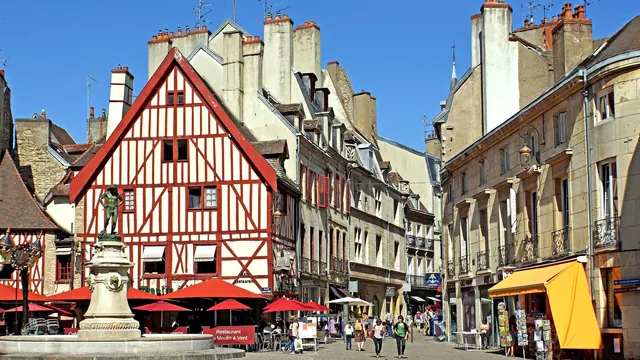
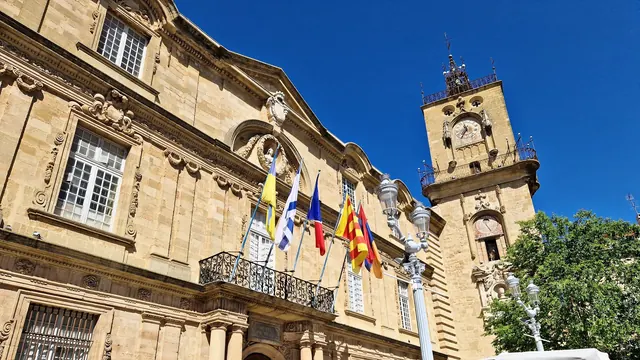
When should you go?
Pick your month. The climate figures are measured averages, not a forecast.
Burgundy in July
Provence in July
Daytime high, °C
Rainfall in the month, mm
Where the figures come from
Burgundy's temperatures are measured 33 km from the centre, at Dijon.
Burgundy has no rain gauge within 25 km of the centre, so its rainfall comes from a gridded climate dataset read at the destination rather than from a gauge further away.
Provence has no rain gauge within 25 km of the centre, so its rainfall comes from a gridded climate dataset read at the destination rather than from a gauge further away.
Provence's sunshine is measured 53 km from the centre, at Nimes / Courbessac.
Temperature and rainfall are climate normals, averaged over the years shown. Burgundy: 1991-2020 normals, Dijon (32.7 km from centre). Provence: 2005-2020 (sunshine 1981-2010, rainfall 1991-2020) normals, Avignon / Morières-lès-Avignon (11.9 km from centre).
Burgundy is at its best from late May to September. Days reach about 27°C in July, which is warm enough for the Morvan lakes and rarely too hot for walking round Dijon or Beaune. Rain is spread through the year with no dry season. Winters are grey, with highs near 6°C and little sunshine, so November to February suits only cellar visits and long dinners. September is a fine month in the vineyards before October turns damp.
Provence, measured inland where most visitors stay, is several degrees warmer than Burgundy all year and far sunnier. July reaches about 32°C and is the driest month. That is ideal for the coast but heavy going in the streets of Avignon or Arles at midday, so May, June and September are more comfortable for sightseeing and walking. Autumn brings the heaviest rain, around 102mm in October. Winter stays mild at about 11°C with plenty of sun, which makes Provence the better of the two out of season.
Which traveller are you?
On a beach and sun trip, Provence is the only real choice. Its Var coast has the long sand of Pampelonne, the clear shallows of Porquerolles and the calanques near Cassis, while Burgundy has only lake beaches at Settons or Lac Kir for an afternoon swim.
For a trip on a tight budget, Burgundy goes further. Guesthouses and cottages in the Morvan and the Yonne, and set lunches in village restaurants, are fairly priced. In summer, Provence's Luberon villas and Saint-Tropez stays are among the most expensive in France.
On an outdoors trip, Provence has the drama: rim walks and kayaking in the Verdon gorges, coastal trails in the Calanques and Mont Ventoux for cyclists. Burgundy is gentler, with Morvan forests, vineyard cycle paths and canal towpaths that suit easy walkers more than climbers.
Before you go
| Measure | Burgundy | Provence |
|---|---|---|
| Official language | French | French |
| Currency | Euro (EUR) | Euro (EUR) |
| Sockets | CE230 V, 50 Hz | CE230 V, 50 Hz |
| Driving side | Right | Right |
| Time zone | UTC+1, UTC+2 in summer | UTC+1, UTC+2 in summer |
| Emergency number | 112 | 112 |
| Main airport | Lyon Saint-Exupéry Airport (LYS)141 non-stop destinations | Marseille Provence Airport (MRS)126 non-stop destinations |
| Public holidays this year | 11 days | 11 days |
By the numbers
| Measure | Burgundy | Provence |
|---|---|---|
| Population | 1,642,687 | - |
Where else could you go?
Every comparison below shares a destination with this one, so you can follow Burgundy or Provence somewhere new.
- French Rivieravs Provence
- French Alpsvs Burgundy
- Swiss Alpsvs Burgundy
- Black Forestvs Burgundy
- Piedmontvs Provence
- French Alpsvs Provence