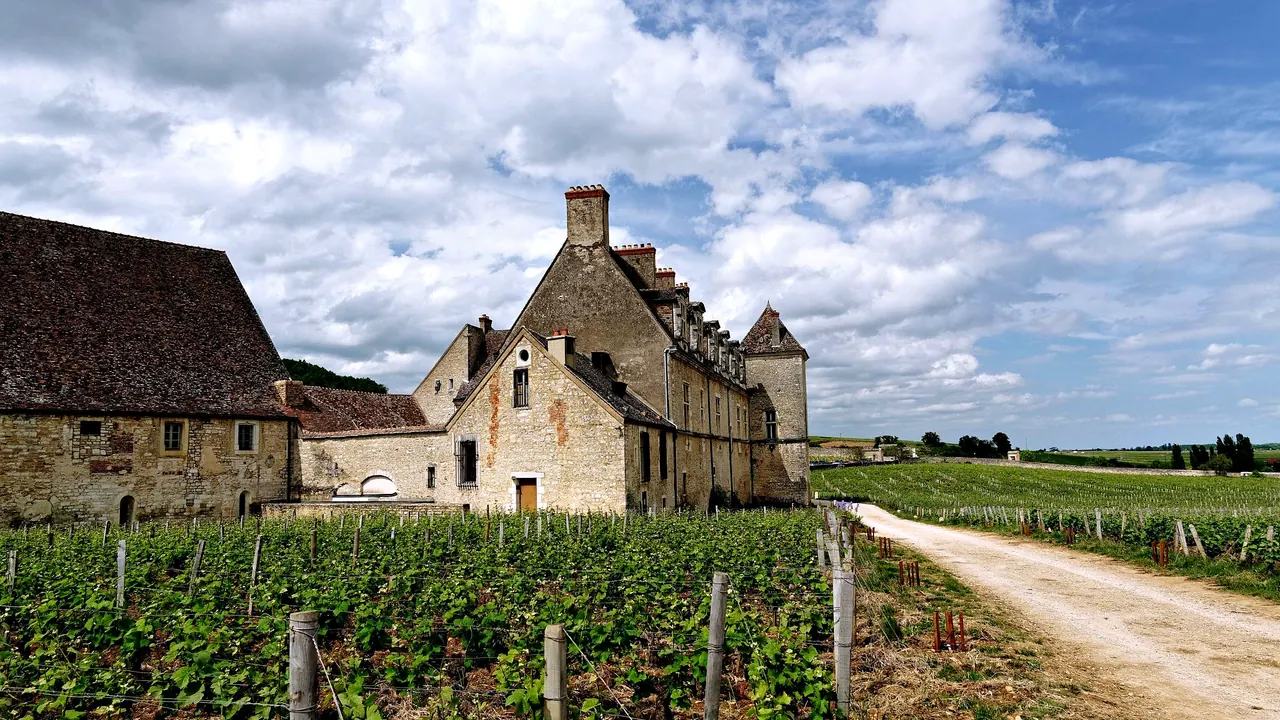
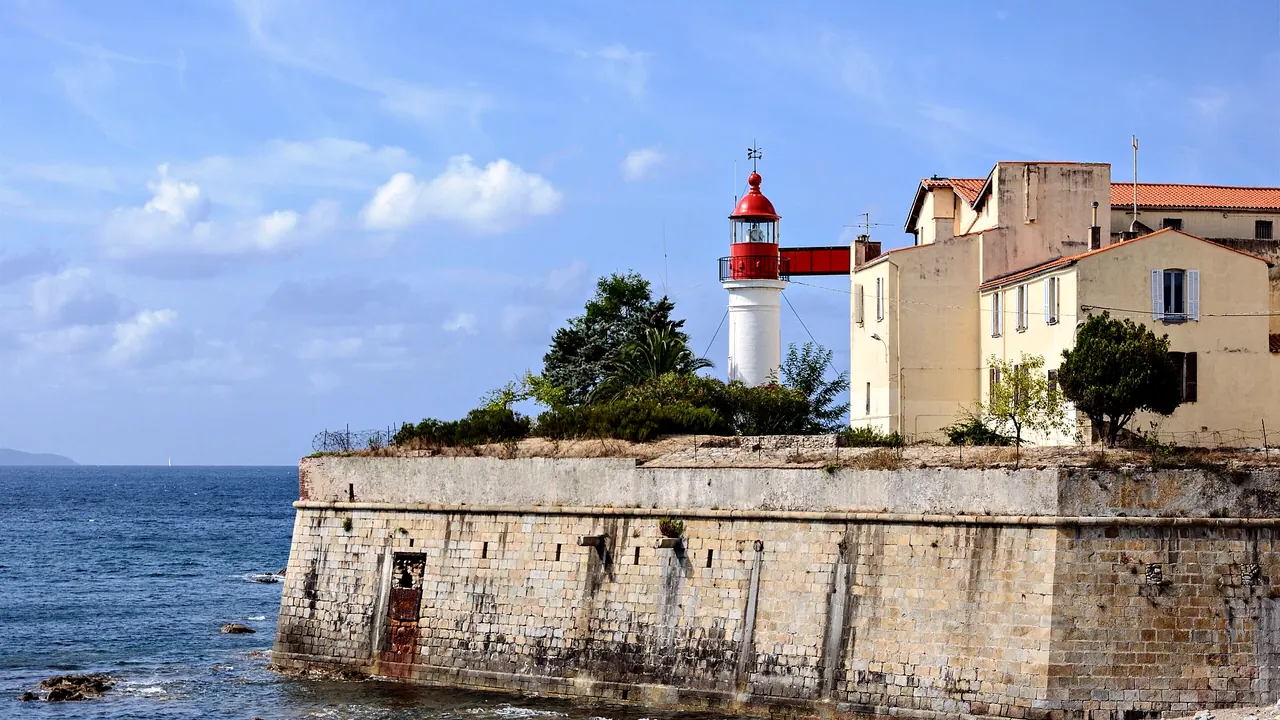
Photos: Burgundy by Gu Bra, Pexels License; Corsica by Myrabella, CC BY-SA 3.0, cropped.
Burgundy or Corsica?
Our verdict in twelve categories, each scored against the same fixed benchmark cities, and the climate month by month, so you can choose for your trip.
Choose Burgundy for
- food and drink
- day trips
- getting around
Burgundy suits travellers for whom the table and the cellar are the point: tasting along the Côte, long dinners in Beaune, and days given to Romanesque abbeys, ducal Dijon and walled hill towns. It is the easier and cheaper choice for a slow touring vacation by car, bicycle or canal boat, with plenty of outings from a single base.
Choose Corsica for
- beaches
- nature and the outdoors
- families
Choose Corsica if you want the sea and the mountains. Its southern beaches stand with the best in the Mediterranean, and its interior is serious walking country, from easy coastal trails to the GR20. Food and sightseeing are good but secondary. The island also costs more and takes longer to get around, so it works best as a summer or early-autumn trip with one or two well-chosen bases.
Scoreboard
Twelve categories on one fixed scale from 0 to 100. The shaded stretch is the gap between the two.
Your match
Pick a travel style or drag the sliders, and both match scores follow your weighting.
Too close to call, 1 point apart
Wins on food and drink and day trips with your weighting.
Wins on beaches and nature and the outdoors with your weighting.
What matters to you?
Category by category
What the scores mean for a trip.
Beaches & swimming
Corsica is one of the Mediterranean's great beach islands. There is pale sand on clear water at Palombaggia, Santa Giulia and Rondinara in the far south, coves reached by boat in the Agriates, and the long bay at Calvi. Burgundy has no coast at all.
Swimming there means lakes: Lac des Settons in the Morvan and Lac Kir on the edge of Dijon, both with supervised beaches that are good for a hot afternoon in July or August. If the sea matters to your trip, that settles the choice.
Food & drink
In Burgundy, food and wine are the reason to go. You can taste in cellars along the Côte de Nuits and Côte de Beaune, and Beaune makes a base full of serious restaurants. The cooking is classic: boeuf bourguignon, Époisses cheese, and starred country inns in places like Saulieu.
Corsica eats well in a different way: cured pork from free-roaming pigs, brocciu cheese, chestnut flour and wild boar, best found in inland village inns and the markets of Ajaccio and Bastia. The wines of Patrimonio are worth seeking out. Menus at the beach resorts in summer are often ordinary, though, so a good meal takes more finding.
Culture & sights
Burgundy has the deeper heritage. Dijon has the Palace of the Dukes with its fine art museum, Beaune has the tiled roof of the Hospices, and Vézelay, Fontenay, Cluny and Autun hold some of Europe's finest Romanesque and Cistercian buildings. They are spread across the countryside, but each is a major site in its own right.
Corsica's sights are those of a fortified frontier: Genoese citadels and watchtowers, Bonifacio's old town on its white cliffs, the upper town of Corte and Napoleon's birthplace in Ajaccio. They make a rewarding road trip, though much of the pleasure lies in where each town stands rather than in what it holds.
Nightlife
Neither suits a big night out, and in both the evening centres on a long dinner. The difference is the season. Corsica comes alive only in July and August, with large open-air clubs in the hills behind Porto-Vecchio and late beach bars in Calvi. Burgundy's smaller scene is in Dijon's student pubs and a couple of clubs, plus the wine bars of Beaune, and it is less tied to high summer.
Nature & outdoors
The real difference is how much effort each one asks of you. Burgundy is outdoors at an easy pace: cycling the vineyard paths of the Côte and the canal towpaths, a week of locks on a hired boat, a summer balloon flight over the vines, or a short scramble up the Roche de Solutré. The Morvan adds forest walking, canoeing and mountain biking, but none of it is demanding, and you will need no special kit.
Corsica is made for people who want to work for the view. Its walking runs from easy village-to-coast routes to some of the hardest multi-day trekking in Europe, and its gorges and sea add canyoning, diving around the Lavezzi islands and sailing, none of which Burgundy can match. Because the mountains rise straight out of the sea, a morning on a ridge trail and an afternoon in the water fit into the same day.
Day trips
Burgundy is the easier region to explore from one base. From Beaune or Dijon, the wine villages of the Côte are minutes apart. Semur-en-Auxois, Noyers and Flavigny-sur-Ozerain, as well as Chablis, Cluny and even Lyon, all make a day out by car.
In Corsica, slow mountain roads give each base only a few outings of its own. From Bonifacio you can visit Sartène or take the ferry to Sardinia, from Calvi the Balagne villages, and from Bastia Cap Corse. The island railway makes Corte an easy outing, but seeing more of the island means moving base.
Good for families
Corsica works better for families, as long as the trip is built around the beach. It has the shallow, calm bay of Santa Giulia, campsites and resort villages with pools, river pools and boat trips to sea caves. There is no theme park or major zoo, though, and winding drives are hard on young children, so one base near a calm bay is the way to do it.
Burgundy is calm and safe but made for adults who enjoy wine. For children the highlights are the medieval castle being built at Guédelon, the Alésia museum and a week on a canal boat. Much of the rest is cellars and abbeys.
Getting around
Burgundy is the simpler of the two to get around. Fast trains reach Dijon, regional lines link Beaune, Chalon-sur-Saône, Mâcon and Auxerre, Dijon has a tram, and bicycles work well on the flat paths of the Côte. You still need a car for the villages, and wine tasting and driving do not mix.
In Corsica a car is close to essential. On narrow, winding roads, journeys take far longer than the map suggests, and near the resorts the roads are slow with traffic in summer. The narrow-gauge railway between Ajaccio, Corte, Bastia and Calvi is a pleasure, but it does not reach the south.
Shopping & style
In both, what you take home is mostly food and drink, but Burgundy has more of it: wine from the cellar door, Dijon mustard, cassis and Époisses, Dijon's covered market hall and Beaune's Saturday market. It also has a reasonable town centre in Dijon and antique dealers out in the countryside.
Corsica's best buys are charcuterie, chestnut flour, honey and hand-forged knives, from the markets of Ajaccio and Bastia and the craft villages of the Balagne. Beyond a few summer boutiques in Porto-Vecchio and Calvi, there is little retail.
Affordability
Burgundy is easier on the wallet. Guesthouses, self-catering cottages and set lunches in Dijon, the Morvan and the rural Yonne are fairly priced. Costs rise mainly in Beaune and the Côte villages, or if you choose the great wines and starred tables.
Corsica is expensive in the months people actually go. Rooms and meals in Porto-Vecchio, Bonifacio and Calvi come at resort prices, with car hire and ferry crossings on top. June or September, campsites and inland villages bring the bill down.
Live music & performing arts
Burgundy has the fuller programme. Dijon's opera company performs in the historic Grand Théâtre and in a modern auditorium. Summer adds a baroque opera festival in Beaune, street theatre in Chalon-sur-Saône and concerts in the basilica at Vézelay.
Corsica's distinctive offer is polyphonic singing: unaccompanied male voices in close harmony, heard in village churches. Summer adds jazz in Calvi and guitar evenings around Patrimonio, but the island has no opera or major concert life.
Wellness & relaxation
Both help you rest through their pace rather than their spas, and neither has a bathing tradition to plan a trip around. In Burgundy that means long lunches, a canal barge drifting through locks and wine-based treatments in some country hotels around Beaune. In Corsica it means siestas in the heat and quiet mountain villages, with spas found mainly in upmarket hotels on the coast.
When should you go?
Pick your month. The climate figures are measured averages, not a forecast.
Burgundy in July
Corsica in July
Daytime high, °C
Rainfall in the month, mm
Where the figures come from
Burgundy's temperatures are measured 33 km from the centre, at Dijon.
Burgundy has no rain gauge within 25 km of the centre, so its rainfall comes from a gridded climate dataset read at the destination rather than from a gauge further away.
Temperature and rainfall are climate normals, averaged over the years shown. Burgundy: 1991-2020 normals, Dijon (32.7 km from centre). Corsica: 1991-2020 normals, Ajaccio (5.1 km from centre).
Burgundy has a continental pattern. Summers are warm, with highs of about 27°C in July, and winters are cold and grey at around 6°C. Rain is spread fairly evenly through the year, a little heavier in May and late autumn. Late spring to early autumn is the time for cellar visits, cycling and the lake beaches, and the short, dark winter days suit little beyond Dijon and Beaune.
On the coast, where most visitors stay, Corsica is warmer and far sunnier. July is almost dry (9mm) and the sea reaches about 25°C in August. Swimming runs from June to October, while spring and early autumn are better for hiking than the heat of high summer at low altitude. Rain arrives in autumn and peaks in November at 115mm, though winters stay much milder than in Burgundy.
Which traveller are you?
On a beach and sun trip, Corsica is the clear choice. Burgundy is landlocked and has only its reservoir beaches, while Corsica has the pale sand and turquoise water of Palombaggia and Rondinara, a dry, sunny summer and a warm sea.
For a culture and arts trip, Burgundy goes further. Dijon's ducal palace and its art museum, the Hospices de Beaune, Vézelay, Fontenay and Cluny, plus opera in Dijon and a baroque festival in Beaune, outweigh Corsica's citadels and Napoleon's birthplace.
On an outdoors trip, Corsica wins easily. It has mountains above 2,700m, the GR20 and the gentler Mare e Monti paths, rivers for canyoning and sea kayaking at Scandola. Burgundy's canal towpaths and Morvan forests suit gentle cyclists better than hikers.
Before you go
| Measure | Burgundy | Corsica |
|---|---|---|
| Official language | French | French |
| Currency | Euro (EUR) | Euro (EUR) |
| Sockets | CE230 V, 50 Hz | CE230 V, 50 Hz |
| Driving side | Right | Right |
| Time zone | UTC+1, UTC+2 in summer | UTC+1, UTC+2 in summer |
| Emergency number | 112 | 112 |
| Main airport | Lyon Saint-Exupéry Airport (LYS)141 non-stop destinations | Ajaccio Napoléon Bonaparte airport (AJA)29 non-stop destinations |
| Public holidays this year | 11 days | 11 days |
By the numbers
| Measure | Burgundy | Corsica |
|---|---|---|
| Population | 1,642,687 | 355,486 |
| People per km² | - | 41 |
| Swim season, months above 21 °C | - | 4 months |
Where else could you go?
Every comparison below shares a destination with this one, so you can follow Burgundy or Corsica somewhere new.
- Sardiniavs Corsica
- Elbavs Corsica
- French Alpsvs Burgundy
- French Rivieravs Corsica
- Swiss Alpsvs Burgundy
- Black Forestvs Burgundy