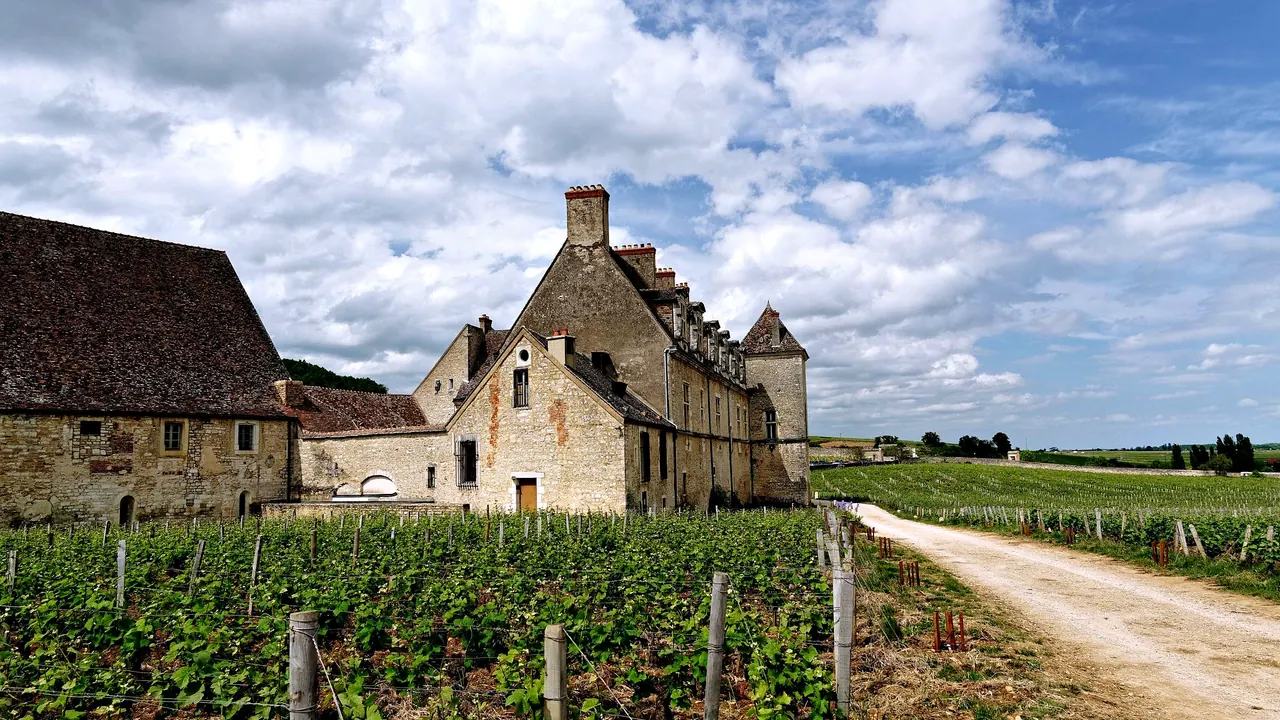
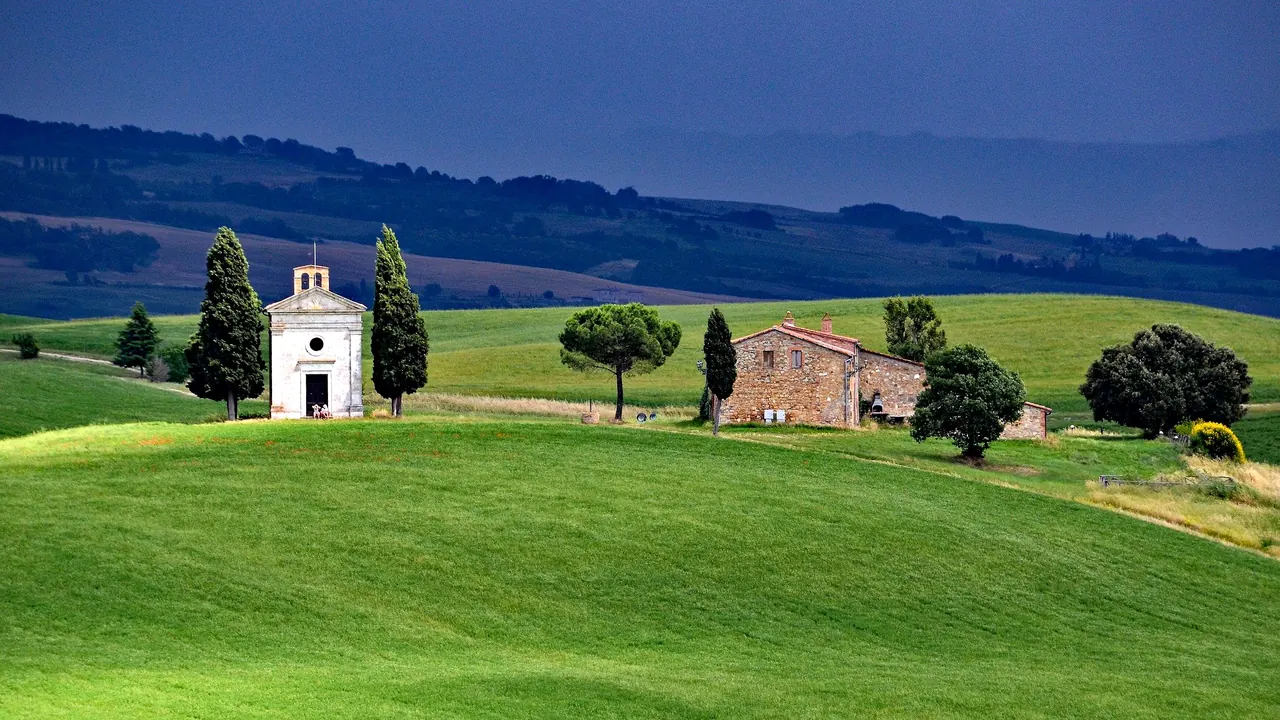
Photos: Burgundy by Gu Bra, Pexels License; Tuscany by Hervé Simon, CC BY-SA 2.0, cropped.
Burgundy or Tuscany?
Our verdict in twelve categories, each scored against the same fixed benchmark cities, and the climate month by month, so you can choose for your trip.
Choose Burgundy for
- prices
- food and drink
Burgundy suits a trip built around the table and the cellar: a slow week tasting along the Côte from a base in Beaune, rich dinners in village inns, a day each for abbeys such as Vézelay and Fontenay, perhaps a canal boat drifting through locks. It is quieter, a little kinder on the budget away from Beaune, and cooler in high summer. What it asks for is a car and someone willing not to drink.
Choose Tuscany for
- beaches
- wellness
- shopping
Choose Tuscany if you want the wine and food plus a great deal more. Florence, Siena and the hill towns give it a far deeper store of art and architecture. It also has things Burgundy lacks altogether: a real sea coast on Elba and in the Maremma, open-air hot springs, serious craft shopping and livelier summer evenings. In exchange you pay more and share Florence with heavy summer crowds.
Scoreboard
Twelve categories on one fixed scale from 0 to 100. The shaded stretch is the gap between the two.
Your match
Pick a travel style or drag the sliders, and both match scores follow your weighting.
Wins on prices and food and drink with your weighting.
Wins on beaches and wellness with your weighting.
What matters to you?
Category by category
What the scores mean for a trip.
Beaches & swimming
Burgundy has no coast at all. Swimming means the Morvan reservoirs, such as Lac des Settons, or Lac Kir on the edge of Dijon: fine for an afternoon in July or August and little more.
Tuscany has a proper summer sea, with sandy bays on Elba, pine-fringed strands in the Maremma and the long, orderly rows of umbrellas along Versilia. From Florence or the hill towns, though, the coast is a long drive, so base yourself there if swimming matters.
Food & drink
Both are outstanding for eating and drinking, and the difference is one of style. Burgundy's cooking is rich and sauce-based, from boeuf bourguignon to eggs poached in red wine and pungent Époisses. Its great wine is concentrated on one narrow slope of famous villages, with Beaune as the obvious base and starred country inns in places such as Saulieu.
Tuscan food is plainer, built on olive oil, unsalted bread, beans and meat grilled over coals. It also has street food, lampredotto from Florence's carts, which Burgundy lacks. Its wine areas are spread out, from Chianti to Montalcino, Montepulciano and Bolgheri, so tasting becomes a tour across the region rather than a short hop between neighbouring villages.
Culture & sights
Burgundy's heritage is real and distinctive: the Palace of the Dukes and its fine art museum in Dijon, the tiled roof of the Hospices in Beaune, and Romanesque and Cistercian landmarks such as Vézelay, Fontenay and Cluny. These are scattered, though, and most take a day's drive each.
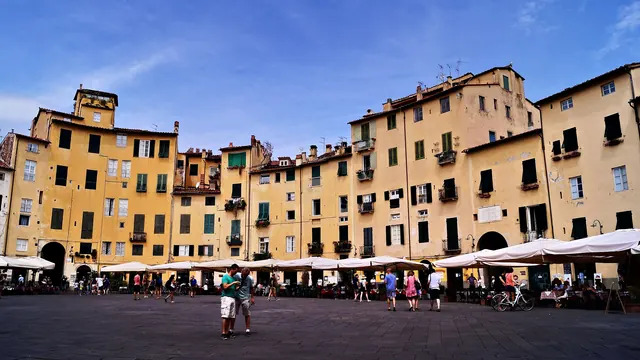
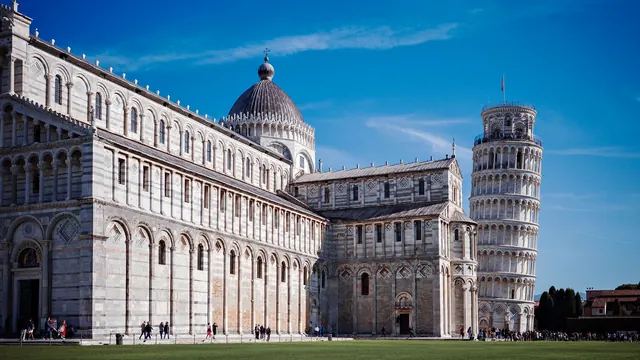
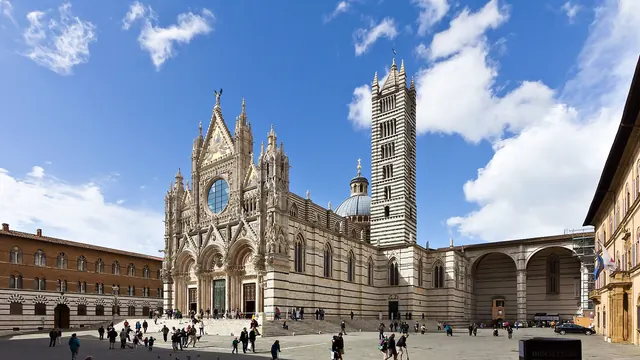
Tuscany is where the Renaissance began. The Uffizi, the Accademia and Brunelleschi's dome are a short walk apart in Florence, with Siena, Pisa, San Gimignano and Lucca close by. For a trip built on art and architecture it is the far richer choice, provided you can cope with Florence's summer crowds.
Nightlife
In both regions the evening revolves around a long dinner, but Burgundy goes quiet sooner. Apart from a few student streets in Dijon and Beaune's wine bars in summer, the villages are asleep early.
Tuscany has more going on after dark. Crowds gather on the steps of Santo Spirito and in Oltrarno's wine bars, and in summer the beach clubs and dance halls of Versilia stay open until dawn.
Nature & outdoors
Burgundy's countryside is gentle: vineyard slopes, Charolais pastures and the forested granite hills of the Morvan. It is at its best by bicycle along the canal towpaths or from a self-drive boat, and its only real climb is a short one, the Roche de Solutré.
Tuscany has far more range. Alongside the cypress lanes of the Val d'Orcia it has the Apuan Alps, rising to nearly 2,000m, the beech forests of the Casentino, the Maremma park on the coast, and sailing and diving around Elba.
Day trips
From Beaune or Dijon, the Côte's wine villages are minutes apart, and walled towns such as Semur-en-Auxois and Noyers make excellent outings, with Lyon within reach for a longer day. Nearly all of it needs a car.
Tuscany's list is longer and better known. From Florence you can reach Siena, Lucca, Pisa and San Gimignano, the south has a natural loop through Montalcino and Pienza, and ferries run out to Elba. Pisa, Lucca and Bologna are reached easily by train, which is not true of Burgundy's villages.
Good for families
Burgundy is calm and safe but built around cellars and long lunches. Its best family days are the medieval castle being built by hand at Guédelon, the Morvan lakes and a week on a canal boat working the locks.
Tuscany gives children more to do. There are farmhouse stays with pools and animals, shallow, lifeguarded beaches in Versilia and the Maremma, the Pinocchio park at Collodi and cycling on Lucca's walls. Children are welcome at Italian dinners however late they run, though Florence's galleries and the summer heat are hard on small ones.
Getting around
In both regions the main towns are easy to manage and the countryside needs a car. In Burgundy, trains link Dijon, Beaune, Chalon and Mâcon, and the Côte villages are close enough to cycle between, which helps when tasting rules out driving.
Tuscany's rail line from Florence to Pisa, Lucca, Arezzo and the coast is more useful, making a full car-free trip possible. Chianti, the Val d'Orcia and the islands still need a car or a ferry, and you park outside walled centres and walk in.
Shopping & style
In Burgundy you shop for things to eat and drink: wine from the cellar door, Dijon mustard, cassis, gingerbread and cheese, with Dijon's covered market and Beaune's Saturday market the highlights. There is little in the way of fashion.
Tuscany adds craft and luxury. You will find leather around Santa Croce, gold on the Ponte Vecchio, marbled paper in Oltrarno's workshops and designer houses on Via de' Tornabuoni, plus local specialities such as Volterra alabaster and Pietrasanta marble.
Affordability
Burgundy is the gentler of the two on the budget, and much of what it costs is up to you. The bill rises with the bottles and the tables: a grand cru bought at the cellar door or dinner at a starred country inn can cost as much as several nights' lodging, while a self-catering cottage and simple village meals keep a stay modest. Beaune and the Côte are at their dearest in summer and at the autumn harvest.
In Tuscany the expense is harder to avoid, because most of it goes on where you sleep. Rooms and rentals are dear through the long season from spring to autumn, and dearest in July and August. Forte dei Marmi is among Italy's costliest resorts. Eating is the cheaper part: trattoria meals and market lunches stay reasonable, and basing yourself in Arezzo, Pistoia or the Garfagnana cuts the lodging bill. In both regions a hired car adds to the total.
Live music & performing arts
Burgundy's performing arts are mostly a summer affair: baroque opera in Beaune, street theatre in Chalon-sur-Saône and jazz at Cluny. For the rest of the year, Dijon's opera carries the scene largely alone.
Tuscany offers more, and more of it all year, centred on opera. Florence has the Maggio Musicale Fiorentino and its own opera house, Lucca holds Puccini recitals and big summer pop concerts, and his operas are staged outdoors by the lake at Torre del Lago.
Wellness & relaxation
Burgundy relaxes you through its pace, with long lunches and barges drifting through locks. Its spa towns, Bourbon-Lancy and Saint-Honoré-les-Bains, serve mainly medical cures.
Tuscany has the same slow countryside plus a real tradition of bathing. There is the grand spa town of Montecatini Terme, the warm open-air cascades at Saturnia, the medieval pool at Bagno Vignoni and the white pools of Bagni San Filippo. A farmhouse near these springs makes for the more restoring stay.
When should you go?
Pick your month. The climate figures are measured averages, not a forecast.
Burgundy in July
Tuscany in July
Daytime high, °C
Rainfall in the month, mm
Where the figures come from
Burgundy's temperatures are measured 33 km from the centre, at Dijon.
Burgundy has no rain gauge within 25 km of the centre, so its rainfall comes from a gridded climate dataset read at the destination rather than from a gauge further away.
Tuscany has no rain gauge within 25 km of the centre, so its rainfall comes from a gridded climate dataset read at the destination rather than from a gauge further away.
Tuscany's sunshine is measured 71 km from the centre, at Pisa / S. Giusto.
Temperature and rainfall are climate normals, averaged over the years shown. Burgundy: 1991-2020 normals, Dijon (32.7 km from centre). Tuscany: 1995-2020 (sunshine 1991-2020, rainfall 1991-2020) normals, Firenze / Peretola (5.6 km from centre).
These figures are measured where most visitors stay in each region. Burgundy has a cooler, more even climate. July peaks around 27°C, so towns and vineyards are comfortable to walk right through the summer, and May to September is the long good season. Rain is spread across the year rather than concentrated in one wet spell. Winter is cold and grey, with highs near 6°C and little sunshine, and the Morvan lakes are only warm enough for swimming in July and August.
Tuscany runs much hotter and sunnier. July and August reach about 33°C, which suits the beach but makes midday sightseeing in Florence hard going. The best months for the towns are May, June and September. Autumn turns wet, with November the rainiest month at around 124mm. Tuscany's winters are milder and brighter than Burgundy's, so a cold-season city visit is easier there.
Which traveller are you?
On a beach and sun trip, Tuscany is the only real choice. It has Elba's sandy bays, the pine-backed Maremma strands and the long Versilia coast, plus hotter, sunnier summers. Burgundy has no coast, only lake beaches for cooling off.
For a relaxing and wellness trip, Tuscany wins clearly. Saturnia's warm cascades, Bagno Vignoni and Montecatini give it a true bathing culture, and a farmhouse in the Val d'Orcia is perfectly restful. Burgundy offers slow canal days but few spas.
On a trip with a tight budget, Burgundy goes further. Dijon, the Morvan and the rural Yonne have fairly priced guesthouses and village set lunches. In season, Tuscany's Florence hotels, Chianti villas and beach clubs cost more, though Lucca and the Maremma are cheaper.
Before you go
| Measure | Burgundy | Tuscany |
|---|---|---|
| Official language | French | Italian |
| Currency | Euro (EUR) | Euro (EUR) |
| Sockets | CE230 V, 50 Hz | CFL230 V, 50 Hz |
| Driving side | Right | Right |
| Time zone | UTC+1, UTC+2 in summer | UTC+1, UTC+2 in summer |
| Emergency number | 112 | 112 |
| Main airport | Lyon Saint-Exupéry Airport (LYS)141 non-stop destinations | Florence Airport, Peretola (FLR)46 non-stop destinations |
| Public holidays this year | 11 days | 13 days |
By the numbers
| Measure | Burgundy | Tuscany |
|---|---|---|
| Population | 1,642,687 | 3,729,641 |
Where else could you go?
Every comparison below shares a destination with this one, so you can follow Burgundy or Tuscany somewhere new.
- Umbriavs Tuscany
- Elbavs Tuscany
- Cinque Terrevs Tuscany
- Lake Gardavs Tuscany
- French Alpsvs Burgundy
- Swiss Alpsvs Burgundy