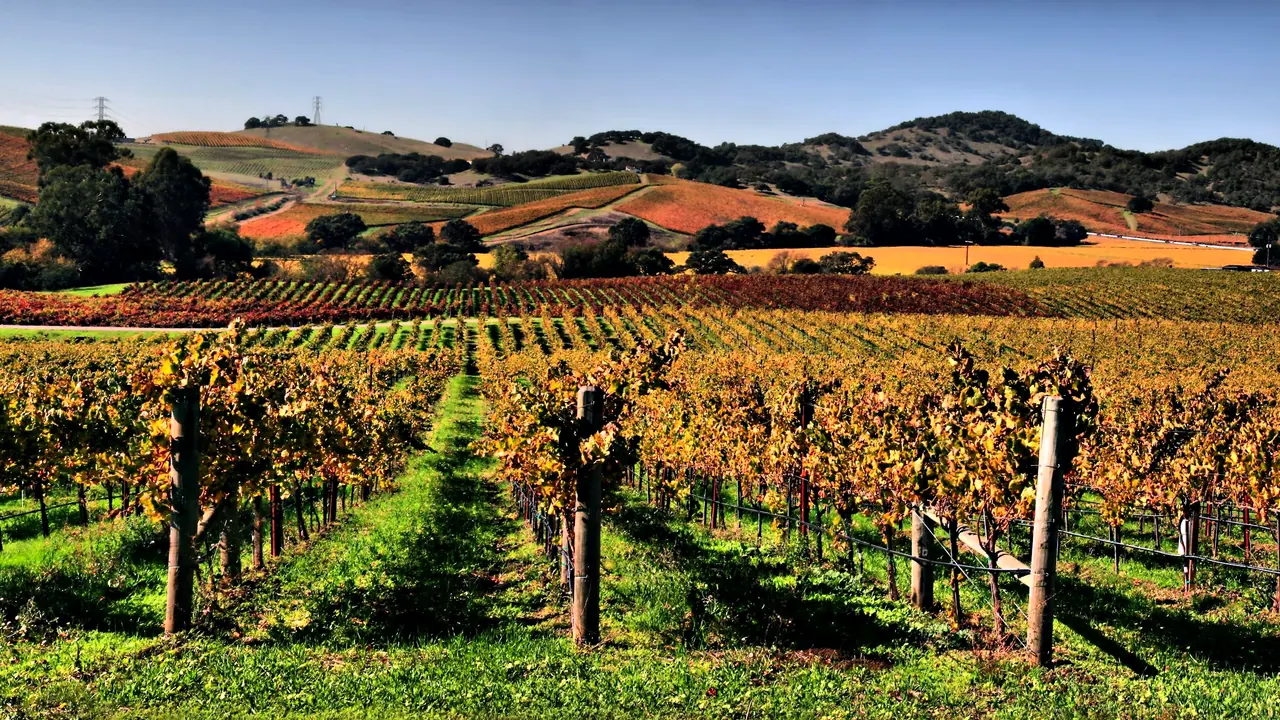
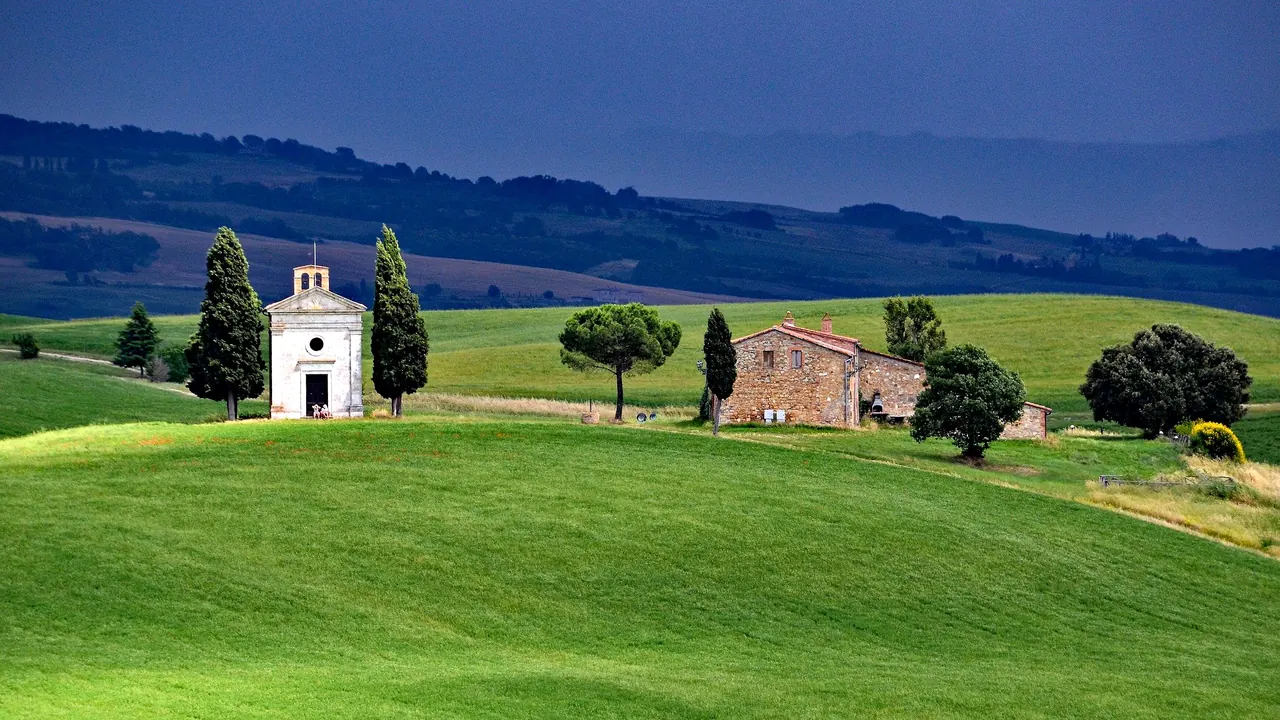
Photos: Napa Valley by Brocken Inaglory, CC BY-SA 3.0, cropped; Tuscany by Hervé Simon, CC BY-SA 2.0, cropped.
Napa Valley or Tuscany?
Our verdict in twelve categories, each scored against the same fixed benchmark cities, and the climate month by month, so you can choose for your trip.
Choose Napa Valley for
Napa Valley does not lead in any category we score.
Napa Valley suits a short, focused trip built around the table and the glass. Everything you came for lies along one narrow valley, from the dining rooms of Yountville to the mud baths of Calistoga, and summer days are reliably dry. It works well as a few indulgent days added to a San Francisco visit, for couples who are happy to spend generously and go to bed early.
Choose Tuscany for
- culture and sights
- beaches
- families
Tuscany is the broader vacation and the better choice for most other trips. It matches Napa for wine and good cooking, then adds Florence and Siena, a summer coast with islands, wilder hills and a calendar of opera. It also has room for children and for travellers watching their spending. It rewards a longer stay, ideally split between a city, a farmhouse and the sea.
Scoreboard
Twelve categories on one fixed scale from 0 to 100. The shaded stretch is the gap between the two.
Your match
Pick a travel style or drag the sliders, and both match scores follow your weighting.
Has no clear advantage with the weighting you have chosen.
Wins on culture and sights and beaches with your weighting.
What matters to you?
Category by category
What the scores mean for a trip.
Beaches & swimming
Napa Valley has no beach of its own. In summer, the place to swim is Lake Berryessa over the eastern hills. The Sonoma coast is a scenic drive away, but at about 12°C, and with strong currents, it is for looking at, not swimming in.
Tuscany has a proper summer coast with several characters. There are clear coves and sandy bays on Elba, wilder pine-fringed strands in the Maremma, and orderly rows of beach-club umbrellas along Versilia. The catch is distance: from Florence or the hill towns, the sea is a separate part of the trip.
Food & drink
Both are serious places to eat and drink, but they offer different experiences. Napa puts it all along one valley: Cabernet estates on Highway 29 and the Silverado Trail, appointment-only cellars on the mountain slopes, and a cluster of fine dining in Yountville, where a meal is usually an occasion.
Tuscany is earthier and more widely spread. You can eat a lampredotto sandwich from a Florentine cart, shop in the San Lorenzo market hall and have a trattoria dinner in Oltrarno. Then you can follow the wine routes from Chianti Classico to Montalcino and Montepulciano, with pecorino in Pienza and truffles in San Miniato along the way.
Culture & sights
The difference here is enormous. Napa's heritage is winemaking history: nineteenth-century stone cellars, the old Greystone building in St. Helena and the restored Bale Grist Mill. These are pleasant to look at between tastings, but visitors go to San Francisco for museums.
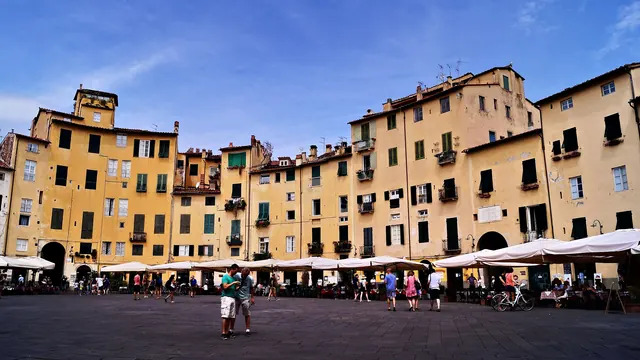
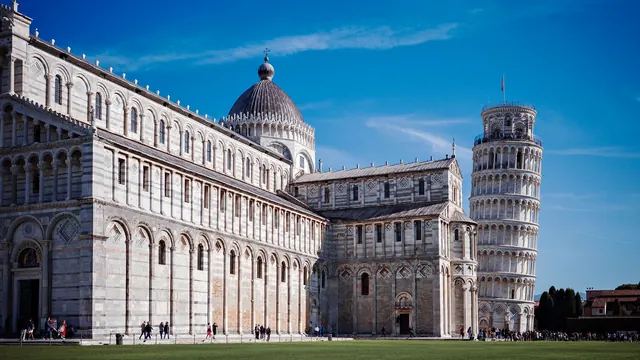
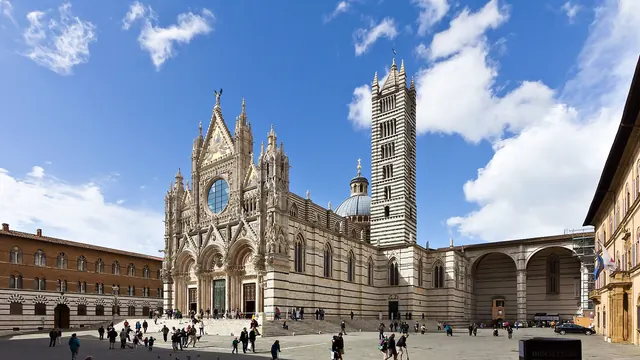
Tuscany is where the Renaissance began. Florence's dome, galleries and frescoed churches would fill a week by themselves. Beyond the city are Siena's Campo, Pisa's cathedral square, Lucca's walls, Piero della Francesca's work in Arezzo and abbeys standing alone in the fields.
Nightlife
In Napa, evenings end at dinner. A few wine bars and taprooms in downtown Napa are all there is, and the up-valley towns go dark soon after the restaurants close.
Tuscany offers more, though it is still not a party destination. In Florence, students and visitors sit on the steps of Santo Spirito, and there are wine bars in Oltrarno and a few weekend clubs. In summer, the beach clubs and dance halls of Versilia stay open until dawn.
Nature & outdoors
Napa offers mild walking and cycling among the vines and oak foothills, while Tuscany adds real mountains, a wild coast and islands. Napa's best moments are a dawn balloon flight over the valley floor, an easy ride along the Silverado Trail and the climb up Mount St. Helena for the view. Closer to town there are shaded redwood and park trails, which are pleasant for a morning but never remote.
Tuscany's farmed hills are better known than Napa's vineyards. You can walk or cycle from one hill town to the next across the Val d'Orcia and the Crete Senesi. Beyond them are the steep ridges of the Apuan Alps above the Carrara quarries, the beech forests of the Casentino, the wild cattle and cliff paths of the Maremma park, and sailing and diving around Elba.
Day trips
From Napa, the outing that stands out is San Francisco, partly by ferry if you like. Sonoma's mission plaza and Berkeley are easy too, but most other choices are another wine valley with a pretty town.
Tuscany has more outings than one trip can hold, and they are very different from one another. They include Siena, Lucca, Pisa and Volterra, a ferry to Elba or Giglio, and then Bologna, Assisi, Orvieto and the Cinque Terre just across the border.
Good for families
Napa caters for adults, and children are tolerated rather than looked after. Calistoga's small geyser and petrified forest, the creekside trails in the state parks and a wildlife park in Vallejo are enough for a couple of days, but long drives and hot afternoons wear children out.
Tuscany is much easier with children. A farmhouse with a pool and animals pairs well with shallow, lifeguarded beaches in Versilia or the Maremma. Children also enjoy the Pinocchio park at Collodi, climbing the leaning tower and cycling on Lucca's walls.
Getting around
Napa is small, about 50km end to end, but almost everything needs a car. Since the point of the trip is drinking wine, many visitors hire a driver or join a tour. Only the centres of Napa, Yountville and St. Helena are walkable.
Tuscany gives you more ways to travel. Florence is best on foot, and regional trains link it with Pisa, Lucca, Arezzo and Viareggio, so a whole trip without a car is realistic. For Chianti, the Val d'Orcia and the Maremma you still need a car, and you park outside the walls of each old town.
Shopping & style
In Napa, shopping mostly means wine bought at the cellar door and shipped home, plus polished boutiques on St. Helena's Main Street and an outlet centre outside Napa town.
Tuscany has a real craft tradition. In Florence you will find leather workshops around Santa Croce, goldsmiths on the Ponte Vecchio and paper makers in Oltrarno. Each town adds its own speciality, from Volterra alabaster to Montelupo ceramics and Pietrasanta marble.
Affordability
Neither is cheap, but Napa is a splurge however carefully you plan. Up-valley inns, tasting fees and the well-known restaurants all cost a great deal, and the only real savings are staying in Napa town and having picnic lunches.
Tuscany leaves more room for a budget. Trattoria meals, market lunches and cellar-door wine are reasonable. Lucca, Arezzo, Pistoia and the Maremma cost noticeably less than Florence or Forte dei Marmi, and spring and autumn are cheaper than high summer.
Live music & performing arts
Napa does well for its size, but mostly in season. There is a big rock and pop festival each late spring, summer concerts at wineries and in Yountville, and touring acts at downtown Napa's restored opera house and Art Deco theatre.
Tuscany has a real musical tradition. Florence has the Maggio Musicale Fiorentino with its own opera house and orchestra, and drama at the Teatro della Pergola. Puccini's operas are staged by the lake at Torre del Lago, and the Accademia Chigiana holds concerts in Siena's palaces.
Wellness & relaxation
Both are excellent places to unwind, and in both cases it comes from hot springs. Napa's waters are concentrated in Calistoga, with volcanic-ash mud baths and mineral pools in a small town. Polished resort spas and fine dining are a short drive away in Yountville.
Tuscany's springs are spread across the countryside and are often outdoors. You can soak in the free terraced pools at Saturnia, visit the medieval bath at Bagno Vignoni or take the grand pump rooms of Montecatini. Combine one of these with a quiet farmhouse in the Val d'Orcia.
When should you go?
Pick your month. The climate figures are measured averages, not a forecast.
Napa Valley in July
Tuscany in July
Daytime high, °C
Rainfall in the month, mm
Where the figures come from
Napa Valley has no rain gauge within 25 km of the centre, so its rainfall comes from a gridded climate dataset read at the destination rather than from a gauge further away.
Napa Valley's sunshine is measured 76 km from the centre, at Sacramento Executive Airport.
Tuscany has no rain gauge within 25 km of the centre, so its rainfall comes from a gridded climate dataset read at the destination rather than from a gauge further away.
Tuscany's sunshine is measured 71 km from the centre, at Pisa / S. Giusto.
Temperature and rainfall are climate normals, averaged over the years shown. Napa Valley: 1991-2020 (sunshine 1981-2010) normals, Napa / Middleton (21.9 km from centre). Tuscany: 1995-2020 (sunshine 1991-2020, rainfall 1991-2020) normals, Firenze / Peretola (5.6 km from centre).
Napa Valley has a very simple year. From June to September it is almost completely dry, with long sunny days and highs of about 26°C, warm enough for vineyard lunches without being too hot to cycle or walk a downtown. April, May and October are almost as pleasant. The rain comes in winter, with about 141mm in January, so tasting rooms and hot springs are the best of it then, although the late-winter mustard flowers have their own appeal.
Tuscany is hotter and wetter at different times. Inland, July and August reach about 33°C, which is hard work in the streets of Florence or Siena but good weather for the coast, and the sea is warm enough for swimming from June to September. May and late September are the best months for walking the towns. October and November are the wettest, with about 124mm in November, while Napa's rain comes later, in mid-winter.
Which traveller are you?
On a culture and arts trip, Tuscany is the clear choice. Florence alone holds the Uffizi, the Accademia and Brunelleschi's dome, and Siena, Pisa and San Gimignano are within reach. Napa's stone cellars and Victorian downtown are pleasant, but they are only a backdrop.
For a beach and sun trip, choose Tuscany. Elba's sandy bays, the pine-backed Maremma shore and the long Versilia sands all give warm summer swimming. Napa is inland and its nearest ocean is too cold for bathing, so swimming there mostly means a hotel pool.
On a family trip with children, Tuscany works far better. Agriturismi have pools and animals, the beaches are shallow and lifeguarded, and children are welcome at late dinners. Napa is designed around tasting rooms and adult resorts, and most families only stop there briefly.
Before you go
| Measure | Napa Valley | Tuscany |
|---|---|---|
| Official language | - | Italian |
| Currency | US Dollar (USD) | Euro (EUR) |
| Sockets | AB120 V, 60 Hz | CFL230 V, 50 Hz |
| Driving side | Right | Right |
| Time zone | UTC-8, UTC-7 in summer | UTC+1, UTC+2 in summer |
| Emergency number | 911 | 112 |
| Main airport | San Francisco International Airport (SFO)143 non-stop destinations | Florence Airport, Peretola (FLR)46 non-stop destinations |
| Public holidays this year | 13 days | 13 days |
By the numbers
| Measure | Napa Valley | Tuscany |
|---|---|---|
| Population | - | 3,729,641 |
Where else could you go?
Every comparison below shares a destination with this one, so you can follow Napa Valley or Tuscany somewhere new.
- Sonomavs Napa Valley
- Umbriavs Tuscany
- Elbavs Tuscany
- Cinque Terrevs Tuscany
- Lake Gardavs Tuscany
- Lake Tahoevs Napa Valley