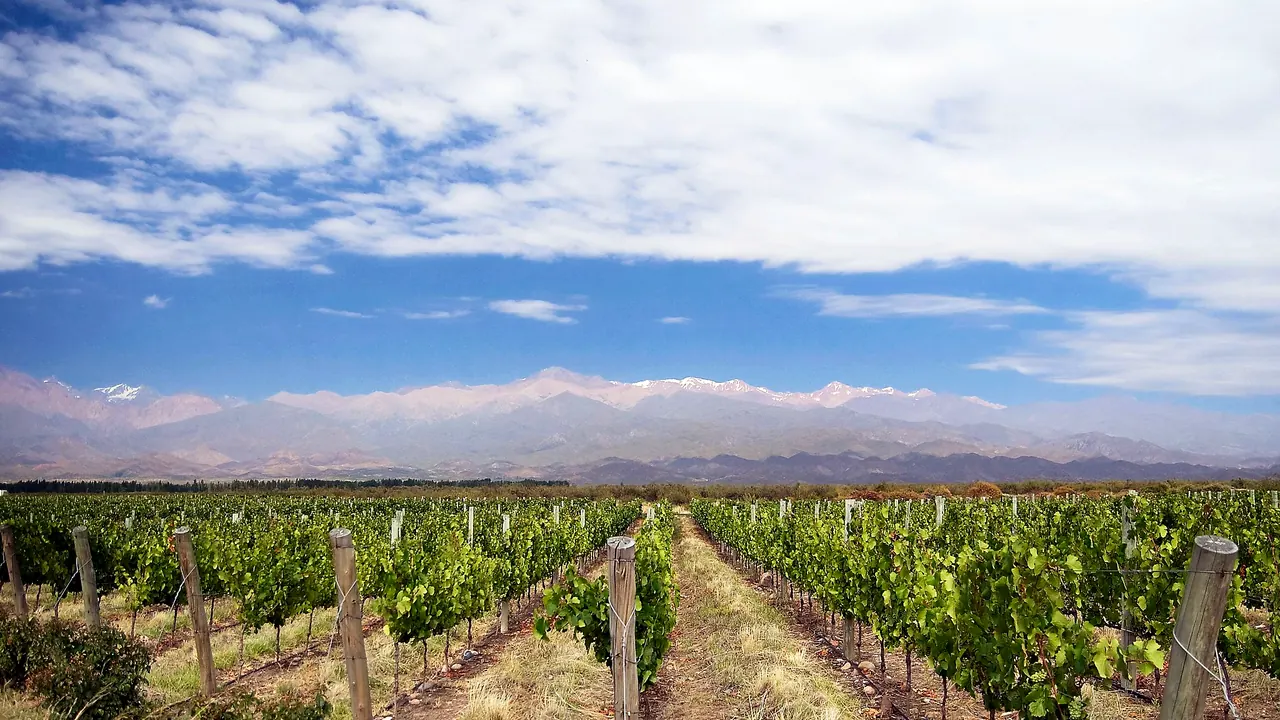
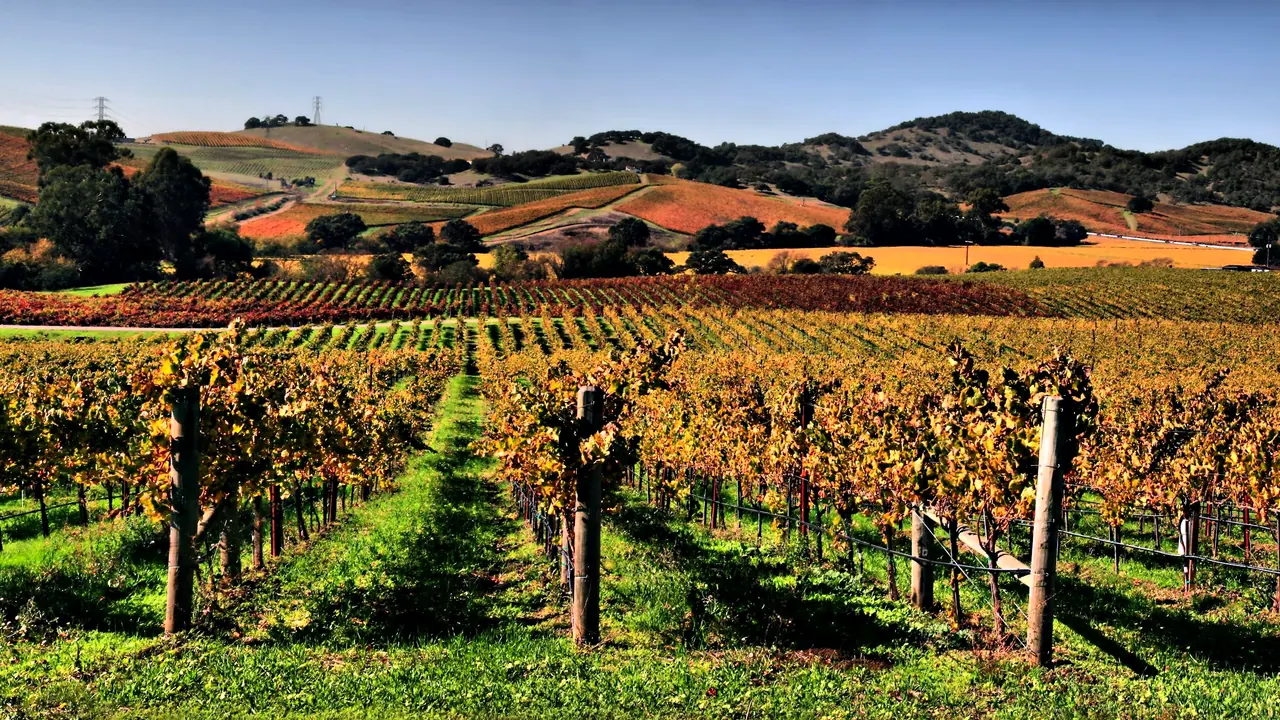
Photos: Mendoza by David, CC BY 2.0, cropped; Napa Valley by Brocken Inaglory, CC BY-SA 3.0, cropped.
Mendoza or Napa Valley?
Our verdict in twelve categories, each scored against the same fixed benchmark cities, and the climate month by month, so you can choose for your trip.
Choose Mendoza for
- prices
- nature and the outdoors
- nightlife
Mendoza suits travellers who want wine country with real mountains attached. The Andes bring rafting, high hiking and the road to Aconcagua within reach of the vineyards. The city keeps late, sociable evenings on its shaded terraces, and everyday costs stay far lower, even if winery lunches and drivers add up.
Choose Napa Valley for
- wellness
- day trips
- food and drink
Napa Valley is the choice for a polished trip built around food, wine and spas. Yountville's dining, Calistoga's mud baths and an easy day in San Francisco make up for quiet nights, a lot of driving and a bill that turns any stay into a splurge.
Scoreboard
Twelve categories on one fixed scale from 0 to 100. The shaded stretch is the gap between the two.
Your match
Pick a travel style or drag the sliders, and both match scores follow your weighting.
Wins on prices and nature and the outdoors with your weighting.
Wins on wellness and day trips with your weighting.
What matters to you?
Category by category
What the scores mean for a trip.
Beaches & swimming
Neither destination is a beach trip, as both lie far inland. Napa Valley has the slightly better swim: Lake Berryessa, over the eastern hills, warms well in summer and has coves for a dip or a paddle, while the cold Pacific at Bodega Bay is for looking at.
Mendoza's Potrerillos reservoir is lovely to look at but not much good for a swim, and the Chilean coast is a full day's drive away over the Andes. In both places, the realistic plan is a hotel pool.
Food & drink
Both are wine destinations first, but Napa Valley offers more depth at the table. Its Cabernet cellars run from grand estates to appointment-only hillside rooms, and Yountville's concentration of fine dining has few equals anywhere. St. Helena and Calistoga add farm-led bistros. The catch is that cheap, casual eating is hard to find.
Mendoza's high points are the long, multi-course Malbec lunches at wineries in Luján de Cuyo and the Uco Valley, eaten with the Andes in view. Back in the city it is parrillas, empanadas mendocinas and late terrace dinners, satisfying but narrow once you step beyond steak and wine.
Culture & sights
Mendoza has a little more to see, though neither is a sightseeing trip. Its main sight is the city itself, rebuilt after the 1861 earthquake as a shaded grid of wide streets and plazas, with the tiled Plaza España, the founding-city ruins and Cerro de la Gloria above Parque San Martín. A day or two covers it.
Napa's heritage is spread among its wineries: stone cellars, the old Greystone building, Victorian fronts along the river in Napa town and the restored Bale Grist Mill. It makes pleasant scenery for a tasting day, and serious museums mean a trip to San Francisco.
Nightlife
Mendoza has a real night out, Argentine-style. Dinner starts at nine or ten, Arístides Villanueva stays full of students and young locals past midnight, and a few big clubs on the city's edge run until dawn at weekends.
Napa Valley's evenings end with dinner. Downtown Napa has wine bars and cocktail bars by the river that go quiet well before midnight, and the up-valley towns close soon after their restaurants do.
Nature & outdoors
Here Mendoza is in another league. The Andes rise straight behind the city, and within an hour you can raft the Mendoza River, hike at altitude in the Cordón del Plata or paraglide off Cerro Arco. A longer day reaches Puente del Inca and Aconcagua, the highest summit in the Americas, and in winter there is skiing at Vallecitos.
Napa's outdoors are gentle and agricultural: a dawn balloon flight over the vines, cycling on the Silverado Trail, redwood groves in Bothe-Napa Valley State Park and the climb up Mount St. Helena. It is pretty, tame country rather than wild.
Day trips
Napa Valley has far more range beyond its own vineyards. San Francisco is about an hour and a half away, partly by ferry if you like, and Berkeley, Sausalito and Sacramento's old riverfront are also within reach. Sonoma's mission plaza and Healdsburg offer softer wine country nearby.
From Mendoza, every outing is wine: cycling between family bodegas in Maipú, the big Malbec estates of Luján de Cuyo and the high Uco Valley. The mountain road counts more as nature than as a day trip, and anyone who does not care about wine will run out of options quickly.
Good for families
Mendoza is the better bet with children, helped by an Argentine culture where kids are out on the plazas late in the evening. Parque San Martín has a lake, paddle boats and playgrounds, and Cacheuta's hot pools and gentle rafting at Potrerillos make good days out.
Napa Valley is designed for adults, with couples' resorts and long tasting days. Calistoga's geyser and petrified forest, the state park trails and the amusement park in Vallejo will fill a few days, and most families treat the valley as a short stop.
Getting around
Mendoza is easier on foot. Its flat, tree-lined grid puts the plazas, the park and the bar streets within a short walk, and the Metrotranvía light rail runs south to Maipú, where bikes are the way to tour the wineries. The Uco Valley and the mountains still need a car, driver or tour.
In Napa Valley almost everything needs a car. The valley is only about 50km long and the roads are simple, but buses are too infrequent for tasting days, and only a few downtowns can be walked. With wine on the agenda, a hired driver or tour is the usual answer.
Shopping & style
The two are broadly level, and in both the real purchase is wine from the cellar door, often bottles you will not find at home. Napa's estates will ship cases for you, and its other shopping is small and polished: homeware and kitchen boutiques on St. Helena's Main Street, galleries in Yountville and a large outlet centre.
Mendoza feels more like a market town. It has leather goods, olive oil and dried fruit, a weekend craft fair in Plaza Independencia and everyday fashion on the Peatonal Sarmiento, but little in the way of design or luxury.
Affordability
The gap is wide. In Mendoza, simple hotels, buses and steak dinners are moderately priced, and the costs that mount up are the ones aimed at foreigners: tasting fees, winery lunches, vineyard lodges and drivers. Argentina's volatile currency also means the same trip can feel cheap one year and dear the next.
Napa Valley is a splurge however you plan it. Up-valley inns are priced for special occasions, tasting fees add up over a day and the famous restaurants are very expensive. Staying in Napa town and picnicking from the delis softens the bill only slightly.
Live music & performing arts
Neither is a stage destination, and both shine mostly in season. Mendoza's big moment is the Vendimia harvest festival in late summer, with its huge night-time show in the Parque San Martín amphitheatre. The rest of the year brings the provincial philharmonic at the Teatro Independencia and folk nights of cueca.
Napa Valley's calendar is more spread out: a large rock and pop festival in late spring, summer classical and jazz concerts at the wineries and in Yountville, and touring acts year round at downtown Napa's restored opera house and Art Deco theatre.
Wellness & relaxation
Napa Valley is the stronger choice for relaxing, with Calistoga at its heart. The town was founded as a hot-springs resort, and its volcanic-ash mud baths and geothermal pools range from plain old bathhouses to polished modern ones. Resort spas among the vines around Yountville and the Silverado Trail fill out the rest of the valley.
Mendoza has one main place to soak, the century-old thermal pools at Cacheuta, about 40km up the river canyon. Its vineyard lodges with spas suit booked retreats rather than a drop-in visit, though the city's slow afternoons in the shade are restful in their own way.
When should you go?
Pick your month. The climate figures are measured averages, not a forecast.
Mendoza in July
Napa Valley in July
Daytime high, °C
Rainfall in the month, mm
Where the figures come from
Napa Valley has no rain gauge within 25 km of the centre, so its rainfall comes from a gridded climate dataset read at the destination rather than from a gauge further away.
Napa Valley's sunshine is measured 76 km from the centre, at Sacramento Executive Airport.
Temperature and rainfall are climate normals, averaged over the years shown. Mendoza: 1991-2020 normals, Mendoza Aerodrome (8.5 km from centre). Napa Valley: 1991-2020 (sunshine 1981-2010) normals, Napa / Middleton (21.9 km from centre).
The two run on opposite calendars. Mendoza's summer falls from December to February, when afternoons reach around 33°C and walking the city is best left to mornings and evenings. That is pool weather, though. The sweet spots are March and April and again October and November, which are warm, bright and good for winery cycling and mountain days. Winter brings highs near 15°C with almost no rain and clear skies. Rain is light all year and comes mostly as summer storms.
Napa Valley is dry and sunny from June to September, with highs around 26°C on the valley floor and almost no rain, so this is when Lake Berryessa and hotel pools come into their own. Autumn stays warm and settled into October. From December to February the valley is cool and wet, with around 141mm falling in January, though this is also when the mustard flowers bloom between the vines.
Which traveller are you?
On a trip on a tight budget, Mendoza is the easier fit. Simple hotels, buses, empanadas and steak dinners are moderately priced, and bike tours in Maipú keep wine days cheap. In Napa Valley, rooms, tastings and dinners all cost a great deal.
For an outdoors trip, Mendoza wins clearly. Within about an hour of the city there is rafting on the Mendoza River and high hiking in the Cordón del Plata, with Aconcagua further up the road. Napa offers gentle vineyard cycling, balloon flights and Mount St. Helena.
On a relaxing and wellness trip, Napa Valley pulls ahead. Calistoga was built around its hot springs, with mud baths and geothermal pools, and resort spas sit among the vines further south. Mendoza has the Cacheuta springs and a slow siesta rhythm, with fewer spa options.
Before you go
| Measure | Mendoza | Napa Valley |
|---|---|---|
| Official language | Spanish | - |
| Currency | Argentine Peso (ARS) | US Dollar (USD) |
| Sockets | CI220 V, 50 Hz | AB120 V, 60 Hz |
| Driving side | Left | Right |
| Time zone | UTC-3 | UTC-8, UTC-7 in summer |
| Emergency number | 117 or 911 | 911 |
| Elevation | 769 m | - |
| Main airport | Governor Francisco Gabrielli International Airport (MDZ)8 km from centre9 non-stop destinations | San Francisco International Airport (SFO)143 non-stop destinations |
| Public holidays this year | 16 days | 13 days |
By the numbers
| Measure | Mendoza | Napa Valley |
|---|---|---|
| Population | 127,160 | - |
| People per km² | 2,355 | - |
| Museums within 10 km | 1 | - |
| UNESCO World Heritage sites within 50 km | 0 | - |
Where else could you go?
Every comparison below shares a destination with this one, so you can follow Mendoza or Napa Valley somewhere new.
- Sonomavs Napa Valley
- Santiagovs Mendoza
- Lake Tahoevs Napa Valley
- Big Survs Napa Valley
- Yosemitevs Napa Valley
- Vina del Marvs Mendoza