Photos: Mendoza by David, CC BY 2.0, cropped; Santiago by Rjcastillo, CC BY-SA 4.0, cropped.
Mendoza or Santiago?
Our verdict in twelve categories, each scored against the same fixed benchmark cities, and the climate month by month, so you can choose for your trip.
Choose Mendoza for
- wellness
- food and drink
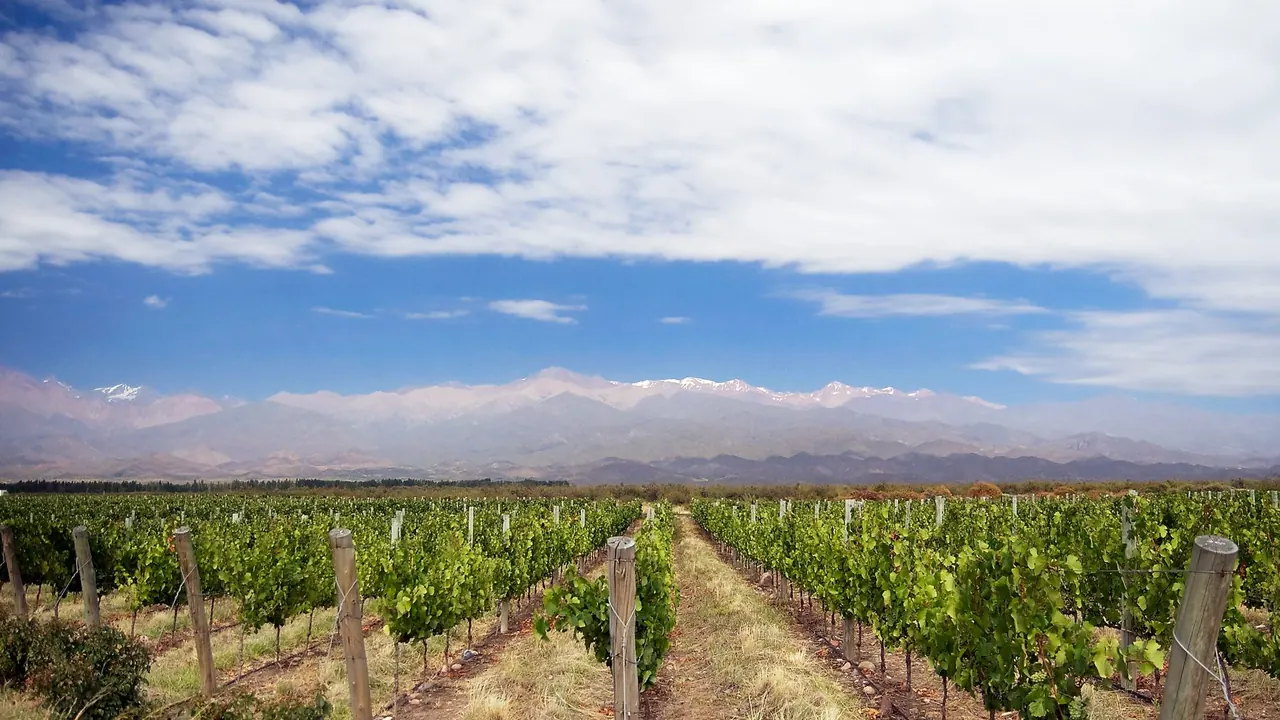
Mendoza suits travellers who want wine at the centre of the trip and an unhurried pace around it. Long paired lunches at estates in Luján de Cuyo and the Uco Valley, bike rides between bodegas in Maipú, thermal pools at Cacheuta and spa lodges among the vines fill the days, with the Andes always in view. It asks for little sightseeing and rewards those who come to slow down.
Choose Santiago for
- culture and sights
- live music and the arts
- nightlife
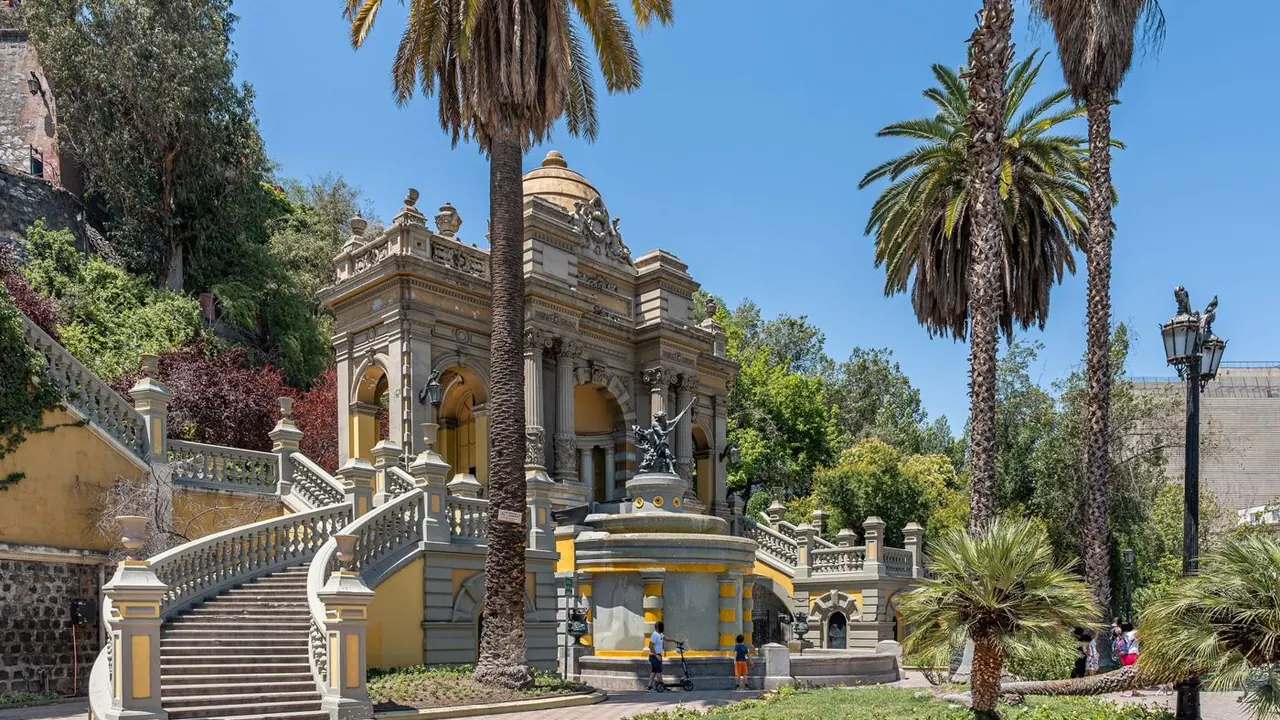
Santiago is the better pick for a fuller city trip. As a capital it has the stronger museums, a proper opera house, livelier nights in Bellavista and a metro that makes it easy to get around, plus a choice of outings from Valparaíso on the coast to the wine estates of the Maipo Valley. Families and anyone wanting variety from one base will find more to do here.
Scoreboard
Twelve categories on one fixed scale from 0 to 100. The shaded stretch is the gap between the two.
Your match
Pick a travel style or drag the sliders, and both match scores follow your weighting.
Wins on wellness and food and drink with your weighting.
Wins on culture and sights and live music and the arts with your weighting.
What matters to you?
Category by category
What the scores mean for a trip.
Beaches & swimming
Neither city works for a beach trip, but Santiago at least puts the sea within a day out. Viña del Mar and the central coast are about two hours away, even if the Humboldt Current keeps the water cold enough that many people only paddle.
From Mendoza the Chilean coast lies over a high Andean pass, a full day's drive each way, so swimming means a hotel pool or the scenic but uninviting Potrerillos reservoir.
Food & drink
Mendoza has the edge for anyone who travels to eat and drink, because its best meals happen at the wineries: many-course lunches with a Malbec matched to each plate and the mountains beyond. Back in town it is steak from wood-fired parrillas and late terrace dinners on Arístides Villanueva.
Santiago's strength is the Pacific. Conger eel soup, sea urchins and machas at the Mercado Central and around La Vega have no match in landlocked Mendoza, and Lastarria and Barrio Italia offer more modern cooking. Both cities leave variety-seekers short of choice once they step outside the local repertoire.
Culture & sights
Santiago gives a sightseer far more to do. The Museo Chileno de Arte Precolombino is a museum worth travelling for, and La Moneda, the Museum of Memory and Human Rights and Neruda's house in Bellavista tell the story of modern Chile.
Mendoza's main sight is the city itself, the shaded grid of plazas laid out after the 1861 earthquake, with tiled Plaza España, the foundation ruins and Cerro de la Gloria above the park. It makes a pleasant day, not a reason to come.
Nightlife
Santiago has the bigger night out. Bellavista fills with student bars, pavement crowds and the city's main LGBTQ+ clubs, Lastarria and Barrio Italia have quieter cocktail and wine bars, and weekend clubs run into the morning.
Mendoza keeps the same late Argentine hours but on a smaller scale: one busy bar street on Arístides Villanueva, wine bars in Chacras de Coria and only a few clubs on the edge of town. Many visitors call it a night early before a winery or mountain day.
Nature & outdoors
Both cities sit under the Andes and use them well, so the choice is about what kind of outdoors you want. Mendoza is the place for rafting and kayaking at Potrerillos, paragliding off Cerro Arco, serious hiking in the Cordón del Plata and the drive up to Aconcagua, the highest summit in the Americas, all under reliably dry, clear skies.
Santiago lets you hike on Cerro San Cristóbal and Manquehue without leaving the city, and the big ski areas of Valle Nevado and La Parva make an easy winter day out, far more than Mendoza's small Vallecitos. Set against that are the sprawl, the winter smog that can hide the peaks, and few buses to trailheads.
Day trips
Santiago offers the wider range of outings. Valparaíso's hills, funiculars and street art make one of the best day trips in South America, Viña del Mar fits into the same day, and the Maipo and Casablanca valleys and the pottery village of Pomaire add wine and crafts.
From Mendoza every road leads to wine, and the three regions differ enough to fill several days: flat Maipú for cycling, the big estates of Luján de Cuyo, the high vineyards of the Uco Valley. Anyone not drinking will run out of ideas quickly.
Good for families
Santiago has much more aimed at children: the funicular, cable car and zoo on Cerro San Cristóbal, the hands-on Museo Interactivo Mirador, an amusement park in Parque O'Higgins and Buin Zoo, plus a metro that copes with pushchairs.
Mendoza is relaxed and child-friendly in spirit, with paddle boats in Parque San Martín, hot pools at Cacheuta and gentle rafting at Potrerillos. But the winery circuit at the heart of most visits suits children poorly, and the summer heat wears them out.
Getting around
Santiago is easier to get around without a car. Line 1 of the metro runs the length of the main axis from the Centro to Las Condes, one card covers trains and buses, and ride-hailing fills the gaps, though rush-hour trains are crowded.
Mendoza's centre is flat, shaded and a pleasure on foot, and the Metrotranvía reaches Maipú for bike hire. The catch is that Luján de Cuyo, the Uco Valley and the mountain road need a hired car, a driver or a tour, and the open irrigation channels by the kerbs call for care after dark.
Shopping & style
Santiago is the better place to shop. Costanera and Parque Arauco cover international brands, Alonso de Córdova has luxury labels and galleries, Barrio Italia has independent design and vintage, and Pueblito Los Dominicos sells lapis lazuli, copper and Mapuche silver.
Mendoza's shopping is mainly wine, and it is very good at that: bottles from small producers that seldom leave Argentina, with olive oil, leather and a weekend craft fair on Plaza Independencia as extras. For fashion it offers little beyond everyday chains.
Affordability
Overall costs are much the same, but the money goes in different places. In Mendoza, city life is moderate and the bills come from tasting fees, winery lunches, vineyard lodges and the drivers needed to reach them, with Argentina's unstable currency making the total hard to predict.
In Santiago, set lunches, market food, the metro and largely free museums keep daily costs down, while hotels in Providencia and Las Condes, skiing and mountain tours push them up.
Live music & performing arts
Santiago has a real performing arts calendar. The 19th-century Teatro Municipal stages opera, ballet and orchestral seasons, GAM adds contemporary dance and theatre, and each January the Santiago a Mil festival takes over stages and streets.
Mendoza's standout is a single event, the Vendimia harvest festival in late summer, with its huge night show in the amphitheatre of Parque San Martín. For the rest of the year there are concerts at the Teatro Independencia and cueca folk nights, enough for an evening but not to plan around.
Wellness & relaxation
Mendoza is the more restful stay. The city itself slows down through the afternoon heat, the Cacheuta hot springs are an easy trip up the river canyon, and vineyard lodges in Luján de Cuyo and the Uco Valley offer spa retreats among the vines.
Santiago has to be escaped to unwind. Its spas are mostly in Las Condes hotels, and the relaxation lies outside town at Termas de Colina or the simple pools of Baños Morales, with Parque Forestal for a quiet walk in between.
When should you go?
Pick your month. The climate figures are measured averages, not a forecast.
Mendoza in July
Santiago in July
Daytime high, °C
Rainfall in the month, mm
Temperature and rainfall are climate normals, averaged over the years shown. Mendoza: 1991-2020 normals, Mendoza Aerodrome (8.5 km from centre). Santiago: 1991-2020 normals, Santiago Q. Normal (3.1 km from centre).
Both cities are dry and sunny, but their seasons run differently. Mendoza has the fiercer summer, with highs around 33°C in January, and its modest rain comes as summer storms. Midday walking in the city is hard from December to February, which is when its pools come into their own. Winter is dry, clear and cool at about 15°C, good for skiing or crisp vineyard days, and spring and autumn are the most comfortable for walking, cycling and hiking.
Santiago's summer is gentler at about 28°C and almost rainless, so it stays pleasant for city walks from October to April. Its rain falls in winter instead, peaking at around 87mm in June, when skies turn greyer and sunshine drops sharply, while Mendoza stays bright. For an outdoor-heavy trip in July or August, Mendoza has the clearer weather. Neither city is a beach destination in any month.
Which traveller are you?
On a culture and arts trip, Santiago is the clear choice. Mendoza's planned grid and handful of modest museums take a day or two, while Santiago's Precolombino museum, Museum of Memory, La Moneda and an opera house with its own ballet fill several days.
For a relaxing and wellness trip, Mendoza is the easier place to switch off. Low buildings, plane-tree shade, quiet wine-bar evenings in Chacras de Coria and lunches that last all afternoon set an unhurried pace. In Santiago, traffic, packed rush-hour trains and winter smog get in the way.
For a short city break, Santiago gives more for a few days. Mendoza's real draws lie out in wine country and need a driver or tour, whereas in Santiago the Centro, Lastarria, Bellavista and Providencia sit close together, with sights, restaurants and nightlife a short walk or metro ride apart.
Before you go
| Measure | Mendoza | Santiago |
|---|---|---|
| Official language | Spanish | Spanish |
| Currency | Argentine Peso (ARS) | Chilean Peso (CLP) |
| Sockets | CI220 V, 50 Hz | CL220 V, 50 Hz |
| Driving side | Left | Right |
| Time zone | UTC-3 | UTC-4, UTC-3 in summer |
| Emergency number | 117 or 911 | Police 133/134, ambulance 131, fire 132 |
| Elevation | 769 m | 575 m |
| Main airport | Governor Francisco Gabrielli International Airport (MDZ)8 km from centre5 non-stop destinations | Comodoro Arturo Merino Benítez International Airport (SCL)14 km from centre67 non-stop destinations |
| Public holidays this year | 16 days | 16 days |
By the numbers
| Measure | Mendoza | Santiago |
|---|---|---|
| City population | 127,160 | 6,257,516 |
| People per km² | 2,355 | 7,468 |
| Museums within 10 km | 1 | 54 |
| UNESCO World Heritage sites within 50 km | 0 | 0 |
Where else could you go?
Every comparison below shares a destination with this one, so you can follow Mendoza or Santiago somewhere new.