Photos: Bariloche by Maclemo, CC BY-SA 3.0, cropped; Mendoza by David, CC BY 2.0, cropped.
Bariloche or Mendoza?
Our verdict in twelve categories, each scored against the same fixed benchmark cities, and the climate month by month, so you can choose for your trip.
Choose Bariloche for
- beaches
- families
- nature and the outdoors
Bariloche is the pick for travellers whose days are spent outside. The national park begins at the edge of town, with lakes, forest, refuge-to-refuge trails in summer and South America's biggest ski area in winter. It also works better for families who are happy outdoors. Expect long dinners and a beer by the fire rather than much to see or do in town.
Choose Mendoza for
- food and drink
- wellness
- day trips
Mendoza suits people who travel to eat and drink. Its winery lunches, Malbec country and late terrace dinners give the trip its shape, and the Andes are still close enough for rafting or a day out towards Aconcagua. It also costs a little less, has thermal pools within reach and makes for an easier, slower stay, but there is no beach and the summer heat is fierce.
Scoreboard
Twelve categories on one fixed scale from 0 to 100. The shaded stretch is the gap between the two.
Your match
Pick a travel style or drag the sliders, and both match scores follow your weighting.
Wins on beaches and families with your weighting.
Wins on food and drink and wellness with your weighting.
What matters to you?
Category by category
What the scores mean for a trip.
Beaches & swimming
Neither city is a beach destination, but Bariloche at least has a shore to sit on. Playa Bonita, Villa Tacul and the edges of Lago Gutiérrez and Lago Moreno are pleasant for a picnic in January and February. The glacial water, though, allows only a quick, cold dip.
Mendoza has nothing comparable. The Pacific is on the far side of the Andes, so cooling off means a hotel pool or a drive to the Potrerillos reservoir, which is better for its views than for swimming.
Food & drink
Bariloche eats like a mountain town with a Patagonian accent: lamb roasted on the iron cross, lake trout, venison, fondue and the chocolate of Calle Mitre. Its best drinking is craft beer in brewery gardens along the road to Cerro Catedral, and beyond that the choice soon runs out.
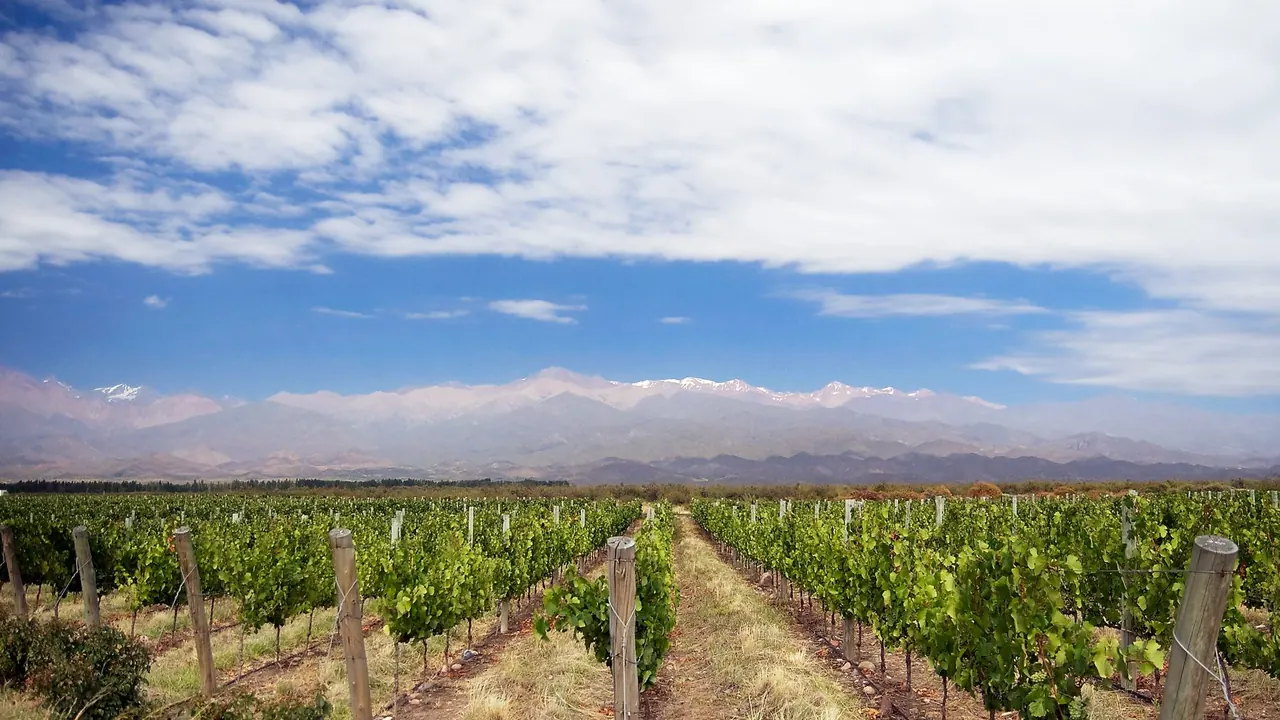
Mendoza is the stronger place to eat and drink. A slow multi-course lunch at a winery, each course paired with the estate's wines and the Andes in view, is the high point of many trips. Back in town there are wood-fired parrillas, olive-and-egg empanadas and late terrace dinners in the Fifth Section.
Culture & sights
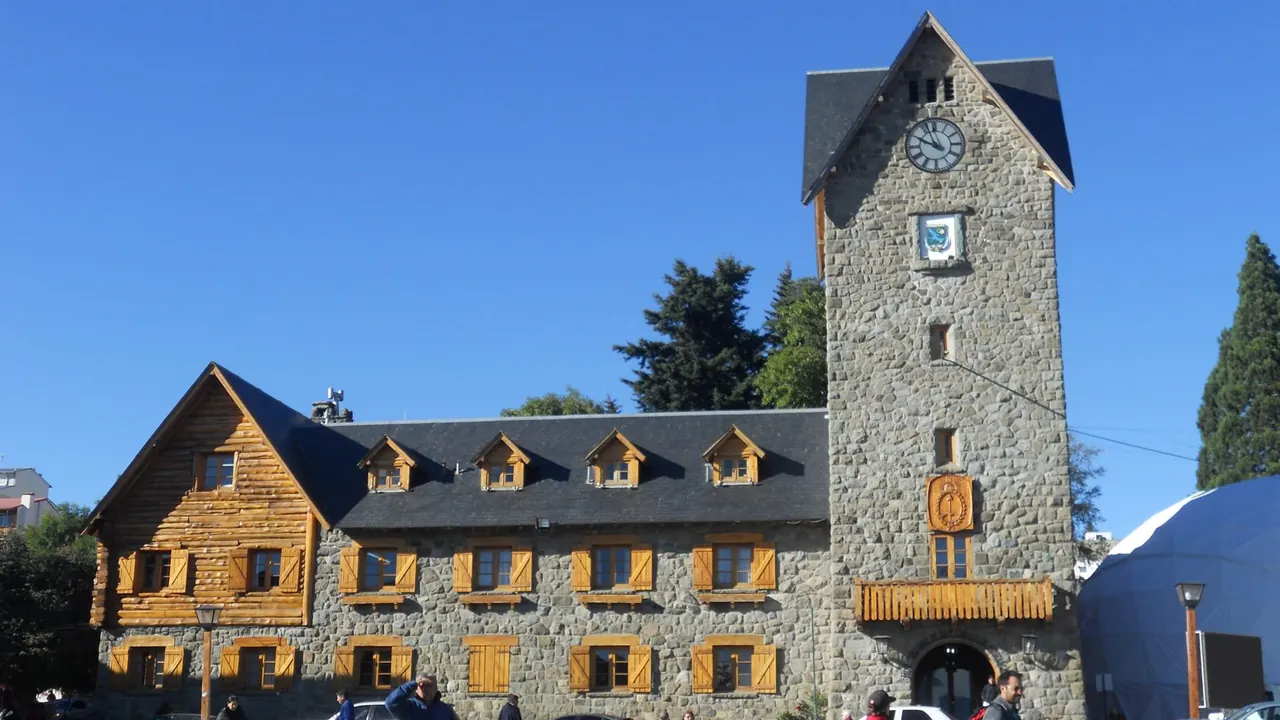
Both are thin on sights, and each takes a morning or a day to cover. What there is differs in character. Bariloche's interest is alpine-style architecture: Bustillo's stone-and-timber Centro Cívico, the Museo de la Patagonia with its Mapuche and settler history, and the Llao Llao hotel and chapel.
Mendoza's is urban planning. After the 1861 earthquake it was rebuilt as a grid of wide, tree-shaded streets around Plaza Independencia and Plaza España. The founding ruins and the Cerro de la Gloria monument to San Martín's crossing of the Andes add some history.
Nightlife
Mendoza has a slightly better night out for adults. Arístides Villanueva fills with students and young locals at pavement tables past midnight, Chacras de Coria has a quieter wine-bar evening, and on weekends a few clubs on the city's edge stay open until dawn.
Bariloche's big clubs are mainly taken over by school-leavers on graduation trips, so grown-up evenings come down to brewpubs, a few bars near Calle Mitre and long dinners.
Nature & outdoors
Both have the Andes on the doorstep, but Bariloche lies right inside them. Nahuel Huapi National Park surrounds the town with lakes, coihue and lenga forest, refuge trails to Frey and Jakob, cable cars up Cerro Otto and Campanario, and Cerro Catedral's ski slopes half an hour away.
Mendoza's landscape is drier and more rugged. It offers rafting at Potrerillos, high hiking in the Cordón del Plata, paragliding from Cerro Arco and a long day out to Aconcagua. It is impressive, but more of it needs a drive.
Day trips
Mendoza gives more reasons to leave town, as long as you like wine. Flat Maipú can be cycled between family bodegas, Luján de Cuyo has the big Malbec estates and the Uco Valley has high vineyards beneath the peaks, so a week can hold several distinct outings.
From Bariloche the drives are mostly through scenery. Villa La Angostura, the settlers' fair at Colonia Suiza and El Bolsón's craft market are the town options, and there are no wineries or heritage sites within reach.
Good for families
Bariloche works better with children. Ski schools on Cerro Catedral, sledging at Cerro Otto, boat trips to Isla Victoria, chocolate workshops and the St Bernards in the Centro Cívico fill the days in both seasons.
In Mendoza, Parque San Martín's paddle boats and playgrounds, the Cacheuta pools and gentle rafting make good outings. However, the winery circuit that draws adults suits children poorly, and the summer heat tires them out.
Getting around
Both cities have a small walkable centre surrounded by places that need wheels, so neither is easy without a car or a tour. In Bariloche the problem is length: lodgings and trailheads stretch about 25km along Avenida Bustillo, served by crowded buses and roads that can be icy in winter.
Mendoza's centre is a flat, shaded grid and is easier on foot. A light-rail line runs towards Maipú, where bikes take over, but the Uco Valley and the mountain road still need a driver.
Shopping & style
Chocolate and wool against wine: the real difference is what you carry home. On Bariloche's Calle Mitre that means chocolatiers, Patagonian knitwear, smoked trout and mountain gear, and the craft fair by the Centro Cívico adds woodwork and Mapuche-style textiles.
In Mendoza the prize is bottles from small producers that rarely leave Argentina, bought in specialist shops or at the cellar door, along with olive oil and leather. The Peatonal Sarmiento and the malls on the edge of town also cover everyday fashion, which Bariloche barely does.
Affordability
In Bariloche the bill depends on when you go. The town is the country's leading mountain resort, so beds and meals cost most in the July ski weeks and in January, and a week on Cerro Catedral adds lift passes and equipment hire on top. Spring or autumn dates, a cabin in a side valley where you cook for yourself, and days on the park's free trails bring a stay back to a moderate level.
Mendoza is the easier place to stay within budget, because most of its expense is optional. Everyday city life, from a plain hotel to an empanada lunch or a steak dinner, is moderately priced all year. The costs pile up in wine country, with tasting fees, long pairing lunches and the driver needed to reach Luján de Cuyo or the Uco Valley. If you keep the bodegas to a bike day in Maipú, you avoid most of that spending.
Live music & performing arts
Neither city is a reason to travel for performances. Mendoza has the slight edge thanks to the Vendimia harvest festival's huge night show in the hills of Parque San Martín, with philharmonic concerts and cueca folk nights through the year.
Bariloche's connection is chamber music: the Camerata Bariloche carries its name and the Semana Musical Llao Llao holds a week of concerts, but most evenings have little on.
Wellness & relaxation
Mendoza offers more for a restful stay. The Cacheuta hot springs up the river canyon have drawn bathers for over a century, the city slows down through the afternoon heat, and vineyard lodges in Luján de Cuyo and the Uco Valley offer spa retreats.
Bariloche has no thermal water nearby. Its calm comes from the hotel spas, the Llao Llao among them, and from staying out by the lake or in the woods away from the centre's student crowds.
When should you go?
Pick your month. The climate figures are measured averages, not a forecast.
Bariloche in July
Mendoza in July
Daytime high, °C
Rainfall in the month, mm
Temperature and rainfall are climate normals, averaged over the years shown. Bariloche: 1991-2020 normals, Bariloche Aerodrome (11.2 km from centre). Mendoza: 1991-2020 normals, Mendoza Aerodrome (8.5 km from centre).
The two cities swap seasons in a useful way. Bariloche is at its best from December to March, when highs reach about 23°C, rain is scarce and the days are long and sunny. That is the time for hiking, lake shores and cycling. From May the rain sets in, peaking at around 172mm in June, and in the mountains it falls as snow. July and August belong to skiers, but they are chilly and grey for anyone walking the streets.
Mendoza runs the other way. Summer highs of around 33°C in January make the city hard work by midday, though the wineries and the mountain valleys are cooler. Autumn (March and April) and spring (October and November) are the sweet spots, warm and sunny for vineyard cycling and walking the grid. The dry winter, with highs near 15°C and almost no rain, is still pleasant for sightseeing at a time when Bariloche is under snow.
Which traveller are you?
On an outdoors trip, Bariloche is the stronger choice. Nahuel Huapi National Park offers multi-day trails between mountain refuges, kayaking, fly fishing and Cerro Catedral's ski slopes, all close to town. Mendoza has rafting and Aconcagua, but more of its outdoor days involve a long drive.
For a food and nightlife trip, choose Mendoza. Long pairing lunches at wineries in Luján de Cuyo and the Uco Valley set it well apart. So do late dinners and bars along Arístides Villanueva. Bariloche offers lamb, trout, chocolate and brewpubs, but the range is narrower.
On a relaxing and wellness trip, Mendoza wins. The city takes a long afternoon pause, the thermal pools at Cacheuta are an easy drive away, and vineyard lodges offer spa stays. Bariloche has no hot springs, so rest there means a hotel spa and a quiet lakeside base.
Before you go
| Measure | Bariloche | Mendoza |
|---|---|---|
| Official language | Spanish | Spanish |
| Currency | Argentine Peso (ARS) | Argentine Peso (ARS) |
| Sockets | CI220 V, 50 Hz | CI220 V, 50 Hz |
| Driving side | Left | Left |
| Time zone | UTC-3 | UTC-3 |
| Emergency number | 117 or 911 | 117 or 911 |
| Elevation | 794 m | 769 m |
| Main airport | Teniente Luis Candelaria International Airport (BRC)12 km from centre17 non-stop destinations | Governor Francisco Gabrielli International Airport (MDZ)8 km from centre5 non-stop destinations |
| Public holidays this year | 16 days | 16 days |
By the numbers
| Measure | Bariloche | Mendoza |
|---|---|---|
| City population | 136,381 | 127,160 |
| People per km² | 619 | 2,355 |
| Museums within 10 km | 3 | 1 |
| UNESCO World Heritage sites within 50 km | 0 | 0 |
Where else could you go?
Every comparison below shares a destination with this one, so you can follow Bariloche or Mendoza somewhere new.