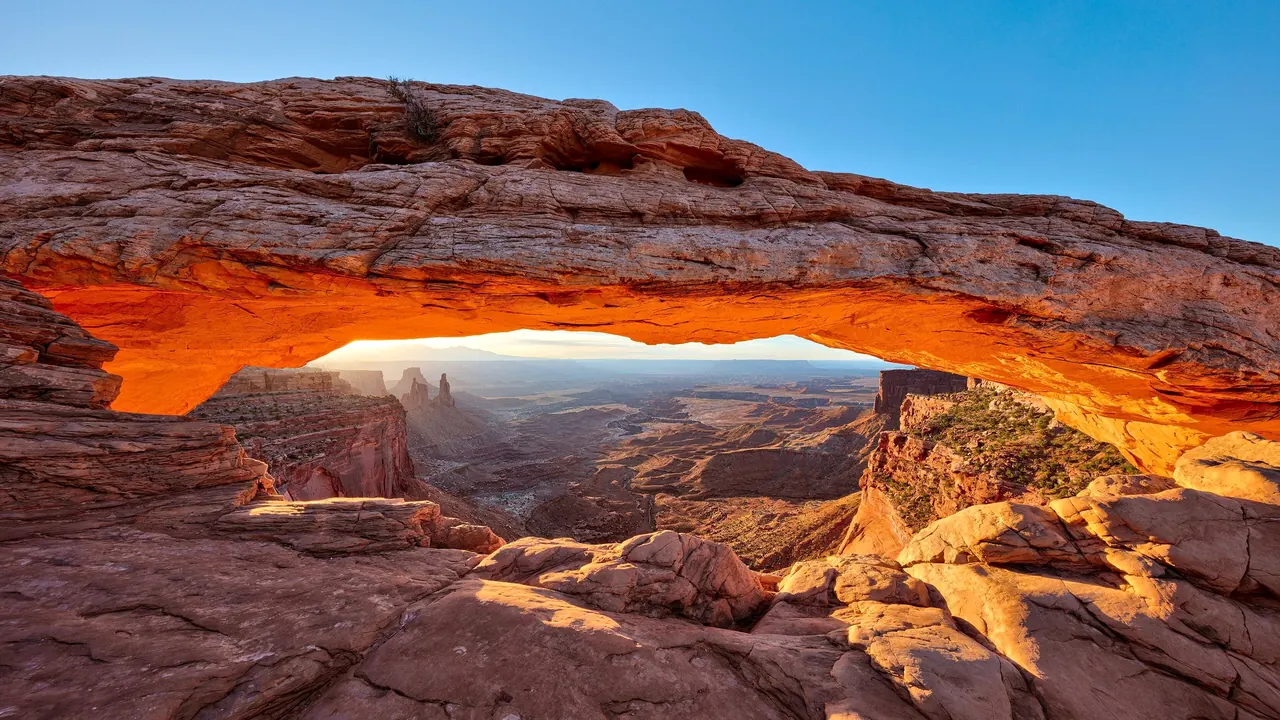
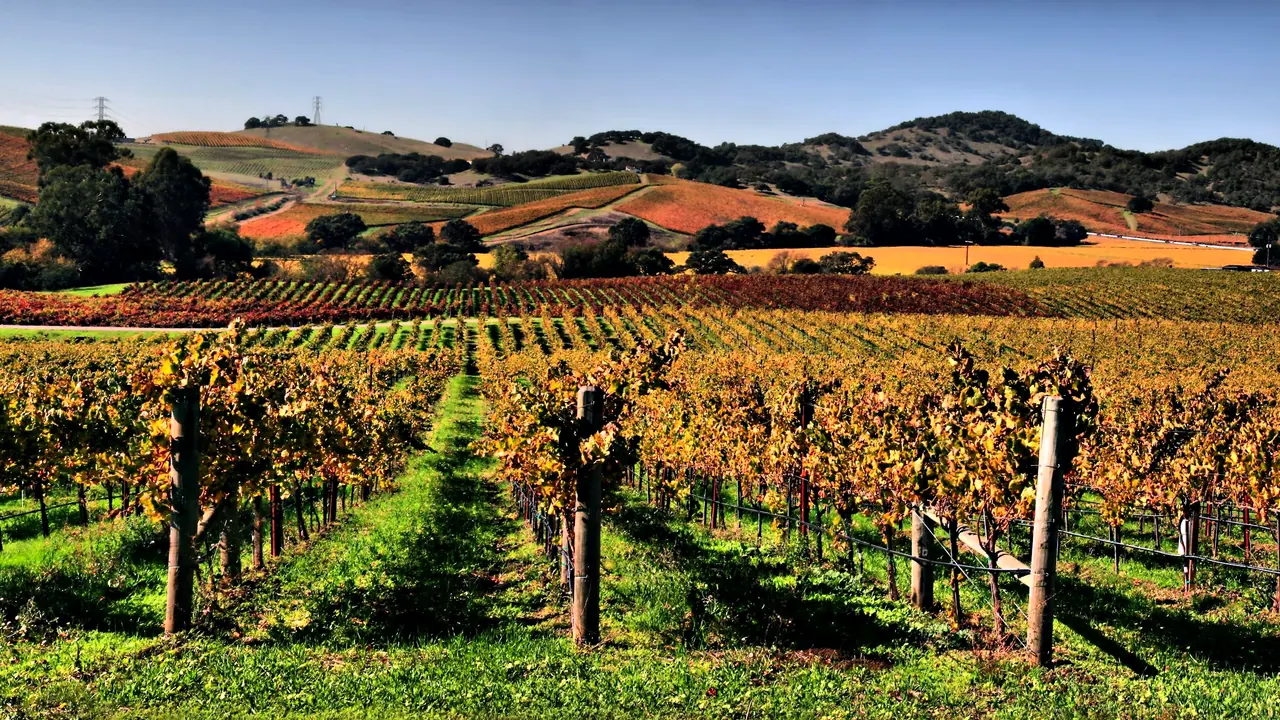
Photos: Canyonlands by Thomas Wolf, www.foto-tw.de, CC BY-SA 3.0, cropped; Napa Valley by Brocken Inaglory, CC BY-SA 3.0, cropped.
Canyonlands or Napa Valley?
Our verdict in twelve categories, each scored against the same fixed benchmark cities, and the climate month by month, so you can choose for your trip.
Choose Canyonlands for
- nature and the outdoors
- prices
- families
Canyonlands is for travellers who want the landscape itself to be the trip. You come for arches, mesas and river gorges to hike, bike, raft and drive through, and for dark skies at the end of the day. It suits active people who are happy to rise before dawn, camp or sleep in a plain motel, and treat food and evenings as an afterthought. It also lets you spend much less money if you plan for it.
Choose Napa Valley for
- wellness
- food and drink
- day trips
Napa Valley rewards a slower, more indulgent kind of trip. Days are built around cellar doors, long lunches and serious dinners. Calistoga has mud baths and mineral pools for unwinding, and San Francisco is close enough for a day in the city. It suits couples and food lovers who want comfort more than adventure, and who accept that it is an expensive place to stay.
Scoreboard
Twelve categories on one fixed scale from 0 to 100. The shaded stretch is the gap between the two.
Your match
Pick a travel style or drag the sliders, and both match scores follow your weighting.
Wins on nature and the outdoors and prices with your weighting.
Wins on wellness and food and drink with your weighting.
What matters to you?
Category by category
What the scores mean for a trip.
Beaches & swimming
Neither is a place to swim, but Napa Valley at least has a proper option. Lake Berryessa, over the eastern hills, warms up in summer and has coves for swimming and paddling. In Canyonlands the rivers are cold, silty and fast, so the water is for rafting, and a dip means a shallow eddy, the small reservoir above Moab or a motel pool.
Food & drink
Food and drink are the main reason to go to Napa Valley. The valley has hundreds of wineries, with Cabernet poured everywhere from grand estates on Highway 29 to small cellars on Howell and Spring Mountain. Yountville has a remarkable cluster of fine dining, and the public market in downtown Napa is there for something more casual.
In Canyonlands you mostly eat to refuel. Moab's burgers, Tex-Mex, pizza and very early breakfasts are built for hikers and cyclists, Utah's liquor laws keep drinking low-key, and many visitors cook at camp. In its favour, eating is simple and informal, which a meal in the valley rarely is.
Culture & sights
Neither is a destination for museums, and both keep their heritage in the open, though of very different kinds. Canyonlands has ancient rock art: Newspaper Rock, the panels along Potash Road and the life-size painted figures of the Great Gallery in Horseshoe Canyon, which take a dirt drive and a long hike to reach.
Napa Valley's past is in its buildings. There are nineteenth-century stone cellars, the old Greystone cellars in St. Helena, the restored Bale Grist Mill and the Victorian frontages along the river in downtown Napa. They are easy to see between tastings but are background rather than a reason to come.
Nightlife
Both regions go to bed early. Moab's few bars and brewpubs fill with rafting guides and mountain bikers on a spring weekend, but the best part of the evening is the star-filled sky over a campsite. In Napa the evening is dinner, followed perhaps by a wine bar or cocktail bar on First Street or along the river, and it is quiet well before midnight.
Nature & outdoors
This is where Canyonlands is far ahead. Arches is minutes from Moab, and Island in the Sky and Dead Horse Point are within an hour. Beyond them lie the Needles and the remote Maze, with slickrock biking, multi-day rafting through Cataract Canyon, climbing at Indian Creek and the White Rim Road to fill the days.
Napa Valley's outdoors is gentle and farmed: vineyards between oak-covered ranges, a dawn balloon flight, cycling on the Silverado Trail, and a climb up Mount St. Helena or a walk among the redwoods of Bothe-Napa Valley State Park. It is lovely country to pass through, but nothing like the scale or wildness of the canyons.
Day trips
Napa Valley has the stronger set of outings, above all San Francisco, about an hour and a half away and partly reachable by ferry from Vallejo. Sonoma's plaza and mission, Healdsburg, Berkeley, Sausalito and Sacramento's old riverfront add to the list, though most of the outings outside the city lead to more wine.
From Canyonlands, a day out usually means more landscape. The towns are small: Bluff's stone houses, the Ancestral Puebloan pottery at the Edge of the Cedars museum in Blanding, the Hovenweep towers, and Grand Junction with Palisade's orchards across the Colorado line. Mesa Verde is far enough away to need its own stop.
Good for families
For families who like the outdoors, Canyonlands works better. Children can walk to Sand Dune Arch and the Windows, join Junior Ranger programmes, see dinosaur tracks near Moab and take gentle float trips on the Colorado, and motel pools and campgrounds keep bases simple. The catches are unfenced drops, dangerous summer heat and long drives.
Napa Valley is built around tasting rooms and long dinners, and children are tolerated more than welcomed. Calistoga's small geyser and petrified forest, the warm resort pools and the wildlife park in Vallejo fill a few days. That is why most families treat the valley as a short stop.
Getting around
Both need a car, but in Canyonlands a car is all you need. Paved roads reach Arches just outside Moab and Island in the Sky within an hour, and a riverside bike path runs from town towards the Arches gate. Only the Maze, Horseshoe Canyon and the White Rim call for high clearance or a guided tour.
Napa Valley is more compact, about 50km from end to end, but the main activity is drinking wine, so driving yourself is awkward. Buses are too infrequent to plan tastings around and Highway 29 slows at weekends, so many visitors hire a driver, join a tour or cycle the flat valley floor.
Shopping & style
Napa Valley has more to buy, and the best of it is wine from the cellar door, often bottles you won't find in shops elsewhere, which estates can ship home. St. Helena's boutiques, the olive oil and cheese at the public market and an outlet centre on the edge of Napa town round it out.
Shopping in Canyonlands is mostly practical: bike, climbing and camping gear on Moab's Main Street, plus rocks, fossils and T-shirts. The real finds are in the trading posts around Bluff and Blanding, which sell Navajo rugs, silver jewellery and pottery.
Affordability
Canyonlands is the cheaper of the two, though Moab is no bargain in its busy seasons. In spring and autumn the town fills up, and plain motels cost far more than their comfort deserves. A few guided days of rafting, jeep tours or canyoneering soon become the largest part of the bill. Winter brings the lowest rates, but many outfitters stop running then.
In Napa Valley, most of the money goes on the room. Hotels in the up-valley towns are priced for anniversaries and celebrations, and weekends and the harvest season push them higher still. Basing yourself in Napa town or further south brings the rate down somewhat, but the stay is still a splurge however you plan it.
Live music & performing arts
Napa Valley has the fuller calendar. Downtown Napa has the restored opera house and an Art Deco theatre all year, summer brings classical, jazz and opera at wineries and in Yountville, and a big rock and pop festival fills the Expo grounds each late spring.
Canyonlands has very little on stage, with one notable exception. The Moab Music Festival runs from late summer into early autumn, with chamber music played in places such as sandstone grottoes reached by jet boat down the Colorado. For a classical-music lover, that alone is worth planning the dates of a trip around.
Wellness & relaxation
Napa Valley is a real wellness destination. Calistoga was founded on its hot springs, and its volcanic-ash mud baths and geothermal pools sit alongside resort spas among the vineyards of Yountville and the Silverado Trail, all at an unhurried pace.
Canyonlands has no bathing tradition, only a few day spas and massage studios in Moab for sore legs. What it offers instead is stillness: sunrise from a canyon rim, desert silence and dark night skies, which rest the mind on a trip that otherwise tires the body.
When should you go?
Pick your month. The climate figures are measured averages, not a forecast.
Canyonlands in July
Napa Valley in July
Daytime high, °C
Rainfall in the month, mm
Where the figures come from
Canyonlands has no weather station within reach, so its figures come from a gridded climate model rather than a measured record, and read a broad area rather than one spot.
Napa Valley has no rain gauge within 25 km of the centre, so its rainfall comes from a gridded climate dataset read at the destination rather than from a gauge further away.
Napa Valley's sunshine is measured 76 km from the centre, at Sacramento Executive Airport.
Temperature and rainfall are climate normals, averaged over the years shown. Canyonlands: 2001-2020 normals, NASA POWER reanalysis grid, no weather station within 90 km. Napa Valley: 1991-2020 (sunshine 1981-2010) normals, Napa / Middleton (21.9 km from centre).
Canyonlands is at its best in spring and autumn, roughly April to May and September to October, when the days are warm enough for long hikes without the danger of summer heat. July reaches 36°C, so walking becomes something you do at dawn, and the heat is better spent on a river trip than on a trail. Winter is cold and quiet, with December highs of about 4°C. Rain is light all year and a little heavier from late summer into autumn.
On the valley floor in Napa, winter is the wet season, with about 141mm of rain in January. From June to September it is almost completely dry and very sunny, and highs hold at a comfortable 26°C. That makes summer a good time for the valley just when canyon country is too hot for walking outside the early hours. Spring and autumn are mild in both places, so they are the easiest months to combine the two.
Which traveller are you?
For an outdoors trip, Canyonlands wins easily. Arches, Island in the Sky and the Needles offer hiking, slickrock biking, river rafting and climbing within reach of Moab. Napa Valley's vineyard rides and balloon flights feel gentle by comparison.
On a relaxing and wellness trip, Napa Valley is the obvious choice. Calistoga's mud baths and mineral pools, resort spas among the vines and long, slow lunches make rest the point of the stay. In Canyonlands, the quiet comes with early starts and hard effort.
For a trip on a tight budget, Canyonlands is far kinder. One park pass, free dispersed camping and cooking for yourself open up its best landscapes cheaply. In Napa Valley, the inns, tasting fees and restaurant dinners keep even a careful stay expensive.
Before you go
| Measure | Canyonlands | Napa Valley |
|---|---|---|
| Currency | US Dollar (USD) | US Dollar (USD) |
| Sockets | AB120 V, 60 Hz | AB120 V, 60 Hz |
| Driving side | Right | Right |
| Time zone | UTC-7, UTC-6 in summer | UTC-8, UTC-7 in summer |
| Emergency number | 911 | 911 |
| Main airport | Canyonlands Regional Airport (CNY)2 non-stop destinations | San Francisco International Airport (SFO)143 non-stop destinations |
| Public holidays this year | 12 days | 13 days |
Where else could you go?
Every comparison below shares a destination with this one, so you can follow Canyonlands or Napa Valley somewhere new.
- Sonomavs Napa Valley
- Archesvs Canyonlands
- Lake Tahoevs Napa Valley
- Bryce Canyonvs Canyonlands
- Big Survs Napa Valley
- Yosemitevs Napa Valley