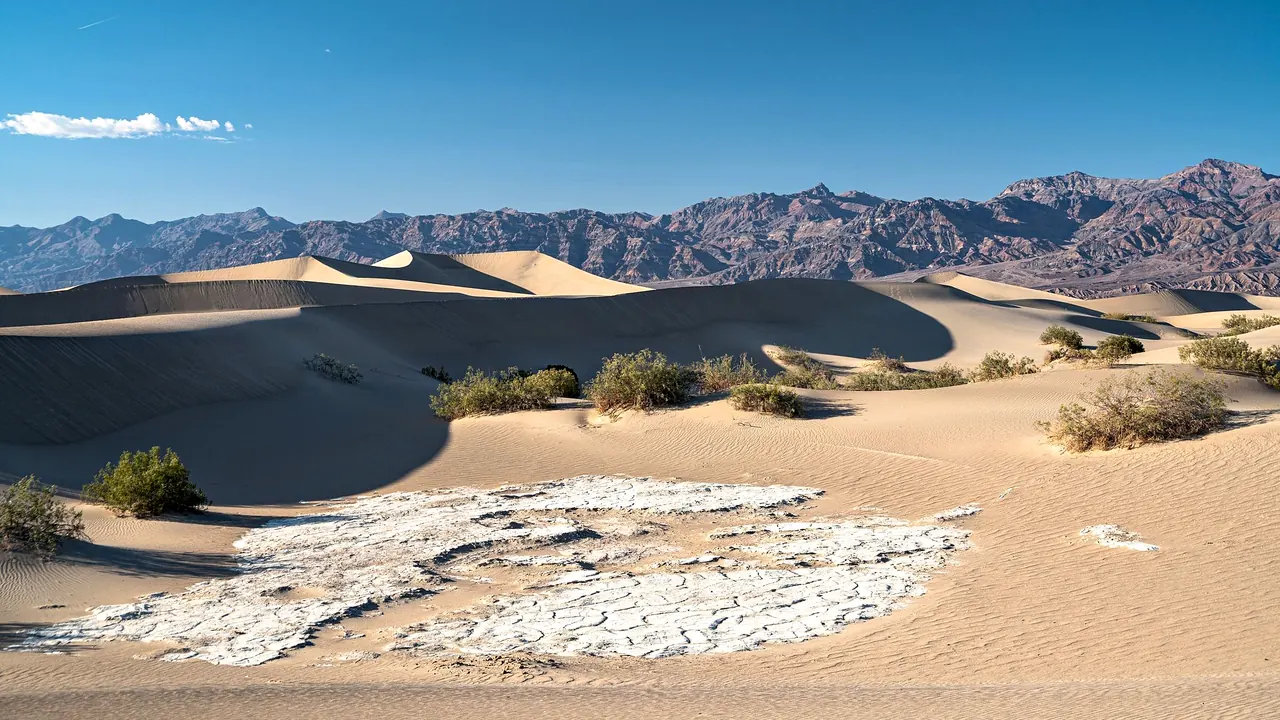
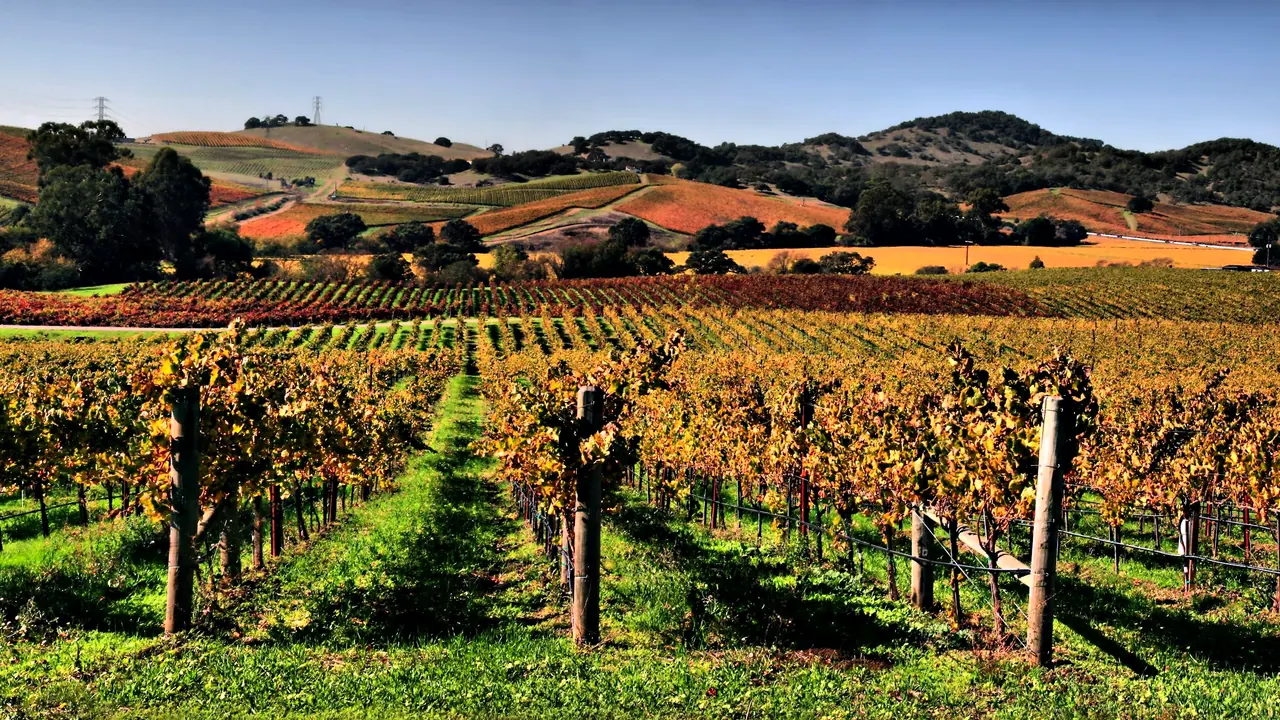
Photos: Death Valley by Anthony Brown, Pexels License; Napa Valley by Brocken Inaglory, CC BY-SA 3.0, cropped.
Death Valley or Napa Valley?
Our verdict in twelve categories, each scored against the same fixed benchmark cities, and the climate month by month, so you can choose for your trip.
Choose Death Valley for
- nature and the outdoors
- prices
Death Valley is for travellers who want raw landscape above everything else: salt flats below sea level, dunes, badlands and canyons, with a dark sky full of stars at night. It suits a self-sufficient road trip in the cool months, with a car, a cool box and a tolerance for long drives. You give up almost every comfort of a town, but nothing in Napa comes close to the scenery.
Choose Napa Valley for
- food and drink
- day trips
- shopping
Napa Valley rewards people who travel to eat, drink and unwind. Cellar-door tastings, the fine dining of Yountville and the mud baths and mineral pools of Calistoga make it a natural choice for couples and for celebrations, with San Francisco close enough for a day out. Bring a generous budget, and accept gentle farmland instead of wilderness.
Scoreboard
Twelve categories on one fixed scale from 0 to 100. The shaded stretch is the gap between the two.
Your match
Pick a travel style or drag the sliders, and both match scores follow your weighting.
Wins on nature and the outdoors and prices with your weighting.
Wins on food and drink and day trips with your weighting.
What matters to you?
Category by category
What the scores mean for a trip.
Beaches & swimming
Neither valley is a place to swim, but Napa at least has open water. In summer Lake Berryessa, over the eastern hills, warms up for swimming or paddling from its coves, while the Pacific near Bodega Bay is too cold to bathe in.
Death Valley has no lake, river or sea at all. Its swimming comes down to the spring-fed pools at the Furnace Creek resort, which work well at the end of a hot day's driving but are not a reason to come.
Food & drink
This is the widest gap between the two. In Death Valley, food is a matter of supplies: lodge dining rooms at Furnace Creek and Stovepipe Wells, general stores, diners in Beatty and Shoshone, and date shakes from the farm near Tecopa. Most visitors fill a cool box before they drive in.
In Napa, food and wine are the reason for the trip. You can taste Cabernet at estates and small hillside cellars, sit down to a serious dinner in Yountville, eat at farm-led bistros in St. Helena and Calistoga, or graze on oysters and cheese at Oxbow Public Market. The only thing missing is cheap everyday eating.
Culture & sights
Both have modest heritage that serves as background, with Napa slightly ahead. Death Valley's story is mining and survival, seen in the Harmony Borax Works ruins, the beehive charcoal kilns at Wildrose and the Timbisha Shoshone history told at the Furnace Creek visitor centre.
Napa's history is in stone and timber: nineteenth-century wine cellars, the Greystone building in St. Helena, Victorian frontages in downtown Napa and the 1840s Bale Grist Mill. It is a gentler, more architectural kind of history. Anyone wanting major museums goes to San Francisco.
Nightlife
Napa has a little evening life and Death Valley has essentially none. Downtown Napa's riverfront and First Street have wine bars, taprooms and cocktail bars, though they wind down well before midnight, and the towns further up the valley go quiet after dinner.
In Death Valley, the saloons at Stovepipe Wells and Furnace Creek pour a beer and then empty. The real evening there is the sky, dark enough on a moonless winter night for the Milky Way to cast shadows.
Nature & outdoors
Death Valley is one of the world's great deserts, and here it leaves Napa far behind. In one park you get the salt polygons of Badwater, the golden badlands at Zabriskie Point, Artist's Palette, the Ubehebe crater and the remote Racetrack, with Telescope Peak rising more than 3,000m above the valley floor. It is wild country, best hiked in winter and often reached on rough dirt roads.
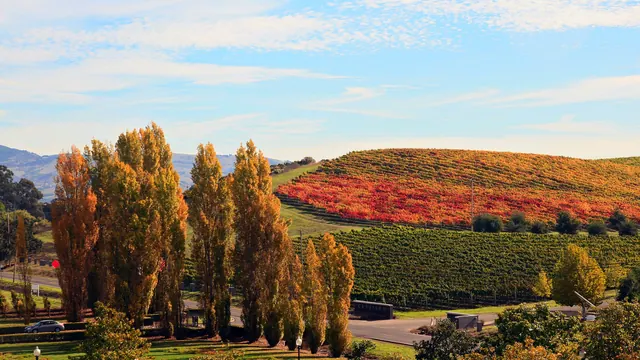
Napa is farmed and gentle: vineyards between oak-covered ranges, a dawn balloon flight, cycling on the Silverado Trail, redwoods in Bothe-Napa Valley State Park. It is lovely to look at in autumn colour, but it is a pastoral landscape, not a dramatic one.
Day trips
Napa makes the far better base for outings. San Francisco is about an hour and a half away, partly by ferry from Vallejo if you like. Sonoma's plaza and mission, Healdsburg and the Russian River, Berkeley and Sausalito are all within easy reach, even if many of these trips are yet more wine country.
From Death Valley the options are few and far apart: the ghost town of Rhyolite near Beatty, the hot springs at Tecopa, and Lone Pine and Manzanar about two hours west. Most days are spent inside the park.
Good for families
Neither suits young children well, but they fall short in different ways. Death Valley can thrill adventurous older children with dune slides, the Badwater salt and the Junior Ranger programme, but only in winter, because the heat at other times is a real danger.
Napa is built around tastings and long dinners, so children are tolerated rather than welcomed. Calistoga's geyser and petrified forest, warm resort pools and the wildlife park in Vallejo can fill a short stay.
Getting around
Both need a car, but the distances are very different. Napa is compact, about 50km from end to end, and its main challenge is the drinking, so many visitors hire a driver, join a tour or cycle the valley floor.
Death Valley is vast, with an hour or more between areas, few fuel stations, and its best back country on dirt tracks that need a high-clearance vehicle. Las Vegas, the nearest major airport, is about two hours from Furnace Creek.
Shopping & style
Napa is the place to shop. The shopping centres on wine bought at the cellar door and shipped home, with St. Helena's Main Street boutiques, local olive oil and cheese at the public market and an outlet centre on the edge of town.
Death Valley offers maps, books, borax souvenirs and Tecopa dates, and little else. Buy what you need in Las Vegas or Pahrump on the way in.
Affordability
Neither is cheap, but Death Valley gives you far more ways to save. Its lodges and fuel cost remote-resort prices, yet camping in the park with your own food makes a low-cost trip entirely possible.
Napa is among the most expensive places to travel in the country, with inns priced for special occasions, tasting fees that mount up and costly dinners. Staying in Napa town and picnicking help, but it remains a splurge.
Live music & performing arts
Napa has a real if seasonal calendar: a large rock and pop festival at the Expo grounds in late spring, summer classical and jazz concerts at wineries and in Yountville, and touring shows at the restored opera house and Art Deco theatre in downtown Napa.
Death Valley's single stage is the Amargosa Opera House at Death Valley Junction, a small adobe theatre with a painted audience on its walls. Most visitors stop to see the building rather than a show.
Wellness & relaxation
Napa is the more complete place to relax. Calistoga was founded on its hot springs and still offers volcanic-ash mud baths and geothermal pools, and resorts across the valley add full spas among the vines, all at an unhurried pace.
Death Valley's calm is more austere: the warm spring-fed pools and spa at Furnace Creek, the rustic soaking pools of Tecopa under the stars, and deep desert silence in the cool months. The long drives, though, make a stay busier than it sounds.
When should you go?
Pick your month. The climate figures are measured averages, not a forecast.
Death Valley in July
Napa Valley in July
Daytime high, °C
Rainfall in the month, mm
Where the figures come from
Death Valley has no weather station within reach, so its figures come from a gridded climate model rather than a measured record, and read a broad area rather than one spot.
Napa Valley has no rain gauge within 25 km of the centre, so its rainfall comes from a gridded climate dataset read at the destination rather than from a gauge further away.
Napa Valley's sunshine is measured 76 km from the centre, at Sacramento Executive Airport.
Temperature and rainfall are climate normals, averaged over the years shown. Death Valley: 1991-2020 normals, TerraClimate 4 km grid at the town, no weather station within 90 km. Napa Valley: 1991-2020 (sunshine 1981-2010) normals, Napa / Middleton (21.9 km from centre).
The two valleys peak at opposite ends of the year. Death Valley is a winter destination. From November to March, daytime highs around the main visitor area run from about 19°C to the mid-twenties, which is ideal for hiking the canyons and dunes, and rain is almost unknown. From May the heat builds fast, and by July highs reach 46°C, too hot to walk anywhere after mid-morning. Spring and late autumn are the sensible edges of the season.
Napa is at its best from late spring to autumn. From June to September the valley floor sits at about 26°C, nearly rainless and with long, sunny days, and the harvest months of September and October are the classic time to visit. Winter is the wet season, with about 141mm falling in January, and it is cooler and greyer, though the mustard flowers in the vineyards brighten late winter. If your dates fall between November and March, Death Valley has the better weather. For summer, Napa is the only comfortable choice.
Which traveller are you?
On an outdoors trip, Death Valley wins outright. Badwater's salt crust, the Mesquite Flat dunes, Mosaic Canyon and the snowy flanks of Telescope Peak are on another scale from Napa's vineyard rides and gentle hikes on Mount St. Helena.
For a food and nightlife trip, Napa Valley is the clear pick, though more for the food and wine than for late nights. Tastings from Highway 29 to Spring Mountain, Yountville's fine dining and Oxbow Public Market beat Death Valley's lodge dining rooms and saloons by far.
On a trip on a tight budget, Death Valley is the more manageable of two pricey places. Camping in the park with your own food keeps costs down. Napa has no real equivalent, because its rooms, tastings and dinners all stay expensive even with careful planning.
Before you go
| Measure | Death Valley | Napa Valley |
|---|---|---|
| Currency | US Dollar (USD) | US Dollar (USD) |
| Sockets | AB120 V, 60 Hz | AB120 V, 60 Hz |
| Driving side | Right | Right |
| Time zone | UTC-8, UTC-7 in summer | UTC-8, UTC-7 in summer |
| Emergency number | 911 | 911 |
| Main airport | Harry Reid International Airport (LAS)160 non-stop destinations | San Francisco International Airport (SFO)143 non-stop destinations |
| Public holidays this year | 13 days | 13 days |
Where else could you go?
Every comparison below shares a destination with this one, so you can follow Death Valley or Napa Valley somewhere new.
- Sonomavs Napa Valley
- Sequoiavs Death Valley
- Kings Canyonvs Death Valley
- Lake Tahoevs Napa Valley
- Big Survs Napa Valley
- Yosemitevs Napa Valley