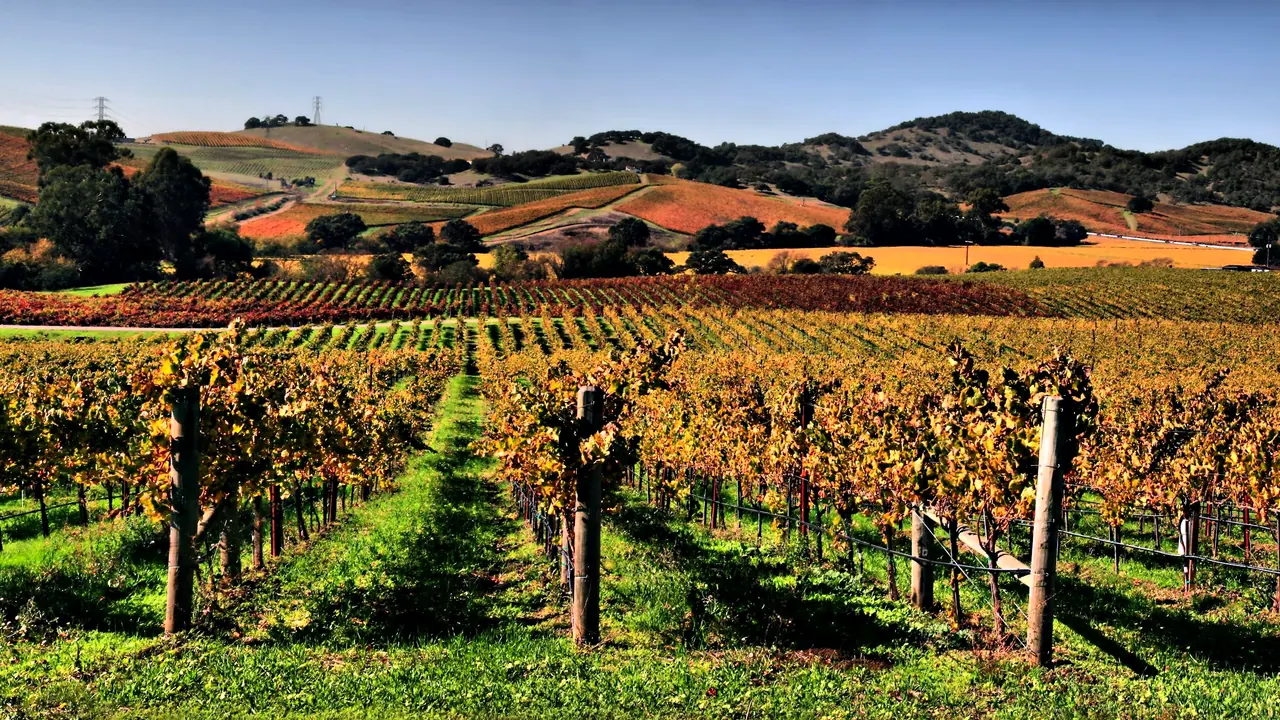
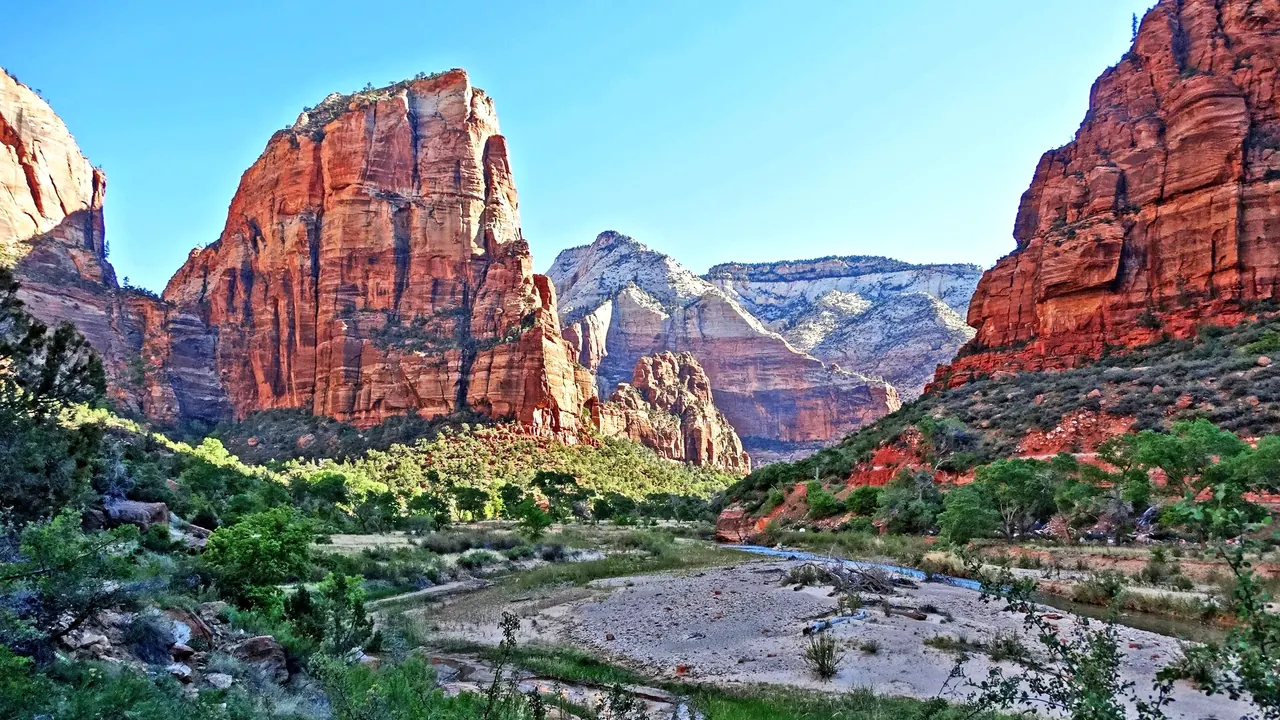
Photos: Napa Valley by Brocken Inaglory, CC BY-SA 3.0, cropped; Zion by inkknife_2000 (7.5 million views +), CC BY-SA 2.0, cropped.
Napa Valley or Zion?
Our verdict in twelve categories, each scored against the same fixed benchmark cities, and the climate month by month, so you can choose for your trip.
Choose Napa Valley for
- food and drink
- day trips
- wellness
Napa Valley is for a slow, indulgent trip built around the table and the glass. Days go on tastings along Highway 29 and the Silverado Trail, long dinners in Yountville and an afternoon soaking in Calistoga's mud baths and mineral pools. San Francisco and Sonoma are within easy reach when you want a change. It suits couples and food lovers who are happy to pay for comfort and don't need much in the way of adventure.
Choose Zion for
- nature and the outdoors
- prices
- families
Zion is the place for people who want the landscape to do the work. Its sandstone canyons, the Narrows and Angels Landing draw hikers from around the world, and the free shuttle makes the main canyon easy to explore. Families with children who like being outdoors will also find it a better fit. Meals and evenings are simple, but once you're there it costs far less, and the reward is early starts, hard walking and dark, starry skies.
Scoreboard
Twelve categories on one fixed scale from 0 to 100. The shaded stretch is the gap between the two.
Your match
Pick a travel style or drag the sliders, and both match scores follow your weighting.
Wins on food and drink and day trips with your weighting.
Wins on nature and the outdoors and prices with your weighting.
What matters to you?
Category by category
What the scores mean for a trip.
Beaches & swimming
Neither place is for swimming, and in both the reliable dip is the hotel pool. Zion has a slightly easier time of it. Sand Hollow, half an hour away near Hurricane, has red-sand shores and water warm enough from June to September, and you can paddle in the Virgin River on a hot day, even though it runs cold.
From Napa Valley, the summer swim is at Lake Berryessa, over the eastern hills, which has coves and day-use areas. The Sonoma coast is a fine drive, but the Pacific there is far too cold and rough for bathing.
Food & drink
This is where the two differ most. Napa Valley exists for eating and drinking. It has hundreds of wineries, from grand estates to appointment-only cellars on Howell Mountain and Spring Mountain, Yountville's remarkable concentration of serious kitchens, and Oxbow Public Market for a more casual meal. The only thing missing is cheap, everyday food.
At Zion, food is fuel for the trail: burgers, pizza and Southwestern plates on Springdale's main road, plus chains in St. George. Utah's liquor rules keep drinking low-key, and many visitors simply buy supplies at a supermarket.
Culture & sights
Neither is a culture destination, and in both the history is a modest backdrop. The difference is in what kind of history. In Napa it is in the buildings: nineteenth-century stone cellars, the Greystone cellars in St. Helena, the Bale Grist Mill and downtown Napa's Victorian riverfront.
Zion's story is pioneer and Paiute history in the wild. It covers the Human History Museum, rock-art panels, the 1930 tunnel cut through the cliff, the adobe ghost town of Grafton and the Mormon temple and dinosaur tracks of St. George.
Nightlife
Both go quiet early, but Napa Valley at least gives you somewhere to go after dinner. Downtown Napa's First Street and riverfront have wine bars, taprooms and cocktail bars, though even these wind down well before midnight. In Springdale, a drink means a brewpub patio. Zion's real evening entertainment is the night sky, which is very dark and full of stars.
Nature & outdoors
Zion wins this clearly. Sandstone walls rise up to 600m above the Virgin River, and the hikes are known worldwide, from the Narrows to Angels Landing and Observation Point. Beyond the main canyon there are slot canyons for canyoneering and the quieter Kolob Canyons, and Bryce is about two hours away.
Napa's countryside is farmed and gentle. You float over the vines in a hot-air balloon at dawn, cycle the Silverado Trail, or climb Mount St. Helena for the views. It is lovely when the vines turn gold or the mustard is in flower, but it is never wild.
Day trips
Napa Valley has far more within reach. San Francisco is about an hour and a half away by road or partly by ferry from Vallejo. Sonoma's plaza and mission are just over the hills, and Berkeley, Sausalito and old Sacramento are all easy outings, even if many other trips lead to yet another wine valley.
From Zion, the worthwhile trips are other parks rather than towns. For history there are Cedar City, Kanab's Western film heritage and the Pipe Spring ranch fort, while Las Vegas is too far for a comfortable day.
Good for families
Zion is much the better place to bring children, as long as they enjoy being outdoors. The Pa'rus Trail is flat enough to cycle, the Riverside Walk ends with a paddle in the river, and there are ranger programmes too. You just need to avoid the cliff-edge routes and midsummer middays.
Napa Valley is built around adults, with tasting rooms, long dinners and couples' resorts. Calistoga's small geyser, the warm pools at the hot springs and the park in Vallejo will fill a few days, but most families treat the valley as a short stop.
Getting around
You need a car for most things in both places. Zion is easier in its core, because in the busy months a free shuttle runs the length of the scenic drive and another links Springdale's hotels to the gate, so you can leave the car parked for days.
Napa Valley is compact, about 50km from end to end, but its buses are too infrequent to plan around, and since the day revolves around wine, someone still has to drive. Many visitors hire a driver, join a tour or cycle the flat valley floor.
Shopping & style
Napa Valley gives you more to take home. Many cellar doors sell bottles you won't find in shops elsewhere, and they will often ship them home by the case. St. Helena's Main Street has polished homeware and kitchen boutiques, the public market in Napa sells local olive oil and preserves, and there is an outlet centre on the edge of town.
Shopping at Zion is mostly practical. Springdale's outfitters rent canyoneering gear and dry suits for the Narrows, and a few galleries sell landscape photography and Native American pottery and jewellery. St. George adds ordinary malls and outlets, but nobody goes there to shop.
Affordability
Napa Valley is a splurge however you plan it. Up-valley inns are priced for special occasions, tasting fees pile up over a day, and the famous dinners are costly. Staying in Napa town and picnicking from the delis softens the cost but doesn't change it.
Zion is expensive only at the gate. Springdale's lodges are in demand from spring to autumn, but park entry covers several days, the shuttles are free and hiking costs nothing. Staying in Hurricane or St. George, or coming in winter, brings costs down a good deal.
Live music & performing arts
Both have more on stage than you might expect, and in both it comes in seasons. They differ in what they offer. Napa leans towards music. There is a big rock and pop festival each late spring, summer classical and jazz concerts at the wineries, and the restored opera house and Art Deco theatre in downtown Napa host acts all year.
Zion's strength is theatre. Tuacahn stages Broadway musicals outdoors against red cliffs near Ivins, and the Utah Shakespeare Festival in Cedar City runs a respected repertory season from summer into autumn.
Wellness & relaxation
Napa Valley is the clear choice for a restful stay. Calistoga was founded as a hot-springs resort, and you can still have volcanic-ash mud baths and soak in geothermal pools there. Resort spas are scattered among the vineyards, and the whole pace is slow, with long outdoor lunches and quiet roads.
Zion offers a different kind of calm: desert silence, sunsets on the canyon walls and a handful of spa resorts around Ivins that combine treatments with yoga and guided hikes. The park itself is busy and physically demanding, though.
When should you go?
Pick your month. The climate figures are measured averages, not a forecast.
Napa Valley in July
Zion in July
Daytime high, °C
Rainfall in the month, mm
Where the figures come from
Napa Valley has no rain gauge within 25 km of the centre, so its rainfall comes from a gridded climate dataset read at the destination rather than from a gauge further away.
Napa Valley's sunshine is measured 76 km from the centre, at Sacramento Executive Airport.
Zion's temperatures are measured 26 km from the centre, at Colorado City / Centennial Park.
Zion's station stands 298 m above the place it is measured for, so that place is likely a little warmer than the figures say.
Zion has no rain gauge within 25 km of the centre, so its rainfall comes from a gridded climate dataset read at the destination rather than from a gauge further away.
Temperature and rainfall are climate normals, averaged over the years shown. Napa Valley: 1991-2020 (sunshine 1981-2010) normals, Napa / Middleton (21.9 km from centre). Zion: 2014-2025 (rainfall 1991-2020) normals, Colorado City / Centennial Park (25.5 km from centre).
Napa Valley has a wet season and a dry one. Rain falls from November to March and is heaviest in winter, around 141mm in January, when the days are cool. From June to September it is almost completely dry, with highs near 26°C and long, sunny days, good weather for cycling between wineries and eating lunch outside. Autumn is the most appealing season, warm and dry while the vines change colour. Late winter brings mustard flowers between the rows, but rain as well.
Zion follows a different pattern. Summer is the hard season. July reaches about 36°C, exposed trails are punishing by midday, and late-summer storms bring a risk of flash floods in the canyons. Spring and autumn, roughly April to May and late September to October, are the best times to hike, warm without being draining. Winter is cold and the canyons are quieter, but January and February are among the wettest months, with February the wettest at about 44mm, though that is still far less rain than a Napa winter. In short, Napa is at its best from early summer to autumn, while Zion is best either side of its summer heat.
Which traveller are you?
On a food and nightlife trip, choose Napa Valley without hesitation. It has world-famous Cabernet, Yountville's fine dining and the oysters and wine bars of downtown Napa. Evenings end early in both places, but Zion's simple meals and strict liquor rules leave even less to enjoy.
For an outdoors trip, Zion is in another league. You can wade the Narrows, climb Angels Landing, explore the emptier Kolob Canyons or go canyoneering through slot canyons. Napa's balloon flights and vineyard cycling are pleasant, but they are gentle by comparison.
On a relaxing and wellness trip, Napa Valley is the stronger choice. Calistoga's long hot-springs tradition offers mud baths and geothermal pools, and many resort spas are set among the vines. Zion has a few good spa resorts near Ivins, but there is no bathing culture and the park itself is busy and demanding.
Before you go
| Measure | Napa Valley | Zion |
|---|---|---|
| Currency | US Dollar (USD) | US Dollar (USD) |
| Sockets | AB120 V, 60 Hz | AB120 V, 60 Hz |
| Driving side | Right | Right |
| Time zone | UTC-8, UTC-7 in summer | UTC-7, UTC-6 in summer |
| Emergency number | 911 | 911 |
| Main airport | San Francisco International Airport (SFO)143 non-stop destinations | Harry Reid International Airport (LAS)160 non-stop destinations |
| Public holidays this year | 13 days | 12 days |
Where else could you go?
Every comparison below shares a destination with this one, so you can follow Napa Valley or Zion somewhere new.
- Sonomavs Napa Valley
- Bryce Canyonvs Zion
- Grand Canyonvs Zion
- Lake Tahoevs Napa Valley
- Big Survs Napa Valley
- Yosemitevs Napa Valley