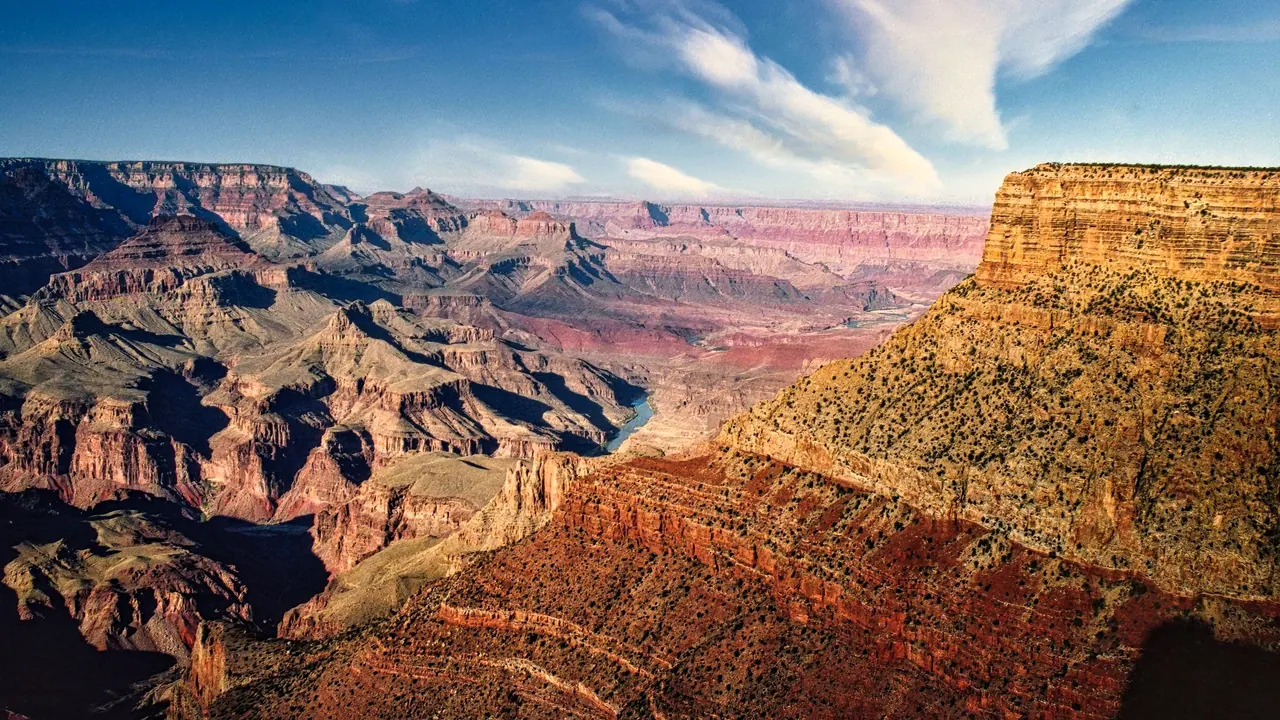
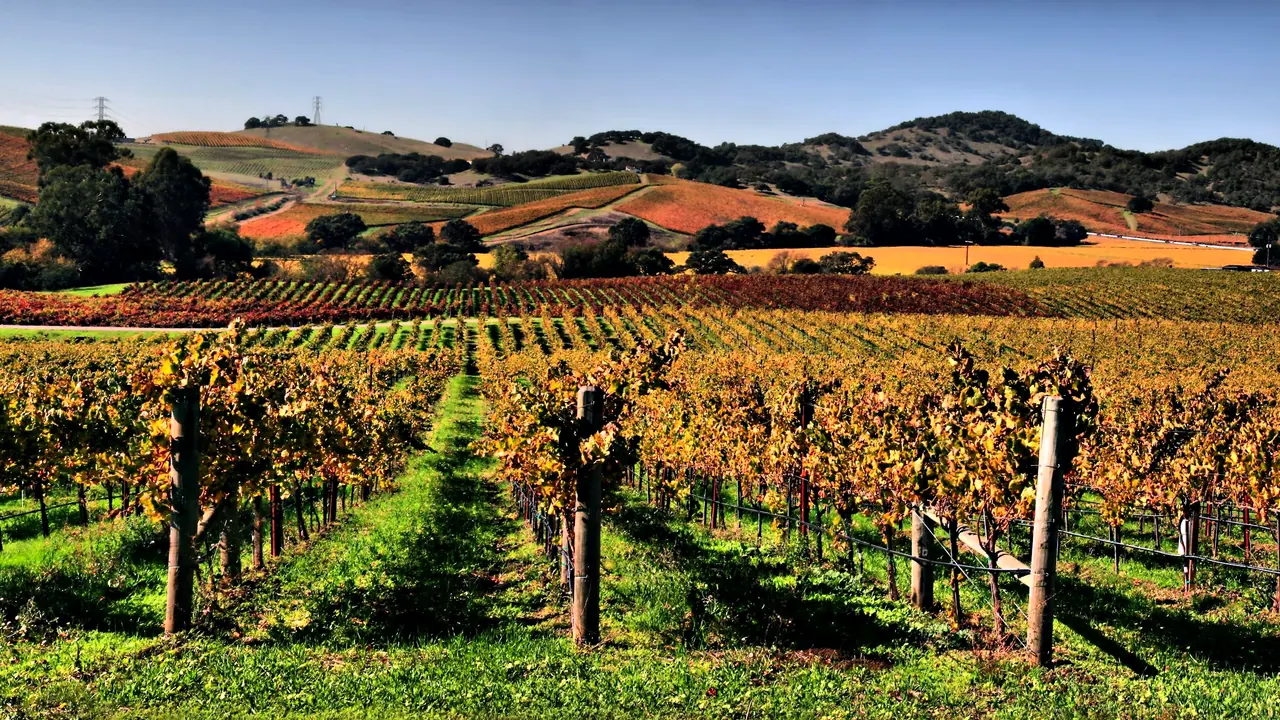
Photos: Grand Canyon by Tom Fisk, Pexels License; Napa Valley by Brocken Inaglory, CC BY-SA 3.0, cropped.
Grand Canyon or Napa Valley?
Our verdict in twelve categories, each scored against the same fixed benchmark cities, and the climate month by month, so you can choose for your trip.
Choose Grand Canyon for
- nature and the outdoors
- prices
- families
Grand Canyon is the pick for travellers who want landscape above everything else. A mile-deep gorge, trails that drop to the Colorado, rafting, mule rides and some of the darkest night skies in the country make it an active, early-to-bed trip. It also works better for school-age children and for anyone watching costs, provided they sleep in Williams, Flagstaff or a campground rather than on the rim.
Choose Napa Valley for
- food and drink
- wellness
- day trips
Napa Valley suits adults who travel to eat, drink and slow down. Cellar doors, Yountville's fine dining and the mud baths and mineral pools of Calistoga make the trip about long lunches and soft afternoons, with San Francisco close enough for a day out. It is a splurge, and the scenery is pleasant farmland rather than anything dramatic.
Scoreboard
Twelve categories on one fixed scale from 0 to 100. The shaded stretch is the gap between the two.
Your match
Pick a travel style or drag the sliders, and both match scores follow your weighting.
Wins on nature and the outdoors and prices with your weighting.
Wins on food and drink and wellness with your weighting.
What matters to you?
Category by category
What the scores mean for a trip.
Beaches & swimming
Neither is a place to swim, and both leave most visitors with a hotel pool. The difference lies in the nearest real water. Grand Canyon has Lake Powell's sandy coves at Page, several hours from the South Rim, and a cold river dip on rafting trips. Napa has Lake Berryessa just over the eastern hills, which is easier to fit into a day, and a cold Pacific that is good for looking at but not for bathing.
Food & drink
Here the valley is in another league. Napa's whole trip is built around eating and drinking: Cabernet from estates and hillside cellars, Yountville's run of fine-dining kitchens, farm-driven bistros up-valley and the public market in town. The only gap is cheap everyday food.
At the canyon, meals are fuel. The El Tovar dining room has atmosphere, but the rest is cafeterias and Tusayan chains. Flagstaff's breweries and green chile are the best you will get, an hour and a half away.
Culture & sights
Grand Canyon has the edge, though neither is a cultural destination. Mary Colter's Desert View Watchtower, Hopi House, the railway-era village and the Tusayan ruin give the rim a real sense of place. Flagstaff adds the Museum of Northern Arizona's Native art and Lowell Observatory, where Pluto was found.
Napa's heritage is mostly about wine: stone cellars, the Greystone building, a restored 1840s grist mill and Victorian streets in downtown Napa. It is pleasant background, and anyone who wants serious museums heads to San Francisco.
Nightlife
Both go quiet early, for different reasons. At the canyon, people are hiking at dawn and the night belongs to the stars. Flagstaff's brewpubs and student bars are too far to reach and still make a sunrise start. In Napa, dinner is the evening. Downtown Napa's riverside wine bars and cocktail bars are the only going out, and they wind down well before midnight.
Nature & outdoors
This is the canyon's reason to exist. Nearly two billion years of rock fall away a mile below the rim, the colours change through the day, condors circle overhead, and you can walk the rim, descend towards the Colorado, raft the rapids or cross from rim to rim.
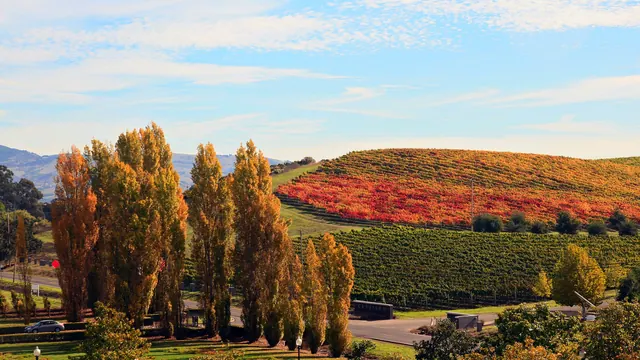
Napa's countryside is gentle by comparison. It means vineyards between oak-covered ranges, gold in autumn and yellow with mustard in late winter, seen from a balloon or a bike. Mount St. Helena and the redwoods of Bothe-Napa Valley give a decent walk, but nothing on the canyon's scale.
Day trips
Napa has the better choice of outings, chiefly because San Francisco is within reach, with Berkeley, Sausalito and Sacramento's old riverfront also close. Sonoma's plaza and mission and the Healdsburg valleys round it out, though many of these trips are more wine country.
From the canyon, distances are long and the destinations are mostly scenery: red-rock Sedona and hillside Jerome, the cliff dwellings at Walnut Canyon and Montezuma Castle, and Antelope Canyon out past Page. They are rewarding, but a day out often means a long drive.
Good for families
Grand Canyon works better with children, as long as they are old enough to walk well. Junior Ranger badges, ranger talks, the vintage train from Williams and that first view over the edge make a strong trip. Unfenced drops, altitude and the heat on the descent trails need care.
Napa is built for adults. Children have Calistoga's small geyser and petrified forest, creekside trails and warm resort pools, plus the park in Vallejo, but tasting rooms and long dinners set the pace. Most families treat it as a short stop.
Getting around
Both depend on a car, but the canyon gives you more time without one. Free shuttles loop the village and run along Hermit Road, the Rim Trail links viewpoints on foot, and the train from Williams avoids the drive altogether. The catch is that the North Rim is hours away by road.
Napa is compact, about 50km end to end, but local buses are too sparse to plan around and only a few downtowns are walkable. Because the day involves wine, many visitors pay for a driver or a tour, or cycle the flat valley floor.
Shopping & style
Napa offers a little more to buy, mostly wine from the cellar door that you will not find at home, shipped by the case. There are also St. Helena's homeware boutiques, local olive oil and cheese, and an outlet centre on the edge of town.
The canyon's one real draw is Native American craft. Navajo rugs and silver, Hopi kachina carvings and pottery are sold at Hopi House and the trading posts around Cameron. Beyond that it is gift shops and Route 66 souvenirs.
Affordability
Neither is cheap, but the canyon is far easier on a careful budget. Once you have paid the entrance fee, the rim walks, shuttles and ranger programmes cost nothing more. Motels in Williams and Flagstaff and the park campgrounds undercut the rim lodges. The big costs are optional extras such as rafting and helicopter flights.
Napa has no equivalent way to economise. Inns, tasting fees and well-known dinners all cost a lot. Staying in Napa town and picnicking from the delis helps, but a few days here remain a splurge.
Live music & performing arts
Napa has the fuller calendar. A big rock and pop festival comes to the Expo grounds each late spring, and summer brings jazz, classical and opera at wineries and in Yountville. Downtown Napa's restored opera house and Art Deco theatre book shows all year.
The canyon's live music is occasional: a late-summer chamber festival on the South Rim, Native American dancers in the warm months, and Flagstaff's small orchestra and historic theatre if you make the drive.
Wellness & relaxation
Napa Valley is the place to unwind. Calistoga grew up as a hot-springs town, and its volcanic-ash mud baths and geothermal pools are still the centre of a stay. Resort spas run down the valley, and the slow days of long outdoor lunches do as much as any treatment.
The canyon has no springs and almost no spa. Its calm comes from a quiet viewpoint at dawn or the slower North Rim. Anyone who wants treatments or yoga has to drive two hours south to Sedona.
When should you go?
Pick your month. The climate figures are measured averages, not a forecast.
Grand Canyon in July
Napa Valley in July
Daytime high, °C
Rainfall in the month, mm
Where the figures come from
Napa Valley has no rain gauge within 25 km of the centre, so its rainfall comes from a gridded climate dataset read at the destination rather than from a gauge further away.
Napa Valley's sunshine is measured 76 km from the centre, at Sacramento Executive Airport.
Temperature and rainfall are climate normals, averaged over the years shown. Grand Canyon: 1991-2020 normals, Grand Canyon Park (1 km from centre). Napa Valley: 1991-2020 (sunshine 1981-2010) normals, Napa / Middleton (21.9 km from centre).
The two run on almost opposite calendars. Grand Canyon is dry all year and its seasons are set by temperature. Winter is cold, with highs around 7°C in January. Midsummer reaches 36°C, which is dangerous for hiking below the rim. That makes April, May, late September and October the best months for walking, with rain light throughout and slightly heavier in late summer and October.
Napa Valley's problem is rain, not heat. Winter is wet, with about 141mm in January and similar totals through December and February. From May to October it is almost rainless and sunny, with highs that stay steady around 26°C, which is comfortable for cycling between wineries. Neither place has beach weather in the usual sense, but Napa's summer is much easier to be outdoors in, and Grand Canyon's spring and autumn are its sweet spot.
Which traveller are you?
On an outdoors trip, Grand Canyon wins easily. The Rim Trail, the steep Bright Angel and South Kaibab descents, rafting on the Colorado and the forested North Rim offer far more than Napa's balloon flights, vineyard cycling and climb up Mount St. Helena.
For a food and nightlife trip, Napa Valley is the clear choice, even though neither place stays up late. Tasting rooms, Yountville's dinners and downtown Napa's wine bars fill the evening, while the canyon offers lodge dining rooms and a lounge that closes early.
On a relaxing and wellness trip, choose Napa Valley. Calistoga's mud baths and geothermal pools, resort spas among the vines and unhurried days do the work. At the canyon, rest means stillness at a viewpoint and early nights, and the treatments are two hours away in Sedona.
Before you go
| Measure | Grand Canyon | Napa Valley |
|---|---|---|
| Currency | US Dollar (USD) | US Dollar (USD) |
| Sockets | AB120 V, 60 Hz | AB120 V, 60 Hz |
| Driving side | Right | Right |
| Time zone | UTC-7 | UTC-8, UTC-7 in summer |
| Emergency number | 911 | 911 |
| Main airport | Phoenix Sky Harbor International Airport (PHX)149 non-stop destinations | San Francisco International Airport (SFO)143 non-stop destinations |
| Public holidays this year | 12 days | 13 days |
Where else could you go?
Every comparison below shares a destination with this one, so you can follow Grand Canyon or Napa Valley somewhere new.
- Sonomavs Napa Valley
- Sedonavs Grand Canyon
- Zionvs Grand Canyon
- Bryce Canyonvs Grand Canyon
- Lake Tahoevs Napa Valley
- Big Survs Napa Valley