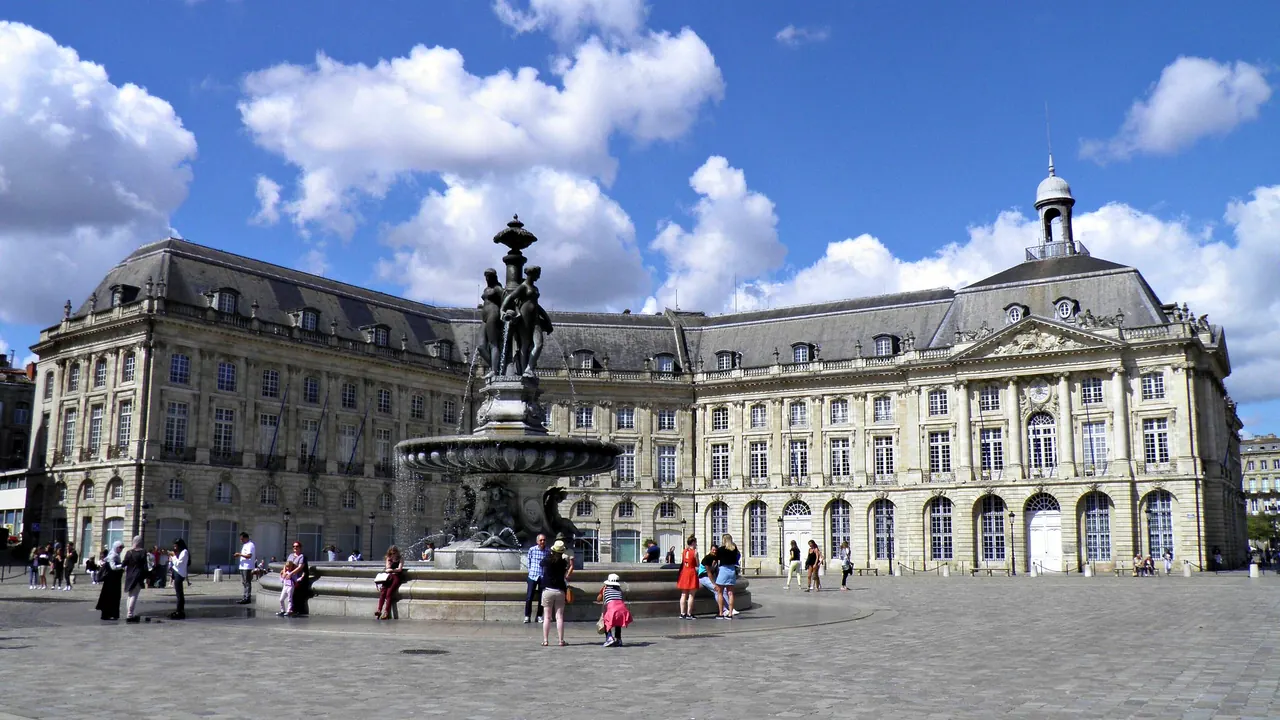
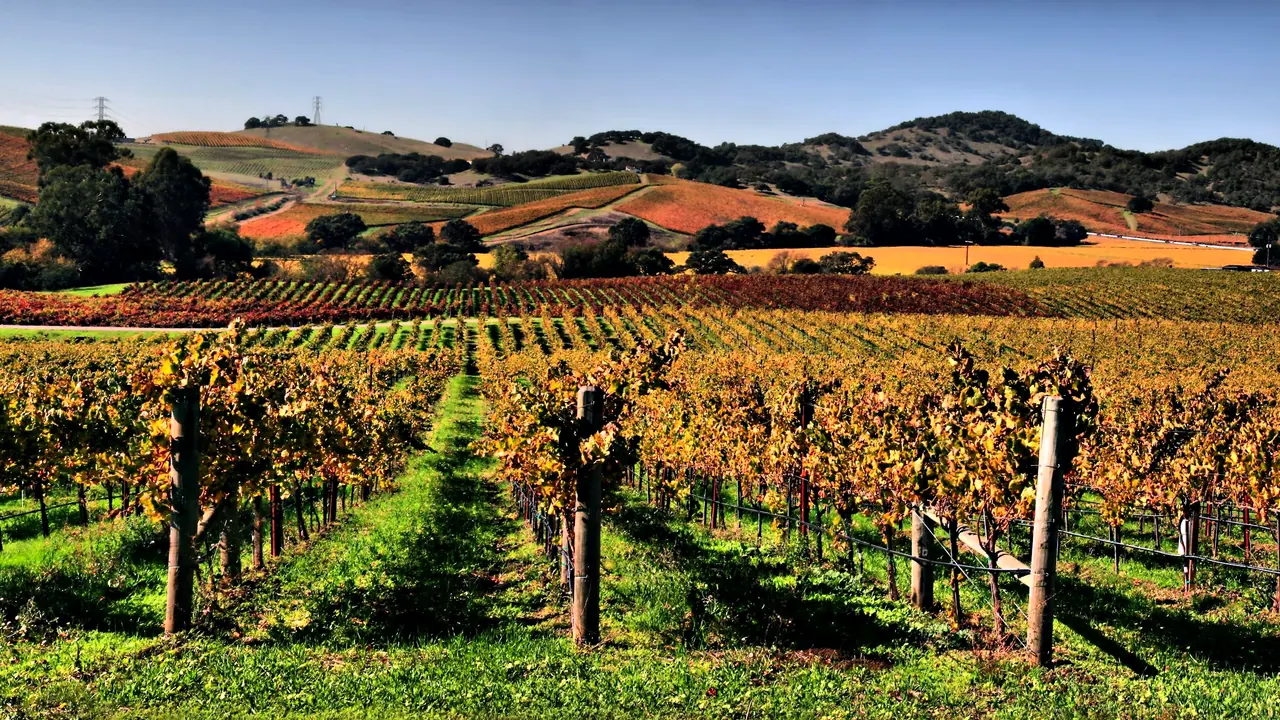
Photos: Bordeaux by Gzen92, CC BY-SA 4.0, cropped; Napa Valley by Brocken Inaglory, CC BY-SA 3.0, cropped.
Bordeaux or Napa Valley?
Our verdict in twelve categories, each scored against the same fixed benchmark cities, and the climate month by month, so you can choose for your trip.
Choose Bordeaux for
- culture and sights
- getting around
- nightlife
Bordeaux suits travellers who want wine as one part of a fuller trip. You get a classical city to walk, trams in place of a hire car, a proper opera house, evenings that run on into bars, and Saint-Émilion or the Atlantic coast within an hour. It is also much the cheaper of the two and the easier with children.
Choose Napa Valley for
- wellness
- food and drink
Choose Napa Valley when the trip is about the glass, the table and very little else. Its tasting rooms, Yountville's fine dining and Calistoga's mud baths and mineral pools make it a place for a few slow, indulgent days, ideally as a couple with a driver booked. In return, expect to spend heavily, to rely on a car and to be in bed early.
Scoreboard
Twelve categories on one fixed scale from 0 to 100. The shaded stretch is the gap between the two.
Your match
Pick a travel style or drag the sliders, and both match scores follow your weighting.
Wins on culture and sights and getting around with your weighting.
Wins on wellness and food and drink with your weighting.
What matters to you?
Category by category
What the scores mean for a trip.
Beaches & swimming
Neither is a beach destination, but Bordeaux at least has the Atlantic within an hour. There are long surf beaches at Lacanau and along the Médoc, and the Arcachon basin, reached by train, has calmer and warmer water that is good for swimming in July and August.
Napa Valley is inland, and its stretch of Pacific near Bodega Bay is a long drive away and too cold for bathing. A summer swim there means Lake Berryessa over the eastern hills or, more often, the hotel pool.
Food & drink
Both are built around wine and both eat well, but in different ways. Bordeaux has an everyday food culture: south-western cooking such as entrecôte grilled over vine cuttings and duck from the Landes, Arcachon oysters at the Marché des Capucins, canelés in every bakery, and set lunches in the brasseries of Saint-Pierre and Chartrons.
Napa Valley is a place for the special-occasion meal. Its Cabernet tasting rooms range from grand estates on Highway 29 to appointment-only cellars on Spring Mountain, and few places anywhere have as much fine dining in one small town as Yountville. What it lacks is the cheap, casual eating that Bordeaux takes for granted.
Culture & sights
Here the gap is wide. In Bordeaux the whole centre is the sight: the UNESCO-listed limestone city along the curve of the Garonne, the Place de la Bourse and its Miroir d'eau, the Grand Théâtre, Saint-André cathedral and the Grosse Cloche. The Musée d'Aquitaine and the CAPC fill the wet afternoons.
Napa Valley's culture is its winemaking past, which you see in 19th-century stone cellars, the restored Bale Grist Mill and the Victorian buildings of downtown Napa. It is pleasant between tastings, but anyone who wants major museums goes to San Francisco for the day.
Nightlife
Bordeaux has a real evening life: terraces fill the squares of Saint-Pierre, students gather around Place de la Victoire, and the clubs along the Quai de Paludate run until morning. In Napa Valley the night is dinner, perhaps a glass at a wine bar in downtown Napa, and then bed, and the up-valley towns go quiet once the restaurants close.
Nature & outdoors
Both are gentle, farmed landscapes rather than wild ones, and the difference lies at the edges. Bordeaux reaches the coast within an hour, where the Dune du Pilat, the tidal flats of the Arcachon basin and the Médoc surf give it more variety. Flat greenways also lead out through the vineyards of Entre-Deux-Mers.
Napa Valley has the hills that Bordeaux lacks: the climb up Mount St. Helena, the redwood groves of Bothe-Napa Valley State Park and a dawn balloon flight over the vines. It is better country for a walk, but it has no shoreline to match.
Day trips
Bordeaux has the richer and more varied choice of day trips, and the best of them are a short train ride away. Saint-Émilion, a medieval hill town with a church carved into the rock, is about forty minutes by rail, and Arcachon's seaside villas and oyster ports are about an hour away. The châteaux of the Médoc and the sweet-wine villages of Sauternes lie close by. Vauban's citadel at Blaye, the brandy houses of Cognac and, at a stretch, Biarritz on the Basque coast make for days out that go well beyond wine.
From Napa Valley the stand-out outing is San Francisco, about an hour and a half by road or partly by ferry from Vallejo. Sonoma's plaza and mission, Berkeley and Sausalito are also easy to reach. Beyond those, Healdsburg and the Russian River mostly mean another valley of vineyards with a pretty town at its centre.
Good for families
Bordeaux is the easier choice with children. Its flat, largely car-free centre is easy with a pushchair, the Miroir d'eau becomes a paddling pool on hot days, and the Jardin Public has a carousel and a puppet theatre. Climbing the Dune du Pilat or playing on Arcachon's calm beaches makes a memorable day out.
Napa Valley is designed for adults, with tasting rooms and resorts aimed at couples. Calistoga's geyser and petrified forest, the warm pools at the hot-springs resorts and the wildlife park in Vallejo fill a few days. Long hours in the car and hot afternoons, though, make it a short stop for most families.
Getting around
You do not need a car in Bordeaux. Its sights line the left bank from Chartrons to Saint-Michel, much of the centre is pedestrianised, trams reach the Cité du Vin and the main station, and trains run to Saint-Émilion and Arcachon. Only the estates of the Médoc and Sauternes call for a driver or a tour.
In Napa Valley, needing a car or driver is the rule rather than the exception. The valley is only about 50km long and easy to drive, but the buses are too infrequent to plan tastings around and only a few downtowns are walkable. Most visitors hire a driver, join a tour or cycle the Silverado Trail.
Shopping & style
In both places the best thing to take home is wine, and both will ship it. Bordeaux's cellars sell everything up to rare old vintages, while Napa estates sell bottles that never reach shops elsewhere.
Beyond wine, Bordeaux has far more choice: high-street chains on Rue Sainte-Catherine, luxury labels in the Triangle d'Or, antique dealers along Rue Notre-Dame and a Sunday market on the quays. Napa offers a few polished boutiques on St. Helena's Main Street, an outlet centre, and local olive oil and cheese.
Affordability
Neither is cheap, but Bordeaux is much easier on the wallet. Set lunches, inexpensive trams and a centre that costs nothing to explore help balance hotel rates and château tours.
Napa Valley is a splurge however carefully you plan it. Up-valley inns are priced for special occasions, tasting fees mount up across a day, and well-known dinners cost a great deal, before you add a driver or a tour. Staying in Napa town and picnicking help only a little.
Live music & performing arts
Bordeaux has the stronger stage, centred on the gilded Grand Théâtre of 1780, home to the city's opera and ballet companies. A national orchestra plays nearby, and a hall on the right bank programmes jazz and world music. The season pauses in high summer.
Napa Valley works the other way round: its calendar peaks in the warm months. There is a big rock and pop festival each late spring, summer concerts on winery lawns and in Yountville, and touring acts at downtown Napa's restored opera house and Art Deco theatre. It has no resident company of real reputation.
Wellness & relaxation
Napa Valley is the clear choice for unwinding. Calistoga grew up as a hot-springs resort, and its volcanic-ash mud baths and geothermal pools are the heart of a stay there. Yountville and the Silverado Trail add resort spas among the vines and olive trees.
Bordeaux has no bathing culture of its own. What it offers is vinotherapy at a few spa hotels in the vineyards outside the city, along with slow walks on the quays and shady benches in the Jardin Public. For real thermal waters you have to travel south to Dax.
When should you go?
Pick your month. The climate figures are measured averages, not a forecast.
Bordeaux in July
Napa Valley in July
Daytime high, °C
Rainfall in the month, mm
Where the figures come from
Napa Valley has no rain gauge within 25 km of the centre, so its rainfall comes from a gridded climate dataset read at the destination rather than from a gauge further away.
Napa Valley's sunshine is measured 76 km from the centre, at Sacramento Executive Airport.
Temperature and rainfall are climate normals, averaged over the years shown. Bordeaux: 1991-2020 normals, Bordeaux / Merignac (9.5 km from centre). Napa Valley: 1991-2020 (sunshine 1981-2010) normals, Napa / Middleton (21.9 km from centre).
Bordeaux is warmest in July and August, with highs around 28°C. That is the only stretch when the Atlantic beaches an hour away are for swimming. Late spring and September are the most pleasant months for walking the stone streets, warm without being heavy. Rain falls in every month, and it is heaviest in November and December at around 114mm, when short, grey days make it a city for museums and long lunches.
Napa Valley, measured on the valley floor, splits more cleanly into seasons. From May to October it is almost rainless and far sunnier than Bordeaux, with summer highs steady around 26°C, which is good weather for tasting days, cycling and the lake. Winter is the wet season, with about 141mm in January, but it stays milder than a Bordeaux winter, and in late winter the mustard flowers bring colour to the vineyards.
Which traveller are you?
On a culture and arts trip, Bordeaux is the clear pick. Its UNESCO-listed 18th-century centre, its Gothic churches, the Musée d'Aquitaine and opera and ballet at the Grand Théâtre fill several days. Napa's old stone cellars are pleasant background rather than a reason to go.
For a relaxing and wellness trip, Napa Valley has the edge. Calistoga was founded as a hot-springs resort and still offers volcanic-ash mud baths and geothermal pools, and resort spas sit among the vines. Bordeaux has vinotherapy at a few vineyard hotels but no bathing tradition.
On a trip on a tight budget, Bordeaux is far kinder. Set lunch menus, cheap trams, a centre that costs nothing to wander and trains to Saint-Émilion keep costs in hand. In Napa, the inns, tasting fees and need for a driver make every day a splurge.
Before you go
| Measure | Bordeaux | Napa Valley |
|---|---|---|
| Official language | French | - |
| Currency | Euro (EUR) | US Dollar (USD) |
| Sockets | CE230 V, 50 Hz | AB120 V, 60 Hz |
| Driving side | Right | Right |
| Time zone | UTC+1, UTC+2 in summer | UTC-8, UTC-7 in summer |
| Emergency number | 112 | 911 |
| Elevation | 1 m | - |
| Main airport | Bordeaux–Mérignac Airport (BOD)11 km from centre95 non-stop destinations | San Francisco International Airport (SFO)143 non-stop destinations |
| Public holidays this year | 11 days | 13 days |
By the numbers
| Measure | Bordeaux | Napa Valley |
|---|---|---|
| Population | 267,991 | - |
| People per km² | 5,425 | - |
| Museums within 10 km | 18 | - |
| UNESCO World Heritage sites within 50 km | 4 | - |
Where else could you go?
Every comparison below shares a destination with this one, so you can follow Bordeaux or Napa Valley somewhere new.
- Sonomavs Napa Valley
- Biarritzvs Bordeaux
- San Sebastianvs Bordeaux
- Toulousevs Bordeaux
- Basque Countryvs Bordeaux
- Lake Tahoevs Napa Valley