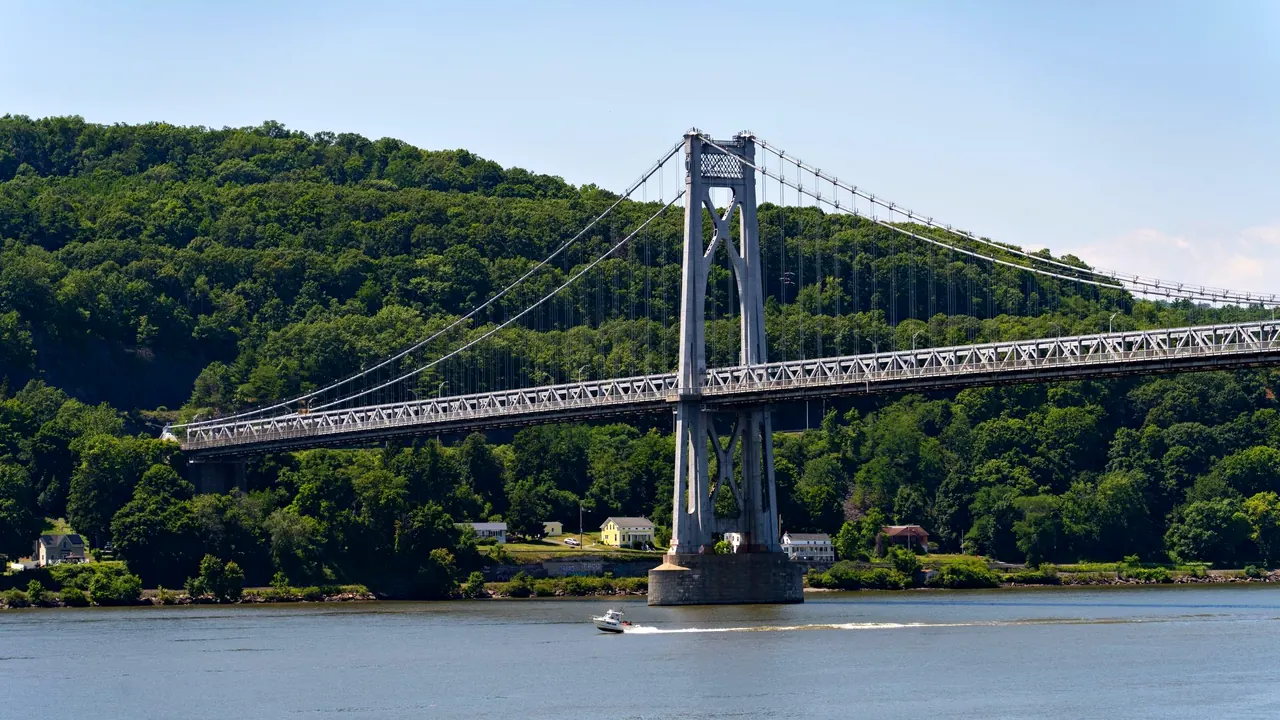
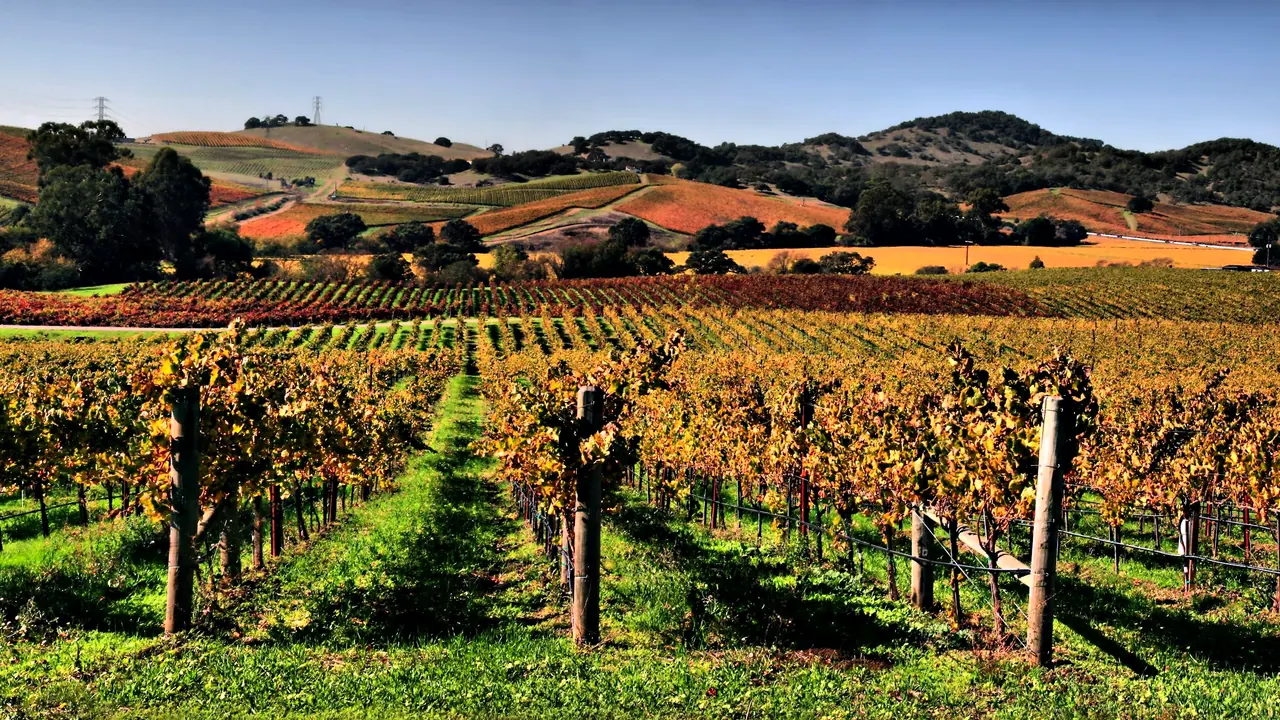
Photos: Hudson Valley by Brett A, Pexels License; Napa Valley by Brocken Inaglory, CC BY-SA 3.0, cropped.
Hudson Valley or Napa Valley?
Our verdict in twelve categories, each scored against the same fixed benchmark cities, and the climate month by month, so you can choose for your trip.
Choose Hudson Valley for
- culture and sights
- families
- nature and the outdoors
The Hudson Valley is the better choice for a varied, active country trip. It pairs Revolutionary War sites and riverside estates with Dia Beacon and Storm King, and the Highlands and Shawangunk cliffs offer real hiking and climbing. It also works better for families, and for anyone who wants to arrive by train and stay in one walkable river town. It costs a lot, but not as much as Napa.
Choose Napa Valley for
- wellness
- food and drink
Napa Valley is built around one thing and does it superbly: wine, food and slowing down. Choose it for cellar-door tastings of Cabernet, dinners in Yountville and days in Calistoga's mud baths and mineral pools. It suits couples on a planned splurge far better than children or anyone hoping to sightsee.
Scoreboard
Twelve categories on one fixed scale from 0 to 100. The shaded stretch is the gap between the two.
Your match
Pick a travel style or drag the sliders, and both match scores follow your weighting.
Wins on culture and sights and families with your weighting.
Wins on wellness and food and drink with your weighting.
What matters to you?
Category by category
What the scores mean for a trip.
Beaches & swimming
Neither valley is somewhere to swim, but the Hudson Valley gives you a little more. In midsummer you can swim at state park lakes such as Lake Welch and Lake Taghkanic, which warm to around 24°C, and in the rock pools of Catskill streams. In Napa, the one real option is a drive over the hills to Lake Berryessa. Otherwise you have the hotel pool, because the Pacific off the Sonoma coast is too cold for a swim.
Food & drink
This is Napa's home ground. Cabernet tasting rooms line Highway 29 and the Silverado Trail, and Yountville has a density of fine dining that the Hudson Valley cannot equal. A meal in Napa is an event, though, and cheap everyday eating is hard to find.
The Hudson Valley offers farm cooking rather than a wine pilgrimage. River towns such as Hudson, Rhinebeck and Beacon serve menus built on the local orchards and dairies, and there are cideries, distilleries and the Shawangunk Wine Trail. Both valleys have a campus of the Culinary Institute of America, at Hyde Park and at Greystone.
Culture & sights
The Hudson Valley is far ahead here. Its history runs from Dutch stone houses and West Point to the Roosevelt and Vanderbilt estates at Hyde Park, and it is the home of the Hudson River School painters. Dia Beacon and Storm King make it a serious destination for modern art.
Napa's heritage is its wine: nineteenth-century stone cellars, the Bale Grist Mill and Victorian downtown Napa. These make a pleasant backdrop to tastings, but they are not a reason to come.
Nightlife
Both valleys are early-to-bed places, though the Hudson Valley has slightly more going on. Kingston, Beacon and Hudson each have a handful of taprooms and wine bars, and the college towns of New Paltz and Poughkeepsie add student bars. In Napa, the only nightlife is along the riverfront in downtown Napa itself, and the up-valley towns close soon after the restaurants do.
Nature & outdoors
For time outdoors, the Hudson Valley is the more exciting landscape. Steep trails climb Breakneck Ridge and Bear Mountain above the river gorge, the Shawangunk cliffs are famous among climbers, and the Catskill escarpment offers waterfalls and long ridge walks.
Napa is gentler country, a narrow strip of vineyards between oak-covered hills. A dawn balloon ride or a bike ride along the Silverado Trail is the typical outing, and Mount St. Helena is the one big hike. Both valleys are at their best in autumn, though Napa also has the yellow of the mustard in late winter.
Day trips
In both valleys the biggest day out is a great city, and how easy it is depends on where you stay. From the lower Hudson Valley, Metro-North trains run along the east bank to Manhattan in about an hour. From Poughkeepsie the trip takes nearer two hours, and from a west-bank base such as New Paltz or Kingston you first have to cross the river to reach a station. From anywhere in Napa, San Francisco is about an hour and a half by road, or you can go part of the way by ferry across the bay from Vallejo.
Beyond the city, the other outings are quite different. The Hudson Valley's are more varied. River towns such as Cold Spring and Woodstock make good half-day visits, and from the northern end you can reach Albany's state capitol, Saratoga Springs and the Berkshire towns of Stockbridge and Lenox. Around Napa, most outings lead to more wine country: Sonoma with its mission and plaza, or Healdsburg and the Russian River. Berkeley and Sausalito are the main change of scene.
Good for families
With children, the Hudson Valley is clearly easier. It has pick-your-own orchards, maple sugaring, Legoland near Goshen, the bear carousel and small zoo at Bear Mountain, and the Halloween displays around Sleepy Hollow. The towns are relaxed and many inns welcome families.
Napa is designed for adults on tasting days. Calistoga's geyser and petrified forest and the amusement park in Vallejo fill a day or two, but families usually make it a short stop.
Getting around
You will need a car in both, but the Hudson Valley gives you a real alternative. The train up the east bank stops at Cold Spring, Beacon, Rhinecliff and Hudson, so a weekend in one river town without a car is easy. For the west bank and the trailheads, though, you will need to drive.
Napa is compact, about 50km from end to end, but the buses are too infrequent to plan around. Because the day revolves around drinking wine, many visitors hire a driver or join a tour rather than take the wheel.
Shopping & style
The Hudson Valley has more to browse. Warren Street in Hudson is lined with antique dealers and interiors shops, Woodstock sells pottery, and there is a large designer outlet village near Central Valley. In Napa, the best buys are bottles from the cellar door that are not sold in shops elsewhere. Beyond the wine, Napa has a few polished boutiques on St. Helena's Main Street and little else.
Affordability
Neither valley is cheap, but the Hudson Valley gives you far more room to save. It has chain motels around Poughkeepsie and Kingston, diners, and farm stands, and hiking and state parks cost almost nothing. You can also save on the hire car by coming by train.
Napa is a splurge however you plan it. Up-valley inns, tasting fees and well-known dinners all add up. Staying in Napa town and picnicking from the markets only softens the cost.
Live music & performing arts
In summer the Hudson Valley has a stronger programme. Opera and dance are staged at Bard's Fisher Center, there are garden concerts at Caramoor, the long-running Maverick chamber series plays near Woodstock, and Shakespeare is performed outdoors above the river near Garrison.
Napa's calendar is more about events: a big rock and pop festival in late spring and concerts on winery lawns. Its restored opera house and Art Deco theatre do give downtown Napa a year-round programme of touring acts.
Wellness & relaxation
Napa wins clearly here because of Calistoga. The town was founded as a hot-springs resort, and its mud baths and geothermal pools are still the reason many people stay there. Resort spas around Yountville and the Silverado Trail add to this.
In the Hudson Valley, relaxing is about the pace rather than the water. You have the Victorian lake resorts of the Shawangunks, yoga weekends and Buddhist monasteries that welcome visitors. The nearest mineral baths are at Saratoga Springs, beyond the north end of the valley.
When should you go?
Pick your month. The climate figures are measured averages, not a forecast.
Hudson Valley in July
Napa Valley in July
Daytime high, °C
Rainfall in the month, mm
Where the figures come from
Hudson Valley's temperatures are measured 35 km from the centre, at Poughkeepsie / New Hackensack.
Hudson Valley has no rain gauge within 25 km of the centre, so its rainfall comes from a gridded climate dataset read at the destination rather than from a gauge further away.
Napa Valley has no rain gauge within 25 km of the centre, so its rainfall comes from a gridded climate dataset read at the destination rather than from a gauge further away.
Napa Valley's sunshine is measured 76 km from the centre, at Sacramento Executive Airport.
Temperature and rainfall are climate normals, averaged over the years shown. Hudson Valley: 1991-2020 normals, Poughkeepsie / New Hackensack (34.5 km from centre). Napa Valley: 1991-2020 (sunshine 1981-2010) normals, Napa / Middleton (21.9 km from centre).
The two valleys follow opposite calendars. In the Hudson Valley, winters are cold, with January highs around 2°C, and summers are humid, reaching 30°C in July. Rain falls steadily all year with no dry season. Late May and June are the most comfortable times for hiking and town walks, and so is the stretch from September into October, when the leaves turn. July and August are the months for a swim in the lakes.
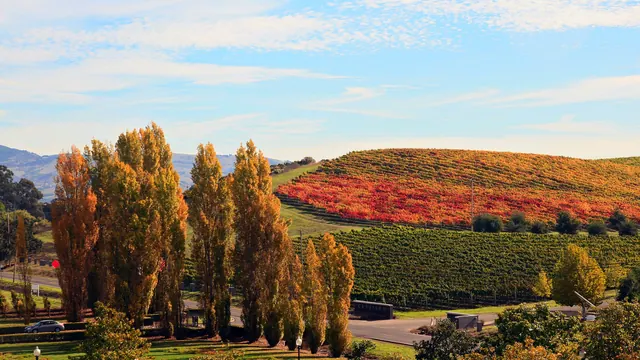
Napa has a classic dry-summer pattern. From May to October rain is rare, with almost none falling in July, highs sit around 26°C from June to September, and the long summer days bring plenty of sunshine. Winter there is mild but wet, with 141mm of rain in January. The spring months are a good alternative: green, mostly dry and not yet hot.
Which traveller are you?
On a culture and arts trip, choose the Hudson Valley. Roosevelt's home at Hyde Park, Olana and the Hudson River School, and the large-scale works at Dia Beacon and Storm King give you far more to see than Napa's old stone cellars and small museums.
For a food and nightlife trip, Napa wins on the food. It has hundreds of wineries and Yountville's run of fine restaurants. Be aware, though, that evenings in both valleys end soon after dinner, and the Hudson towns have slightly more bars.
On a relaxing and wellness trip, Napa is the stronger pick. Calistoga's volcanic-ash mud baths and geothermal pools are a real bathing tradition. The Hudson Valley offers country inns and meditation retreats, but it has no springs of its own.
Before you go
| Measure | Hudson Valley | Napa Valley |
|---|---|---|
| Currency | US Dollar (USD) | US Dollar (USD) |
| Sockets | AB120 V, 60 Hz | AB120 V, 60 Hz |
| Driving side | Right | Right |
| Time zone | UTC-5, UTC-4 in summer | UTC-8, UTC-7 in summer |
| Emergency number | 911 | 911 |
| Main airport | New York Stewart International Airport (SWF)9 non-stop destinations | San Francisco International Airport (SFO)143 non-stop destinations |
| Public holidays this year | 13 days | 13 days |
Where else could you go?
Every comparison below shares a destination with this one, so you can follow Hudson Valley or Napa Valley somewhere new.
- Sonomavs Napa Valley
- Catskillsvs Hudson Valley
- Poconosvs Hudson Valley
- The Hamptonsvs Hudson Valley
- Lake Tahoevs Napa Valley
- Big Survs Napa Valley