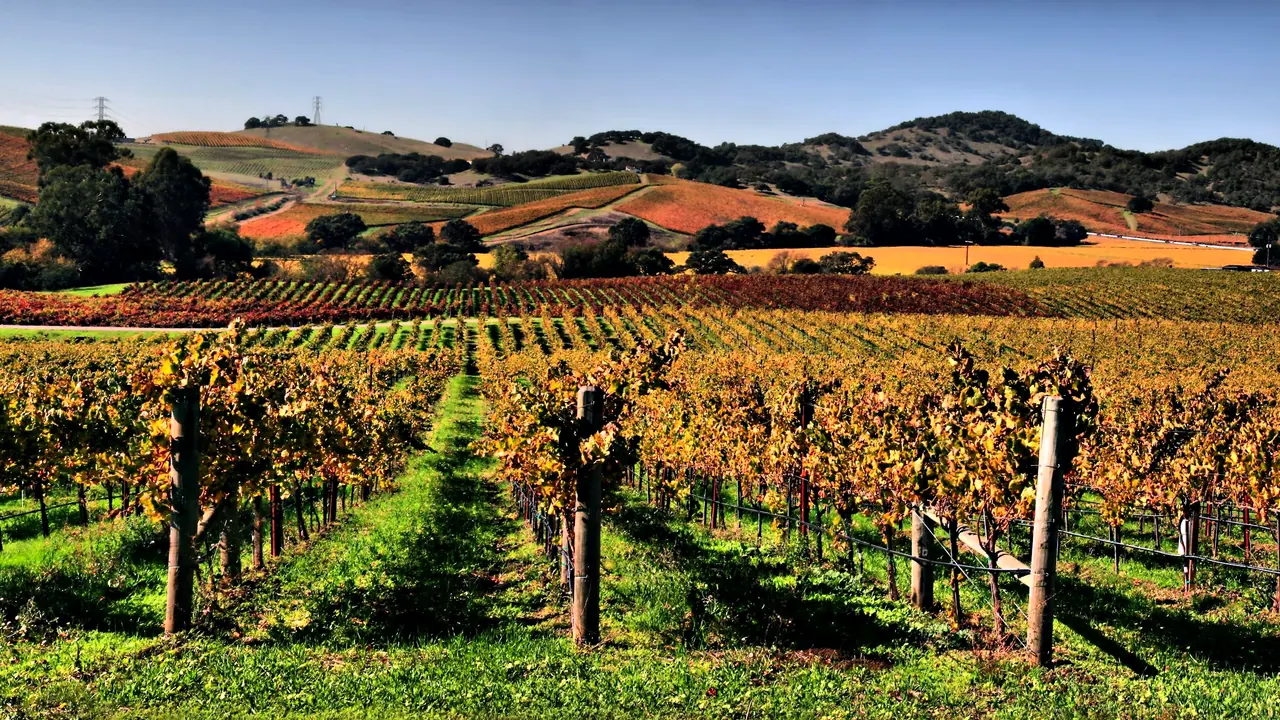
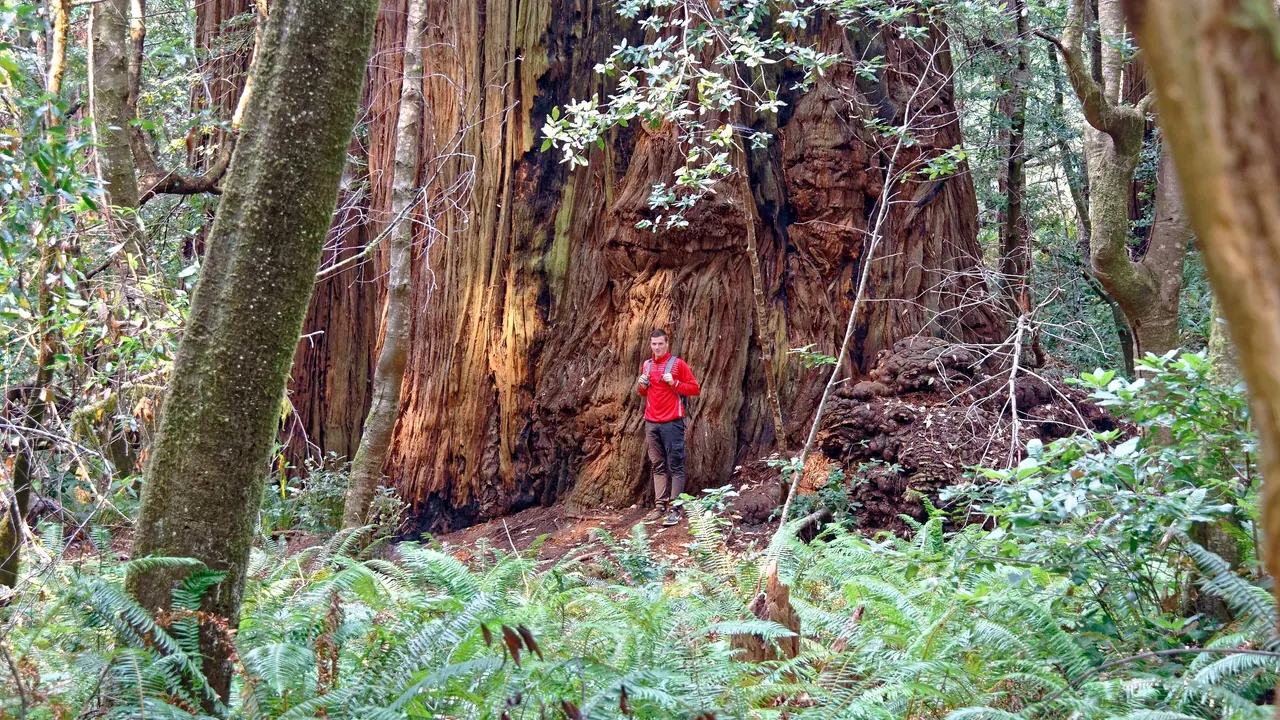
Photos: Napa Valley by Brocken Inaglory, CC BY-SA 3.0, cropped; Redwood National Park by Dirtsc, CC BY-SA 3.0, cropped.
Napa Valley or Redwood National Park?
Our verdict in twelve categories, each scored against the same fixed benchmark cities, and the climate month by month, so you can choose for your trip.
Choose Napa Valley for
- food and drink
- wellness
- day trips
Napa Valley suits travellers whose ideal day runs from a morning tasting to a long lunch and then a serious dinner. It is a polished wine country for adults. Calistoga's mud baths and the resort spas fill the slow hours, and San Francisco is close enough for a day in the city. Come ready to spend, and decide early who is driving.
Choose Redwood National Park for
- nature and the outdoors
- prices
- families
Walkers, campers and families who want the trees themselves to be the trip will be happier at Redwood National Park. It has old-growth groves, Fern Canyon, elk in the meadows and a wild, cold coastline. It costs far less than Napa, but the food is simple, the evenings are quiet and the weather is cool and often damp.
Scoreboard
Twelve categories on one fixed scale from 0 to 100. The shaded stretch is the gap between the two.
Your match
Pick a travel style or drag the sliders, and both match scores follow your weighting.
Wins on food and drink and wellness with your weighting.
Wins on nature and the outdoors and prices with your weighting.
What matters to you?
Category by category
What the scores mean for a trip.
Beaches & swimming
Neither place is for swimming. The difference is what you do instead. Napa's water is Lake Berryessa, over the eastern hills, which warms up in summer and has coves for a swim or a paddle. Otherwise you have the hotel pool, and the cold Sonoma coast is a scenic drive away.
Redwood has a real shoreline. Gold Bluffs and Enderts beaches are wide and empty for walking and beachcombing, but sneaker waves keep people out of the water. Here the swim is in the clear summer pools of the Smith River.
Food & drink
This is where the two differ most. Napa is built around eating and drinking: Cabernet tasted at estates on Highway 29 and the Silverado Trail, Yountville's fine dining and Oxbow Public Market for oysters and cheese. Almost every meal is an occasion.
Around the redwoods, food is practical: diners, smoked-fish shacks and a picnic for the trail. The better cooking is an hour south in Arcata and Eureka, with Humboldt Bay oysters, Dungeness crab in season and craft beer. It is honest food, but not a reason to come.
Culture & sights
Neither has much in the way of museums or landmarks, and in both the sights fill half a day around the real reason for coming. Napa's heritage is wine: the stone cellars of the early families, Greystone in St. Helena and the restored Bale Grist Mill.
The redwood coast's story is older and of a different kind. The rebuilt village of plank houses at Sue-meg State Park tells of the Yurok, Tolowa and other peoples who have lived here for thousands of years. Eureka's Victorian Old Town and the Carson Mansion are the best architecture on the coast.
Nightlife
Both go quiet early, so neither suits a trip built around going out. In Napa the evening is dinner, then perhaps a glass in a wine bar by the river downtown. Near the park the night means campfires and stars, and for a drink in company you drive to the student brewpubs in Arcata or to Eureka's Old Town.
Nature & outdoors
The redwood coast is in a different class. It has the tallest trees on earth in Stout Grove and Tall Trees Grove, plus Fern Canyon and the Coastal Trail above the sea stacks. Roosevelt elk graze near Orick, and grey whales pass offshore in winter and spring.
Napa's countryside is gentle and farmed, a valley floor of vines between ranges covered in oak. People take a dawn balloon flight, cycle the Silverado Trail or climb Mount St. Helena for the view. It is lovely to travel through, but it is nothing like the scale of the forest further north.
Day trips
Napa wins clearly on day trips, mainly because San Francisco is about an hour and a half away, by road or partly by ferry from Vallejo. Sonoma, Healdsburg, Berkeley and Sausalito add more choice, though several of them are simply more wine country.
From the park the outings are to small towns: Trinidad on its headland, Arcata and Eureka, Victorian Ferndale, and the harbour towns across the Oregon line. They make pleasant drives, but there is no city or major sight within easy reach for a day.
Good for families
The forest works much better for children. The flat loop trails, climbing over logs and wading the creek in Fern Canyon, spotting elk and the Junior Ranger programmes fill the days easily. The gondola near Klamath and the canopy walkway at Eureka's zoo add variety. The drawbacks are the cold, unsafe sea and the rain.
Napa is made for adults, and tasting rooms and long dinners are at its heart. Calistoga's small geyser and petrified forest, the warm hot-springs pools and the wildlife park in Vallejo give families a few good days, but most treat the valley as a short stop.
Getting around
You need a car in both, but the redwood coast is the easier drive. Traffic is light, the Newton B. Drury Scenic Parkway is a sight in itself, and the main groves are close together. Howland Hill Road and the road to Fern Canyon are slow, though, and not paved.
Napa is compact, about 50km from end to end, but Highway 29 jams at weekends and during the harvest. Because the day is spent drinking wine, you need a driver who stays sober, or you hire one, join a tour or cycle the flat valley floor.
Shopping & style
Napa has more to buy. Above all there is wine at the cellar door, often bottles that are not sold elsewhere, and the estates will ship it home. St. Helena's Main Street boutiques, the olive oil and cheese at the public market and an outlet centre add to that.
The redwood coast has burl carvings and chainsaw sculptures beside the highway, galleries and bookshops in Eureka's Old Town, and basketry and jewellery by Native artists. It is worth a browse, but it is not worth setting aside time for.
Affordability
In Napa the money goes on the experience itself. Rooms up-valley are priced for celebrations and climb further at weekends and through the harvest, each estate on a day of tastings charges its own fee, and dinner in Yountville is a large bill. Add a hired driver or a tour, since someone has to stay sober, and even a carefully planned stay is an indulgence.
On the redwood coast the main fixed cost is the car and its fuel, because nothing in the parks works without one. Meals cost what they do anywhere in the country, with few cheap options, and in summer the rooms near the groves can fill early and cost more. A day walking under the trees costs almost nothing, though, so a trip here comes to far less than one in Napa.
Live music & performing arts
Napa has the fuller calendar. Downtown Napa's restored opera house and Art Deco theatre book shows all year. A large rock and pop festival comes each late spring, and wineries hold classical, jazz and opera concerts in summer. There is no major resident company, but there is usually something on.
Near the park, summer brings ranger campfire talks and little more. The modest local scene is an hour south, at Arcata's university venues and with Eureka's small symphony and community theatre.
Wellness & relaxation
Napa is the place to be pampered. Calistoga has been a hot-springs town since the nineteenth century, with volcanic-ash mud baths and geothermal pools. Resorts throughout the valley add full spas set among vines and olive trees.
The redwood coast has no springs and no real spas, only hot tubs you can rent in Arcata and massage at a few lodges. What it offers instead is quiet: slow walks through the hushed old-growth groves and evenings with no traffic noise.
When should you go?
Pick your month. The climate figures are measured averages, not a forecast.
Napa Valley in July
Redwood National Park in July
Daytime high, °C
Rainfall in the month, mm
Where the figures come from
Napa Valley has no rain gauge within 25 km of the centre, so its rainfall comes from a gridded climate dataset read at the destination rather than from a gauge further away.
Napa Valley's sunshine is measured 76 km from the centre, at Sacramento Executive Airport.
Redwood National Park's temperatures are measured 35 km from the centre, at Arcata / Clam Beach.
Redwood National Park has no rain gauge within 25 km of the centre, so its rainfall comes from a gridded climate dataset read at the destination rather than from a gauge further away.
Redwood National Park's sunshine is measured 55 km from the centre, at Eureka.
Temperature and rainfall are climate normals, averaged over the years shown. Napa Valley: 1991-2020 (sunshine 1981-2010) normals, Napa / Middleton (21.9 km from centre). Redwood National Park: 1991-2020 (sunshine 1981-2010) normals, Arcata / Clam Beach (34.6 km from centre).
Napa Valley has a real warm season. From June to September afternoons reach about 26°C, with long hours of sunshine and almost no rain. That suits tastings and the hotel pool, but it makes cycling after lunch hard work. Spring and autumn are milder and the best time to walk among the vines. From December to February the valley is cool and wet, with around 140mm of rain a month.
Redwood National Park hardly changes temperature through the year. Highs run from 13°C in winter to no more than 17°C in late summer, so the trails are never too hot. Rain decides the season instead. July and August are nearly dry, though often foggy, autumn tends to bring the clearest days, and December can bring over 300mm. The sea stays cold all year, and nobody comes here to swim in it.
Which traveller are you?
For a food and nightlife trip, Napa Valley is the clear choice on the food side. It has estate tastings along the Silverado Trail, Yountville's fine dining and oysters at Oxbow Public Market. Evenings end early in both places, so dinner is the night out.
On an outdoors trip, Redwood National Park is the obvious pick, with the tallest trees on earth, Fern Canyon, the Coastal Trail above the sea stacks and elk grazing near Orick. Napa offers balloon flights and cycling, but its landscape is farmed and gentle.
On a tight budget, Redwood National Park goes much further. The park charges no entry, the campgrounds in the groves are inexpensive and picnics are normal there. Napa stays a splurge, even if you sleep in Napa town and buy lunch at a deli.
Before you go
| Measure | Napa Valley | Redwood National Park |
|---|---|---|
| Currency | US Dollar (USD) | US Dollar (USD) |
| Sockets | AB120 V, 60 Hz | AB120 V, 60 Hz |
| Driving side | Right | Right |
| Time zone | UTC-8, UTC-7 in summer | UTC-8, UTC-7 in summer |
| Emergency number | 911 | 911 |
| Main airport | San Francisco International Airport (SFO)143 non-stop destinations | California Redwood Coast-Humboldt County Airport (ACV)6 non-stop destinations |
| Public holidays this year | 13 days | 13 days |
By the numbers
| Measure | Napa Valley | Redwood National Park |
|---|---|---|
| Swim season, months above 21 °C | - | None |
Where else could you go?
Every comparison below shares a destination with this one, so you can follow Napa Valley or Redwood National Park somewhere new.
- Sonomavs Napa Valley
- Lake Tahoevs Napa Valley
- Big Survs Napa Valley
- Yosemitevs Napa Valley
- Kings Canyonvs Napa Valley
- Sequoiavs Napa Valley