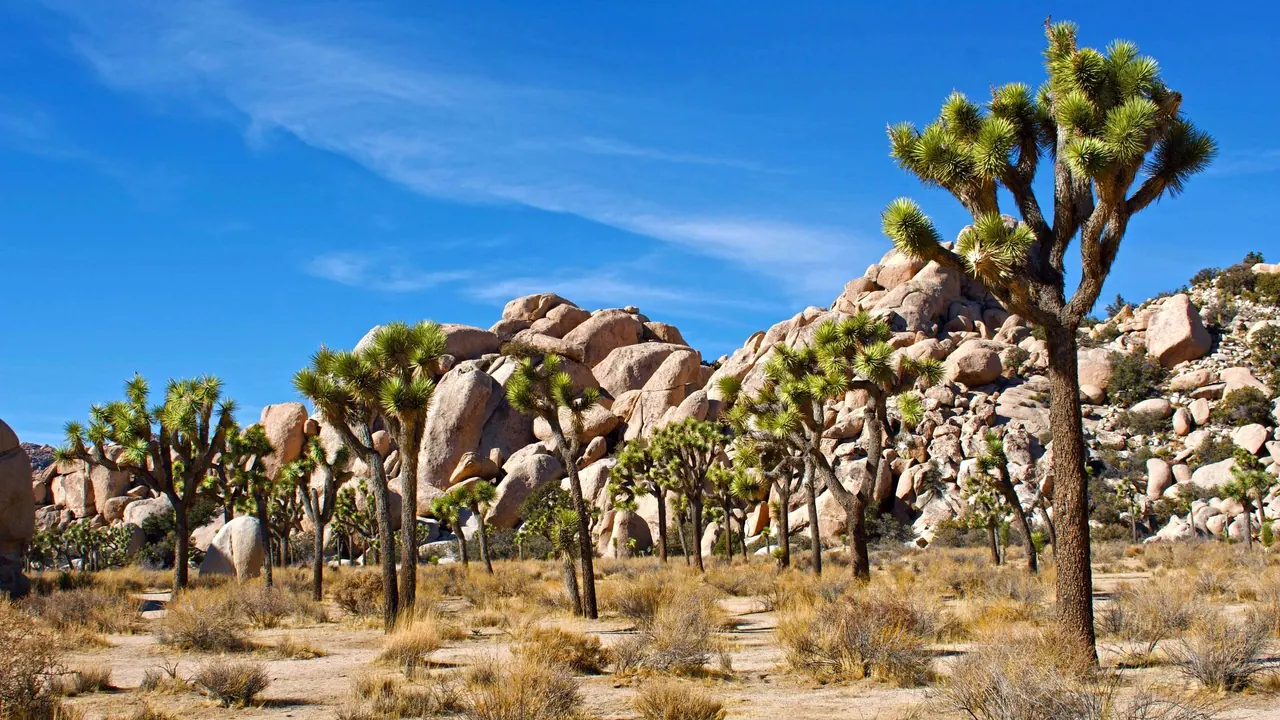
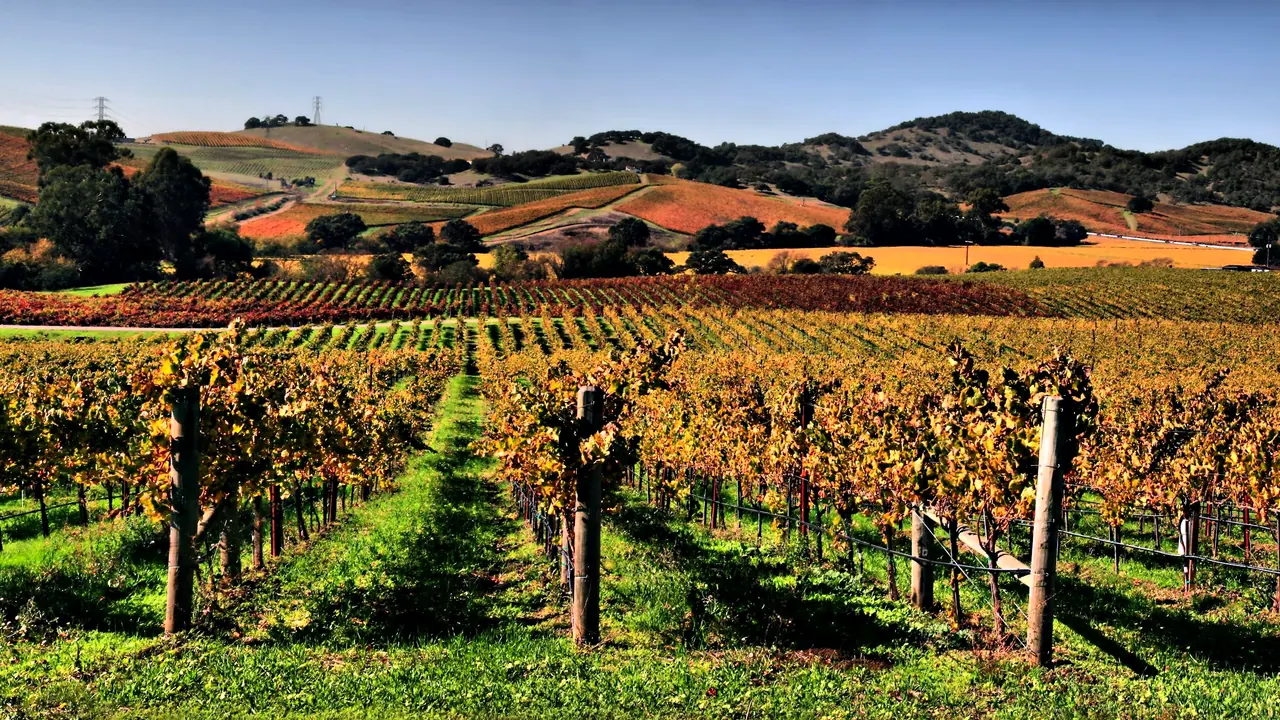
Photos: Joshua Tree by Mr. Location Scout, Pexels License; Napa Valley by Brocken Inaglory, CC BY-SA 3.0, cropped.
Joshua Tree or Napa Valley?
Our verdict in twelve categories, each scored against the same fixed benchmark cities, and the climate month by month, so you can choose for your trip.
Choose Joshua Tree for
- nature and the outdoors
- prices
- families
Joshua Tree is the pick for travellers who want landscape and a lot of time outdoors. The national park's granite boulder piles, Joshua tree forests and climbing routes are the whole point, the night sky is dark enough to show the Milky Way, and a rental house with a fire pit costs far less than a valley inn. It suits climbers, hikers, stargazers and anyone happy to cook their own dinner and go to bed with the desert quiet outside.
Choose Napa Valley for
- food and drink
- day trips
- wellness
Choose Napa Valley if the trip is built around the table and the glass. Cellar doors, Yountville's fine dining and Calistoga's mud baths make it one of the easiest places in the country for an indulgent few days, and San Francisco and Sonoma are close enough for a day out. Expect to spend heavily and to stay among vineyards rather than wild country.
Scoreboard
Twelve categories on one fixed scale from 0 to 100. The shaded stretch is the gap between the two.
Your match
Pick a travel style or drag the sliders, and both match scores follow your weighting.
Wins on nature and the outdoors and prices with your weighting.
Wins on food and drink and day trips with your weighting.
What matters to you?
Category by category
What the scores mean for a trip.
Beaches & swimming
Neither is a swimming destination, but Napa Valley at least has natural water. In summer Lake Berryessa, just over the eastern hills, warms up enough for a swim or a paddle from its coves, and the Sonoma coast makes a dramatic if chilly drive. Joshua Tree has nothing beyond the pool at your rental house or motel, which on a hot desert afternoon is where everyone ends up.
Food & drink
This is where the two are furthest apart. Napa Valley is built around eating and drinking: Cabernet tasting rooms along Highway 29 and the Silverado Trail, Yountville's concentration of fine dining, farm bistros in St. Helena and Calistoga, and a casual market and river wine bars in downtown Napa.
Joshua Tree feeds you well enough for the park, with diners, Mexican places, good coffee and Pioneertown barbecue along Highway 62, but dinner choices are few and close early. Most visitors cook at their rental, and the serious restaurants are an hour away in Palm Springs.
Culture & sights
Both are thin on museums and history, and in both the sights are background to the main reason for coming. The difference is in flavour. Joshua Tree's are eccentric desert oddities: Noah Purifoy's scrap sculptures, the Integratron dome and Pioneertown's false-front film street, plus Keys Ranch and petroglyphs in the park.
Napa's heritage is genteel and tied to wine, seen in nineteenth-century stone cellars, the Greystone building in St. Helena, a mock medieval castle winery, downtown Napa's Victorian frontage and the 1840s Bale Grist Mill.
Nightlife
Both go quiet early, so neither is a place to go out. In Joshua Tree the evening's event is the sky, watched from a fire pit, with a saloon or two and the Pioneertown roadhouse at weekends. Napa's version is a glass of wine after dinner at a riverside wine bar or cocktail bar in downtown Napa, and the up-valley towns shut down even sooner.
Nature & outdoors
Joshua Tree's landscape is the main event, and Napa's is scenery. The park's boulder piles and Joshua tree forests, cholla gardens in the lower desert, thousands of climbing routes, palm oasis hikes and dark-sky nights make it a destination for serious outdoor people from October to May.
Napa offers a softer countryside of vineyards between oak-covered ranges, best seen from a dawn balloon, a bike on the Silverado Trail or the top of Mount St. Helena. Its redwood groves in Bothe-Napa Valley State Park are lovely, but nothing here is wild.
Day trips
Napa Valley has far more within reach. San Francisco is about an hour and a half away, partly by ferry if you like, and Sonoma's mission plaza, Healdsburg, Berkeley and Sausalito are all easy outings, though many of them are more wine country.
From Joshua Tree, the obvious day out is Palm Springs and its mid-century houses, with Idyllwild, Route 66 ghost stops and the strange Salton Sea further afield. Beyond those there is mostly open desert.
Good for families
Neither is designed for children, but Joshua Tree works better for active older ones. The rock piles at Hidden Valley, Skull Rock and Jumbo Rocks make a natural playground, there is a junior ranger programme, and a night under the Milky Way stays with them, as long as you avoid the heat and bring plenty of water.
Napa is aimed at couples and long dinners. Calistoga's geyser, the petrified forest, warm spa pools and the park in Vallejo can fill a few days, so most families treat it as a short stop.
Getting around
Both need a car, and in both the driving is easy, so the difference is in the details. Joshua Tree spreads out more, with long stretches along Highway 62 and through the park, but traffic is light. There is no signal on many trails, and the west entrance queues on spring weekends.
Napa is compact, a short drive from one end of the valley to the other, and the centres of Napa, Yountville and St. Helena are walkable. Because the day involves tasting, many visitors hire a driver, join a tour or cycle, and they take the Silverado Trail when the main valley road clogs at weekends.
Shopping & style
Napa has more worth buying, and most of it is wine: cellar-door bottles that rarely reach shops elsewhere, shipped home by the case, plus St. Helena's homeware and kitchen boutiques, market olive oil and cheese, and an outlet centre. Joshua Tree's shopping is smaller and quirkier, with vintage Western wear and mid-century pieces in Yucca Valley's old town, crystal and climbing-gear shops in the village and weekend artists' markets.
Affordability
Joshua Tree is much easier on the wallet. Camping or an older motel in Twentynine Palms keeps a trip cheap, park entry costs little, and food is modest, though the stylish rental houses get expensive on spring weekends.
Napa Valley is a splurge however you plan it. Up-valley inns are priced for special occasions, tasting fees mount over a day, and dinners at the famous tables cost a great deal. Sleeping in Napa town and picnicking from the delis softens it only somewhat.
Live music & performing arts
Joshua Tree's music comes down to one room and a couple of weekends. A night of indie, rock or country at the Pioneertown roadhouse is part of many trips, and the Joshua Tree Music Festival brings camping weekends in spring and autumn.
The valley's calendar runs wider and longer. A big rock and pop festival takes over the Expo grounds each late spring, summer brings classical, jazz and opera at wineries and in Yountville, and downtown Napa's restored opera house and Art Deco theatre book touring acts all year.
Wellness & relaxation
In the desert, rest is looser and more spiritual: yoga and meditation retreats around Joshua Tree village, sound baths in the Integratron dome and a hot tub under the stars at your rental. For a mineral soak you drive half an hour to the small spa motels of Desert Hot Springs.
Calistoga goes deeper. The town was founded as a hot-springs resort, and its volcanic-ash mud baths and geothermal pools are the heart of a stay. Full resort spas among the vines near Yountville and the Silverado Trail add polish that the desert towns cannot match.
When should you go?
Pick your month. The climate figures are measured averages, not a forecast.
Joshua Tree in July
Napa Valley in July
Daytime high, °C
Rainfall in the month, mm
Where the figures come from
Joshua Tree has no rain gauge within 25 km of the centre, so its rainfall comes from a gridded climate dataset read at the destination rather than from a gauge further away.
Napa Valley has no rain gauge within 25 km of the centre, so its rainfall comes from a gridded climate dataset read at the destination rather than from a gauge further away.
Napa Valley's sunshine is measured 76 km from the centre, at Sacramento Executive Airport.
Temperature and rainfall are climate normals, averaged over the years shown. Joshua Tree: 1992-2020 (rainfall 1991-2020) normals, Twentynine Palms / Sunfair Heights (20.4 km from centre). Napa Valley: 1991-2020 (sunshine 1981-2010) normals, Napa / Middleton (21.9 km from centre).
Joshua Tree runs on the opposite calendar to most places. From June to September highs around the main towns climb to 37°C and more, so hiking and climbing shrink to dawn and dusk and the pool becomes the only sensible place to be. The good months are October to May, with warm, comfortable days in spring and autumn and cool, crisp winter days near 17°C. Rain barely registers at any time of year.
Napa Valley has a wet winter and a dry, sunny summer. From December to February the rain is heavy, around 140mm a month, while from June to September it hardly rains at all, highs sit near 26°C and the long sunny days suit lunch outdoors and a swim at Lake Berryessa. Late spring and the harvest weeks of September and October are the most comfortable for touring the valley, so the two overlap best in spring and autumn.
Which traveller are you?
On an outdoors trip, Joshua Tree is the clear choice. The national park offers world-class climbing and bouldering, hikes to Ryan Mountain and the palm oases, and dark-sky stargazing, while Napa's vineyard country is pleasant for cycling but gentle and tame.
For a food and drink trip, Napa Valley wins easily. Hundreds of wineries, Yountville's fine dining and the oysters and cheese of Oxbow Public Market fill every day, whereas Joshua Tree offers diners, barbecue and kitchens that close early. In both, evenings end soon after dinner.
On a tight budget, Joshua Tree is far kinder. Camping or an older motel in Twentynine Palms and a cheap park entry keep costs down, while Napa's inns, tasting fees and restaurant bills make even a carefully planned stay a splurge.
Before you go
| Measure | Joshua Tree | Napa Valley |
|---|---|---|
| Currency | US Dollar (USD) | US Dollar (USD) |
| Sockets | AB120 V, 60 Hz | AB120 V, 60 Hz |
| Driving side | Right | Right |
| Time zone | UTC-8, UTC-7 in summer | UTC-8, UTC-7 in summer |
| Emergency number | 911 | 911 |
| Main airport | Palm Springs International Airport (PSP)29 non-stop destinations | San Francisco International Airport (SFO)143 non-stop destinations |
| Public holidays this year | 13 days | 13 days |
Where else could you go?
Every comparison below shares a destination with this one, so you can follow Joshua Tree or Napa Valley somewhere new.
- Sonomavs Napa Valley
- Lake Tahoevs Napa Valley
- Big Survs Napa Valley
- Yosemitevs Napa Valley
- Death Valleyvs Joshua Tree
- Kings Canyonvs Napa Valley