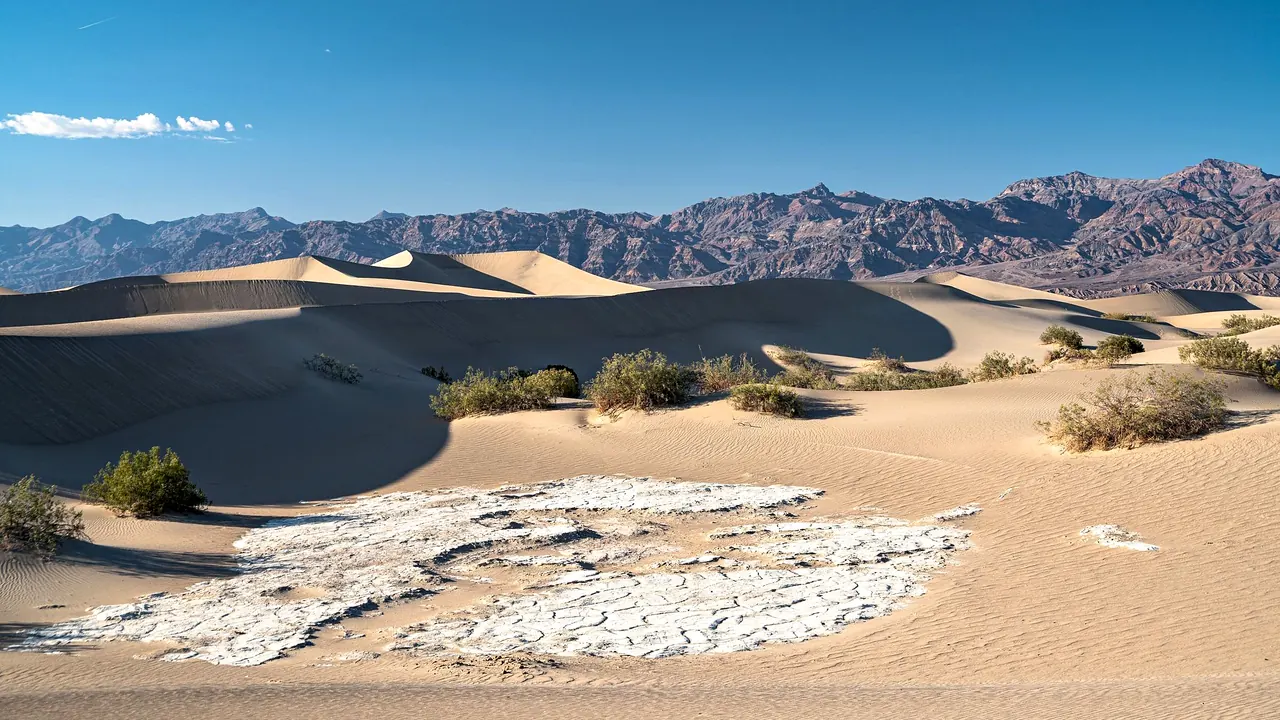
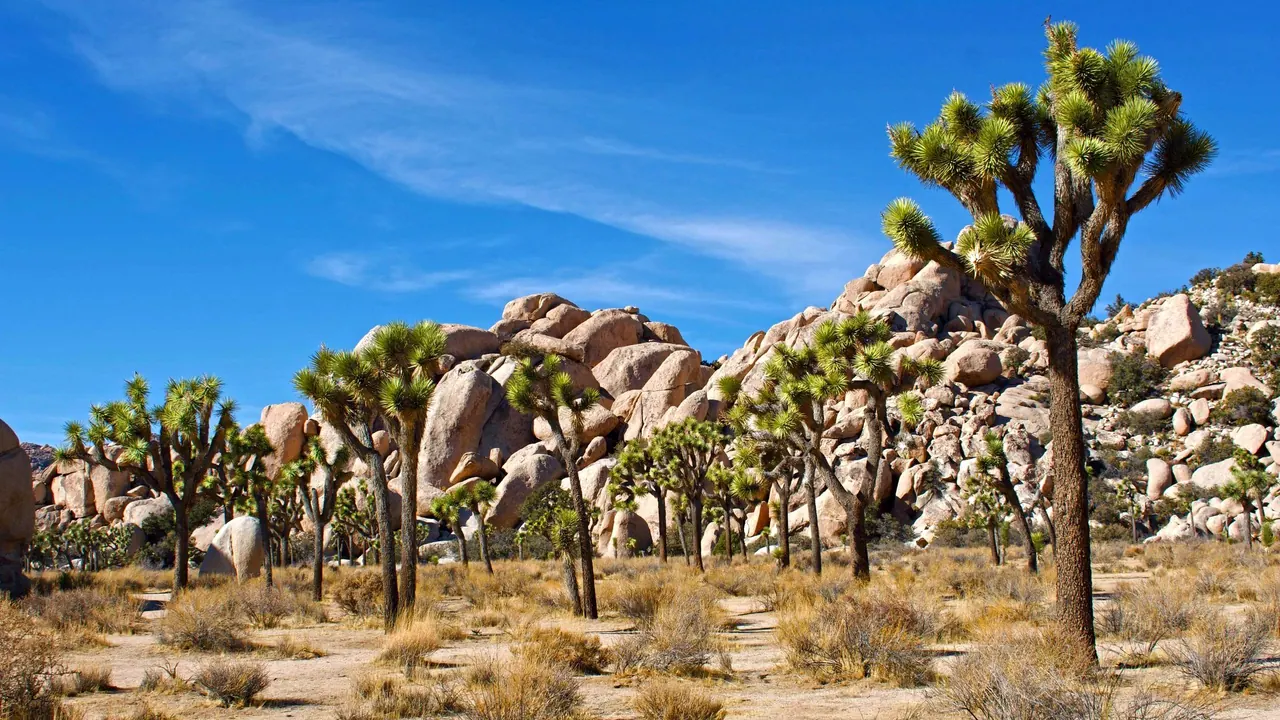
Photos: Death Valley by Anthony Brown, Pexels License; Joshua Tree by Mr. Location Scout, Pexels License.
Death Valley or Joshua Tree?
Our verdict in twelve categories, each scored against the same fixed benchmark cities, and the climate month by month, so you can choose for your trip.
Choose Death Valley for
- nature and the outdoors
Death Valley is for the traveller who wants the desert at its most extreme and doesn't need much comfort. Its geology covers a huge range, from salt flats below sea level to a peak that holds snow in winter, with dunes, badlands and remote back-country tracks in between. You give up good food, evening life and easy distances. What you get is silence, space and a landscape that feels like nowhere else.
Choose Joshua Tree for
- shopping
- live music and the arts
- wellness
Joshua Tree makes a gentler and more sociable desert trip, and that is why it wins for most weekends and short vacations. Its granite boulders and Joshua tree forests match Death Valley for drama, but in a more intimate way, and it is the obvious choice for climbers. Around the park you also get stylish rental houses, hot springs and retreats, vintage shops, a famous music roadhouse and Palm Springs within easy reach.
Scoreboard
Twelve categories on one fixed scale from 0 to 100. The shaded stretch is the gap between the two.
Your match
Pick a travel style or drag the sliders, and both match scores follow your weighting.
Wins on nature and the outdoors with your weighting.
Wins on shopping and live music and the arts with your weighting.
What matters to you?
Category by category
What the scores mean for a trip.
Beaches & swimming
Neither has a beach or any natural water to swim in, so swimming in both comes down to a pool after a day in the desert. The real difference is access. In Death Valley, the warm spring-fed pools at Furnace Creek are for resort guests, so many visitors never swim at all. In Joshua Tree, plenty of rental houses and motels have their own pool or plunge pool, so a dip is easier to arrange wherever you stay.
Food & drink
In Death Valley, food is a matter of logistics. You eat in lodge dining rooms and saloons at Furnace Creek, Stovepipe Wells and Panamint Springs, or at diners in Beatty and Shoshone. The only treat is a date shake from the farm near Tecopa, and most people arrive with a cool box.
Joshua Tree eats better, though still simply. The towns along Highway 62 have Mexican places, diners, good coffee and health-food cafés aimed at climbers, and Pioneertown adds smoky barbecue. Supermarkets in Yucca Valley make self-catering in a rental house easy, and Palm Springs is an hour away when you want a proper restaurant.
Culture & sights
Death Valley's history is industrial and makes good background. You'll see the ruins of Harmony Borax Works, where the twenty-mule teams set out, the beehive charcoal kilns at Wildrose and the story of the Timbisha Shoshone told at the Furnace Creek visitor centre.
Joshua Tree has a little more worth going out of your way for, and it is odder. There are Noah Purifoy's scrap-sculpture museum in the open desert, the Integratron's white dome, the false-front film-set street of Pioneertown and Keys Ranch inside the park. Neither place has a major museum or historic town.
Nightlife
After dark, both places are really about the sky, and both are dark enough to show the Milky Way. Death Valley has almost nothing else: a beer at the Stovepipe Wells or Furnace Creek saloon, and then quiet. Joshua Tree gives you a little more. There are a couple of bars in Joshua Tree and Twentynine Palms, and Pioneertown's roadhouse fills up at weekends, though most evenings still end around a fire pit at the rental.
Nature & outdoors
These are two of the great American desert parks, and they differ in kind more than in quality. Death Valley is about scale and extremes. Badwater lies 86m below sea level beneath the snowy summit of Telescope Peak, and in between you find the badlands of Zabriskie Point, the dunes, the Ubehebe crater and the moving rocks of the Racetrack, many of them reached on rough dirt roads.
Joshua Tree is more intimate and more hands-on. You get forests of Joshua trees among rounded granite piles, cholla gardens where the Mojave meets the Colorado Desert, and palm oases at the end of hikes. Its thousands of climbing routes make it a world-class rock destination, something Death Valley doesn't offer. Joshua Tree's season also runs longer, from October to May.
Day trips
Joshua Tree has better places to go for the day. Palm Springs, with its mid-century houses and walkable downtown, is only an hour downhill. Beyond it you can reach the pine village of Idyllwild, the old Route 66 stops at Amboy and the strange shoreline of the Salton Sea.
From Death Valley, the outings are fewer and further. The ghost town of Rhyolite and the hot-spring hamlet of Tecopa are close enough. Lone Pine, Manzanar and Las Vegas are each about two hours away, so most days stay inside the park.
Good for families
Joshua Tree is the easier place to bring children. The boulder piles at Hidden Valley, Skull Rock and Jumbo Rocks work as a natural climbing frame, rental houses with yards and pools make a comfortable base, and the Living Desert zoo is within a long drive.
Death Valley can thrill adventurous older children with dune slides at Stovepipe Wells, the salt crust at Badwater and the Junior Ranger programme. Even so, distances are longer and shops and fuel are scarcer, so families do best on short winter days based at Furnace Creek. The summer heat is a danger to small children in both places.
Getting around
A car is essential in both, but Joshua Tree asks less of you. Highway 62 links its towns, the paved park roads keep distances moderate, and parking is a short walk from the rocks. Expect queues at the west entrance on spring weekends, and download maps because there's no signal in much of the park.
Death Valley is on another scale. It is two hours from the Las Vegas airport, an hour or more between areas is normal and fuel stations are few. Highlights such as Titus Canyon and the Racetrack need a high-clearance vehicle, so you have to plan fuel and water every day.
Shopping & style
Death Valley offers supplies and little more: maps, books and borax souvenirs from the lodge gift counters, plus dates from the Tecopa farm. It's best to stock up in Las Vegas or Pahrump on the way in.
Joshua Tree has small but distinctive shopping. Yucca Valley's old town is good for vintage Western wear and mid-century furniture. Joshua Tree village has galleries, crystal shops and climbing gear, and weekend markets sell local art. Palm Springs is an hour away for design and consignment shops.
Affordability
Joshua Tree is the easier of the two on the budget. You can camp or take an older motel in Twentynine Palms, and food is modestly priced. The catch is that the popular rental houses get expensive at weekends and in spring, so midweek winter stays work out best.
Death Valley's few lodgings charge remote-resort rates, and fuel inside the park is notably dearer than outside. Keeping costs down means camping with your own food, or staying in Beatty or Pahrump and accepting long daily drives.
Live music & performing arts
Death Valley has a single stage, the Amargosa Opera House at Death Valley Junction. It is a small adobe theatre with a painted audience on its walls, and it puts on occasional shows. Most visitors come to see the building rather than a performance.
Joshua Tree has a real if small music scene. Pioneertown's old roadhouse books well-known indie, rock and country acts, and the Joshua Tree Music Festival brings camping weekends of music in spring and autumn. Palm Springs adds touring shows an hour away.
Wellness & relaxation
Both places offer the deep quiet of the desert, but Joshua Tree has built a whole way of slowing down around it. Yoga and meditation retreats and sound baths cluster near the village, with the Integratron's dome as the best known. Desert Hot Springs, half an hour away, has small spa resorts with mineral pools, and many rentals add a hot tub.
Death Valley's rest is simpler. You can swim in the warm spring-fed pools and use the spa at the Furnace Creek resort, or soak under the stars in Tecopa's rustic mineral pools. The long drives between sights make it hard to stay still for long.
When should you go?
Pick your month. The climate figures are measured averages, not a forecast.
Death Valley in July
Joshua Tree in July
Daytime high, °C
Rainfall in the month, mm
Where the figures come from
Death Valley has no weather station within reach, so its figures come from a gridded climate model rather than a measured record, and read a broad area rather than one spot.
Joshua Tree has no rain gauge within 25 km of the centre, so its rainfall comes from a gridded climate dataset read at the destination rather than from a gauge further away.
Temperature and rainfall are climate normals, averaged over the years shown. Death Valley: 1991-2020 normals, TerraClimate 4 km grid at the town, no weather station within 90 km. Joshua Tree: 1992-2020 (rainfall 1991-2020) normals, Twentynine Palms / Sunfair Heights (20.4 km from centre).
Neither destination is for summer. Around Furnace Creek in Death Valley, the comfortable season runs roughly from November to March. Midwinter days sit in the high teens and low twenties, and by March the afternoons are already reaching 27°C. From May the heat is serious, and July reaches 46°C, which makes walking dangerous after mid-morning. Joshua Tree sits higher in the Mojave and is a few degrees cooler in every month. Its season stretches from October to May, so April and October are good for hiking and climbing there when Death Valley is already too hot. Its summer highs still reach around 39°C, so outdoor time shrinks to dawn and dusk.
In midwinter that extra coolness works against Joshua Tree. December highs there are around 16°C, and December is its wettest month, though rain is still light. Death Valley is a little warmer and drier at the same time, which makes it the better pick from December to February. Rain is scarce in both, so the choice comes down to heat. Go to Death Valley for a winter trip and to Joshua Tree in spring or autumn.
Which traveller are you?
On an outdoors trip built around vast, extreme landscapes, Death Valley has the edge. Badwater's salt crust, the Mesquite Flat dunes, Mosaic Canyon and the remote Racetrack cover a range of terrain few deserts can match. Climbers, though, should head for Joshua Tree's boulders.
For a relaxing and wellness trip, Joshua Tree is the clear choice. Yoga retreats and sound baths gather around the village, the Integratron offers its acoustic dome, and the spring-fed spa pools of Desert Hot Springs are half an hour away. Death Valley's soaking is rustic, and its long drives break up the calm.
On a food and nightlife trip, neither place is a real destination, but Joshua Tree gives you an evening. You can eat barbecue in Pioneertown, see a band at its old roadhouse and choose from cafés along Highway 62. In Death Valley you get lodge dining rooms and saloons that are quiet by mid-evening.
Before you go
| Measure | Death Valley | Joshua Tree |
|---|---|---|
| Currency | US Dollar (USD) | US Dollar (USD) |
| Sockets | AB120 V, 60 Hz | AB120 V, 60 Hz |
| Driving side | Right | Right |
| Time zone | UTC-8, UTC-7 in summer | UTC-8, UTC-7 in summer |
| Emergency number | 911 | 911 |
| Main airport | Harry Reid International Airport (LAS)160 non-stop destinations | Palm Springs International Airport (PSP)29 non-stop destinations |
| Public holidays this year | 13 days | 13 days |
Where else could you go?
Every comparison below shares a destination with this one, so you can follow Death Valley or Joshua Tree somewhere new.
- Sequoiavs Death Valley
- Kings Canyonvs Death Valley
- Yosemitevs Death Valley
- Zionvs Death Valley
- Sequoiavs Joshua Tree
- Kings Canyonvs Joshua Tree