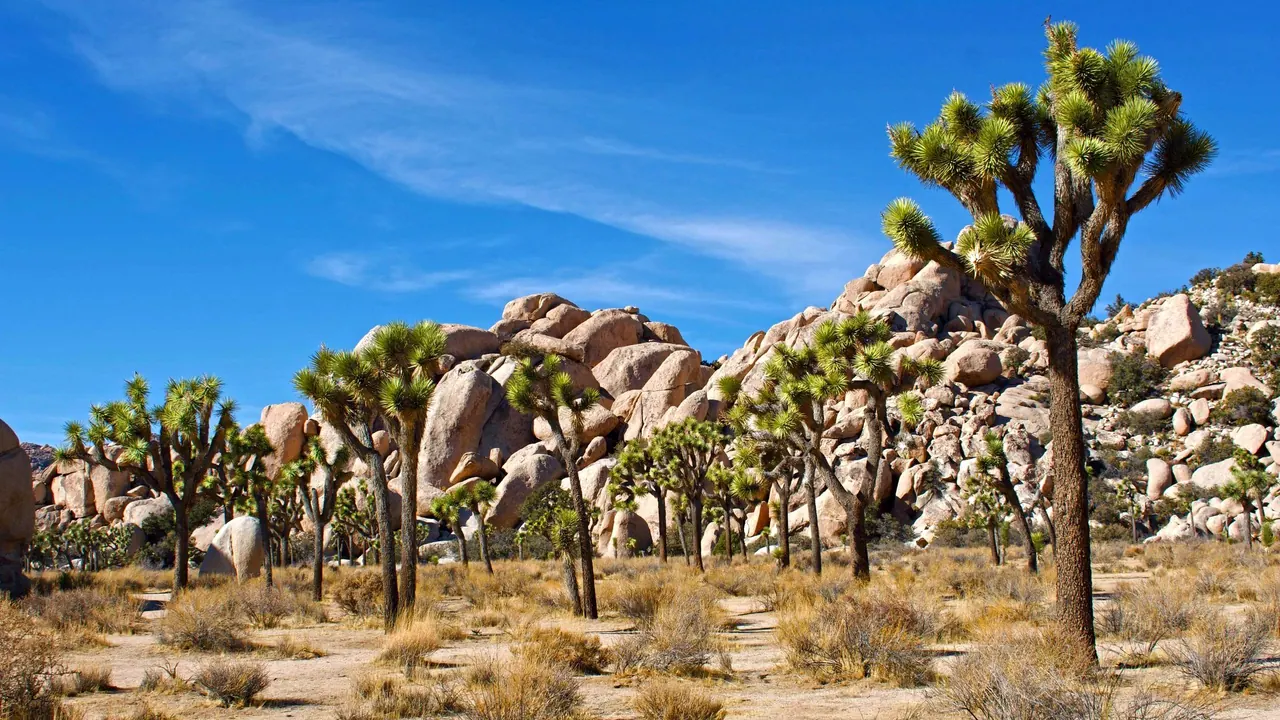
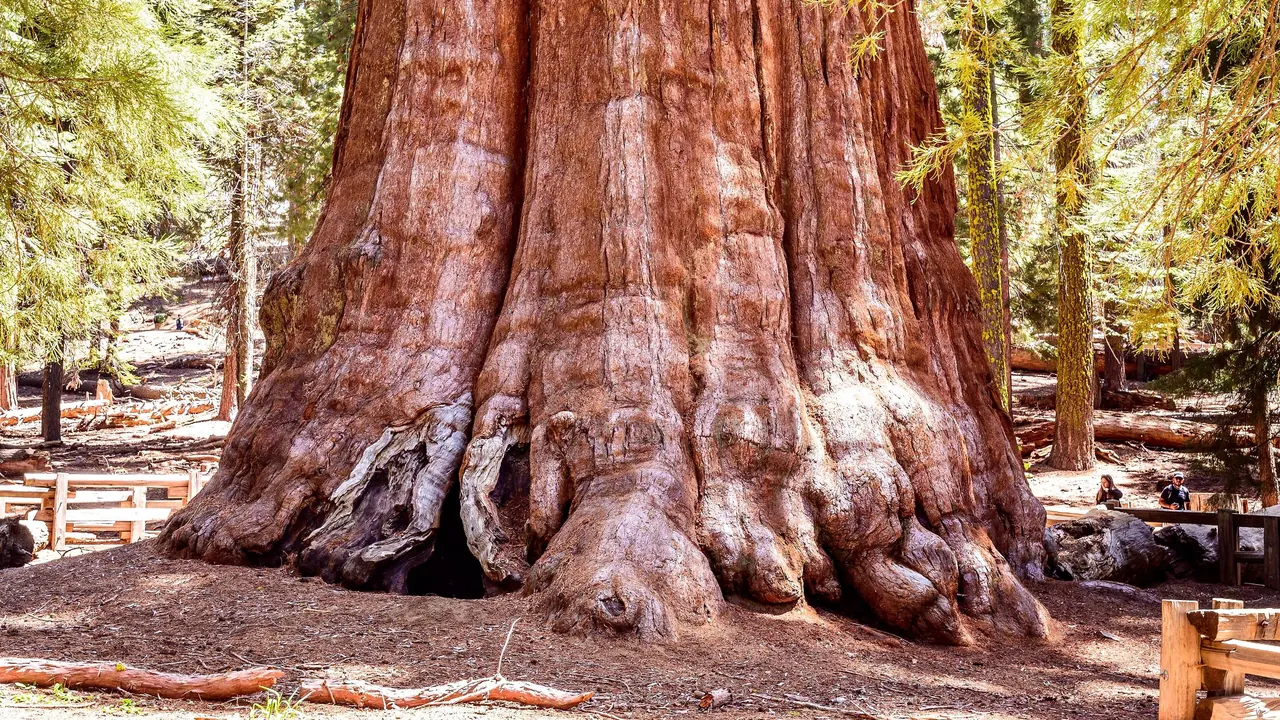
Photos: Joshua Tree by Mr. Location Scout, Pexels License; Sequoia by Domenico Convertini from Zurich, Schweiz, CC BY-SA 2.0, cropped.
Joshua Tree or Sequoia?
Our verdict in twelve categories, each scored against the same fixed benchmark cities, and the climate month by month, so you can choose for your trip.
Choose Joshua Tree for
- wellness
- shopping
- day trips
Joshua Tree suits a slower, more sociable desert trip: climbing and scrambling on granite boulders, a rental house with a pool or hot tub, evenings under the Milky Way and the odd night at the Pioneertown roadhouse. It is easier to drive, has hot springs and retreats close by, and Palm Springs is near enough for a day of shops, restaurants and mid-century houses. Come here in the cooler half of the year.
Choose Sequoia for
- beaches
- nature and the outdoors
- families
Sequoia is the choice when the landscape is the whole point. The giant trees of the Giant Forest, the drop into Kings Canyon and trails climbing into the High Sierra make it the bigger and more varied place for walking, and children are often more taken with it. In return you give up almost everything else: the roads are slow, the evenings are quiet and there is little to buy or do outside the parks. It is mainly a summer trip.
Scoreboard
Twelve categories on one fixed scale from 0 to 100. The shaded stretch is the gap between the two.
Your match
Pick a travel style or drag the sliders, and both match scores follow your weighting.
Wins on wellness and shopping with your weighting.
Wins on beaches and nature and the outdoors with your weighting.
What matters to you?
Category by category
What the scores mean for a trip.
Beaches & swimming
Swimming in Joshua Tree means the pool or plunge pool at your rental or motel. It is welcome on a hot afternoon, but there is no lake or river to go to.
Sequoia has real water, though only in season. In late summer the Kaweah River around Three Rivers settles into granite pools, and Hume Lake has a small sandy shore with calm water in July and August. In spring and early summer the rivers run fast, icy and dangerous, so treat a swim as a reward after a hike.
Food & drink
Both are places where you mostly cook for yourself, and the difference is in the kind of food around you. Joshua Tree's towns along Highway 62 have diners, Mexican places and cafés that cater to climbers, plus barbecue in Pioneertown. When you want more choice, Palm Springs is about an hour away.
Sequoia has lodge dining rooms, village delis and a few burger and barbecue places in Three Rivers. Down in the valley it gets more interesting, with summer fruit stands selling straight from the orchards and Armenian and Hmong cooking in Fresno.
Culture & sights
Joshua Tree's sights are the work of desert eccentrics and homesteaders, and there are enough of them to give a few days some character. There is Noah Purifoy's field of scrap sculptures, the Integratron dome near Landers, Pioneertown's old Western film set and the homestead buildings at Keys Ranch.
Sequoia tells its human story on a smaller scale. The Giant Forest Museum explains the trees and how they came to be protected, Hospital Rock has Western Mono rock paintings, and the Crystal Cave tour is about as close as it comes to a classic sight.
Nightlife
After dinner, Joshua Tree at least gives you somewhere to go. There are a couple of saloons in Joshua Tree and Twentynine Palms, and the Pioneertown roadhouse fills up at weekends.
In Sequoia an evening means dinner at the lodge or a ranger's campfire talk, with a beer in Three Rivers as the only alternative. Most people are asleep early ahead of a dawn start on the trails.
Nature & outdoors
Both are outstanding, and Sequoia has the greater scale and variety. You can go from groves of sequoias thousands of years old up to the granite High Sierra and down into Kings Canyon, with routes ranging from a short loop to a multi-day trek toward Mount Whitney. Black bears are a common sight, and Mineral King is the quiet base for serious hiking.
Joshua Tree is a different kind of landscape. It is open desert where two ecosystems meet, with Joshua trees, cholla gardens and great piles of boulders that make it one of the world's best climbing areas. Its other draw is the certified dark sky.
Day trips
Joshua Tree is much better placed for days away from the park. Palm Springs is about an hour downhill, with mid-century houses and a walkable downtown. Idyllwild sits among pines further on, Route 66 runs out past Amboy, and the Salton Sea makes a strange, long excursion.
From Sequoia there is less to go to and further to drive. Visalia has a pleasant old downtown, Fresno has the Forestiere Underground Gardens dug by hand, and Hanford and Allensworth hold some history, all reached across flat farmland.
Good for families
Sequoia is easier to win children over with. The paved Big Trees Trail, driving through the Tunnel Log and standing beneath the General Sherman make an impression straight away, and the Crystal Cave tour and summer paddling at Hume Lake fill out the days. Plan around carsickness on the switchbacks, Moro Rock's big drops and the spring rivers.
Joshua Tree works for older children who like climbing on things at Hidden Valley or Skull Rock. Young children struggle with the lack of shade and the heat from late spring onwards.
Getting around
You need a car for both, but driving is far easier in Joshua Tree. The towns line up along Highway 62, traffic is light and most trailheads have parking close to the rocks. The main catches are queues at the west entrance on spring weekends and no mobile signal in much of the park.
In Sequoia the Generals Highway climbs through dozens of hairpins, and the groves are an hour apart. Cedar Grove and Mineral King are reached on seasonal roads, and snow chains are often required from late autumn. A summer shuttle around the Giant Forest helps, and so does staying inside the park.
Shopping & style
Joshua Tree is the only one of the two worth a shopping stop. Yucca Valley's old town sells vintage Western wear and mid-century furniture, the village has galleries, crystal shops and climbing gear, and Palm Springs has design and consignment stores. In Sequoia you are limited to lodge gift shops, visitor-centre bookshops and fruit from the valley stands.
Affordability
The costs are broadly similar, and in both places the bill depends on where you sleep. The big difference is when prices peak. In Joshua Tree the desert rental houses are dearest in the cool months and spring weekends, while camping or a motel in Twentynine Palms keeps costs down. Petrol adds up in both.
Sequoia is expensive in summer, when the park lodges and the motels in Three Rivers fill. Sleeping in Visalia saves money but costs hours on mountain roads, and the campgrounds among the pines are the real bargain.
Live music & performing arts
Joshua Tree has a small music scene of its own, built around the Pioneertown roadhouse, which books well-known indie, rock and country acts. The Joshua Tree Music Festival adds camping weekends in spring and autumn. In Sequoia, live performance means a ranger's campfire programme. Visalia's Fox Theatre and Fresno's orchestra are a long drive back down at night.
Wellness & relaxation
Joshua Tree is set up for unwinding. Retreats, meditation and sound baths cluster around the village and the Integratron dome. Desert Hot Springs, about half an hour away, has spa motels with pools fed by hot mineral springs, ideal after climbing.
In Sequoia the calm comes from the setting rather than any facilities. There are cabins near the groves, creekside cottages in Three Rivers and silent mornings among the trees, but no thermal baths and hardly any treatments.
When should you go?
Pick your month. The climate figures are measured averages, not a forecast.
Joshua Tree in July
Sequoia in July
Daytime high, °C
Rainfall in the month, mm
Where the figures come from
Joshua Tree has no rain gauge within 25 km of the centre, so its rainfall comes from a gridded climate dataset read at the destination rather than from a gauge further away.
Sequoia has no weather station within reach, so its figures come from a gridded climate model rather than a measured record, and read a broad area rather than one spot.
Temperature and rainfall are climate normals, averaged over the years shown. Joshua Tree: 1992-2020 (rainfall 1991-2020) normals, Twentynine Palms / Sunfair Heights (20.4 km from centre). Sequoia: 2001-2020 normals, NASA POWER reanalysis grid, no weather station within 90 km.
The two are at their best in opposite halves of the year. Around the towns on the edge of Joshua Tree, the good months run from October to April, when days are mild to warm and there is little rain. December and January are cool, but the middle of the day is good for long walks, and March and April are pleasant for climbing. May is already hot. From June to September the afternoons are fierce, reaching around 39°C in July and August, so hiking and climbing are limited to dawn and dusk.
Sequoia's figures come from one point in a region that runs from the foothills up to the High Sierra, so the high country is colder than they suggest. Winter highs are around 8°C, and December brings about 90mm, which falls as snow higher up. From June to September it turns dry, with highs near 30°C at the warmest, and this is the season for long trails and the high roads. A cool-off in the river pools waits for late summer, once the snowmelt has dropped and the water has calmed. May and October are mild but changeable.
Which traveller are you?
On an outdoors trip, Sequoia has the wider range. You can walk among the largest trees on earth, look down from Moro Rock, descend into Kings Canyon and hike for days into the High Sierra. Joshua Tree is the better pick only if bouldering and climbing are what you came for.
For a relaxing and wellness trip, Joshua Tree is far better. Yoga retreats and sound baths gather around the village and the Integratron, Desert Hot Springs has spa pools fed by mineral springs, and many rentals have a hot tub. Sequoia gives you quiet and very little else.
On a family trip with children, Sequoia is slightly the better choice. The paved Big Trees Trail, driving through the Tunnel Log, the Crystal Cave tour and paddling at Hume Lake are all easy wins. Joshua Tree's boulders suit older children, but there is little shade and the summers are punishing.
Before you go
| Measure | Joshua Tree | Sequoia |
|---|---|---|
| Currency | US Dollar (USD) | US Dollar (USD) |
| Sockets | AB120 V, 60 Hz | AB120 V, 60 Hz |
| Driving side | Right | Right |
| Time zone | UTC-8, UTC-7 in summer | UTC-8, UTC-7 in summer |
| Emergency number | 911 | 911 |
| Main airport | Palm Springs International Airport (PSP)29 non-stop destinations | Fresno Yosemite International Airport (FAT)15 non-stop destinations |
| Public holidays this year | 13 days | 13 days |
Where else could you go?
Every comparison below shares a destination with this one, so you can follow Joshua Tree or Sequoia somewhere new.
- Kings Canyonvs Sequoia
- Yosemitevs Sequoia
- Death Valleyvs Sequoia
- Death Valleyvs Joshua Tree
- Kings Canyonvs Joshua Tree
- Grand Canyonvs Joshua Tree