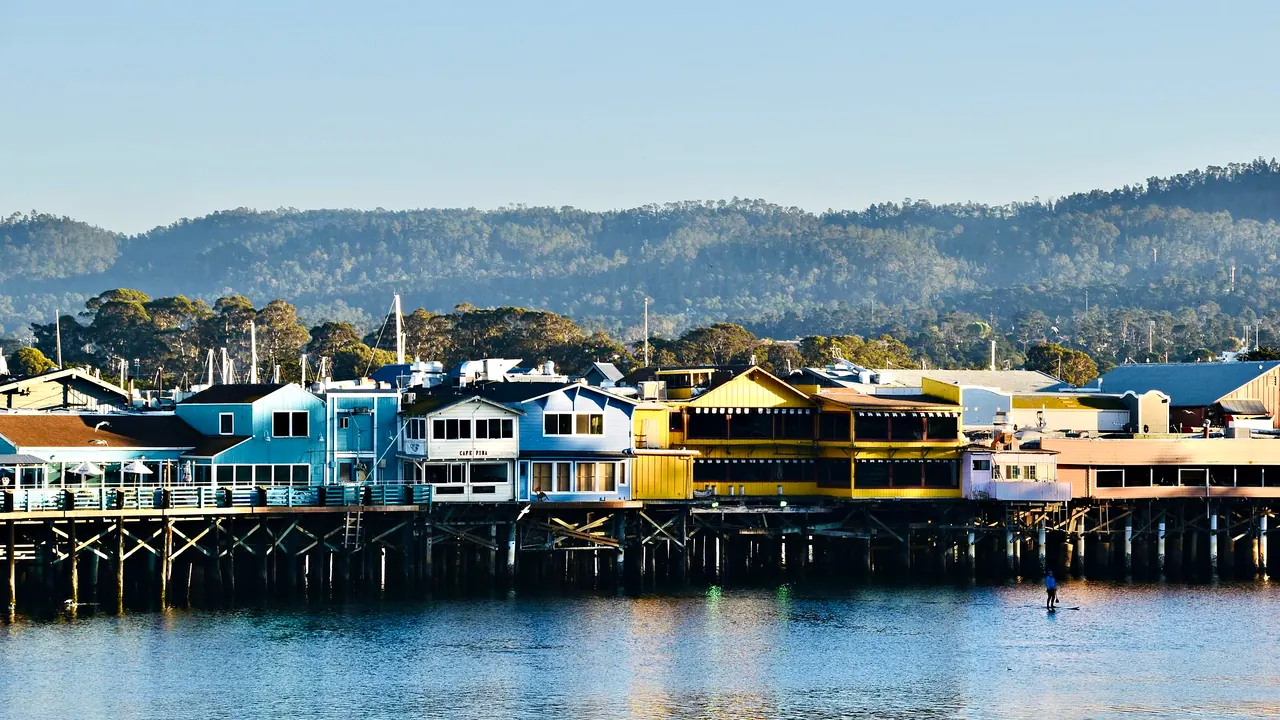
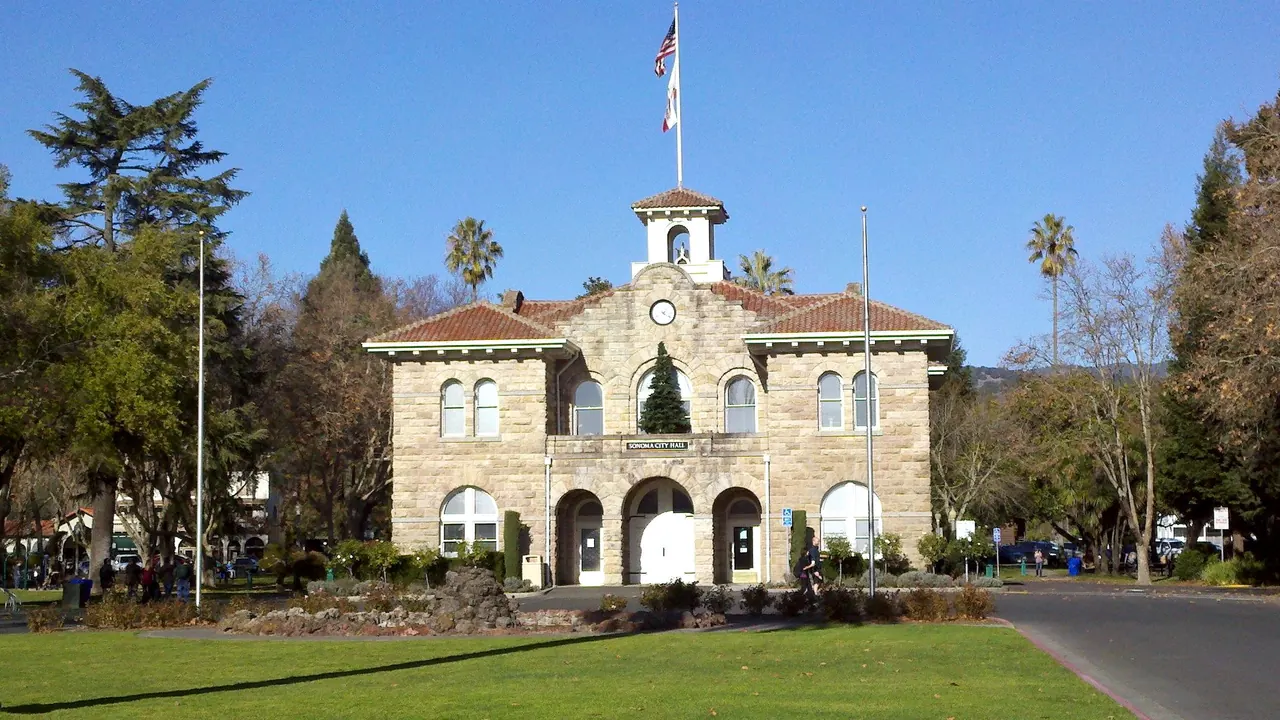
Photos: Monterey by Lesli Whitecotton, Pexels License; Sonoma by Cullen328, CC BY-SA 3.0, cropped.
Monterey or Sonoma?
Our verdict in twelve categories, each scored against the same fixed benchmark cities, and the climate month by month, so you can choose for your trip.
Choose Monterey for
- families
- nature and the outdoors
- beaches
Monterey suits travellers who want the coast and its wildlife at the centre of the trip. Whales offshore, sea otters in the kelp, Point Lobos and Big Sur to the south and a world-class aquarium make it the clear choice for families and anyone who likes to be outdoors. Its adobe history also gives you more to see on foot than Sonoma's does.
Choose Sonoma for
- food and drink
- day trips
- wellness
Couples who want to slow down over food and wine will be happier in Sonoma. Wineries are the point of the place, the plaza goes quiet early, a historic hot-spring resort is on the edge of town and San Francisco is close enough for a day out. It is a good place for long lunches and a spa day, but there is less to fill a lively itinerary.
Scoreboard
Twelve categories on one fixed scale from 0 to 100. The shaded stretch is the gap between the two.
Your match
Pick a travel style or drag the sliders, and both match scores follow your weighting.
Wins on families and nature and the outdoors with your weighting.
Wins on food and drink and day trips with your weighting.
What matters to you?
Category by category
What the scores mean for a trip.
Beaches & swimming
You shouldn't plan a swimming trip around either, but Monterey at least has the sea on its doorstep. Del Monte Beach is in town, with Carmel Beach's white sand and the Asilomar dunes nearby for walks and picnics. On warm autumn days families paddle near the wharf and kayakers and divers go out in wetsuits.
Sonoma has no shore of its own. The Bodega Bay coast is over an hour's drive and just as cold, so summer swimming means a hotel pool or the gravel beaches of the Russian River.
Food & drink
Sonoma is the stronger choice for eating and drinking, because wine is why people go. Tasting rooms surround the plaza, and old-vine Zinfandel, Cabernet and Carneros Pinot Noir are all close by. The cooking is built on local cheese, olive oil and produce. It is better for long lunches than for variety.
Monterey's strength is seafood: squid, Dungeness crab and sand dabs, with Salinas Valley produce behind them. But the wharf and Cannery Row are full of bread-bowl chowder for day visitors, and you have to look for the better meals in Old Monterey, Pacific Grove or Carmel.
Culture & sights
Both offer small-scale California history, but Monterey has more of it. As the old capital of Spanish and Mexican Alta California, it keeps the Custom House, Colton Hall and the Royal Presidio Chapel close together and easy to walk. The Carmel Mission is ten minutes away, and the Steinbeck-era canneries still stand on Cannery Row.
Sonoma's story fits around one plaza: the Bear Flag Revolt, the last Franciscan mission and the barracks, with Vallejo's house and the ruins of Jack London's Wolf House nearby. It fills half a day, where Monterey can fill a full day or more.
Nightlife
Neither is a place for a big night out, but Monterey stays a little livelier. Alvarado Street's pubs, wine bars and brewpubs fill with students from the language and naval schools, and Cannery Row picks up on weekends. Sonoma's few wine bars and saloons around the plaza wind down by late evening, and for a proper night out you have to drive to Santa Rosa or San Francisco.
Nature & outdoors
Both have fine landscapes, but Monterey's is the more remarkable. A deep submarine canyon brings whales close to shore, sea otters float in the kelp beside the waterfront path, and Point Lobos and the redwood canyons and cliff trails of Big Sur lie just to the south. Kayaking and kelp-forest diving start from town.
Sonoma's countryside is gentler: vineyards between the Mayacamas range and the Sonoma Mountains, trails from the plaza up to the Overlook, and Sugarloaf Ridge and Jack London State Historic Park a short drive away. It is at its best in green spring and at harvest, while summer heat and fire-season smoke can get in the way. Monterey's drawback is early-summer fog.
Day trips
Sonoma is the better base for getting around the region. San Francisco is about an hour away, close enough for a full day in the city. Napa, Healdsburg, Petaluma and the bayside towns of Sausalito and Tiburon are all easy to reach, though many outings turn out to be another wine valley.
Monterey's best excursions are next door: Carmel, Pacific Grove and Carmel Valley. Steinbeck's Salinas, San Juan Bautista and Santa Cruz are a little further. San Francisco is around two hours each way, and beyond that the choice soon runs out.
Good for families
This is where the two differ most. Monterey's aquarium is among the best anywhere for children, with otters, jellyfish and a towering kelp forest. Tide pools, whale-watching boats, sea lions on the wharf and Dennis the Menace Park fill the rest of the stay.
Sonoma is safe and calm, but its days revolve around tasting rooms and long lunches. The plaza playground, a miniature railway park and an African wildlife park near Santa Rosa are enough for a day or two at most. Families often do better staying elsewhere and visiting for a day.
Getting around
In both places a car does most of the work, but Monterey's sights are easier to reach without one. The flat coastal recreation trail links the wharf, downtown, Cannery Row, the aquarium and Pacific Grove, on foot or by hired bike. In Sonoma you can walk the plaza and the tasting rooms around it, but the wineries, parks and hills are spread out. On tasting days most people use a driver or join a tour so that nobody has to drive after the wine.
Shopping & style
Neither is a reason to go shopping, and the difference lies in what you bring home. Monterey's own streets sell taffy and sea-otter souvenirs, and the real browsing is in Carmel's galleries and boutiques and the antique shops of Pacific Grove. Sonoma's plaza and its arcades lean towards kitchenware, cheese, olive oil and wine bought straight from the winery, with a farmers' market in summer.
Affordability
Both are costly, and Sonoma is the more expensive of the two. It has few rooms and they are priced for wine-country weekends, tasting fees add up over a few days, and a car or driver is close to essential. The usual way to save is to stay in Santa Rosa or Petaluma.
Monterey is expensive too, especially on summer weekends and during the August classic-car week at Pebble Beach, and the aquarium is a big expense for a family. But it is easier to keep costs down there, with chain motels along the highway, cheaper beds in Seaside and Marina, and free days on the coastal trail and at the tide pools.
Live music & performing arts
Both depend mainly on summer and festival seasons, with little in between. Monterey has the bigger place in music history: a September jazz festival held every year since 1958, the 1967 Pop Festival on the same fairgrounds and the Carmel Bach Festival in summer. Sonoma's highlights are outdoor shows among the oaks at Jack London State Historic Park and concerts at wineries, with the Green Music Center's concert hall half an hour away for touring orchestras.
Wellness & relaxation
Sonoma is the better choice if you want a spa in the plan. Natural mineral springs at Boyes Hot Springs feed a historic resort spa that sells day passes, and Calistoga's mud baths are about an hour over the hills. The quiet plaza and early evenings keep the pace slow.
Monterey has no thermal water of its own. Relaxing there means foggy mornings, shore walks in Pacific Grove and resort spas in Carmel Valley or at Pebble Beach, and the waterfront gets crowded on summer weekends.
When should you go?
Pick your month. The climate figures are measured averages, not a forecast.
Monterey in July
Sonoma in July
Daytime high, °C
Rainfall in the month, mm
Where the figures come from
Sonoma has no rain gauge within 25 km of the centre, so its rainfall comes from a gridded climate dataset read at the city rather than from a gauge further away.
Sonoma's sunshine is measured 87 km from the centre, at Sacramento Executive Airport.
Temperature and rainfall are climate normals, averaged over the years shown. Monterey: 1991-2020 normals, Monterey / Pacific Grove Acres (5 km from centre). Sonoma: 1991-2020 (sunshine 1981-2010) normals, Napa / Middleton (17.8 km from centre).
Monterey's weather barely changes through the year. Highs stay mild in every month and peak at about 23°C from August to October, which makes early autumn its best and driest stretch. Rain comes from December to March. Even at its warmest the bay only reaches about 15°C, so whatever the month, the sea is for kayaks and wetsuits rather than swimming. It never gets too hot or too cold for walking the waterfront.
Sonoma swings much more. From June to September the valley reaches around 26°C, with long sunny days that are good for the vineyards but warm on the valley floor in the afternoon. Winters are cooler than Monterey's and much wetter, with December and January each bringing about 169mm of rain. April, May and October, mild and fairly dry, are the most comfortable months for walking and tasting. The coast an hour away stays cold all year.
Which traveller are you?
On a family trip with young children, Monterey wins easily. The aquarium, the tide pools at Pacific Grove, whale-watching boats and otters along the waterfront fill several days. In Sonoma, days built around tasting rooms leave children little beyond a playground and a miniature railway.
For a relaxing and wellness trip, Sonoma is the calmer choice. Boyes Hot Springs gives it real mineral water with day passes, the plaza goes quiet early and long afternoons on a terrace set the pace. Monterey's waterfront fills with crowds on summer weekends.
For a wine-tasting trip, Sonoma is the obvious base. Dozens of wineries lie within a short drive, with Carneros Pinot Noir and old-vine Zinfandel close by, and Napa and Healdsburg make easy outings. Monterey's Carmel Valley tasting rooms are only a pleasant extra.
Before you go
| Measure | Monterey | Sonoma |
|---|---|---|
| Currency | US Dollar (USD) | US Dollar (USD) |
| Sockets | AB120 V, 60 Hz | AB120 V, 60 Hz |
| Driving side | Right | Right |
| Time zone | UTC-8, UTC-7 in summer | UTC-8, UTC-7 in summer |
| Emergency number | 911 | 911 |
| Elevation | 8 m | 26 m |
| Main airport | Mineta San Jose International Airport (SJC)85 km from centre39 non-stop destinations | Charles M. Schulz Sonoma County Airport (STS)39 km from centre14 non-stop destinations |
| Public holidays this year | 13 days | 13 days |
By the numbers
| Measure | Monterey | Sonoma |
|---|---|---|
| City population | 30,218 | 10,739 |
| People per km² | 991 | 1,513 |
| Museums within 10 km | 5 | 7 |
| UNESCO World Heritage sites within 50 km | 0 | 0 |
| Swim season, months above 21 °C | None | None |
Where else could you go?
Every comparison below shares a destination with this one, so you can follow Monterey or Sonoma somewhere new.
- Carmel-by-the-Seavs Monterey
- Napavs Sonoma
- San Franciscovs Sonoma
- San Josevs Monterey
- San Josevs Sonoma
- San Franciscovs Monterey