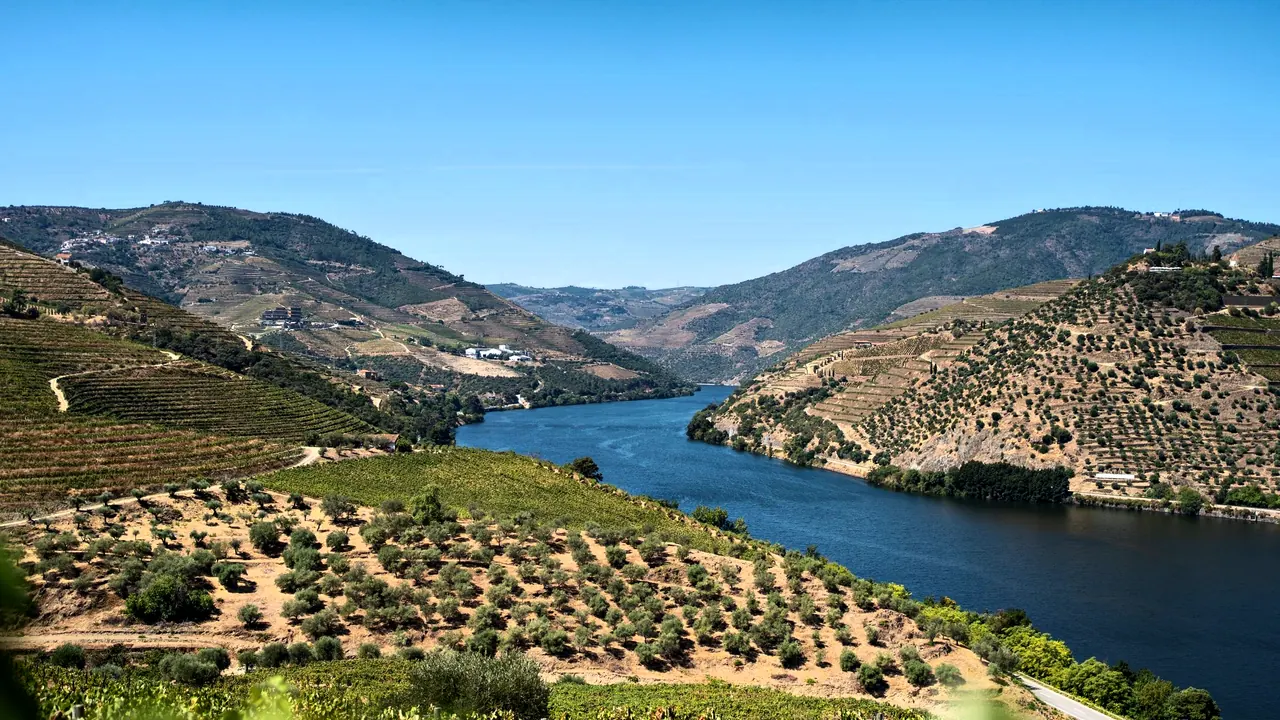
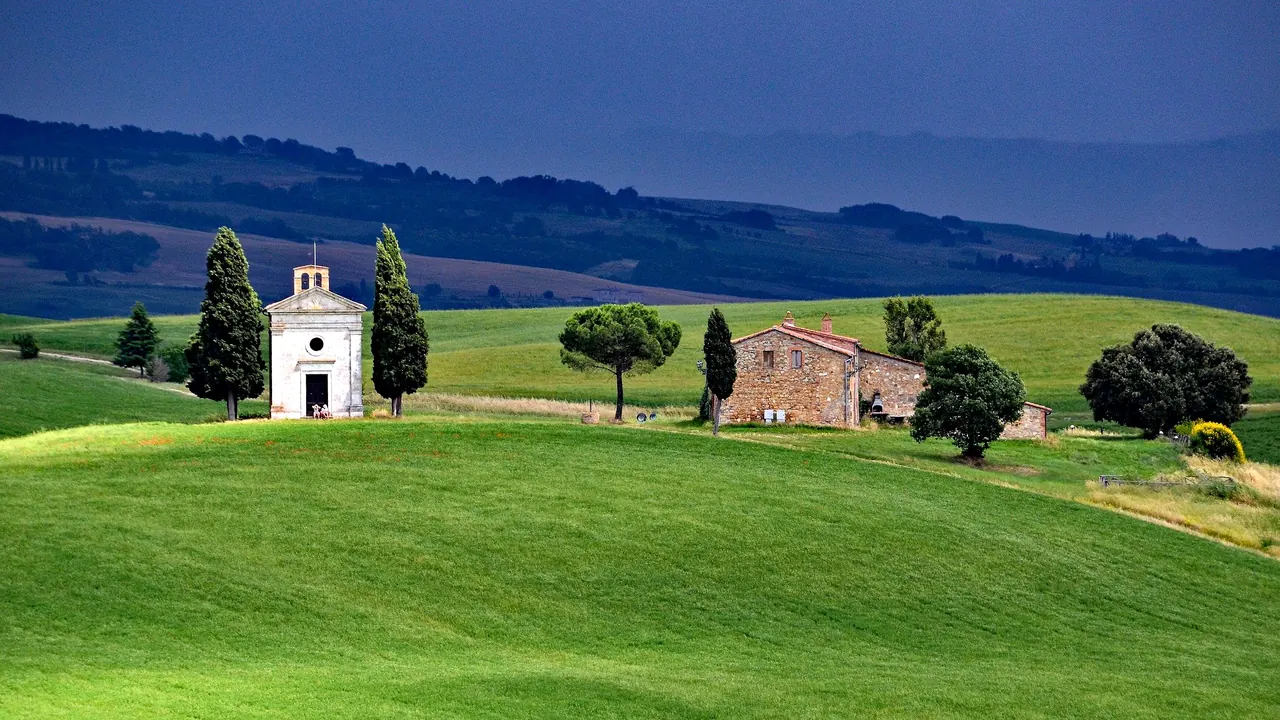
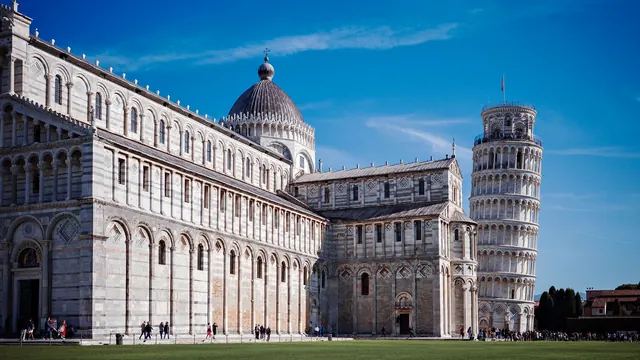
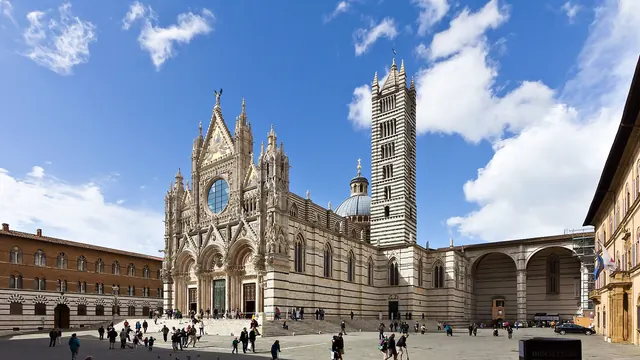
Photos: Douro Valley by Finn Ruijter, Pexels License; Tuscany by Hervé Simon, CC BY-SA 2.0, cropped.
Douro Valley or Tuscany?
Our verdict in twelve categories, each scored against the same fixed benchmark cities, and the climate month by month, so you can choose for your trip.
Choose Douro Valley for
- prices
The Douro Valley is for travellers who want a trip built around wine. You taste port and the valley's dry reds at the quintas where they are made, look down on the terraced gorge between Régua and Pinhão, and end each evening early over a long dinner. The trip is quiet and focused, with little else on offer. It can stay inexpensive if you drive and sleep in town, and many people add it as a few days onto a stay in Porto.
Choose Tuscany for
- beaches
- shopping
- live music and the arts
Tuscany suits people who want more from one trip: Renaissance art in Florence and Siena, hill towns and vineyards, a real summer coast, and open-air hot springs in the countryside. Families, first-time visitors and anyone who gets restless after two days of tastings will find far more to do there. The cost is higher bills and heavy summer crowds in the famous cities.
Scoreboard
Twelve categories on one fixed scale from 0 to 100. The shaded stretch is the gap between the two.
Your match
Pick a travel style or drag the sliders, and both match scores follow your weighting.
Wins on prices with your weighting.
Wins on beaches and shopping with your weighting.
What matters to you?
Category by category
What the scores mean for a trip.
Beaches & swimming
The Douro offers no real beach vacation. The Atlantic is back past Porto, so in summer you swim at grassy river beaches on the Tua and the Paiva, or more often in your quinta hotel's pool. That is fine for cooling off, but it will not fill a day.
Tuscany has a proper coast, though you need to stay near it. You can choose between Elba's clear water at Fetovaia and Cavoli, the wilder pine-backed strands of the Maremma, and the ordered rows of umbrellas at Versilia's beach clubs, all with sea swimming from June to late September.
Food & drink
Both are wine regions, but they offer different things. The Douro is about fortified wine and the dry reds of the valley, tasted on the terraces between Régua and Pinhão, alongside hearty plates of roast kid and the meat-stuffed bola de Lamego. There are no markets or street food, though, and little variety.
Tuscany has a wider table. Florence has lampredotto from street carts and the San Lorenzo and Sant'Ambrogio market halls. Out in the country you can taste Chianti, Brunello and Vino Nobile, eat pecorino in Pienza and look for white truffles around San Miniato. You eat and drink better across a whole trip there, while the Douro is the place to go for port itself.
Culture & sights
The Douro's main monument is the landscape: centuries of hand-built terraces, listed as a World Heritage wine region. Around it are a few separate sights, such as the baroque stairway at Lamego, the Mateus Palace and the Palaeolithic rock engravings of the Côa Valley, spread out and with no dense historic town between them.
Tuscany is on another scale. The Uffizi, Michelangelo's David and the frescoed churches of Florence fill several days on their own, before you add Siena, San Gimignano, Lucca's walls and Piero della Francesca in Arezzo.
Nightlife
After dark the Douro means a glass of port on the terrace and villages that go quiet early. Apart from a few bars in Vila Real and the odd summer festa, you would have to go back to Porto to find a night out.
Tuscany is mostly about long dinners too, but Florence's Santo Spirito steps and the wine bars of Oltrarno stay busy late. In summer, the beach clubs and dance halls of Versilia keep going until dawn.
Nature & outdoors
Both regions have outstanding farmed landscapes. The Douro is one dramatic scene: a deep schist gorge terraced with vines, olive and almond trees, seen from viewpoints such as São Leonardo de Galafura. You can walk between quintas, cycle the Corgo trackbed or kayak on the river.
Tuscany has more variety. As well as the cypress lanes of the Val d'Orcia, there are ridge hikes in the Apuan Alps, beech forests in the Casentino, the coastal wilds of the Maremma park, and sailing and diving around Elba.
Day trips
From the Douro, the outings take some driving but are worthwhile. Porto is a full day away by the riverside train, and Amarante, Guimarães and Braga can be reached by car, as can the Dão country around Viseu.
Tuscany has more outings than one trip can hold. Siena, Lucca, Pisa and San Gimignano are all close together, the Montalcino and Pienza loop runs through wine country, and Bologna, the Cinque Terre and the Umbrian towns lie just over the border.
Good for families
Children tend to get bored in the Douro. A river boat, the scenic train, quinta pools and grape-treading at harvest fill a day or two, but the rest is winding drives and adult tastings, so most families treat it as a short stop on a longer trip.
Tuscany works much better with children. You can split the stay between an agriturismo with animals and a pool and the shallow, lifeguarded beaches of Versilia or Elba, and add the Pinocchio park at Collodi or a bike ride on Lucca's walls.
Getting around
In the Douro, the railway from Porto to Pocinho and the river boats cover the core of the valley without a car. The quintas and viewpoints up on the slopes need a car, a driver or a tour, and because tasting is the point, many visitors hire a driver.
Tuscany is easier. Florence is walkable, and regional trains link it to Pisa, Lucca, Arezzo and Viareggio. Chianti, the Val d'Orcia and the Maremma still need a car, and you park outside the old town walls.
Shopping & style
Shopping in the Douro means wine. You can buy aged tawnies and vintage port at the estates, along with olive oil, almonds and black pottery from Bisalhães, and there is little else.
Tuscany is a real place for craft shopping. Florence has leather workshops around Santa Croce, goldsmiths on the Ponte Vecchio and marbled paper in Oltrarno. Around the region you can buy alabaster in Volterra, ceramics in Montelupo and marble in Pietrasanta, and there are designer outlets in the Arno valley.
Affordability
The Douro is the cheaper of the two. Village restaurants and the wine are inexpensive, and guesthouses in Régua and Lamego cost little. The bills go up when you stay at wine-estate hotels, hire drivers and take boat trips, especially at harvest.
Tuscany costs a lot in the months people visit. Central Florence, Chianti villas and Forte dei Marmi are all expensive, and car hire comes on top. Staying in Lucca, Arezzo or the Garfagnana, or going in spring or autumn, brings the cost down noticeably.
Live music & performing arts
The Douro has very little to attend: a modest municipal theatre in Vila Real, brass bands at summer festas, and the pilgrimage festivities in Lamego. For concerts or fado you go to Porto.
Tuscany has a proper musical calendar. Florence's Maggio Musicale has its own opera house, Puccini's operas are staged outdoors by the lake at Torre del Lago in summer, and Siena's Accademia Chigiana holds concerts in palaces.
Wellness & relaxation
In the Douro, rest is mostly a matter of pace. You spend slow days among the vines, and the larger estate hotels add a spa and a pool looking over the terraces. For thermal water, the spa village of Caldas de Aregos near Resende has drawn bathers to its sulphur springs for centuries, and the long-established resort of São Pedro do Sul lies further south. Both are a drive from the heart of the valley, though, and bathing plays little part in the region as a whole.
In Tuscany, hot springs are part of the trip itself, and they are spread across the south. You can soak for free in the warm terraced pools of Saturnia's Cascate del Mulino, see the medieval bath that takes the place of a square in Bagno Vignoni, or find the white limestone pools in the woods at Bagni San Filippo. For a grander spa with old-fashioned pump rooms, there is Montecatini Terme. Base yourself in the countryside rather than in Florence, which is anything but restful in summer.
When should you go?
Pick your month. The climate figures are measured averages, not a forecast.
Douro Valley in July
Tuscany in July
Daytime high, °C
Rainfall in the month, mm
Where the figures come from
Douro Valley has no weather station within reach, so its figures come from a gridded climate model rather than a measured record, and read a broad area rather than one spot.
Tuscany has no rain gauge within 25 km of the centre, so its rainfall comes from a gridded climate dataset read at the destination rather than from a gauge further away.
Tuscany's sunshine is measured 71 km from the centre, at Pisa / S. Giusto.
Temperature and rainfall are climate normals, averaged over the years shown. Douro Valley: 1991-2020 normals, TerraClimate 4 km grid at the town, no weather station within 90 km. Tuscany: 1995-2020 (sunshine 1991-2020, rainfall 1991-2020) normals, Firenze / Peretola (5.6 km from centre).
The Douro is at its best from May to early October. At the point where its climate is measured, highs reach 26°C in July and August and almost no rain falls (11mm in July). Down on the valley floor around Pinhão it feels much hotter, so midsummer is for pools and shade, and spring and the September harvest are better for walking the vineyards. The rain comes hard from October, with well over 160mm a month until the new year, so winter is wet as well as cool.
Tuscany heats up further. August highs reach 33°C and July has about 320 hours of sunshine, which suits the coast but makes walking around Florence in the afternoon tiring. May, June and September are the comfortable months for the cities and hill towns. Tuscany's winters are drier than the Douro's, and its wettest month, November, has 124mm. That makes the shoulder seasons a safer bet in Tuscany.
Which traveller are you?
On a tight budget, the Douro is the better choice. Everyday eating and drinking cost little, and if you stay in a valley town rather than on an estate, the whole trip stays modest. Tuscany is expensive in its main season, and even its cheaper corners rarely cost as little.
On a culture and arts trip, Tuscany wins easily. A week of Renaissance painting, sculpture and architecture barely gets you through Florence and Siena. The Douro's heritage lies mostly in its terraced slopes, plus a handful of sights spread across the valley.
On a family trip with children, Tuscany is much easier. Children are welcome at the dinner table, the sea is within reach and there are days out designed with them in mind. In the Douro, the tastings and long drives soon wear young children out.
Before you go
| Measure | Douro Valley | Tuscany |
|---|---|---|
| Official language | Portuguese | Italian |
| Currency | Euro (EUR) | Euro (EUR) |
| Sockets | CF230 V, 50 Hz | CFL230 V, 50 Hz |
| Driving side | Right | Right |
| Time zone | UTC, UTC+1 in summer | UTC+1, UTC+2 in summer |
| Emergency number | 112 | 112 |
| Main airport | Francisco de Sá Carneiro Airport (OPO)134 non-stop destinations | Florence Airport, Peretola (FLR)46 non-stop destinations |
| Public holidays this year | 14 days | 13 days |
By the numbers
| Measure | Douro Valley | Tuscany |
|---|---|---|
| Population | - | 3,729,641 |
Where else could you go?
Every comparison below shares a destination with this one, so you can follow Douro Valley or Tuscany somewhere new.
- Umbriavs Tuscany
- Elbavs Tuscany
- Cinque Terrevs Tuscany
- Lake Gardavs Tuscany
- Istriavs Tuscany
- Piedmontvs Tuscany