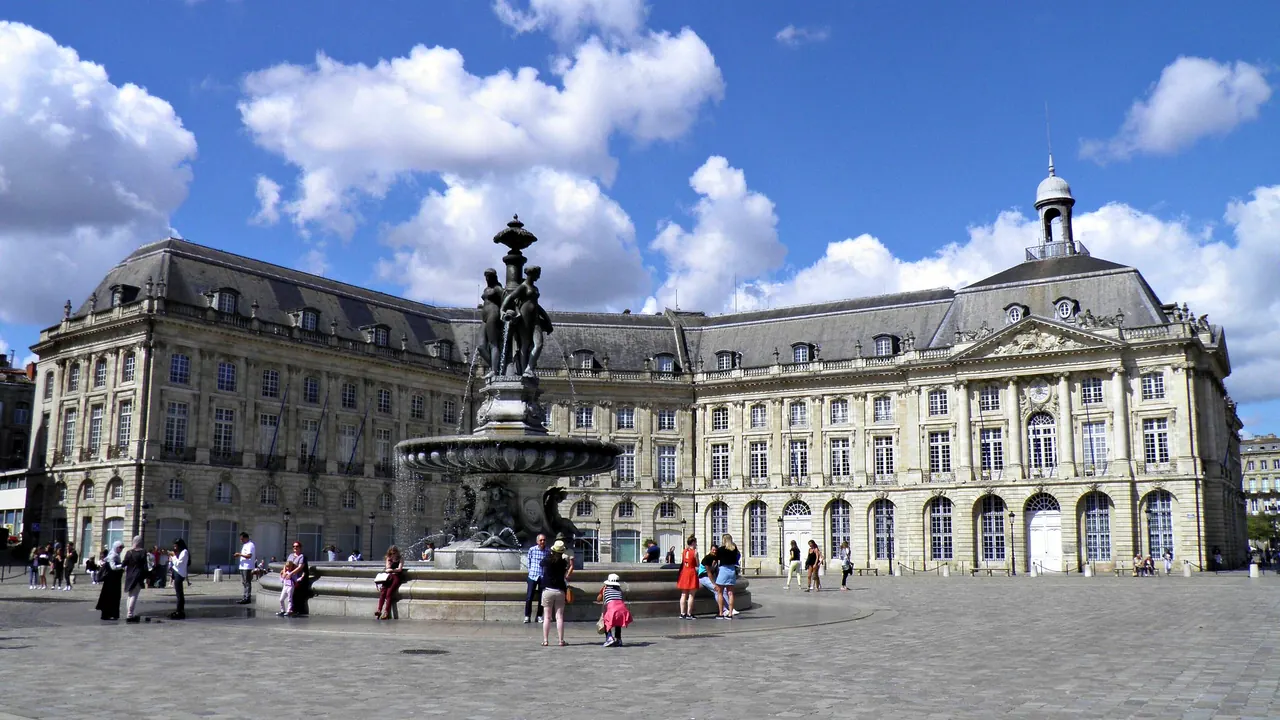
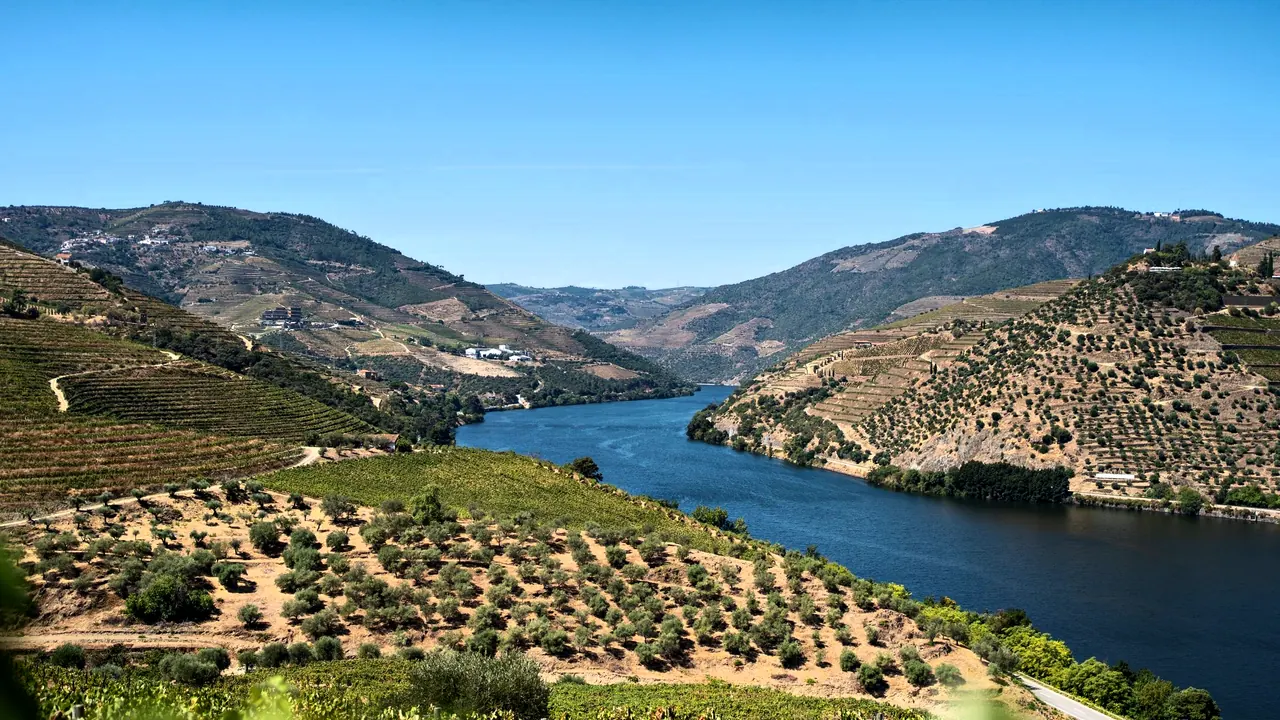
Photos: Bordeaux by Gzen92, CC BY-SA 4.0, cropped; Douro Valley by Finn Ruijter, Pexels License.
Bordeaux or Douro Valley?
Our verdict in twelve categories, each scored against the same fixed benchmark cities, and the climate month by month, so you can choose for your trip.
Choose Bordeaux for
- live music and the arts
- nightlife
- getting around
Bordeaux suits travellers who want wine as part of a full city trip. You get a walkable classical centre of pale limestone, trams, the Grand Théâtre and wine bars in the evening, with Saint-Émilion, the Médoc and the Arcachon coast as easy outings. It is the better choice with children, without a car, or for anyone who wants an evening out after the tastings.
Choose Douro Valley for
- prices
- wellness
- nature and the outdoors
Choose the Douro Valley when the landscape and the bottle are the whole point. Its terraced gorge between Régua and Pinhão is far more dramatic than the gentle country around Bordeaux. The quinta hotels are deeply quiet, and eating and drinking cost less. In return you give up nightlife, there is little for children, and you need a car or a driver to reach the estates.
Scoreboard
Twelve categories on one fixed scale from 0 to 100. The shaded stretch is the gap between the two.
Your match
Pick a travel style or drag the sliders, and both match scores follow your weighting.
Wins on live music and the arts and nightlife with your weighting.
Wins on prices and wellness with your weighting.
What matters to you?
Category by category
What the scores mean for a trip.
Beaches & swimming
Neither is a beach destination, but from Bordeaux the Atlantic is about an hour away. Lacanau and the Médoc have surf beaches, and the Arcachon basin below the Dune du Pilat has calmer water that suits small children.
In the Douro, swimming means a grassy river beach on the Tua or the Paiva, or more often the quinta pool. The open sea lies far back beyond Porto.
Food & drink
Both are wine destinations first, but they are very different places to eat. Bordeaux has a whole city of tables: oyster counters at the Marché des Capucins, brasseries and bistros in Saint-Pierre and Chartrons, entrecôte grilled over vine cuttings, and bars pouring Médoc, Saint-Émilion and Sauternes by the glass.
The Douro is about drinking where the wine is made: tawny and vintage port and structured reds on terraces above the vines, with roast kid, bola de Lamego and smoked sausages alongside. The cooking is hearty but narrow and village evenings end early, so for eating out night after night Bordeaux has more to offer.
Culture & sights
Bordeaux has a dense historic centre to walk. The classical riverfront runs from the Place de la Bourse to the Grand Théâtre and the bell tower of Saint-Michel, and the Musée d'Aquitaine and the CAPC fill a rainy day.
The Douro's heritage is the terraced wine landscape itself, with separate sights you have to drive between: the Douro Museum in Régua, Lamego's baroque stairway, the Mateus Palace and the Palaeolithic rock engravings of the Côa Valley. None of its towns rewards an afternoon's wandering the way Bordeaux does.
Nightlife
Bordeaux has a real, if modest, night out. There are wine bars and terraces in Saint-Pierre, a student crowd around Place de la Victoire and clubs on the Quai de Paludate that run until morning. In the Douro, evenings are a long dinner and a glass of port on a terrace, with the odd summer festa as the only exception. Porto is the nearest place to go out.
Nature & outdoors
The Douro has the stronger scenery. Its schist gorge is carved into terraces of vines, olives and almonds and is at its most dramatic from the viewpoints at São Leonardo de Galafura and Casal de Loivos. You can walk between quintas, take a kayak on the river or head for rougher walking in the Alvão hills.
The country around Bordeaux is flat and gentle, which makes it good for cycling greenways through Entre-Deux-Mers. Its best nature is an hour away at the Dune du Pilat, on the Arcachon tidal flats and along the Médoc surf coast, and there is no real hiking nearby.
Day trips
Bordeaux makes the easier base. Saint-Émilion is about forty minutes away by train and Arcachon about an hour. The Médoc châteaux and Sauternes are close, and Cognac and Biarritz are at the edge of a day.
From the Douro, Porto takes a full day on the riverside train, and Amarante, Guimarães, Braga and Viseu all mean driving. There is plenty of variety, with heritage towns and the Dão wine country, but every outing takes more effort.
Good for families
Bordeaux is much easier with children. The centre is flat and served by trams, the Miroir d'eau turns into a paddling pool on hot days, and the Jardin Public has a carousel and a puppet theatre. The dune and the calm Arcachon beaches make good bigger days out.
In the Douro, the river boats, the scenic train and the quinta pools are the high points, set against winding drives and adults' tastings. It works best as a short stop for families with outdoorsy older children.
Getting around
You don't need a car in Bordeaux. The centre is flat and largely pedestrianised, trams run to the Cité du Vin, the right bank and the station, and bike lanes follow the river. A car only matters for visiting estates in the Médoc or Sauternes.
The Douro is the other way round. The railway and the boats link the riverside towns, but the quintas and viewpoints are up narrow, twisting roads. Since the day is about tasting, most visitors hire a driver or stay at a quinta they can walk around.
Shopping & style
Bordeaux has proper city shopping: chains along Rue Sainte-Catherine, luxury labels in the Triangle d'Or and antique dealers on Rue Notre-Dame in Chartrons. Its wine cellars will ship bottles home for you.
In the Douro, the one real purchase is wine straight from the estates, often port and reds that are hard to find abroad. Olive oil, almonds and black pottery from Bisalhães make up the rest.
Affordability
The Douro is the cheaper of the two, especially for eating and drinking. Village restaurants and good local wine cost little, and simple guesthouses in Régua or Lamego keep a stay inexpensive. Estate hotels, private drivers and a harvest-time visit narrow the gap.
Bordeaux costs what a prosperous French city costs, with central hotels at mid-to-high prices. Set lunch menus are the main way to save.
Live music & performing arts
Bordeaux has a season worth planning around: opera and ballet in the gilded Grand Théâtre of 1780, the national orchestra nearby, and jazz and world music on the right bank, though it goes quiet in high summer. The Douro has little beyond Vila Real's municipal theatre and the brass bands and folk groups of the summer festas. For concerts or fado, you have to go back to Porto.
Wellness & relaxation
Neither has a bathing culture, and both rely on vinotherapy, but the Douro does calm better. Its estate hotels have spas and infinity pools above the terraces, the nights are deeply quiet, and the old sulphur springs of Caldas de Aregos and the thermal resort of São Pedro do Sul are within reach.
In Bordeaux, it means a day or two at a vineyard spa outside town, or slow lunches and evening walks on the quays. For real thermal waters you have to travel to Dax.
When should you go?
Pick your month. The climate figures are measured averages, not a forecast.
Bordeaux in July
Douro Valley in July
Daytime high, °C
Rainfall in the month, mm
Where the figures come from
Douro Valley has no weather station within reach, so its figures come from a gridded climate model rather than a measured record, and read a broad area rather than one spot.
Temperature and rainfall are climate normals, averaged over the years shown. Bordeaux: 1991-2020 normals, Bordeaux / Merignac (9.5 km from centre). Douro Valley: 1991-2020 normals, TerraClimate 4 km grid at the town, no weather station within 90 km.
Both places are warm from May to October, with daytime highs of 20°C or more, but Bordeaux's summer runs a little hotter. It reaches about 28°C in August, against the Douro's 26°C. July is Bordeaux's sunniest and driest month, and July and August are the weeks for swimming on the Atlantic coast an hour away. Rain picks up again from September and is heaviest in November and December, when short, grey days suit museums and wine bars better than the coast.
In the Douro, measured around the riverside towns, the year divides more sharply into wet and dry. Summer is almost rainless, with about 11mm in July, but the gorge traps the heat, so walking the terraces in July and August is hard work. Spring and September are better for being outdoors. From October to January the valley is far wetter than Bordeaux, with up to 178mm in December, though its winter days stay a little milder.
Which traveller are you?
For a food and nightlife trip, Bordeaux is the better choice because the evening doesn't have to end after dinner. In a city full of restaurants you can eat somewhere different every night and still find a bar or a dance floor afterwards. The Douro gives you wine at its source and an early night.
On an outdoors trip, the Douro Valley gives you more, as long as you avoid high summer. A river gorge with steep terraced slopes means active days on foot, by bike or on the water among the vines. Bordeaux offers gentler, flatter riding, with the wilder coast an hour away.
On a tight budget, your money goes further in the Douro if you drive yourself and sleep in a town rather than at a wine estate. Meals and good bottles cost little there. Bordeaux is a prosperous French city where rooms and dinner wine add up, although walking its streets costs nothing.
Before you go
| Measure | Bordeaux | Douro Valley |
|---|---|---|
| Official language | French | Portuguese |
| Currency | Euro (EUR) | Euro (EUR) |
| Sockets | CE230 V, 50 Hz | CF230 V, 50 Hz |
| Driving side | Right | Right |
| Time zone | UTC+1, UTC+2 in summer | UTC, UTC+1 in summer |
| Emergency number | 112 | 112 |
| Elevation | 1 m | - |
| Main airport | Bordeaux–Mérignac Airport (BOD)11 km from centre97 non-stop destinations | Francisco de Sá Carneiro Airport (OPO)134 non-stop destinations |
| Public holidays this year | 11 days | 14 days |
By the numbers
| Measure | Bordeaux | Douro Valley |
|---|---|---|
| Population | 267,991 | - |
| People per km² | 5,425 | - |
| Museums within 10 km | 18 | - |
| UNESCO World Heritage sites within 50 km | 4 | - |
Where else could you go?
Every comparison below shares a destination with this one, so you can follow Bordeaux or Douro Valley somewhere new.
- Biarritzvs Bordeaux
- San Sebastianvs Bordeaux
- Toulousevs Bordeaux
- Basque Countryvs Bordeaux
- Bilbaovs Bordeaux
- Nantesvs Bordeaux