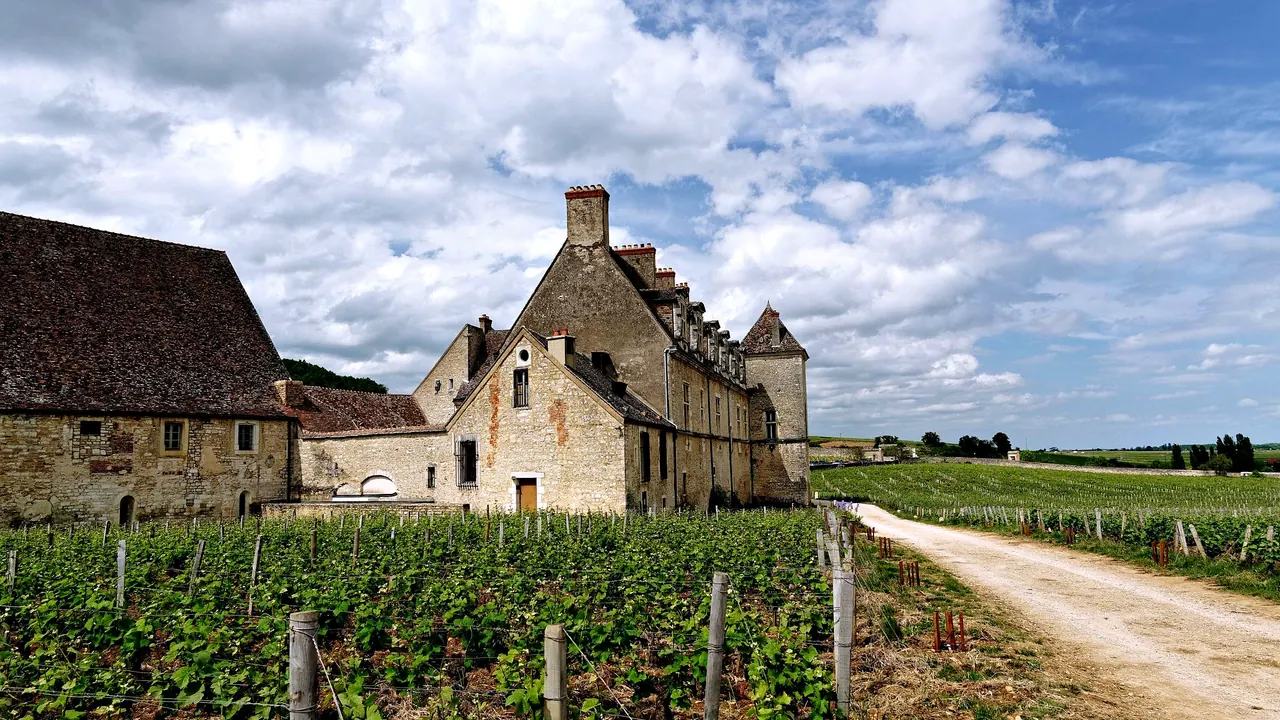
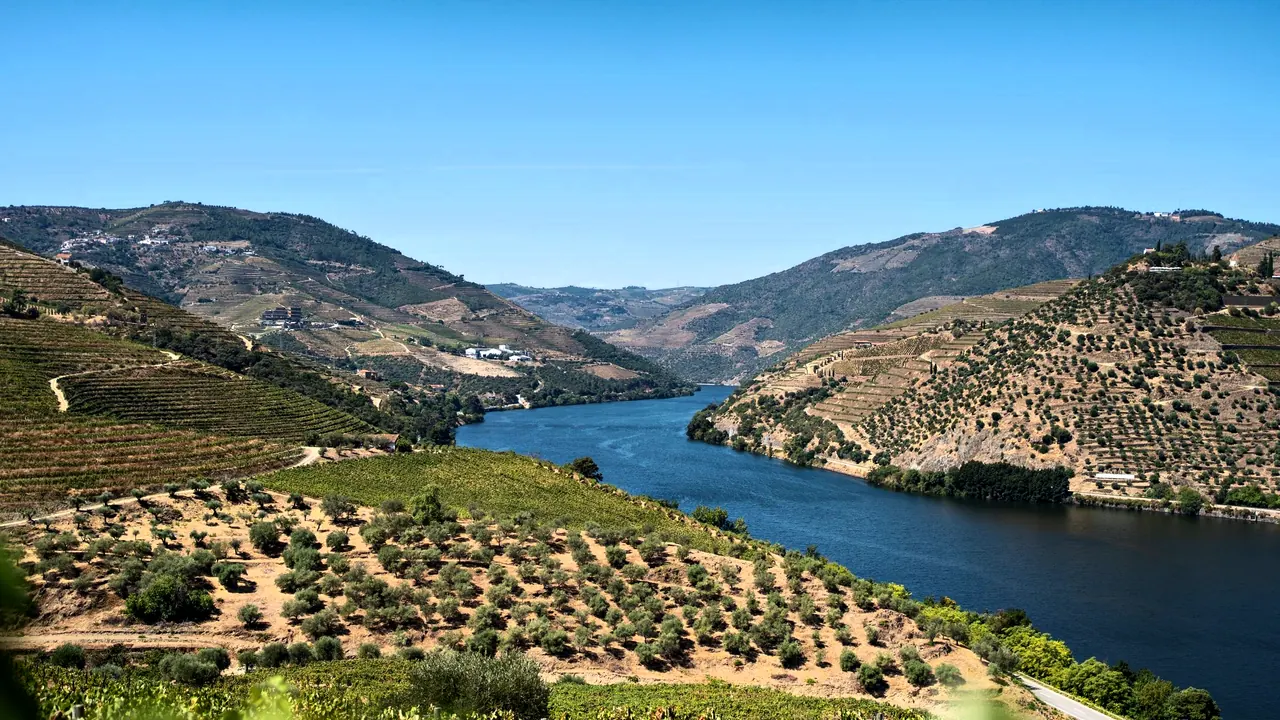
Photos: Burgundy by Gu Bra, Pexels License; Douro Valley by Finn Ruijter, Pexels License.
Burgundy or Douro Valley?
Our verdict in twelve categories, each scored against the same fixed benchmark cities, and the climate month by month, so you can choose for your trip.
Choose Burgundy for
- live music and the arts
- shopping
- culture and sights
Burgundy is the better choice if you want depth as well as wine. Its cellars and country inns are among the most famous in Europe, and between tastings you have Romanesque abbeys, ducal Dijon and a string of walled medieval towns. Dijon and Beaune also give you trains, walkable centres and a few evenings out, so it works for a longer, more varied stay and copes better with children.
Choose Douro Valley for
- nature and the outdoors
- prices
- wellness
The Douro Valley suits travellers who come mainly for the view and the glass. The terraced schist gorge is more dramatic than anything in Burgundy's gentle hills, a quinta stay there is calmer and more secluded, and plain meals and wine cost less. In return you get fewer sights, almost nothing to do after dinner and little for children, which is why many people fit it into a wider trip from Porto.
Scoreboard
Twelve categories on one fixed scale from 0 to 100. The shaded stretch is the gap between the two.
Your match
Pick a travel style or drag the sliders, and both match scores follow your weighting.
Wins on live music and the arts and shopping with your weighting.
Wins on nature and the outdoors and prices with your weighting.
What matters to you?
Category by category
What the scores mean for a trip.
Beaches & swimming
Both are inland, and neither is a place to come for swimming. The difference is the water. Burgundy has proper lake beaches on the Morvan reservoirs and at Lac Kir in Dijon, with sailing and pedalos, while the Douro has a few grassy river beaches on the Tua and Paiva, and most visitors simply use the quinta pool.
Food & drink
Both are first of all wine trips, but Burgundy goes further. The Côte de Nuits and Côte de Beaune hold some of the world's most sought-after vineyards, Chablis and the Mâconnais add range, and the cooking, from boeuf bourguignon to Époisses and starred inns in Saulieu and Chagny, is a reason to come in its own right.
The Douro's draw is port and its strong dry reds, tasted on terraces above the river between Régua and Pinhão. Its food is hearty mountain fare such as roast kid and bola de Lamego, generous but narrower, and fine dining is mostly limited to a few estate dining rooms.
Culture & sights
Burgundy has far more to see. Dijon's Palace of the Dukes and its fine art museum, the tiled roof of the Hospices in Beaune and the great abbeys of Vézelay, Fontenay and Cluny make it one of Europe's richest regions for medieval architecture, though you need a car to link them.
In the Douro the landscape is the monument: the World Heritage terraces themselves. Lamego's baroque stairway, the Mateus Palace and the Côa Valley rock engravings are worth the drive, but there is no historic town centre to rival Dijon or Beaune.
Nightlife
Neither is a place for a big night out, but Burgundy at least has two towns with some life. Dijon's student streets have pubs and a couple of clubs, and Beaune's wine bars stay busy on summer evenings. In the Douro the evening ends with port on the terrace, apart from a few bars in Vila Real and the odd village festa.
Nature & outdoors
The Douro is the more dramatic landscape. The river cuts a deep schist gorge lined with terraces that turn gold in autumn, the viewpoints at Galafura and Casal de Loivos look down on the bends, and you can kayak, ride the riverside railway or head for the wilder canyons of the Douro International.
Burgundy is gentler: rolling vineyards, Charolais pastures and the beech forests of the Morvan. Its strength is slow travel, with canal towpaths to cycle and self-drive barges, which suits easy walkers more than anyone looking for scenery that stops them in their tracks.
Day trips
Burgundy offers more outings within a short drive. The Côte villages are minutes apart, walled towns such as Semur-en-Auxois, Noyers and Flavigny are close by, and Lyon is within reach. The Douro's best excursions, Porto by the river train, Amarante, Guimarães and Braga, are good but lie further off, so you spend more time on the road.
Good for families
Burgundy is easier with children, though neither region is built around them. Guédelon, where a castle is being raised with medieval methods, the Alésia museum and the Morvan lakes give real days out, and a canal boat week works well for families. The Douro offers boat trips, the scenic train and grape-treading at harvest, between long winding drives and hot afternoons.
Getting around
Burgundy is simpler to get around. Fast trains reach Dijon, regional lines connect the main towns, Dijon has a tram, and flat cycle paths link the Côte villages a few kilometres apart. A car is still needed for the abbeys and the countryside.
The Douro has the riverside railway and the river boats along its spine, which is lovely for seeing the core of the valley. Once you leave the river, though, it means narrow, twisting roads, which is why so many visitors hire a driver for tasting days.
Shopping & style
In both, the shopping is mostly wine bought at the estate, but Burgundy gives you more besides. Dijon's mustard shops and covered market, Beaune's Saturday market, cassis, gingerbread and countryside antique dealers make it a better place to browse. In the Douro, after port, olive oil, almonds and Bisalhães black pottery, there is little else to buy.
Affordability
The Douro is the cheaper of the two, as long as you stay in town. Village meals and local wine cost little, and simple guesthouses in Régua or Lamego are easy on the budget. Quinta hotels and private drivers are what push the bill up.
Burgundy is mid-priced. Dijon, the Morvan and the Yonne are fair value, but Beaune and the Côte cost noticeably more, and car hire is usually unavoidable.
Live music & performing arts
Burgundy has a performance scene of its own, while the Douro mostly borrows Porto's. Dijon has a resident opera company that plays through the season, so even outside summer you can usually find an evening of opera, orchestral music or dance a short trip from a Beaune base. In July and August the music spreads out across the region, with festivals in the abbey towns and concerts beneath the vaults at Vézelay.
The Douro has no stage of comparable weight. What you hear there is local and seasonal: a brass band at a village festa, folk songs at a harvest supper, the odd show in Vila Real. If you want opera or a night of fado, you need to set aside a long evening in Porto, about two hours away by the river line.
Wellness & relaxation
The Douro is slightly better for switching off. Its larger quinta hotels have spas, vinotherapy and infinity pools above the terraces, with deep quiet after dark, and Caldas de Aregos has centuries-old sulphur springs. Burgundy's calm comes more from the pace: long lunches and barge days drifting through locks, with a few spa hotels near Beaune and thermal towns that mostly serve medical cures.
When should you go?
Pick your month. The climate figures are measured averages, not a forecast.
Burgundy in July
Douro Valley in July
Daytime high, °C
Rainfall in the month, mm
Where the figures come from
Burgundy's temperatures are measured 33 km from the centre, at Dijon.
Burgundy has no rain gauge within 25 km of the centre, so its rainfall comes from a gridded climate dataset read at the destination rather than from a gauge further away.
Douro Valley has no weather station within reach, so its figures come from a gridded climate model rather than a measured record, and read a broad area rather than one spot.
Temperature and rainfall are climate normals, averaged over the years shown. Burgundy: 1991-2020 normals, Dijon (32.7 km from centre). Douro Valley: 1991-2020 normals, TerraClimate 4 km grid at the town, no weather station within 90 km.
Burgundy has a clear continental pattern. Winters are cold and grey, with daytime highs around 6°C and short, dull days. Late May to September is the time to go: the days are long and sunny and warm without being oppressive, peaking near 27°C in July, which suits cycling the Côte and wandering village streets. The Morvan lakes are only warm enough for a swim in July and August. Rain falls fairly evenly all year, a little more in late autumn.
Around Régua and Pinhão, the Douro's year is shaped by rain. Its winters are milder than Burgundy's but very wet, with about 178mm in December and most of October to March often soaked. Summer is almost dry, with only about 11mm in July and highs near 26°C, but the deep gorge holds the heat, so July and August are hard going for walking among the terraces. May, June and September are the sweet spot. In short, Burgundy's off-season is cold and dim, while the Douro's is wet, and its high summer is too hot for comfort, so it rewards the months either side.
Which traveller are you?
For a culture and arts trip, Burgundy wins clearly. Dijon's ducal palace and museum, the Hospices of Beaune, Vézelay, Fontenay and Cluny outclass the Douro's scattered sights, and summer adds baroque opera in Beaune and street theatre in Chalon.
On an outdoors trip, the Douro Valley is the stronger choice. Its deep, terraced gorge, high viewpoints, river kayaking and vineyard footpaths are more striking than Burgundy's gentle slopes, as long as you avoid the hottest weeks of high summer.
On a family trip with children, Burgundy is the easier bet. Guédelon's castle building site, the Morvan lake beaches and a week on a hired canal boat keep children busy, while the Douro offers little beyond pools, boat trips and the scenic train.
Before you go
| Measure | Burgundy | Douro Valley |
|---|---|---|
| Official language | French | Portuguese |
| Currency | Euro (EUR) | Euro (EUR) |
| Sockets | CE230 V, 50 Hz | CF230 V, 50 Hz |
| Driving side | Right | Right |
| Time zone | UTC+1, UTC+2 in summer | UTC, UTC+1 in summer |
| Emergency number | 112 | 112 |
| Main airport | Lyon Saint-Exupéry Airport (LYS)141 non-stop destinations | Francisco de Sá Carneiro Airport (OPO)134 non-stop destinations |
| Public holidays this year | 11 days | 14 days |
By the numbers
| Measure | Burgundy | Douro Valley |
|---|---|---|
| Population | 1,642,687 | - |
Where else could you go?
Every comparison below shares a destination with this one, so you can follow Burgundy or Douro Valley somewhere new.
- French Alpsvs Burgundy
- Alsacevs Burgundy
- Swiss Alpsvs Burgundy
- Black Forestvs Burgundy
- Alentejovs Douro Valley
- Loire Valleyvs Burgundy