Portugal
Coimbra
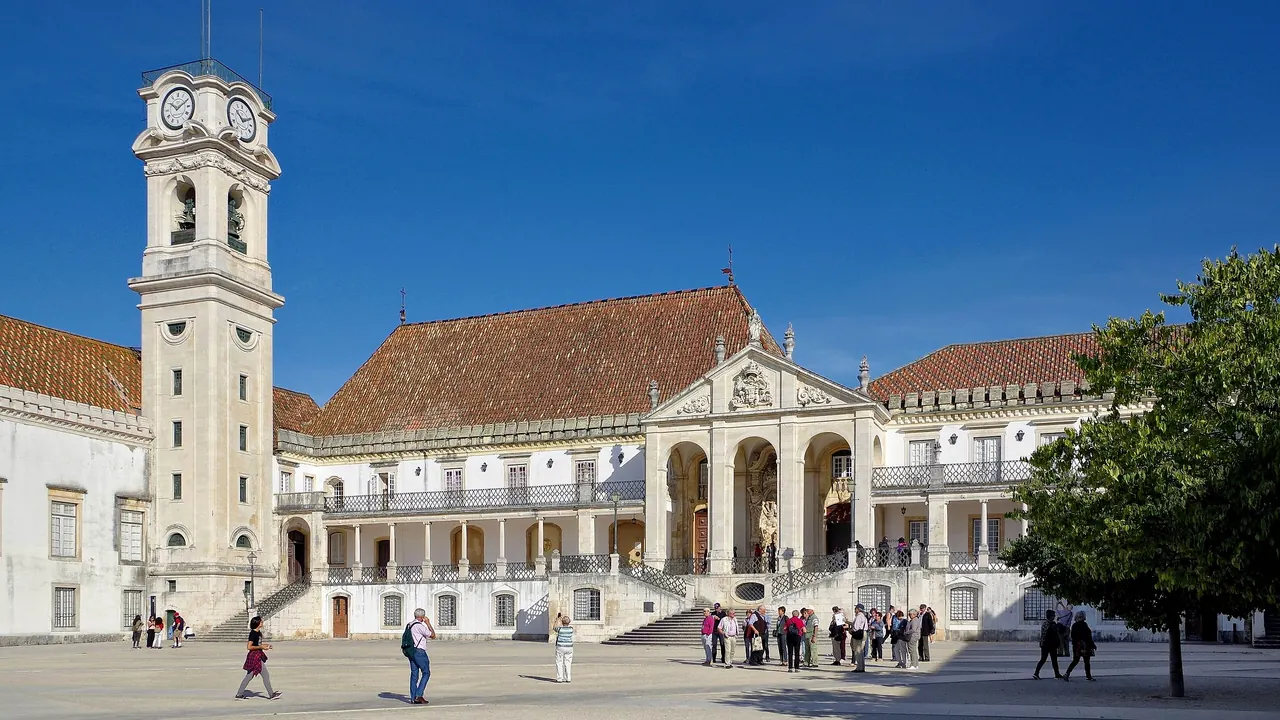
The university bell tower above the Paço das Escolas
- Day trips80
- Affordable cities66
- Nature & outdoors65
Photo: Berthold Werner, CC BY-SA 3.0, cropped
Match
53
Every category weighted equally
- Beach & sun52
- Culture & arts56
- Food & nightlife51
- Family trip55
- Outdoors58
- Relax & unwind52
- Shopping & style51
- On a budget55
Coimbra in twelve categories
Our verdict on each, scored 0 to 100 against the same fixed benchmark cities, so a score means the same thing on every page.
Beaches & swimming. Scores 36 out of 100.
Food & drink. Scores 50 out of 100.
Culture & sights. Scores 64 out of 100.
Nightlife. Scores 42 out of 100.
Nature & outdoors. Scores 65 out of 100.
Day trips. Scores 80 out of 100.
Good for families. Scores 50 out of 100.
Getting around. Scores 60 out of 100.
Shopping & style. Scores 35 out of 100.
Affordability. Scores 66 out of 100.
Live music & performing arts. Scores 45 out of 100.
Wellness & relaxation. Scores 45 out of 100.
Coimbra category by category
Beaches & swimming
36Coimbra is an inland river city, so beaches are a day out rather than part of the stay. The nearest is Figueira da Foz, about an hour away by train or a little less by car, with a very wide sandy beach, the old fishing quarter of Buarcos at its northern end and quieter stretches at Quiaios and Tocha further up. This is the open Atlantic: the water rarely gets above 18-19°C even in August, and the surf and wind can be strong.
In summer, locals also swim at the praias fluviais, river beaches with grassy banks on the Mondego and its tributaries in the hills east of the city. The water there feels warmer and calmer. They are pleasant for an afternoon, but nobody picks Coimbra for swimming.
Food & drink
50Eating in Coimbra is regional, hearty and cheap, shaped by a big student population and the farm country around it. The great local dish is leitão, suckling pig roasted until the skin crackles. It comes from the Bairrada towns just north, especially Mealhada, where whole strings of roadside restaurants serve nothing else, and it goes with the region's sparkling wine. Chanfana, goat slow-cooked in red wine in clay pots, comes from the hills to the east.
In the city itself, eating out mostly means small family tascas in the lanes of the Baixa and around the university, with daily set lunches, grilled fish and soup. There are pastry shops selling convent sweets like pastéis de Tentúgal and the anise-scented arrufadas, and the Mercado D. Pedro V for produce. Beyond that the range is narrow. There is little international cooking and only a thin layer of ambitious restaurants.
Culture & sights
64Coimbra's heritage climbs a single hill. At the top sits the old university, one of Europe's oldest, set in a former royal palace and listed by UNESCO. Its centrepiece is the Biblioteca Joanina, a baroque library of gilded and lacquered wood that is the city's one sight of real international fame. Around it are the Sala dos Capelos, the palace chapel and the clock tower that looks out over the whole city.
On the way down there is the fortress-like Romanesque Sé Velha and the Machado de Castro museum, which is built over a Roman cryptoportico. Down in the Baixa is the Monastery of Santa Cruz, where Portugal's first kings are buried. Across the river lie the ruined Gothic convent of Santa Clara-a-Velha, partly dug out of river silt, and the later Santa Clara-a-Nova. It is a rich, compact set that a visitor can cover in one or two full days.
Nightlife
42Coimbra's nights are student nights. During the academic year, bars around Praça da República and in the lanes of the upper town fill up late. Drinking spills into the streets and squares, and a few small clubs keep going into the early hours. The highlight of the calendar is the Queima das Fitas in May, a week of parades and outdoor parties that marks the end of the year and takes over the city.
Outside term the mood changes a lot. In July and August many bars are quiet, and evenings mostly end with a long dinner and a drink by the river. It is a friendly, cheap place to go out, but it has no real club culture.
Nature & outdoors
65Coimbra sits where the Mondego leaves the hills for the coastal plain, and the landscape around it is greener and more varied than many visitors expect. The city has its own green spaces: the old botanical garden below the university, the Choupal woods by the river and riverside parks for walking and cycling. Kayak trips run down the Mondego from Penacova through a wooded valley.
About half an hour north is the Buçaco forest, a walled monastic woodland of ancient trees, fern valleys and viewpoints. To the east the Serra da Lousã has marked trails between slate-built villages and chestnut woods. The Serra da Estrela, mainland Portugal's highest range, is about two hours away for proper mountain hiking and occasional winter snow. Summers get hot, so spring and autumn are the best seasons for walking.
Day trips
80Coimbra is halfway between Lisbon and Porto on the main rail line, and that makes it a very good base for day trips. Porto itself is about an hour away by fast train, and the canal town of Aveiro, with its painted moliceiro boats and Art Nouveau facades, is under an hour. Just south of the city lie the Roman ruins of Conímbriga, with some of the best-preserved mosaics on the Iberian Peninsula.
In the other direction you can reach the great monasteries of central Portugal by car or coach in roughly an hour to an hour and a half: Batalha, Alcobaça and the Templar Convent of Christ at Tomar. Óbidos, Fátima and the hilltop castle town of Montemor-o-Velho are within range too. Closer in are the Buçaco palace, the old spa towns and the wine estates of Bairrada.
Good for families
50Coimbra has two attractions made for children. Portugal dos Pequenitos, across the river, is a park of miniature Portuguese houses, monuments and colonial pavilions sized for small visitors. The Exploratório is a hands-on science centre by the Mondego. There are also riverside parks, the botanical garden and the Choupal woods for running around.
Portuguese culture is easygoing with children, and the city is small and safe. But the historic centre is a steep climb on cobbles and stairways, which is hard going with a pushchair, and the university sights will hold older children more than young ones. A couple of days is about right.
Getting around
60Everything a visitor wants to see in Coimbra is within a couple of kilometres, so most people walk. The catch is the hill. The route from the riverside Baixa up to the university is a steep climb on cobbled lanes and long stairways, such as the Quebra-Costas. A public lift and a funicular near the market take some of the strain out of the climb.
City buses cover the rest, including the trip across the river to Santa Clara. Coimbra-B station is on the main Lisbon to Porto line, with a short connection to the central Coimbra-A station. You do not need a car in the city, but one helps for the forests, hill villages and monasteries around it.
Shopping & style
35Shopping in Coimbra is modest and local. The pedestrian streets of the Baixa, such as Rua Ferreira Borges and Rua Visconde da Luz, have clothing, shoe and old-fashioned specialist shops. The Mercado D. Pedro V sells produce, cheese and cured meats. Things worth taking home are hand-painted Coimbra faience, convent sweets, Bairrada wine and the student-themed souvenirs sold near the university. For anything bigger, locals go to the shopping centres on the edge of town.
Affordability
66Coimbra is an inexpensive city to visit by Western European standards, largely because so many of its customers are students. Simple restaurants, cafés and bars set their prices for that crowd, so a set lunch in a family tasca, a coffee and pastry or an evening of drinks around Praça da República costs little. Rooms are fairly priced too, even close to the old town, though they fill up and get dearer during the Queima das Fitas in May and graduation season.
City buses are cheap, and most sights are close enough to walk between. The one real expense is the university visit, where the ticket for the Biblioteca Joanina and the palace rooms is the biggest single cost of a stay.
Live music & performing arts
45Coimbra has its own kind of fado, and that is the main reason to go to a performance here. It is sung by men in black academic capes, with the distinctive Coimbra guitar, and it grew out of student serenades. The songs are more lyrical and less mournful than the Lisbon style. Small fado houses in the old town hold short concerts most evenings, and serenades on the steps of the Sé Velha are a high point of the student festivals.
Outside fado, the programme is that of a university city. The Teatro Académico de Gil Vicente puts on theatre, film and concerts, and the arts centre in the former Convent of São Francisco hosts touring music and dance. There is no opera house and no major orchestra.
Wellness & relaxation
45Coimbra has no bathing tradition of its own, but central Portugal's old spa country starts about half an hour north. In Luso, below the Buçaco forest, mineral water is piped to a public fountain and there is a thermal spa. Nearby Curia has a thermal park, Belle Époque hotels and a lake. Both work as a restful day out or an overnight stay.
The city itself moves at an easy pace outside term time. Long lunches, the shady botanical garden and evening walks along the Mondego make up its version of unwinding. Spa options in the city are mostly limited to hotels.
When should you go?
Pick a month to see what it is like. The climate figures are measured averages, not a forecast.
Coimbra in July
Daytime high, °C
Rainfall in the month, mm
The whole year
Shaded against this city’s own year: the deepest cell is its best month for that figure and the palest its weakest.
Temperature and rainfall are climate normals, averaged over the years shown. Coimbra: 1991-2020 normals, Coimbra (1.6 km from centre).
Before you go
| Measure | Coimbra |
|---|---|
| Official language | Portuguese |
| Currency | Euro (EUR) |
| Sockets | CF230 V, 50 Hz |
| Driving side | Right |
| Time zone | UTC, UTC+1 in summer |
| Emergency number | 112 |
| Elevation | 43 m |
| Main airport | Francisco de Sá Carneiro Airport (OPO)117 km from centre133 non-stop destinations |
| Public holidays this year | 14 days |
By the numbers
| Measure | Coimbra |
|---|---|
| City population | 140,816 |
| People per km² | 441 |
| Museums within 10 km | 10 |
| UNESCO World Heritage sites within 50 km | 1 |
| Swim season, months above 21 °C | None |
Compare Coimbra with
Every comparison with a written verdict behind it.