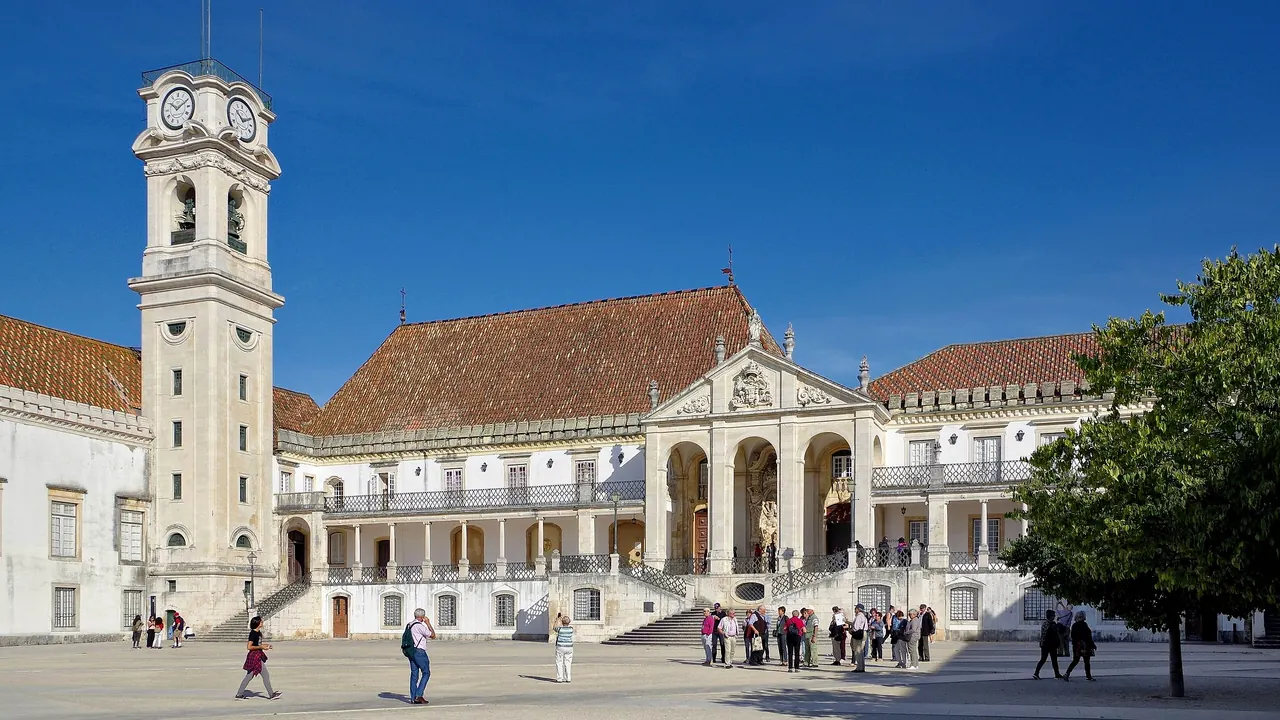
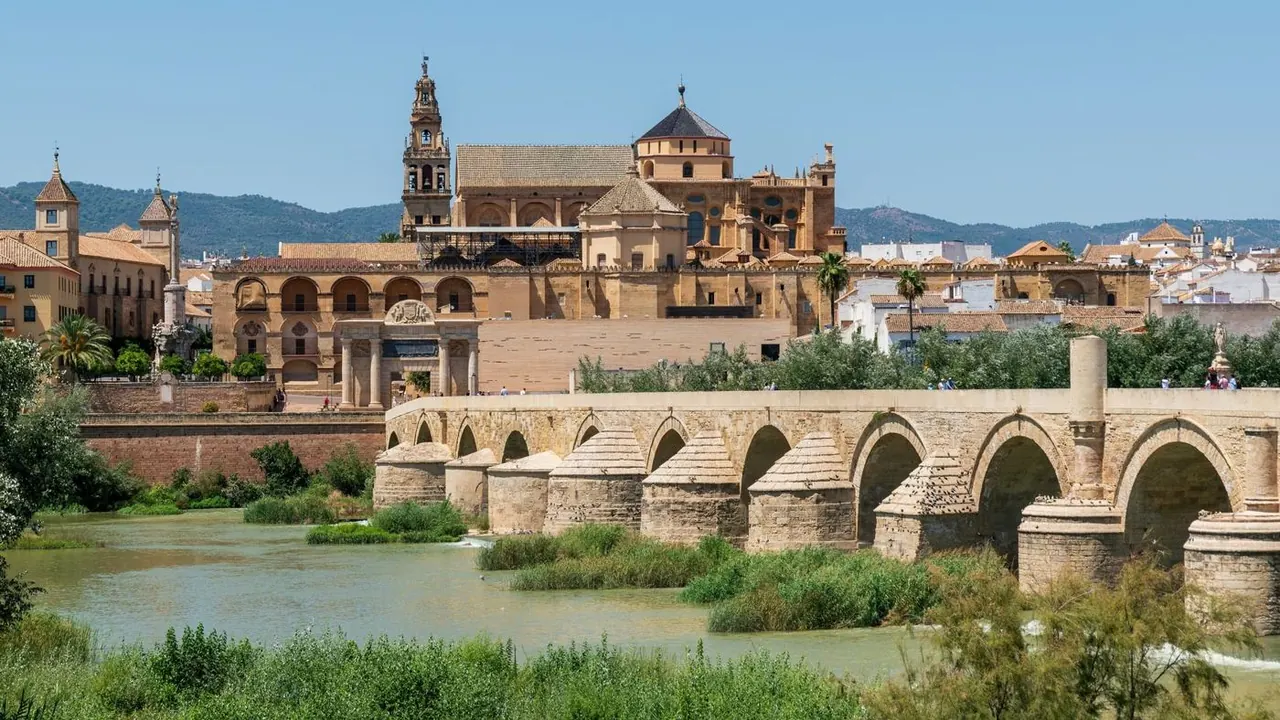
Photos: Coimbra by Berthold Werner, CC BY-SA 3.0, cropped; Cordoba by Jose María Ligero Loarte, CC BY-SA 4.0, cropped.
Coimbra or Cordoba?
Our verdict in twelve categories, each scored against the same fixed benchmark cities, and the climate month by month, so you can choose for your trip.
Choose Coimbra for
- beaches
- nature and the outdoors
- families
Coimbra is the better pick for a slower, greener trip through central Portugal. The old university on its hill is a fine sight in itself, and the real strength lies around it: the Buçaco forest, the Lousã slate villages, river beaches on the Mondego and the Atlantic sand at Figueira da Foz. Families also have more to do, with Portugal dos Pequenitos and a hands-on science centre, and the summer heat stays bearable for walking.
Choose Cordoba for
- culture and sights
- food and drink
- getting around
Cordoba suits travellers who come mainly for monuments and food. The Mezquita-Cathedral, the Juderia and Medina Azahara add up to a heritage set of real international weight. Evenings in patio tabernas over salmorejo and chilled Montilla are better eating than Coimbra's hearty tascas. Fast trains to Seville, Granada and Malaga make it an excellent base for seeing Andalusia without moving hotel, provided you avoid the furnace of high summer.
Scoreboard
Twelve categories on one fixed scale from 0 to 100. The shaded stretch is the gap between the two.
Your match
Pick a travel style or drag the sliders, and both match scores follow your weighting.
Too close to call, 1 point apart
Wins on beaches and nature and the outdoors with your weighting.
Wins on culture and sights and food and drink with your weighting.
What matters to you?
Category by category
What the scores mean for a trip.
Beaches & swimming
Neither city is a beach destination, but Coimbra makes swimming much easier. Figueira da Foz, with its very wide sandy beach and the old fishing quarter of Buarcos, is about an hour away by train. In summer the grassy praias fluviais on the Mondego offer calmer, warmer water for an afternoon.
From Cordoba, the sea means a long day on the Costa del Sol around Malaga, roughly 160km away. Otherwise there are pools and Sierra Morena reservoirs, and if swimming matters you will want a few nights on the coast.
Food & drink
Cordoba is the stronger food city. Its patio tabernas, tapas rounds through Santa Marina and San Agustin, and local dishes such as salmorejo, flamenquin and aubergine with cane honey give an evening plenty of variety. The chilled Montilla-Moriles wines add a regional signature.
Coimbra's eating is honest and hearty but narrower. Students keep it to set lunches in Baixa tascas, convent pastries and the Mercado D. Pedro V. Its showpiece, leitão, really means a drive north to the roadside restaurants of Mealhada, with Bairrada sparkling wine to go with it.
Culture & sights
Coimbra's heritage is all on one hill: the UNESCO-listed old university with the gilded Biblioteca Joanina, the Romanesque Sé Velha, the Roman cryptoportico under the Machado de Castro museum and Santa Cruz, where Portugal's first kings lie. It is a satisfying day or two.
Cordoba plays in a higher league. The Mezquita-Cathedral, with its forest of striped arches and a Renaissance cathedral inside, is one of Europe's great buildings. Around it are the Juderia, the Alcazar gardens, the patio houses of Viana and San Basilio and the caliphal ruins of Medina Azahara, enough to fill an extra day.
Nightlife
Neither city has a real club scene, and both get much of their life from students, but the rhythm differs. Coimbra's nights centre on the bars around Praça da República and the upper town during term, then go quiet in July and August. Cordoba is busiest in summer, with late terraces around the Corredera and Las Tendillas filling after ten.
Each city has one week when it erupts, both in May: the Queima das Fitas student parades in Coimbra and the casetas of the Cordoba fair, which dance until dawn.
Nature & outdoors
Coimbra is the greener base by some distance. The Choupal woods and the botanical garden are in the city, and the walled Buçaco forest is half an hour north. The Lousã slate villages are a short drive east, and the Serra da Estrela offers real mountain hiking about two hours away.
Cordoba has the cork and holm-oak hills of the Sierra Morena, the birds of prey of Hornachuelos and good karst walking in the Subbeticas. But you need a car, and from June to September the heat confines activity to dawn.
Day trips
Both are superb bases on a fast rail line, and Cordoba edges ahead because its neighbours are bigger names. Seville, Granada with the Alhambra, and Malaga are all within easy reach by high-speed train, and a car opens up Ubeda, Baeza and the dolmens of Antequera.
From Coimbra, Porto is about an hour by train and Aveiro's canals are closer still. The Conímbriga mosaics are just south, and by road you can reach the great monasteries of Batalha, Alcobaça and Tomar.
Good for families
Coimbra gives children more to do. Portugal dos Pequenitos, with its miniature houses and monuments, and the Exploratório science centre are aimed squarely at them, though the cobbled climb to the university is hard work with a pushchair.
In Cordoba the treats are the Alcazar fountains, the horse show at the royal stables and the castle at Almodovar del Rio. The traffic-free lanes are easy to wander, but summer heat makes spring or autumn the only comfortable season with young children.
Getting around
Both centres are walkable, but Cordoba is the easier one. Its Mezquita, Juderia, Alcazar and Roman bridge lie close together on flat lanes, and the station is within walking distance. You only need transport for Medina Azahara and the countryside.
Coimbra's sights are just as close together, but the walk from the Baixa up to the university means steep stairways such as the Quebra-Costas. The public lift and funicular help. Trains arrive at Coimbra-B, so getting into the centre takes a short connection.
Shopping & style
Neither city is worth a shopping trip, and both are best for a few local things to take home. In Coimbra that means hand-painted faience, convent sweets and Bairrada wine from the Baixa's pedestrian streets. Cordoba's crafts have more pedigree: silver filigree, embossed cordobán leather and workshop guitars, with high-street chains around Cruz Conde.
Affordability
Both are cheap by Western European standards, so cost should not decide between them. Coimbra's prices are set by students, which makes set lunches and drinks especially cheap, and the university ticket is the main expense. Cordoba's tapas and Montilla cost little too, but rooms near the Mezquita cost more, and both cities get pricier in May, when their festivals fall.
Live music & performing arts
Each city has one live art of its own, and both are well worth an evening. Coimbra's fado is sung by men in academic capes with the Coimbra guitar, and it is more lyrical than Lisbon's. You can hear it in small old-town houses and at serenades on the Sé Velha steps.
Cordoba offers flamenco, from polished tablaos to the peñas where aficionados gather, along with a respected guitar festival. It also has the Gran Teatro with a city orchestra, which gives it a little more beyond its signature art.
Wellness & relaxation
Relaxing works differently in the two cities. From Coimbra, the real thing is a short drive away in the old spa towns of Luso and Curia, with thermal waters, Belle Époque hotels and the Buçaco woods. Cordoba keeps the caliphal tradition alive in Arab-style bath houses in the old town, and its courtyards with fountains and orange trees make a slow afternoon easy.
When should you go?
Pick your month. The climate figures are measured averages, not a forecast.
Coimbra in July
Cordoba in July
Daytime high, °C
Rainfall in the month, mm
Temperature and rainfall are climate normals, averaged over the years shown. Coimbra: 1991-2020 normals, Coimbra (1.6 km from centre). Cordoba: 1991-2020 normals, Cordoba / Aeropuerto (7.6 km from centre).
The two cities part company in summer. Coimbra peaks at around 28°C in July and August, warm and very dry, which is ideal for river swimming and fine for walking the hill, although the Atlantic at Figueira da Foz stays cool at about 18°C. Cordoba climbs to 37°C in July and August, too hot to tour the streets except early in the morning and late in the evening, so its best months are April, May, late September and October.
Winter favours Cordoba. Both cities have similar mild daytime highs, but Coimbra is much wetter from October to January, with well over 110mm in most of those months, and it gets noticeably less sunshine. Cordoba's winters are drier and brighter, which makes it the better choice for a city break between November and March. Spring suits both, but Coimbra is cooler and greener, while Cordoba is already hot by late May.
Which traveller are you?
For a culture and arts trip, Cordoba is the better choice. Coimbra's university hill and Biblioteca Joanina fill a day or two, but the Mezquita-Cathedral, the Juderia, the Alcazar gardens and Medina Azahara go deeper, and flamenco in the peñas fills the evenings.
On an outdoors trip, Coimbra wins clearly: the Buçaco forest is half an hour away, Lousã has trails between slate villages and you can kayak the Mondego. Cordoba's sierras suit spring and autumn walking, but in summer the heat confines it to dawn.
On a family trip with children, Coimbra has the edge. Portugal dos Pequenitos and the Exploratório science centre are made for children, and the summers are milder. Cordoba's centre is safe and largely free of cars, but its sights are mostly for adults.
Before you go
| Measure | Coimbra | Cordoba |
|---|---|---|
| Official language | Portuguese | Spanish |
| Currency | Euro (EUR) | Euro (EUR) |
| Sockets | CF230 V, 50 Hz | CF230 V, 50 Hz |
| Driving side | Right | Right |
| Time zone | UTC, UTC+1 in summer | UTC+1, UTC+2 in summer |
| Emergency number | 112 | 112 |
| Elevation | 43 m | 120 m |
| Main airport | Francisco de Sá Carneiro Airport (OPO)117 km from centre133 non-stop destinations | Córdoba Airport (ODB)8 km from centre3 non-stop destinations |
| Public holidays this year | 14 days | 12 days |
By the numbers
| Measure | Coimbra | Cordoba |
|---|---|---|
| City population | 140,816 | 323,262 |
| People per km² | 441 | 258 |
| Museums within 10 km | 10 | 16 |
| UNESCO World Heritage sites within 50 km | 1 | 2 |
| Swim season, months above 21 °C | None | - |
Where else could you go?
Every comparison below shares a destination with this one, so you can follow Coimbra or Cordoba somewhere new.