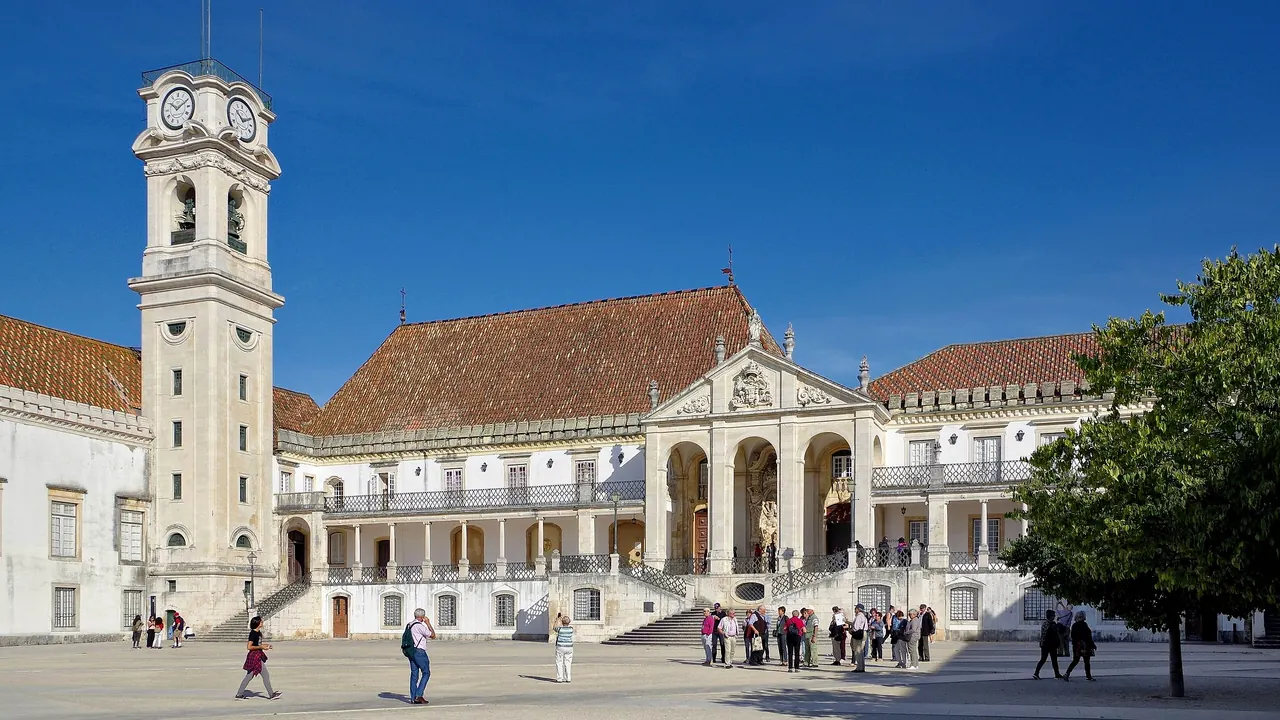
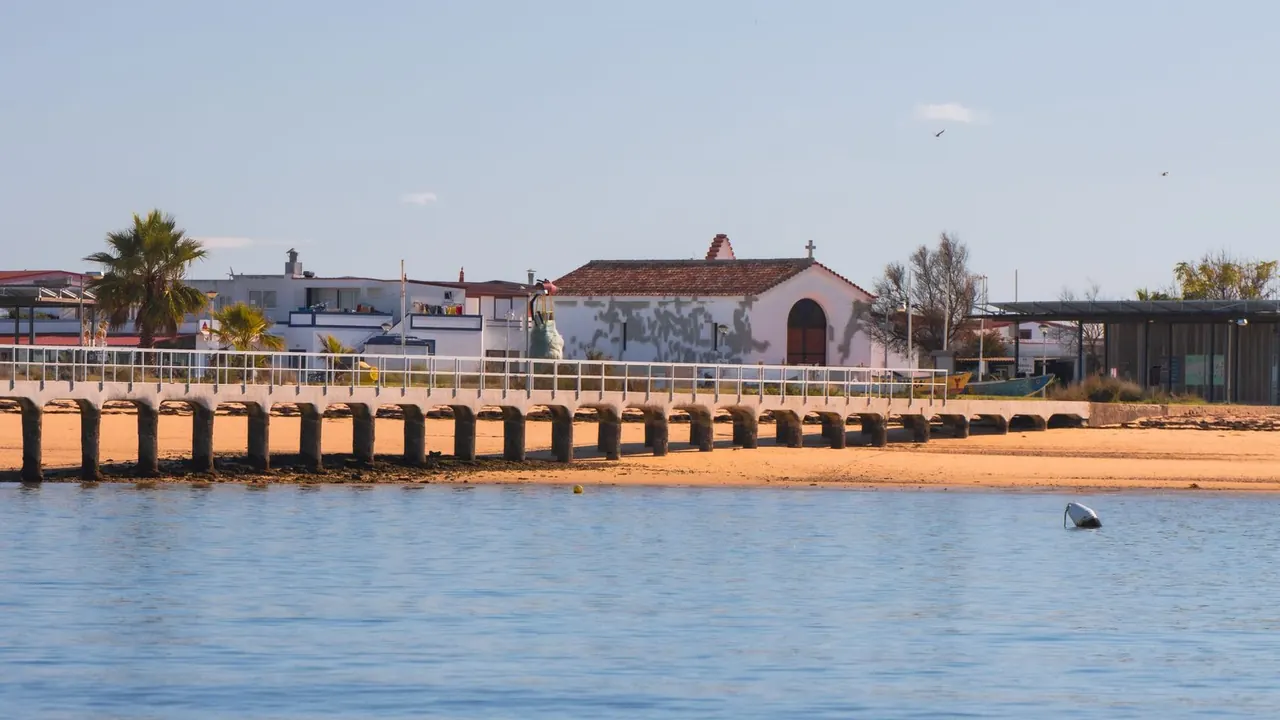
Photos: Coimbra by Berthold Werner, CC BY-SA 3.0, cropped; Faro by Vitor Oliveira, CC BY-SA 2.0, cropped.
Coimbra or Faro?
Our verdict in twelve categories, each scored against the same fixed benchmark cities, and the climate month by month, so you can choose for your trip.
Choose Coimbra for
- culture and sights
- day trips
- live music and the arts
Coimbra suits the traveller who wants history, music and movement. Its hill of university buildings, royal tombs and Romanesque cathedral gives two full days of real sightseeing, its own fado, sung by men in black academic capes, gives the evenings a purpose, and its spot on the main line between Lisbon and Porto makes it a strong base for Porto, Aveiro, Conímbriga and the great monasteries. It is also the cheaper and livelier of the two in term time, so long as you don't mind steep cobbles and an inland setting.
Choose Faro for
- beaches
- families
Faro is the better pick when the sea is the point. The barrier islands of the Ria Formosa give long, quiet sandy beaches with warmer and calmer water than anything near Coimbra, and the lagoon itself is good for boats, kayaks and birdwatching. The flat, compact centre and gentle beaches make it easy with children. Its old town takes only a day, though, and evenings are quiet, so it rewards a slow beach-and-lagoon stay more than a busy sightseeing trip.
Scoreboard
Twelve categories on one fixed scale from 0 to 100. The shaded stretch is the gap between the two.
Your match
Pick a travel style or drag the sliders, and both match scores follow your weighting.
Wins on culture and sights and day trips with your weighting.
Wins on beaches and families with your weighting.
What matters to you?
Category by category
What the scores mean for a trip.
Beaches & swimming
Faro wins this clearly. Its beaches lie on the barrier islands of the Ria Formosa, with Praia de Faro reached by bus and Ilha Deserta and Culatra by ferry, and the sand runs on for kilometres backed by dunes. The water here is noticeably warmer and calmer than on the west coast, and Tavira's island beach and the Albufeira coves are within an hour.
Coimbra has no beach of its own. Figueira da Foz is about an hour away, with a huge sandy beach but cool, often rough Atlantic water, so most visitors make it an occasional outing. The river beaches in the hills to the east are nice for an afternoon dip, not a reason to come.
Food & drink
The two eat about equally well, and both are hearty, inexpensive and regional, but they draw on different country. Coimbra's cooking comes from the land: crackling suckling pig from the Bairrada roadside restaurants at Mealhada, goat chanfana from the eastern hills, and convent pastries such as pastéis de Tentúgal, with Bairrada sparkling wine alongside.
Faro looks to the lagoon and sea, with Ria Formosa clams and oysters, fish sold by weight and copper-pan cataplana, plus almond and fig sweets. Neither has much international or ambitious cooking, and in Faro the better seafood is a short train ride away in Olhão.
Culture & sights
Coimbra is well ahead. Its old university, set in a former royal palace and listed by UNESCO, holds the gilded Biblioteca Joanina and the Sala dos Capelos. On the walk down the hill come the Romanesque Sé Velha, the Machado de Castro museum over its Roman cryptoportico and the Monastery of Santa Cruz with Portugal's first kings, and the Santa Clara convents wait across the river.
Faro's walled Cidade Velha is charming, with storks on the bell towers, a cathedral tower over the lagoon, a Roman mosaic in the convent museum and the bone chapel at Carmo. It fills a relaxed day, where Coimbra needs one or two full ones.
Nightlife
Coimbra has the livelier nights, at least during the academic year, when students pack the bars around Praça da República and the upper town and the May Queima das Fitas takes over the streets. In July and August it goes much quieter.
Faro's evenings are calmer still: terraces on Rua do Prior and near the marina, a few small late clubs, and most visitors calling it a night after dinner. Neither has a real club scene, and from Faro anyone wanting one has to go to Albufeira.
Nature & outdoors
Both have good outdoors close at hand, but of a very different kind. Coimbra's is green and hilly: the Choupal woods and botanical garden in town, kayaking down the wooded Mondego from Penacova, the ancient trees of the Buçaco forest, slate villages in the Serra da Lousã and real mountain hiking in the Serra da Estrela.
Faro's is flat and watery. The Ria Formosa saltmarsh starts at the old town's edge, with flamingos and spoonbills in the salt pans, paddling through the channels and easy cycling along the lagoon. The cork-oak hills of the Serra do Caldeirão and the ochre cliffs to the west are there for walkers.
Day trips
Coimbra is the stronger base. Sitting on the main Lisbon to Porto line, it puts Porto and canal-side Aveiro each about an hour away by train, the Conímbriga mosaics just south of the city and the monasteries of Batalha, Alcobaça and Tomar within reach by road, so a week of varied outings is easy to fill.
Faro's day trips are pleasant but more alike: Algarve towns such as Tavira, Olhão, Loulé and Silves, the Milreu Roman villa and, further off, Lagos and Sagres. Seville is the standout, though it is a long day by road.
Good for families
Faro is the easier choice with children. Gentle sandy beaches, boat rides to the islands and a quiet, flat old town make for unhurried days, and the Algarve's water parks and marine park are within driving distance, though awkward without a car.
Coimbra has two attractions built for children, the miniature houses and monuments of Portugal dos Pequenitos and the Exploratório science centre, plus riverside parks. The steep cobbled climb to the old town is hard work with a pushchair, and the university sights appeal more to older children.
Getting around
Both are walkable cities where you won't need a car in town, but the walking feels quite different. Coimbra's sights sit on a steep hill, climbed by cobbled lanes and stairways such as the Quebra-Costas, with a public lift and funicular to ease the climb. Faro's centre is flat, and the airport and ferry quay are close.
Beyond the city, Coimbra's position on the fast main rail line is a real advantage. Faro's coastal railway is slow, and most visitors touring the Algarve end up hiring a car.
Shopping & style
Neither is a shopping destination, and both offer a few pedestrian high streets plus a mall on the edge of town. What differs is what you take home. In Coimbra it is hand-painted Coimbra faience, convent sweets and Bairrada wine. In Faro it is cork goods, tinned fish, almonds, fig sweets and flor de sal from the lagoon salt pans, with Loulé's market close by for more choice.
Affordability
Coimbra is slightly cheaper overall, because its student customers keep tasca lunches, coffee and bar drinks cheap, and rooms are fair outside the Queima das Fitas and graduation weeks. The university ticket is the main single expense.
Faro's everyday costs are moderate too, but rooms in July and August are priced for beach season, just when most people want to go, and a hire car adds to the bill for anyone touring the region.
Live music & performing arts
Coimbra has more to offer, and it has something Faro lacks: its own fado, sung by men in black academic capes to the Coimbra guitar, with short concerts in old-town fado houses most evenings. The Teatro Académico de Gil Vicente and the São Francisco arts centre add theatre, film and touring dance.
Faro's calendar is smaller but has a classical side. The ornate Teatro Lethes holds chamber music, and the Teatro das Figuras brings the regional orchestra and occasional opera. Fado there is an occasional restaurant evening, and on many nights nothing is on.
Wellness & relaxation
Coimbra has the edge because real spa country lies about half an hour north. Luso has a thermal spa below the Buçaco forest and Curia has a thermal park and Belle Époque hotels, both easy for a day or a night away.
Faro's nearest historic spa, Caldas de Monchique, is well over an hour's drive, so wellness there mostly means resort spas along the golf coast. Its calm comes instead from the lagoon at sunset and quiet, mild winters.
When should you go?
Pick your month. The climate figures are measured averages, not a forecast.
Coimbra in July
Faro in July
Daytime high, °C
Rainfall in the month, mm
Temperature and rainfall are climate normals, averaged over the years shown. Coimbra: 1991-2020 normals, Coimbra (1.6 km from centre). Faro: 1991-2020 normals, Faro / Aeroporto (2.8 km from centre).
Both cities are hot and dry from June to August, with afternoons reaching about 29°C, warm for walking but fine early and late in the day. Faro is the place for swimming. Its sea is warm enough from June to October and reaches about 22°C in August, while the Atlantic near Coimbra stays cool all summer. Faro also gets more sun in every month and keeps warm beach days well into October.
The real difference comes in the cooler half of the year. In Coimbra the rain arrives in earnest in October and stays through to January, with over 120mm in the wettest months, so spring and early autumn are the best times for its hills and day trips. Faro's winters are mild, bright and much drier until the wetter weeks around December, which makes it a pleasant off-season escape when Coimbra is grey and damp.
Which traveller are you?
On a beach and sun trip, Faro is the obvious choice. Ferries and a short bus ride reach the sandy Ria Formosa islands, where the sea is calmer and warmer, while from Coimbra the nearest beach is a day out to the cool open Atlantic.
For a culture and arts trip, choose Coimbra. The UNESCO-listed old university, the Biblioteca Joanina, the Sé Velha and Santa Cruz far outweigh Faro's one-day old town, and the evenings bring Coimbra fado and a proper university theatre programme.
On a family trip with young children, Faro is the easier base. Its centre is flat and quiet, the lagoon beaches are gentle, and island boat trips feel like an adventure, whereas Coimbra's cobbled stairways are tiring with a pushchair despite Portugal dos Pequenitos.
Before you go
| Measure | Coimbra | Faro |
|---|---|---|
| Official language | Portuguese | Portuguese |
| Currency | Euro (EUR) | Euro (EUR) |
| Sockets | CF230 V, 50 Hz | CF230 V, 50 Hz |
| Driving side | Right | Right |
| Time zone | UTC, UTC+1 in summer | UTC, UTC+1 in summer |
| Emergency number | 112 | 112 |
| Elevation | 43 m | 10 m |
| Main airport | Francisco de Sá Carneiro Airport (OPO)117 km from centre133 non-stop destinations | Faro - Gago Coutinho International Airport (FAO)3 km from centre91 non-stop destinations |
| Public holidays this year | 14 days | 14 days |
By the numbers
| Measure | Coimbra | Faro |
|---|---|---|
| City population | 140,816 | 64,560 |
| People per km² | 441 | 319 |
| Museums within 10 km | 10 | 2 |
| UNESCO World Heritage sites within 50 km | 1 | 0 |
| Swim season, months above 21 °C | None | 3 months |
Where else could you go?
Every comparison below shares a destination with this one, so you can follow Coimbra or Faro somewhere new.