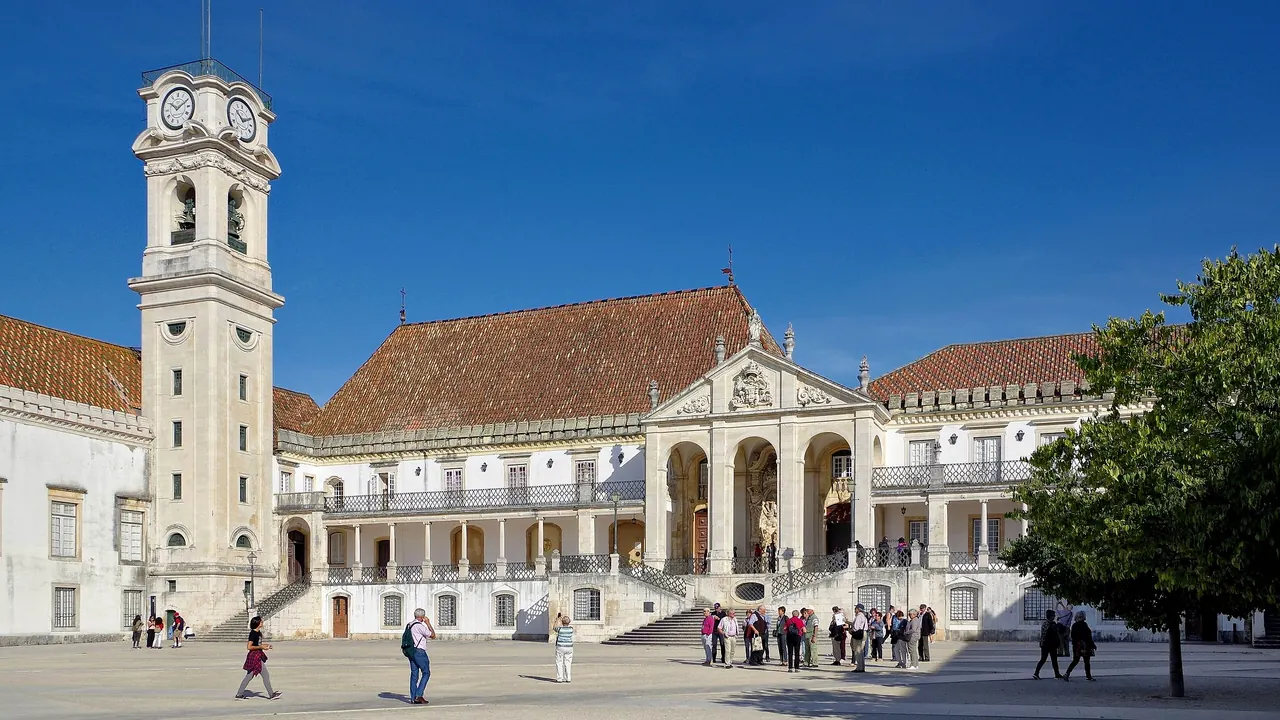
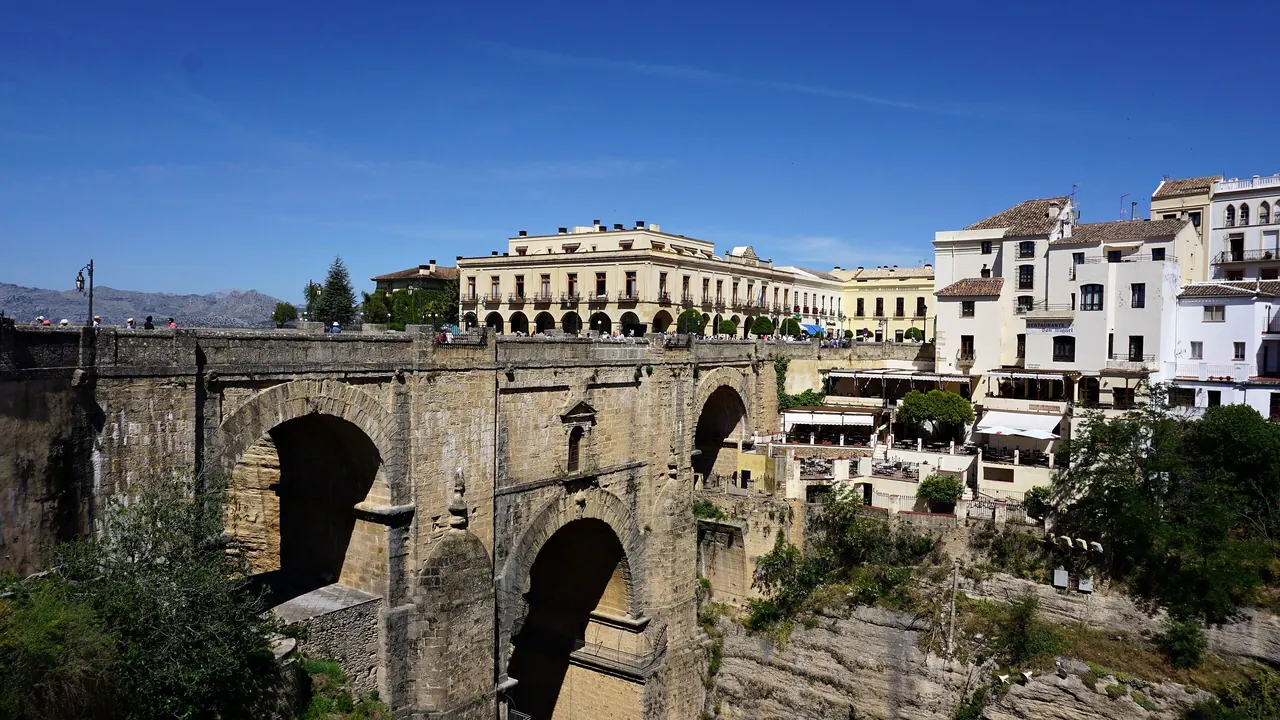
Photos: Coimbra by Berthold Werner, CC BY-SA 3.0, cropped; Ronda by Julia Kostecka, CC BY 2.0, cropped.
Coimbra or Ronda?
Our verdict in twelve categories, each scored against the same fixed benchmark cities, and the climate month by month, so you can choose for your trip.
Choose Coimbra for
- nightlife
- live music and the arts
- families
Coimbra is the better choice for a trip with more going on. It has the deeper heritage, with its hilltop university and baroque library, plus student bars, its own style of fado and cheap, hearty tascas. Its spot on the Lisbon to Porto railway means you can reach Porto, Aveiro and the great monasteries without a car. Pick it if you want a lively small city that works as a base, and if you'd like the trip to work for children and for evenings out as well as for sightseeing.
Choose Ronda for
- nature and the outdoors
Ronda is for people who come for the landscape. The town sits across a deep gorge and is ringed by the limestone sierras of Grazalema and Las Nieves, with white villages a short drive away. Evenings stop at tapas and dinner, and there is little to see on stage, but walkers, climbers and anyone happy to spend days at a country house with a pool will find the countryside better here. Plan on hiring a car.
Scoreboard
Twelve categories on one fixed scale from 0 to 100. The shaded stretch is the gap between the two.
Your match
Pick a travel style or drag the sliders, and both match scores follow your weighting.
Wins on nightlife and live music and the arts with your weighting.
Wins on nature and the outdoors with your weighting.
What matters to you?
Category by category
What the scores mean for a trip.
Beaches & swimming
Neither town is a beach base, but Coimbra makes it easier. Figueira da Foz is a train ride away, with a huge sandy beach. The water there is cold, rough Atlantic, and on hot days the river beaches in the hills give you calmer, warmer water closer to town.
Ronda's coast is warmer Mediterranean, but it lies over a winding mountain road and the beaches are heavily built up. Without a car you can't really get there, so most visitors cool off in a pool instead.
Food & drink
Coimbra eats better and more cheaply. Leitão and Bairrada sparkling wine are just up the road, chanfana comes from the eastern hills, and the Baixa has family tascas and convent pastry shops with plenty of choice. The range is still narrow beyond Portuguese cooking.
Ronda's mountain food is good but there is less of it: oxtail, game, hams and autumn chestnuts, with local wine tastings nearby. The best of it is in the Mercadillo tapas bars rather than on the terraces above the gorge.
Culture & sights
Coimbra has the more famous single sight in the Biblioteca Joanina. Around it is a layered set of buildings from Roman to Gothic, from the Sé Velha and the cryptoportico to the royal tombs at Santa Cruz.
What you remember from Ronda is the setting more than the buildings: the Puente Nuevo over El Tajo, the old bullring and the Arab baths. Both towns take one or two full days.
Nightlife
Coimbra has a real night out, at least during term. Students keep the upper town and Praça da República busy late, a few small clubs stay open, and the Queima das Fitas in May takes over the whole city.
Ronda gives you a good evening rather than a night. Plaza del Socorro stays lively over late dinners in summer, but the town is asleep in the small hours except during the September fair.
Nature & outdoors
Ronda wins outdoors. The gorge starts at the edge of town and draws climbers, the Sierra de Grazalema has vultures and the Garganta Verde ravine, and the Spanish fir forests of Sierra de las Nieves offer serious hiking.
Coimbra's countryside is softer and greener. You can walk in the Choupal woods, paddle the Mondego from Penacova and wander the monastic forest of Buçaco. For real mountains you need the long drive to the Serra da Estrela.
Day trips
Coimbra edges ahead because it sits on a main railway line. Porto and Aveiro are each about an hour away by train, Conímbriga's mosaics are just south of town, and the monasteries of Batalha, Alcobaça and Tomar make strong days out.
Ronda's outings are more scenic. White villages such as Setenil and Zahara are close, and Seville and Málaga are within reach. Most of these really need a hire car.
Good for families
Coimbra is the easier town with children. Portugal dos Pequenitos and the Exploratório give younger ones something made for them, and the riverside parks give them space.
Ronda has nothing like that. Older children enjoy the bridge, the rock stairway at the Casa del Rey Moro and the caves nearby. Both towns are steep and cobbled, which makes a pushchair hard work.
Getting around
You'll walk almost everywhere in both towns, but the walking feels different. In Coimbra it is one long climb from the Baixa to the university, helped by a public lift and a funicular. Ronda is flatter on the plateau and only drops steeply towards La Ciudad and the gorge.
The bigger difference is leaving town. Coimbra's trains run often to Lisbon and Porto. Ronda's trains and buses are slow and infrequent, so its villages and parks are best seen by car.
Shopping & style
Shopping is modest in both, but Coimbra's Baixa streets have more to browse, from old specialist shops to the produce at Mercado D. Pedro V and hand-painted faience. In Ronda the main things to buy are on Carrera Espinel and the souvenir lanes by the bridge, and the best things to take home are wine, ham and olive oil.
Affordability
Both are cheap compared with the big cities nearby. In Coimbra the student crowd keeps meals, coffee and drinks cheap, and the university ticket is the biggest single cost. Ronda's tapas bars and country houses are fair value, but the hire car you'll want and the hotels over the gorge push costs up. Both get dearer around their festivals.
Live music & performing arts
Coimbra has far more to go to. Its own fado, sung by men in academic capes to the Coimbra guitar, is on most evenings, and a university theatre and an arts centre bring in theatre, film and dance.
Ronda offers flamenco for visitors in small venues and an occasional show at the municipal theatre. The Corrida Goyesca at the September fair is the one big event.
Wellness & relaxation
Coimbra has a real spa tradition nearby. Luso and Curia, about half an hour away, have thermal baths, a park and Belle Époque hotels.
Ronda's Arab baths are a monument rather than somewhere to bathe. Its version of rest is a farmhouse in the hills with a pool and olive groves, and that suits a few lazy days very well.
When should you go?
Pick your month. The climate figures are measured averages, not a forecast.
Coimbra in July
Ronda in July
Daytime high, °C
Rainfall in the month, mm
Where the figures come from
Ronda has no weather station within reach, so its figures come from a gridded climate model rather than a measured record, and read a broad area rather than the city itself.
Temperature and rainfall are climate normals, averaged over the years shown. Coimbra: 1991-2020 normals, Coimbra (1.6 km from centre). Ronda: 1991-2020 normals, TerraClimate 4 km grid at the town, no weather station within 90 km.
Coimbra has the milder summer of the two. Highs peak at about 29°C in August, which is warm but manageable on its hill, and June to August are nearly dry and very sunny. The Atlantic at Figueira da Foz stays cool, around 18°C even at its warmest, so a beach day is bracing at any time of year. Rain comes back hard in October, the wettest month of its year, and the city stays damp and grey through to January. May, June and September are the best months for walking its streets.
Ronda's year has bigger swings. July and August reach about 32°C and are almost rainless, so hikes and town walks are best done early in the morning, while the Mediterranean down on the coast warms to about 22°C. Winters are a little colder than Coimbra's. The rain falls mostly from October to March, and March is one of the wettest months, so late April, May and September are Ronda's best months for walking, with dry hills and warm days without the summer heat. In October the two towns are equally mild. Ronda gets less rain than Coimbra that month, but already about as much as in its own winter, and it turns colder sooner in November. For high summer Coimbra is the easier town to walk around. Ronda is at its best in spring and September, and by mid-autumn neither has a clear advantage.
Which traveller are you?
On a food and nightlife trip, Coimbra is the clear pick. During term, students fill the bars around Praça da República, and fado houses hold concerts most evenings. Suckling pig from Mealhada is a short trip away. Ronda's nights end with tapas and dinner.
For an outdoors trip, choose Ronda. You can walk straight from town to the floor of the gorge. The crags of Grazalema, the fir forests of Sierra de las Nieves and the Caminito del Rey are all within driving range. Coimbra has good woods and hills, but the walking is gentler.
On a family trip with children, Coimbra has more for them to do. Portugal dos Pequenitos and the Exploratório science centre are made for children, and the riverside parks give them room to run. Ronda has nothing built for children, and some of its viewpoints are high and exposed.
Before you go
| Measure | Coimbra | Ronda |
|---|---|---|
| Official language | Portuguese | Spanish |
| Currency | Euro (EUR) | Euro (EUR) |
| Sockets | CF230 V, 50 Hz | CF230 V, 50 Hz |
| Driving side | Right | Right |
| Time zone | UTC, UTC+1 in summer | UTC+1, UTC+2 in summer |
| Emergency number | 112 | 112 |
| Elevation | 43 m | 724 m |
| Main airport | Francisco de Sá Carneiro Airport (OPO)117 km from centre133 non-stop destinations | Málaga-Costa del Sol Airport (AGP)60 km from centre166 non-stop destinations |
| Public holidays this year | 14 days | 12 days |
By the numbers
| Measure | Coimbra | Ronda |
|---|---|---|
| City population | 140,816 | 33,671 |
| People per km² | 441 | 87 |
| Museums within 10 km | 10 | 5 |
| UNESCO World Heritage sites within 50 km | 1 | 0 |
| Swim season, months above 21 °C | None | 1 month |
Where else could you go?
Every comparison below shares a destination with this one, so you can follow Coimbra or Ronda somewhere new.